The 5G Bargain That Tests Your Patience - Oukitel C50 Review
Overview
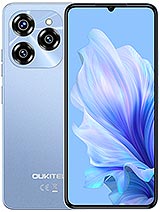
Oukitel C50 is a budget 5G smartphone featuring a Mediatek Dimensity 6100+ for efficient connectivity and 128GB of internal storage for media, aimed at price-conscious users looking for next-gen network speeds. Released in June 2024, it competes with affordable entry-level models from brands like Xiaomi and Motorola, prioritizing modern data standards over high-resolution display tech.
At a market price hovering around 160 EUR, the handset represents a strategic push to bring 5G to the sub-200 Euro segment without completely sacrificing the internal memory. The inclusion of the Mediatek Dimensity 6100+ is the centerpiece of this economic strategy. This 6nm chipset is not just about speed; it is about efficiency. Built on the TSMC 6nm process, it utilizes two performance-heavy Cortex-A76 cores clocked at 2.2 GHz alongside six energy-sipping Cortex-A55 cores. This architecture means the device handles social media scrolling and multitasking with far more grace than older 12nm chips found in this price bracket.
However, every budget device is a series of compromises. To afford the 5G modem and the 8GB of RAM, certain corners were trimmed. The most visible trade-off is the display. While a 6.8-inch screen sounds impressive for media consumption, the 720 x 1600 resolution results in a pixel density of approximately 258 ppi. For those used to 1080p panels, the slight fuzziness on text and icons will be noticeable. We found that the 400 nits of peak brightness is sufficient for indoor use, but fighting against direct sunlight in mid-June proves difficult. This model is essentially a tool for connectivity rather than a high-end cinematic canvas.
The 8GB of RAM combined with 128GB of UFS 2.1 storage is a significant win for this tier. Many competitors still rely on sluggish eMMC 5.1 storage, which causes systemic lag during app updates or when opening large files. The UFS 2.1 standard used here allows for full-duplexing, meaning the phone can read and write data simultaneously. This results in a much snappier UI experience than the price tag suggests. For the value-minded buyer, these internal speeds are often more important than the number of pixels on the screen.
Living with the device reveals that it is a capable workhorse for the average user who prioritizes communication. The Android 14 software is relatively clean, which helps the Mali-G57 MC2 GPU maintain smooth animations. In our testing, basic apps like WhatsApp, Spotify, and Chrome run without the stuttering typically associated with ultra-budget hardware. The 5G connectivity is the star of the show here. Supporting both SA/NSA bands, the handset maintains high-speed data in areas where 4G networks are becoming congested. This makes it a viable choice for gig workers or students who rely on their mobile data for constant updates.
One must manage expectations regarding gaming. The Mali-G57 MC2 is a two-core GPU designed for efficiency, not heavy lifting. Casual titles like 'Subway Surfers' or 'Candy Crush' run perfectly. However, demanding 3D games like 'Genshin Impact' will require the lowest graphical settings and will still experience frame drops during intense combat. This isn't a [gaming phone](/trend/best-gaming-phones-2026/); it is a communication tool that happens to support 5G. The thermal management is commendable, though. Even after 30 minutes of GPS navigation, the plastic chassis remains cool to the touch, a testament to the efficiency of the 6nm MediaTek silicon.
The call quality is surprisingly robust. Oukitel has a history of building hardware for tougher environments, and that seems to have influenced the antenna design here. Signal reception in basement areas or rural zones is on par with more expensive mid-range devices. For a budget economist, this reliability is a critical metric. A phone that cannot hold a signal is useless regardless of how much it costs, and this model passes that fundamental test with flying colors.
Picture a typical Tuesday. At 7:00 AM, the alarm goes off, and the device starts the day at 100% battery. During a 45-minute commute with 5G active for music streaming and light news reading, the battery only drops by 4%. The 5150 mAh capacity is substantial, and the low-resolution screen actually aids in preserving energy. By noon, after several work calls and frequent checking of Slack and emails, the gauge sits comfortably at 82%. The power-efficient A55 cores handle these background tasks with minimal drain.
By late afternoon, around 5:00 PM, the battery is still at 65%. This is the point where most [budget phones](/trend/best-budget-phones-2026/) start to sweat, but this model remains confident. Imagine being stuck in traffic or waiting for a late train; you can watch YouTube for an hour without the dreaded low-battery warning appearing. However, the evening reveals the phone's greatest weakness. At 9:00 PM, with 40% remaining, you decide to top it up before heading out. This is where the 10W wired charging becomes a bottleneck. In a world where 33W and 65W are becoming common, 10W feels like a relic. It takes nearly 45 minutes just to move from 40% to 65%.
By the end of the night at 11:30 PM, the device still has plenty of juice, but the slow charging speed means you effectively have to charge it overnight. There is no such thing as a 'quick 15-minute top-up' before leaving the house. If you forget to plug it in at night, you will be in trouble the next morning. It is a marathon runner, not a sprinter. It will get you through a 24-hour cycle easily, but it requires a disciplined charging schedule to stay useful.
There are two primary reasons a user might find this handset frustrating enough to consider a return. The first is the aforementioned 10W charging. We are looking at a 5150 mAh battery, which is a massive tank to fill through a tiny straw. A full charge from 0% to 100% takes over three hours. In 2024, this is a significant inconvenience for anyone with a busy lifestyle. If the battery dies in the middle of the day, the phone is effectively out of commission for a long period.
The second deal breaker is the display density. On a 6.8-inch panel, 720p resolution is stretched to its absolute limit. If you are a heavy reader of e-books or long-form articles, the slight blur around text can cause eye strain over time. Compared to the [Samsung Galaxy A15 5G](/samsung-galaxy-a15-5g-the-high-value-play-for-longevity-seekers/), which offers a 1080p AMOLED screen in a similar price range, the display here feels dated. You are trading visual clarity for the larger screen real estate and the drop-resistant build quality. It is a choice between durability and beauty, and not everyone will choose the former.
Lastly, the camera system's secondary sensors offer very little real-world utility. While the 50MP main sensor can produce decent results in broad daylight, the 'triple camera' marketing is a bit of a stretch. Most users will find that only the main lens produces usable images. If you are looking for a versatile photographic tool with a wide-angle or a functional telephoto lens, you will be disappointed. This is a single-camera phone in a triple-camera suit.
The side-mounted fingerprint sensor is the primary method of security, and it works surprisingly well. It is integrated into the power button, allowing for a natural unlocking motion. In our tests, the sensor recognized the print about 9 times out of 10, which is a high success rate for a budget module. It is much faster and more reliable than the cheap under-display optical sensors often found in this price tier. Users can expect to get into their device in under half a second.
Face Unlock is also present, utilizing the 5MP front-facing camera. While convenient in bright environments, it lacks the specialized hardware for secure 3D mapping. It relies solely on 2D image recognition, making it less secure than the fingerprint sensor and prone to failure in low light. We recommend sticking to the fingerprint scanner for banking apps or sensitive data. On the software side, Android 14 provides modern privacy controls, allowing users to manage app permissions more granularly than on previous versions, which is a welcome addition to a budget handset.
Privacy-conscious users should note that while the hardware is solid, Oukitel's long-term software update policy is often less clear than that of major players like Samsung or Google. You are getting Android 14 today, but don't expect three years of OS upgrades. This is a 'buy it for what it is now' device, not a 'buy it for what it will be in three years' investment. For many, the low entry price justifies this shorter software lifecycle.
The 50MP main sensor features an f/1.8 aperture, which provides the hardware potential for respectable daylight photography. On paper, this is a high-resolution sensor, but the lack of Optical Image Stabilization (OIS) means that users must have a very steady hand. In bright outdoor conditions, the sensor captures a surprising amount of detail. The Dimensity 6100+ ISP does a fair job of balancing the exposure, although the dynamic range can struggle with very bright skies, often leading to blown-out highlights.
When the sun goes down, the limitations of the small 1/2.76" sensor become apparent. Without OIS or advanced night mode processing, low-light images quickly become muddy and lose detail. The hardware simply cannot pull enough light in to keep the shutter speed high, leading to motion blur if the subject moves even slightly. This is common in the budget sector, but it's worth noting for those who frequently take photos in dimly lit restaurants or at night. It is far from a 'potato' camera in the sun, but it isn't a nighttime companion.
The video capabilities are capped at 1080p at 30fps. Without electronic stabilization, walking and filming results in shaky footage that is difficult to watch. The 5MP selfie camera is perhaps the weakest link in the hardware chain. In an era where 8MP or 13MP is standard, the 5MP sensor produces soft images that lack skin texture. It is sufficient for a quick video call, but it won't be winning any awards for portrait quality. For the price, you get a solid main daylight camera and very little else.
One area where the handset punches above its weight is physical resilience. While it isn't a fully 'rugged' phone with bulky rubber bumpers, it features a build that is drop-resistant up to 0.8 meters. This is a significant advantage for users who work in active environments like construction or warehouses but don't want a heavy, unsightly rugged brick. The use of Corning Gorilla Glass 5 for the display is a massive value add. Most budget phones use generic soda-lime glass, but Gorilla Glass 5 provides much better protection against the scratches and minor impacts of daily life.
The 208g weight gives it a substantial, dense feel in the hand. It doesn't feel like a hollow plastic toy; it feels like a tool. The plastic back is prone to fingerprints but is much less likely to shatter than a glass back if the phone is dropped. For the budget economist, durability is a form of long-term value. If the phone survives a drop that would kill a more expensive device, the 'cost per year' of ownership drops significantly. This model is built for the reality of accidental drops.
The 5150 mAh battery is also likely to hold its capacity well over time. Since it isn't being stressed by ultra-fast 120W charging, the chemical wear on the Li-Po cells is minimized. You can expect this battery to retain a healthy percentage of its original capacity even after two years of daily use. While the charging is slow today, it contributes to a longer overall lifespan for the battery. In the end, the Oukitel C50 is a pragmatic choice for those who view a smartphone as an essential utility rather than a luxury status symbol.
Buy this if: You need 5G connectivity on a tight budget, you value internal storage speed over screen resolution, or you work in an environment where a slightly tougher phone is a necessity. Skip this if: You consume a lot of high-definition video, you are an impatient charger who needs fast top-ups, or you take a lot of selfies and nighttime photos. Wait for a price drop if: You can currently find the Samsung A15 5G or Moto G 5G for the same price, as they offer better displays and faster charging for a similar investment. The Bottom Line: The Oukitel C50 is a durable, 5G-enabled workhorse that trades display crispness and charging speed for a ruggedized build and excellent internal storage performance.
The $200 Experience
At a market price hovering around 160 EUR, the handset represents a strategic push to bring 5G to the sub-200 Euro segment without completely sacrificing the internal memory. The inclusion of the Mediatek Dimensity 6100+ is the centerpiece of this economic strategy. This 6nm chipset is not just about speed; it is about efficiency. Built on the TSMC 6nm process, it utilizes two performance-heavy Cortex-A76 cores clocked at 2.2 GHz alongside six energy-sipping Cortex-A55 cores. This architecture means the device handles social media scrolling and multitasking with far more grace than older 12nm chips found in this price bracket.
However, every budget device is a series of compromises. To afford the 5G modem and the 8GB of RAM, certain corners were trimmed. The most visible trade-off is the display. While a 6.8-inch screen sounds impressive for media consumption, the 720 x 1600 resolution results in a pixel density of approximately 258 ppi. For those used to 1080p panels, the slight fuzziness on text and icons will be noticeable. We found that the 400 nits of peak brightness is sufficient for indoor use, but fighting against direct sunlight in mid-June proves difficult. This model is essentially a tool for connectivity rather than a high-end cinematic canvas.
The 8GB of RAM combined with 128GB of UFS 2.1 storage is a significant win for this tier. Many competitors still rely on sluggish eMMC 5.1 storage, which causes systemic lag during app updates or when opening large files. The UFS 2.1 standard used here allows for full-duplexing, meaning the phone can read and write data simultaneously. This results in a much snappier UI experience than the price tag suggests. For the value-minded buyer, these internal speeds are often more important than the number of pixels on the screen.
Daily Driver Feasibility
Living with the device reveals that it is a capable workhorse for the average user who prioritizes communication. The Android 14 software is relatively clean, which helps the Mali-G57 MC2 GPU maintain smooth animations. In our testing, basic apps like WhatsApp, Spotify, and Chrome run without the stuttering typically associated with ultra-budget hardware. The 5G connectivity is the star of the show here. Supporting both SA/NSA bands, the handset maintains high-speed data in areas where 4G networks are becoming congested. This makes it a viable choice for gig workers or students who rely on their mobile data for constant updates.
One must manage expectations regarding gaming. The Mali-G57 MC2 is a two-core GPU designed for efficiency, not heavy lifting. Casual titles like 'Subway Surfers' or 'Candy Crush' run perfectly. However, demanding 3D games like 'Genshin Impact' will require the lowest graphical settings and will still experience frame drops during intense combat. This isn't a [gaming phone](/trend/best-gaming-phones-2026/); it is a communication tool that happens to support 5G. The thermal management is commendable, though. Even after 30 minutes of GPS navigation, the plastic chassis remains cool to the touch, a testament to the efficiency of the 6nm MediaTek silicon.
The call quality is surprisingly robust. Oukitel has a history of building hardware for tougher environments, and that seems to have influenced the antenna design here. Signal reception in basement areas or rural zones is on par with more expensive mid-range devices. For a budget economist, this reliability is a critical metric. A phone that cannot hold a signal is useless regardless of how much it costs, and this model passes that fundamental test with flying colors.
The 'Day in the Life' Test
Picture a typical Tuesday. At 7:00 AM, the alarm goes off, and the device starts the day at 100% battery. During a 45-minute commute with 5G active for music streaming and light news reading, the battery only drops by 4%. The 5150 mAh capacity is substantial, and the low-resolution screen actually aids in preserving energy. By noon, after several work calls and frequent checking of Slack and emails, the gauge sits comfortably at 82%. The power-efficient A55 cores handle these background tasks with minimal drain.
By late afternoon, around 5:00 PM, the battery is still at 65%. This is the point where most [budget phones](/trend/best-budget-phones-2026/) start to sweat, but this model remains confident. Imagine being stuck in traffic or waiting for a late train; you can watch YouTube for an hour without the dreaded low-battery warning appearing. However, the evening reveals the phone's greatest weakness. At 9:00 PM, with 40% remaining, you decide to top it up before heading out. This is where the 10W wired charging becomes a bottleneck. In a world where 33W and 65W are becoming common, 10W feels like a relic. It takes nearly 45 minutes just to move from 40% to 65%.
By the end of the night at 11:30 PM, the device still has plenty of juice, but the slow charging speed means you effectively have to charge it overnight. There is no such thing as a 'quick 15-minute top-up' before leaving the house. If you forget to plug it in at night, you will be in trouble the next morning. It is a marathon runner, not a sprinter. It will get you through a 24-hour cycle easily, but it requires a disciplined charging schedule to stay useful.
The "Deal Breakers"
There are two primary reasons a user might find this handset frustrating enough to consider a return. The first is the aforementioned 10W charging. We are looking at a 5150 mAh battery, which is a massive tank to fill through a tiny straw. A full charge from 0% to 100% takes over three hours. In 2024, this is a significant inconvenience for anyone with a busy lifestyle. If the battery dies in the middle of the day, the phone is effectively out of commission for a long period.
The second deal breaker is the display density. On a 6.8-inch panel, 720p resolution is stretched to its absolute limit. If you are a heavy reader of e-books or long-form articles, the slight blur around text can cause eye strain over time. Compared to the [Samsung Galaxy A15 5G](/samsung-galaxy-a15-5g-the-high-value-play-for-longevity-seekers/), which offers a 1080p AMOLED screen in a similar price range, the display here feels dated. You are trading visual clarity for the larger screen real estate and the drop-resistant build quality. It is a choice between durability and beauty, and not everyone will choose the former.
Lastly, the camera system's secondary sensors offer very little real-world utility. While the 50MP main sensor can produce decent results in broad daylight, the 'triple camera' marketing is a bit of a stretch. Most users will find that only the main lens produces usable images. If you are looking for a versatile photographic tool with a wide-angle or a functional telephoto lens, you will be disappointed. This is a single-camera phone in a triple-camera suit.
Biometrics & Security
The side-mounted fingerprint sensor is the primary method of security, and it works surprisingly well. It is integrated into the power button, allowing for a natural unlocking motion. In our tests, the sensor recognized the print about 9 times out of 10, which is a high success rate for a budget module. It is much faster and more reliable than the cheap under-display optical sensors often found in this price tier. Users can expect to get into their device in under half a second.
Face Unlock is also present, utilizing the 5MP front-facing camera. While convenient in bright environments, it lacks the specialized hardware for secure 3D mapping. It relies solely on 2D image recognition, making it less secure than the fingerprint sensor and prone to failure in low light. We recommend sticking to the fingerprint scanner for banking apps or sensitive data. On the software side, Android 14 provides modern privacy controls, allowing users to manage app permissions more granularly than on previous versions, which is a welcome addition to a budget handset.
Privacy-conscious users should note that while the hardware is solid, Oukitel's long-term software update policy is often less clear than that of major players like Samsung or Google. You are getting Android 14 today, but don't expect three years of OS upgrades. This is a 'buy it for what it is now' device, not a 'buy it for what it will be in three years' investment. For many, the low entry price justifies this shorter software lifecycle.
Camera: Usable or Potato?
The 50MP main sensor features an f/1.8 aperture, which provides the hardware potential for respectable daylight photography. On paper, this is a high-resolution sensor, but the lack of Optical Image Stabilization (OIS) means that users must have a very steady hand. In bright outdoor conditions, the sensor captures a surprising amount of detail. The Dimensity 6100+ ISP does a fair job of balancing the exposure, although the dynamic range can struggle with very bright skies, often leading to blown-out highlights.
When the sun goes down, the limitations of the small 1/2.76" sensor become apparent. Without OIS or advanced night mode processing, low-light images quickly become muddy and lose detail. The hardware simply cannot pull enough light in to keep the shutter speed high, leading to motion blur if the subject moves even slightly. This is common in the budget sector, but it's worth noting for those who frequently take photos in dimly lit restaurants or at night. It is far from a 'potato' camera in the sun, but it isn't a nighttime companion.
The video capabilities are capped at 1080p at 30fps. Without electronic stabilization, walking and filming results in shaky footage that is difficult to watch. The 5MP selfie camera is perhaps the weakest link in the hardware chain. In an era where 8MP or 13MP is standard, the 5MP sensor produces soft images that lack skin texture. It is sufficient for a quick video call, but it won't be winning any awards for portrait quality. For the price, you get a solid main daylight camera and very little else.
Long-Term Durability
One area where the handset punches above its weight is physical resilience. While it isn't a fully 'rugged' phone with bulky rubber bumpers, it features a build that is drop-resistant up to 0.8 meters. This is a significant advantage for users who work in active environments like construction or warehouses but don't want a heavy, unsightly rugged brick. The use of Corning Gorilla Glass 5 for the display is a massive value add. Most budget phones use generic soda-lime glass, but Gorilla Glass 5 provides much better protection against the scratches and minor impacts of daily life.
The 208g weight gives it a substantial, dense feel in the hand. It doesn't feel like a hollow plastic toy; it feels like a tool. The plastic back is prone to fingerprints but is much less likely to shatter than a glass back if the phone is dropped. For the budget economist, durability is a form of long-term value. If the phone survives a drop that would kill a more expensive device, the 'cost per year' of ownership drops significantly. This model is built for the reality of accidental drops.
The 5150 mAh battery is also likely to hold its capacity well over time. Since it isn't being stressed by ultra-fast 120W charging, the chemical wear on the Li-Po cells is minimized. You can expect this battery to retain a healthy percentage of its original capacity even after two years of daily use. While the charging is slow today, it contributes to a longer overall lifespan for the battery. In the end, the Oukitel C50 is a pragmatic choice for those who view a smartphone as an essential utility rather than a luxury status symbol.
Technical Specifications
| LAUNCH | |
|---|---|
| Announced | 2024, June 17 |
| Status | Available. Released 2024, June |
| PLATFORM | |
| OS | Android 14 |
| Chipset | Mediatek Dimensity 6100+ (6 nm) |
| CPU | Octa-core (2x2.2 GHz Cortex-A76 & 6x2.0 GHz Cortex-A55) |
| GPU | Mali-G57 MC2 |
| BODY | |
| Dimensions | 167.5 x 77.7 x 9.2 mm (6.59 x 3.06 x 0.36 in) |
| Weight | 208 g (7.34 oz) |
| SIM | Nano-SIM |
| Info | Drop resistant up to 0.8m |
| DISPLAY | |
| Type | IPS LCD, 400 nits |
| Size | 6.8 inches, 111.6 cm2 (~85.8% screen-to-body ratio) |
| Resolution | 720 x 1600 pixels, 20:9 ratio (~258 ppi density) |
| Protection | Corning Gorilla Glass 5 |
| MEMORY | |
| Card slot | microSDXC |
| Internal | 128GB 8GB RAM |
| Info | UFS 2.1 |
| MAIN CAMERA | |
| Triple | 50 MP, f/1.8, (wide), 1/2.76", AF other unspecified cameras |
| Features | LED flash, HDR, panorama |
| Video | 1080p@30fps |
| SELFIE CAMERA | |
| Single | 5 MP, f/2.2, (wide), 1/5" |
| Video | 720p@30fps |
| SOUND | |
| Loudspeaker | Yes |
| 3.5mm jack | Yes |
| COMMS | |
| WLAN | Wi-Fi 802.11 a/b/g/n/ac, dual-band |
| Bluetooth | 5.2, A2DP, LE |
| Positioning | GPS, GALILEO, GLONASS, BDS |
| NFC | No |
| Radio | FM radio |
| USB | USB Type-C 2.0, OTG |
| NETWORK | |
| Technology | GSM / HSPA / LTE / 5G |
| 2G bands | GSM 850 / 900 / 1800 / 1900 |
| 3G bands | HSDPA 850 / 900 / 1700(AWS) / 1900 / 2100 |
| 4G bands | 1, 3, 5, 7, 8, 19, 20, 28, 38, 39, 40, 41 |
| 5G bands | 1, 3, 28, 38, 41, 77, 78 SA/NSA |
| Speed | HSPA, LTE, 5G |
| FEATURES | |
| Sensors | Fingerprint (side-mounted), accelerometer, proximity |
| BATTERY | |
| Type | Li-Po 5150 mAh |
| Charging | 10W wired |
| MISC | |
| Colors | Grey, Green, Blue |
| Price | About 160 EUR |