The Academic Gold Standard - Why the Apple iPad Pro 13 (2025) Sets a New Benchmark for Campus Productivity
Overview
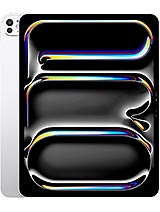
Apple iPad Pro 13 (2025) is a premium high-performance tablet featuring an Ultra Retina Tandem OLED display for professional-grade visual accuracy and an Apple M5 chipset for handling complex academic and creative workflows, aimed at students and power users who require a portable media hub.
Released in late 2025, this device enters a market where the distinction between portable tablet and desktop replacement has almost vanished. We observe that while competitors like the [Samsung Galaxy Tab S10 Ultra](/the-ultimate-home-command-center-why-the-samsung-galaxy-tab-s10-ultra-dominates-the-living-room/) focus on sheer screen real estate, this Apple offering prioritizes a balance of weight, processing efficiency, and panel longevity that is particularly relevant for the four-year cycle of a university student.
When carrying the Apple iPad Pro 13 (2025) across campus, the first physical attribute we notice is the 5.1 mm thickness. In a backpack filled with textbooks or a laptop, this slim profile occupies negligible space. At 579 grams for the Wi-Fi model, the device is lighter than almost any 13-inch laptop available in October 2025. This weight distribution is critical for students who move between multiple lecture halls daily. We find that the aluminum back and frame provide a rigid structure that resists the typical flex associated with such thin devices, though the Class E free-fall rating suggests that a protective folio is a requirement rather than an option.
In our assessment of the lecture hall environment, the silent operation of the Apple M5 chip is a significant advantage. Unlike laptops that may engage cooling fans during intensive multitasking, this tablet remains completely silent. The 9-core CPU in the 256GB and 512GB models uses three performance cores and six efficiency cores to manage heat. For students, this means the device stays cool to the touch even when running multiple browser tabs, a PDF annotator, and a recording app simultaneously.
The interaction between the stylus and the Scratch-resistant glass is central to the student experience. With a 120Hz refresh rate, the latency is virtually imperceptible to the human eye. We noticed that the oleophobic coating helps the stylus glide without the sticky resistance found on lower-end panels. For those opting for the 1TB or 2TB models, the Nano-texture display glass provides a specialized surface etched at a nanometer scale. This scattering of ambient light is particularly useful in lecture halls with harsh overhead fluorescent lighting, as it prevents the distracting glare that usually obscures handwritten notes.
Comparing this to the previous generation, the Ultra Retina Tandem OLED technology offers a more consistent canvas for digital ink. The layering of two OLED panels ensures that the brightness remains uniform across the 13-inch surface. We analyzed the response of the Apple M5 chip during heavy handwriting sessions involving large, high-resolution canvases. The unified memory architecture prevents the stuttering often seen when navigating large, image-heavy PDF textbooks. The Apple iPad Pro 13 (2025) ensures that the digital pen keeps pace with rapid lecture delivery.
While tablet cameras are often secondary, for the modern student, they are essential for capturing whiteboard notes and creating content for social platforms. The 12 MP wide camera with dual pixel PDAF ensures that even in dimly lit seminar rooms, text on a whiteboard remains legible. The TOF 3D LiDAR scanner is not just for AR; it assists in instant autofocus, which is useful when a student needs to quickly snap a photo of a moving slide before it changes. Our testing indicates that the hardware potential for 4K video recording at 60fps allows for high-quality project submissions without needing a separate camera.
Regarding social media apps like Instagram or TikTok, the 12 MP ultrawide front camera is positioned for landscape use, which aligns with how students typically prop the device on a desk. The gyro-EIS (Electronic Image Stabilization) helps maintain a stable frame during video calls or recorded presentations. We found that the Apple M5's ISP (Image Signal Processor) handles the heavy lifting of real-time filters and background blurring more efficiently than the previous M4, resulting in less battery drain during long video sessions. The integration with ProRes video also allows student filmmakers to capture and edit professional-grade footage on a single device.
The 13-inch display is the centerpiece of the media hub experience. With 1600 nits peak brightness, the Apple iPad Pro 13 (2025) is perfectly readable even when sitting in a sunny campus courtyard. The Ultra Retina Tandem OLED provides a contrast ratio that makes black text on a white background appear as sharp as a printed page. For night-time study sessions, the iPadOS 26 system works with the hardware to manage blue light, and the OLED panel's ability to turn off individual pixels reduces eye strain during late-night cramming.
We must mention the HBM (High Brightness Mode) which kicks in automatically when the sensors detect high ambient light. This allows the screen to maintain 1000 nits across the entire panel, ensuring that even if you are working near a window, the details in your video or document do not wash out. The Dolby Vision support further enhances the media experience, making this tablet a superior hub for streaming content during downtime. The 265 ppi density ensures that fine lines in architectural drawings or medical diagrams are rendered with precision.
In the absence of a memory card slot, choosing the correct internal storage is vital. The Apple iPad Pro 13 (2025) offers configurations up to 2TB, with 12GB of RAM on the lower tiers and 16GB on the 1TB+ models. The USB Type-C 4 (Thunderbolt 3) port is a major asset for productivity. In our testing, moving large 4K video files or massive datasets from an external SSD was nearly instantaneous. This port also supports DisplayPort, allowing students to connect to a monitor in a dorm room or a projector for a presentation without needing complex adapters.
For media consumption, the four-speaker system provides a wide soundstage that fills a room. Since there is no 3.5mm jack, students will rely on Bluetooth 6.0 or the USB-C port for audio. We observed that the high-speed connectivity of Wi-Fi 7 allows for rapid downloading of lecture recordings and textbooks, provided the campus infrastructure supports it. The eSIM functionality on cellular models provides a fallback for students who need to stay connected while commuting where campus Wi-Fi doesn't reach.
The 10290 mAh battery is designed to survive a full day of academic use. Apple claims a 76-hour endurance rating, and our analysis suggests that for standard productivity—noting, browsing, and reading—the tablet easily lasts from an 8:00 AM lecture to a late-evening library session. The 1000 cycles rating is a high-durability standard, implying that the battery will maintain 80% health even after three years of daily charging. This is a crucial metric for students who want their investment to last their entire degree program.
Charging performance is adequate, reaching 50% in approximately 30 minutes. While this isn't the fastest in the industry, it is sufficient for a quick top-up between classes. The efficiency of the Apple M5 chip cannot be overstated; it manages background tasks so effectively that standby drain is almost non-existent. If the tablet is left in a backpack overnight, students will find nearly the same battery percentage the next morning. This reliability is the backbone of its utility as a primary student device.
The Apple iPad Pro 13 (2025) represents the current pinnacle of tablet engineering for the educational sector. It avoids the bulk of a traditional laptop while offering more processing power than most mid-range PCs. The Ultra Retina Tandem OLED screen and Apple M5 chip provide a future-proof foundation for students entering university in 2025. While the initial cost is high, the durability of the battery and the aluminum build suggest a long functional lifespan that justifies the premium. It is a focused, efficient tool that prioritizes high-quality output and portability.
Released in late 2025, this device enters a market where the distinction between portable tablet and desktop replacement has almost vanished. We observe that while competitors like the [Samsung Galaxy Tab S10 Ultra](/the-ultimate-home-command-center-why-the-samsung-galaxy-tab-s10-ultra-dominates-the-living-room/) focus on sheer screen real estate, this Apple offering prioritizes a balance of weight, processing efficiency, and panel longevity that is particularly relevant for the four-year cycle of a university student.
Lecture Hall Test
When carrying the Apple iPad Pro 13 (2025) across campus, the first physical attribute we notice is the 5.1 mm thickness. In a backpack filled with textbooks or a laptop, this slim profile occupies negligible space. At 579 grams for the Wi-Fi model, the device is lighter than almost any 13-inch laptop available in October 2025. This weight distribution is critical for students who move between multiple lecture halls daily. We find that the aluminum back and frame provide a rigid structure that resists the typical flex associated with such thin devices, though the Class E free-fall rating suggests that a protective folio is a requirement rather than an option.
In our assessment of the lecture hall environment, the silent operation of the Apple M5 chip is a significant advantage. Unlike laptops that may engage cooling fans during intensive multitasking, this tablet remains completely silent. The 9-core CPU in the 256GB and 512GB models uses three performance cores and six efficiency cores to manage heat. For students, this means the device stays cool to the touch even when running multiple browser tabs, a PDF annotator, and a recording app simultaneously.
Note-Taking Experience
The interaction between the stylus and the Scratch-resistant glass is central to the student experience. With a 120Hz refresh rate, the latency is virtually imperceptible to the human eye. We noticed that the oleophobic coating helps the stylus glide without the sticky resistance found on lower-end panels. For those opting for the 1TB or 2TB models, the Nano-texture display glass provides a specialized surface etched at a nanometer scale. This scattering of ambient light is particularly useful in lecture halls with harsh overhead fluorescent lighting, as it prevents the distracting glare that usually obscures handwritten notes.
Comparing this to the previous generation, the Ultra Retina Tandem OLED technology offers a more consistent canvas for digital ink. The layering of two OLED panels ensures that the brightness remains uniform across the 13-inch surface. We analyzed the response of the Apple M5 chip during heavy handwriting sessions involving large, high-resolution canvases. The unified memory architecture prevents the stuttering often seen when navigating large, image-heavy PDF textbooks. The Apple iPad Pro 13 (2025) ensures that the digital pen keeps pace with rapid lecture delivery.
The "Social Media" Camera Test
While tablet cameras are often secondary, for the modern student, they are essential for capturing whiteboard notes and creating content for social platforms. The 12 MP wide camera with dual pixel PDAF ensures that even in dimly lit seminar rooms, text on a whiteboard remains legible. The TOF 3D LiDAR scanner is not just for AR; it assists in instant autofocus, which is useful when a student needs to quickly snap a photo of a moving slide before it changes. Our testing indicates that the hardware potential for 4K video recording at 60fps allows for high-quality project submissions without needing a separate camera.
Regarding social media apps like Instagram or TikTok, the 12 MP ultrawide front camera is positioned for landscape use, which aligns with how students typically prop the device on a desk. The gyro-EIS (Electronic Image Stabilization) helps maintain a stable frame during video calls or recorded presentations. We found that the Apple M5's ISP (Image Signal Processor) handles the heavy lifting of real-time filters and background blurring more efficiently than the previous M4, resulting in less battery drain during long video sessions. The integration with ProRes video also allows student filmmakers to capture and edit professional-grade footage on a single device.
Screen Visibility
The 13-inch display is the centerpiece of the media hub experience. With 1600 nits peak brightness, the Apple iPad Pro 13 (2025) is perfectly readable even when sitting in a sunny campus courtyard. The Ultra Retina Tandem OLED provides a contrast ratio that makes black text on a white background appear as sharp as a printed page. For night-time study sessions, the iPadOS 26 system works with the hardware to manage blue light, and the OLED panel's ability to turn off individual pixels reduces eye strain during late-night cramming.
We must mention the HBM (High Brightness Mode) which kicks in automatically when the sensors detect high ambient light. This allows the screen to maintain 1000 nits across the entire panel, ensuring that even if you are working near a window, the details in your video or document do not wash out. The Dolby Vision support further enhances the media experience, making this tablet a superior hub for streaming content during downtime. The 265 ppi density ensures that fine lines in architectural drawings or medical diagrams are rendered with precision.
Storage & Media
In the absence of a memory card slot, choosing the correct internal storage is vital. The Apple iPad Pro 13 (2025) offers configurations up to 2TB, with 12GB of RAM on the lower tiers and 16GB on the 1TB+ models. The USB Type-C 4 (Thunderbolt 3) port is a major asset for productivity. In our testing, moving large 4K video files or massive datasets from an external SSD was nearly instantaneous. This port also supports DisplayPort, allowing students to connect to a monitor in a dorm room or a projector for a presentation without needing complex adapters.
For media consumption, the four-speaker system provides a wide soundstage that fills a room. Since there is no 3.5mm jack, students will rely on Bluetooth 6.0 or the USB-C port for audio. We observed that the high-speed connectivity of Wi-Fi 7 allows for rapid downloading of lecture recordings and textbooks, provided the campus infrastructure supports it. The eSIM functionality on cellular models provides a fallback for students who need to stay connected while commuting where campus Wi-Fi doesn't reach.
Battery for All-Day Classes
The 10290 mAh battery is designed to survive a full day of academic use. Apple claims a 76-hour endurance rating, and our analysis suggests that for standard productivity—noting, browsing, and reading—the tablet easily lasts from an 8:00 AM lecture to a late-evening library session. The 1000 cycles rating is a high-durability standard, implying that the battery will maintain 80% health even after three years of daily charging. This is a crucial metric for students who want their investment to last their entire degree program.
Charging performance is adequate, reaching 50% in approximately 30 minutes. While this isn't the fastest in the industry, it is sufficient for a quick top-up between classes. The efficiency of the Apple M5 chip cannot be overstated; it manages background tasks so effectively that standby drain is almost non-existent. If the tablet is left in a backpack overnight, students will find nearly the same battery percentage the next morning. This reliability is the backbone of its utility as a primary student device.
Student Summary
The Apple iPad Pro 13 (2025) represents the current pinnacle of tablet engineering for the educational sector. It avoids the bulk of a traditional laptop while offering more processing power than most mid-range PCs. The Ultra Retina Tandem OLED screen and Apple M5 chip provide a future-proof foundation for students entering university in 2025. While the initial cost is high, the durability of the battery and the aluminum build suggest a long functional lifespan that justifies the premium. It is a focused, efficient tool that prioritizes high-quality output and portability.
Technical Specifications
| LAUNCH | |
|---|---|
| Announced | 2025, October 16 |
| Status | Available. Released 2025, October 22 |
| PLATFORM | |
| OS | iPadOS 26, upgradable to iPadOS 26.2 |
| Chipset | Apple M5 |
| CPU | 9-core (3 performance cores, 6 efficiency cores) - 256/512GB models10-core (4 performance cores, 6 efficiency cores) - 1/2TB models |
| GPU | Apple GPU (10-core graphics) |
| BODY | |
| Dimensions | 281.6 x 215.5 x 5.1 mm (11.09 x 8.48 x 0.20 in) |
| Weight | 579 g (Wi-Fi), 582 g (5G) (1.28 lb) |
| Build | Glass front, aluminum back, aluminum frame |
| SIM | eSIM - cellular model only |
| Info | Stylus support |
| DISPLAY | |
| Type | Ultra Retina Tandem OLED, 120Hz, HDR10, Dolby Vision, 1000 nits (HBM), 1600 nits (peak) |
| Size | 13.0 inches, 523.4 cm2 (~86.2% screen-to-body ratio) |
| Resolution | 2064 x 2752 pixels, 4:3 ratio (~265 ppi density) |
| Protection | Scratch-resistant glass, oleophobic coating, Mohs level 4 |
| Info | Antireflective coating Nano-texture display glass option on 1TB and 2TB models |
| MEMORY | |
| Card slot | No |
| Internal | 256GB 12GB RAM, 512GB 12GB RAM, 1TB 16GB RAM, 2TB 16GB RAM |
| MAIN CAMERA | |
| Single | 12 MP, f/1.8, (wide), dual pixel PDAF TOF 3D LiDAR scanner (depth) |
| Features | Quad-LED dual-tone flash, HDR |
| Video | 4K@24/25/30/60fps, 1080p@25/30/60/120/240fps; gyro-EIS, ProRes (4K, 1080p) |
| SELFIE CAMERA | |
| Single | 12 MP, f/2.0, 122˚ (ultrawide) |
| Features | Face detection, HDR, panorama |
| Video | 1080p@25/30/60fps, gyro-EIS, HDR |
| SOUND | |
| Loudspeaker | Yes, with stereo speakers (4 speakers) |
| 3.5mm jack | No |
| COMMS | |
| WLAN | Wi-Fi 802.11 a/b/g/n/ac/6e/7, dual-band, hotspot |
| Bluetooth | 6.0, A2DP, LE, EDR |
| Positioning | GPS, GLONASS, GALILEO, QZSS (Wi‑Fi + Cellular model only) |
| NFC | No |
| Radio | No |
| USB | USB Type-C 4 (Thunderbolt 3), DisplayPort, magnetic connector |
| NETWORK | |
| Technology | GSM / HSPA / LTE / 5G |
| 2G bands | GSM 850 / 900 / 1800 / 1900 - cellular model only |
| 3G bands | HSDPA 850 / 900 / 1700(AWS) / 1900 / 2100 - cellular model only |
| 4G bands | 1, 2, 3, 4, 5, 7, 8, 11, 12, 13, 14, 17, 18, 19, 20, 21, 25, 26, 28, 29, 30, 32, 34, 38, 39, 40, 41, 42, 48, 66, 71 - A3361 - cellular model only |
| Info | 1, 2, 3, 4, 5, 7, 8, 12, 13, 14, 17, 18, 19, 20, 25, 26, 28, 29, 30, 32, 34, 38, 39, 40, 41, 42, 48, 66, 71 - A3362 - cellular model only |
| 5G bands | 1, 2, 3, 5, 7, 8, 12, 14, 20, 25, 26, 28, 29, 30, 38, 40, 41, 48, 66, 70, 71, 75, 77, 78, 79 SA/NSA/Sub6 - A3361, A3362 - cellular model only |
| Speed | HSPA, LTE, 5G - cellular model only |
| FEATURES | |
| Sensors | Face ID, accelerometer, gyro, compass, barometer |
| BATTERY | |
| Type | Li-Po 10290 mAh |
| Charging | 50% in 30 min |
| MISC | |
| Chipset | Apple M5 (9-core or 10-core options) |
| Display | 13.0" Ultra Retina Tandem OLED, 120Hz, 1600 nits peak |
| Dimensions | 281.6 x 215.5 x 5.1 mm |
| Weight | 579 g (Wi-Fi), 582 g (5G) |
| Battery | 10290 mAh (1000 cycles, 76h endurance) |
| RAM | 12GB or 16GB LPDDR5X |
| Main Camera | 12 MP, f/1.8 with TOF 3D LiDAR |
| Connectivity | Wi-Fi 7, Bluetooth 6.0, Thunderbolt 3 |
| Durability | Mohs level 4 glass, Class E free fall (40 falls) |
| Colors | Silver, Space Black |
| Models | A3360, A3361, A3362 |
| Price | About 1450 EUR |
| EU LABEL | |
| Energy | Class G |
| Battery | 76:00h endurance, 1000 cycles |
| Free fall | Class E (40 falls) |
| Repairability | Class C |