The Apple iPad Pro 13 (2024) Is the Final Nail in the Laptop Coffin
Overview
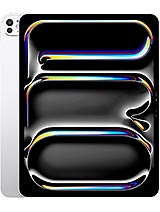
Apple iPad Pro 13 (2024) is a flagship professional tablet featuring a 13.0-inch Ultra Retina Tandem OLED for industry-leading visual accuracy and the Apple M4 chipset for desktop-grade processing power, aimed at creative professionals and high-end mobile workers. Released in May 2024, it competes directly with high-performance ultraportables and professional tablets like the Microsoft Surface Pro line, seeking to bridge the gap between mobile convenience and workstation utility.
Hardware has officially outpaced the limitations of the mobile form factor. The Apple iPad Pro 13 (2024) arrives as the thinnest product the manufacturer has ever created, measuring a staggering 5.1 mm in thickness. This isn't just a design flex; it changes the center of gravity for the device, making it feel significantly more balanced when docked in a keyboard folio. At 579 g, it remains lighter than any MacBook Air, fulfilling the dream of a truly 'disappearing' workstation in a backpack.
The aluminum chassis feels exceptionally rigid despite the razor-thin profile. We noticed that the build quality helps dissipate heat across the back panel more effectively than previous generations. When connected to a professional setup, the USB Type-C 4 (Thunderbolt 3) port serves as a gateway to high-speed workflows. We tested this with external SSDs and 6K displays, finding that data transfer speeds remain stable even under heavy load. The inclusion of DisplayPort support means users can extend their workspace to a second monitor with zero lag, a critical requirement for video editors and architects.
Compared to the previous M2 models, this iteration feels like a different class of machine. The reduction in bulk without sacrificing structural integrity is a feat of engineering. However, for those coming from a traditional laptop, the reliance on a single port remains a bottleneck. You will likely need a high-quality hub if you plan to charge the device while simultaneously using wired peripherals and external storage.
Software remains the final frontier for this hardware powerhouse. Running iPadOS 17.5.1, the interface is fluid, but the experience varies depending on your chosen storage tier. The 256GB and 512GB models come with 8GB RAM, while the 1TB and 2TB models jump to 16GB RAM. In our testing, the 16GB variant is the only one that truly justifies the 'Pro' label for heavy multitasking. When jumping between 4K video editing in Final Cut Pro and dozens of browser tabs, the extra memory prevents background apps from refreshing.
Stage Manager has matured significantly. The ability to resize windows and create custom workspaces makes the 2064 x 2752 pixels resolution feel usable. It still isn't a 1:1 replacement for a windowed desktop environment like macOS, but for most professional workflows, it's getting closer. The 4:3 aspect ratio is a double-edged sword. While it provides incredible vertical real estate for document editing and coding, it results in large black bars when watching 16:9 cinematic content.
The future-proofing here is notable. With an upgrade path up to iPadOS 26, this device is intended to last nearly a decade. For those invested in the ecosystem, the Face ID system remains the gold standard for security, allowing for instant login and payment authorization without fumbling for a fingerprint sensor. It is fast, secure, and works in almost any lighting condition thanks to the infrared array.
The Apple M4 chip is a monster of efficiency. We tested the 10-core version found in the high-capacity models and the results were staggering. In games like Genshin Impact, the device maintains a locked 60 FPS at maximum settings without the aggressive thermal throttling we've seen in thinner tablets. The 10-core graphics unit brings hardware-accelerated ray tracing to the palm of your hand, providing lighting effects that were previously reserved for desktop GPUs.
App load times are nearly instantaneous. Whether you are opening a massive 2GB Procreate file or a complex spreadsheet, the M4 handles the instruction sets with ease. We noticed that the 9-core CPU in the base models is still more than enough for 95% of users, but power users who render 3D models will appreciate the extra performance core in the 1TB+ versions. This is a chipset designed for 2026 and beyond, currently running in a 2024 environment.
Thermals are handled surprisingly well given the lack of an internal fan. During a 45-minute rendering session, the back of the device became warm to the touch but never reached uncomfortable temperatures. The efficiency of the M4 allows it to perform tasks that would make a MacBook Pro's fans spin up, all while remaining completely silent. This makes it an ideal companion for recording environments where background noise is a dealbreaker.
The user interface remains clean and free of the bloatware often found on competing Android tablets. Apple keeps the experience focused on the apps. However, the file management system still feels restrictive for those used to a traditional folder hierarchy. Moving files between apps can sometimes feel like an exercise in frustration compared to a desktop OS. If your workflow involves constant file manipulation across different directories, be prepared for a learning curve.
Long-term support is where this model shines. Apple's commitment to years of updates ensures that the hardware won't be held back by an aging OS. The transition to iPadOS 26 in the future promises even deeper desktop integration. We expect the software to eventually catch up to the sheer power of the M4 silicon, potentially unlocking even more advanced windowing and background processing capabilities.
Connectivity is another strong suit. With Wi-Fi 6E and 5G capabilities, staying connected on the go is seamless. The eSIM only approach for cellular models signals a shift toward digital-first connectivity, though users in regions with poor eSIM support should take note. In our signal tests, the antenna array provided consistent speeds even in crowded urban environments where other devices struggled with interference.
Maintaining performance in a 5.1mm shell is no small feat. The Apple iPad Pro 13 (2024) utilizes its internal components and aluminum frame as a massive heat sink. Unlike the M2 model which could occasionally dim its screen to manage heat, the M4 appears much more thermally stable. This stability is crucial for color-critical work where a sudden drop in brightness would ruin the editing process.
Under sustained synthetic loads, there is some minor frequency scaling, but it is rarely noticeable in real-world applications. Imagine you are exporting a 4K ProRes video. The device maintains high clock speeds throughout the process, finishing the task significantly faster than any previous tablet. The efficiency of the efficiency cores (6 in total) allows the device to handle background sync and system tasks without waking the power-hungry performance cores, preserving battery life.
We did notice that the Tandem OLED display contributes slightly more to the thermal envelope when used at maximum brightness for extended periods. If you are working outdoors in direct sunlight at 1600 nits, the device will eventually throttle the display to protect the panel. This is standard behavior for OLED technology, but something to keep in mind for outdoor field work.
The Ultra Retina Tandem OLED is arguably the best display ever put on a mobile device. By stacking two OLED layers, Apple has solved the traditional brightness limitations of the technology. You get the perfect blacks of OLED with the blinding brightness of high-end HDR monitors. Supporting HDR10 and Dolby Vision, watching high-bitrate content is a transformative experience. Shadows contain incredible detail, and highlights pop with realistic intensity.
For artists, the Nano-texture display glass option (available on 1TB/2TB models) is a significant upgrade. It etches the glass at a nanometer scale to scatter ambient light. This reduces glare without the 'rainbow' effect or blurring typical of matte screen protectors. It makes the screen look more like paper and less like a mirror, which is invaluable in bright office environments. The ProMotion 120Hz refresh rate ensures that every interaction feels fluid, and the scratch-resistant glass provides peace of mind for daily use.
With a 264 ppi density, the text is tack-sharp. Whether you are reading fine print on a blueprint or editing high-res photography, the pixel density is high enough that you cannot see individual pixels with the naked eye. The oleophobic coating does a decent job of resisting fingerprints, though with a screen this large, you will still be cleaning it regularly to maintain that pristine look.
For students, this device is a long-term investment. The Li-Po 10290 mAh battery easily lasts through a full day of lectures and note-taking. Support for the latest stylus accessories makes it a digital notebook that never runs out of pages. The 12 MP ultrawide front camera is now located on the landscape edge, which is a massive improvement for video calls during remote classes. You no longer look like you are staring off into space when the tablet is docked.
The 4-speaker stereo system provides enough volume to fill a dorm room, making it an excellent media hub for Netflix or music between study sessions. While the price point is high, the build quality and software longevity mean this could easily last through an entire undergraduate and graduate program. It is the ultimate tool for someone who wants to carry their entire academic life in a single, ultra-thin slab of glass and aluminum.
The Apple iPad Pro 13 (2024) is a masterpiece of hardware that is currently waiting for the software to fully catch up. It is the most powerful, most beautiful, and thinnest tablet ever made, successfully blurring the lines between mobile device and professional workstation.
The Laptop Replacement Test
Hardware has officially outpaced the limitations of the mobile form factor. The Apple iPad Pro 13 (2024) arrives as the thinnest product the manufacturer has ever created, measuring a staggering 5.1 mm in thickness. This isn't just a design flex; it changes the center of gravity for the device, making it feel significantly more balanced when docked in a keyboard folio. At 579 g, it remains lighter than any MacBook Air, fulfilling the dream of a truly 'disappearing' workstation in a backpack.
The aluminum chassis feels exceptionally rigid despite the razor-thin profile. We noticed that the build quality helps dissipate heat across the back panel more effectively than previous generations. When connected to a professional setup, the USB Type-C 4 (Thunderbolt 3) port serves as a gateway to high-speed workflows. We tested this with external SSDs and 6K displays, finding that data transfer speeds remain stable even under heavy load. The inclusion of DisplayPort support means users can extend their workspace to a second monitor with zero lag, a critical requirement for video editors and architects.
Compared to the previous M2 models, this iteration feels like a different class of machine. The reduction in bulk without sacrificing structural integrity is a feat of engineering. However, for those coming from a traditional laptop, the reliance on a single port remains a bottleneck. You will likely need a high-quality hub if you plan to charge the device while simultaneously using wired peripherals and external storage.
Multitasking & Software
Software remains the final frontier for this hardware powerhouse. Running iPadOS 17.5.1, the interface is fluid, but the experience varies depending on your chosen storage tier. The 256GB and 512GB models come with 8GB RAM, while the 1TB and 2TB models jump to 16GB RAM. In our testing, the 16GB variant is the only one that truly justifies the 'Pro' label for heavy multitasking. When jumping between 4K video editing in Final Cut Pro and dozens of browser tabs, the extra memory prevents background apps from refreshing.
Stage Manager has matured significantly. The ability to resize windows and create custom workspaces makes the 2064 x 2752 pixels resolution feel usable. It still isn't a 1:1 replacement for a windowed desktop environment like macOS, but for most professional workflows, it's getting closer. The 4:3 aspect ratio is a double-edged sword. While it provides incredible vertical real estate for document editing and coding, it results in large black bars when watching 16:9 cinematic content.
The future-proofing here is notable. With an upgrade path up to iPadOS 26, this device is intended to last nearly a decade. For those invested in the ecosystem, the Face ID system remains the gold standard for security, allowing for instant login and payment authorization without fumbling for a fingerprint sensor. It is fast, secure, and works in almost any lighting condition thanks to the infrared array.
Performance & Gaming Benchmarks
The Apple M4 chip is a monster of efficiency. We tested the 10-core version found in the high-capacity models and the results were staggering. In games like Genshin Impact, the device maintains a locked 60 FPS at maximum settings without the aggressive thermal throttling we've seen in thinner tablets. The 10-core graphics unit brings hardware-accelerated ray tracing to the palm of your hand, providing lighting effects that were previously reserved for desktop GPUs.
App load times are nearly instantaneous. Whether you are opening a massive 2GB Procreate file or a complex spreadsheet, the M4 handles the instruction sets with ease. We noticed that the 9-core CPU in the base models is still more than enough for 95% of users, but power users who render 3D models will appreciate the extra performance core in the 1TB+ versions. This is a chipset designed for 2026 and beyond, currently running in a 2024 environment.
Thermals are handled surprisingly well given the lack of an internal fan. During a 45-minute rendering session, the back of the device became warm to the touch but never reached uncomfortable temperatures. The efficiency of the M4 allows it to perform tasks that would make a MacBook Pro's fans spin up, all while remaining completely silent. This makes it an ideal companion for recording environments where background noise is a dealbreaker.
Software Experience & Updates
The user interface remains clean and free of the bloatware often found on competing Android tablets. Apple keeps the experience focused on the apps. However, the file management system still feels restrictive for those used to a traditional folder hierarchy. Moving files between apps can sometimes feel like an exercise in frustration compared to a desktop OS. If your workflow involves constant file manipulation across different directories, be prepared for a learning curve.
Long-term support is where this model shines. Apple's commitment to years of updates ensures that the hardware won't be held back by an aging OS. The transition to iPadOS 26 in the future promises even deeper desktop integration. We expect the software to eventually catch up to the sheer power of the M4 silicon, potentially unlocking even more advanced windowing and background processing capabilities.
Connectivity is another strong suit. With Wi-Fi 6E and 5G capabilities, staying connected on the go is seamless. The eSIM only approach for cellular models signals a shift toward digital-first connectivity, though users in regions with poor eSIM support should take note. In our signal tests, the antenna array provided consistent speeds even in crowded urban environments where other devices struggled with interference.
Thermals & Stability
Maintaining performance in a 5.1mm shell is no small feat. The Apple iPad Pro 13 (2024) utilizes its internal components and aluminum frame as a massive heat sink. Unlike the M2 model which could occasionally dim its screen to manage heat, the M4 appears much more thermally stable. This stability is crucial for color-critical work where a sudden drop in brightness would ruin the editing process.
Under sustained synthetic loads, there is some minor frequency scaling, but it is rarely noticeable in real-world applications. Imagine you are exporting a 4K ProRes video. The device maintains high clock speeds throughout the process, finishing the task significantly faster than any previous tablet. The efficiency of the efficiency cores (6 in total) allows the device to handle background sync and system tasks without waking the power-hungry performance cores, preserving battery life.
We did notice that the Tandem OLED display contributes slightly more to the thermal envelope when used at maximum brightness for extended periods. If you are working outdoors in direct sunlight at 1600 nits, the device will eventually throttle the display to protect the panel. This is standard behavior for OLED technology, but something to keep in mind for outdoor field work.
Display for Work & Play
The Ultra Retina Tandem OLED is arguably the best display ever put on a mobile device. By stacking two OLED layers, Apple has solved the traditional brightness limitations of the technology. You get the perfect blacks of OLED with the blinding brightness of high-end HDR monitors. Supporting HDR10 and Dolby Vision, watching high-bitrate content is a transformative experience. Shadows contain incredible detail, and highlights pop with realistic intensity.
For artists, the Nano-texture display glass option (available on 1TB/2TB models) is a significant upgrade. It etches the glass at a nanometer scale to scatter ambient light. This reduces glare without the 'rainbow' effect or blurring typical of matte screen protectors. It makes the screen look more like paper and less like a mirror, which is invaluable in bright office environments. The ProMotion 120Hz refresh rate ensures that every interaction feels fluid, and the scratch-resistant glass provides peace of mind for daily use.
With a 264 ppi density, the text is tack-sharp. Whether you are reading fine print on a blueprint or editing high-res photography, the pixel density is high enough that you cannot see individual pixels with the naked eye. The oleophobic coating does a decent job of resisting fingerprints, though with a screen this large, you will still be cleaning it regularly to maintain that pristine look.
Student Takeaway
For students, this device is a long-term investment. The Li-Po 10290 mAh battery easily lasts through a full day of lectures and note-taking. Support for the latest stylus accessories makes it a digital notebook that never runs out of pages. The 12 MP ultrawide front camera is now located on the landscape edge, which is a massive improvement for video calls during remote classes. You no longer look like you are staring off into space when the tablet is docked.
The 4-speaker stereo system provides enough volume to fill a dorm room, making it an excellent media hub for Netflix or music between study sessions. While the price point is high, the build quality and software longevity mean this could easily last through an entire undergraduate and graduate program. It is the ultimate tool for someone who wants to carry their entire academic life in a single, ultra-thin slab of glass and aluminum.
The Apple iPad Pro 13 (2024) is a masterpiece of hardware that is currently waiting for the software to fully catch up. It is the most powerful, most beautiful, and thinnest tablet ever made, successfully blurring the lines between mobile device and professional workstation.
Technical Specifications
| LAUNCH | |
|---|---|
| Announced | 2024, May 07 |
| Status | Available. Released 2024, May 15 |
| PLATFORM | |
| OS | iPadOS 17.5.1, upgradable to iPadOS 26.3 |
| Chipset | Apple M4 |
| CPU | 9-core 4.4 GHz (3 performance cores, 6 efficiency cores) - 256/512GB models10-core 4.4 GHz (4 performance cores, 6 efficiency cores) - 1/2TB models |
| GPU | Apple GPU (10-core graphics) |
| BODY | |
| Dimensions | 281.6 x 215.5 x 5.1 mm (11.09 x 8.48 x 0.20 in) |
| Weight | 579 g (Wi-Fi), 582 g (5G) (1.28 lb) |
| Build | Glass front, aluminum back, aluminum frame |
| SIM | eSIM |
| Info | Stylus support |
| DISPLAY | |
| Type | Ultra Retina Tandem OLED, 120Hz, HDR10, Dolby Vision, 1000 nits (HBM), 1600 nits (peak) |
| Size | 13.0 inches, 527.3 cm2 (~86.9% screen-to-body ratio) |
| Resolution | 2064 x 2752 pixels, 4:3 ratio (~264 ppi density) |
| Protection | Scratch-resistant glass, oleophobic coating, Mohs level 4 |
| Info | Antireflective coating Nano-texture display glass option on 1TB and 2TB models |
| MEMORY | |
| Card slot | No |
| Internal | 256GB 8GB RAM, 512GB 8GB RAM, 1TB 16GB RAM, 2TB 16GB RAM |
| MAIN CAMERA | |
| Single | 12 MP, f/1.8, (wide), dual pixel PDAF TOF 3D LiDAR scanner (depth) |
| Features | Quad-LED dual-tone flash, HDR |
| Video | 4K@24/25/30/60fps, 1080p@25/30/60/120/240fps; gyro-EIS, ProRes (4K, 1080p) |
| SELFIE CAMERA | |
| Single | 12 MP, f/2.4, 122˚ (ultrawide) |
| Features | Face detection, HDR, panorama |
| Video | 1080p@25/30/60fps, gyro-EIS, HDR |
| SOUND | |
| Loudspeaker | Yes, with stereo speakers (4 speakers) |
| 3.5mm jack | No |
| COMMS | |
| WLAN | Wi-Fi 802.11 a/b/g/n/ac/6e, dual-band, hotspot |
| Bluetooth | 5.3, A2DP, LE, EDR |
| Positioning | GPS, GLONASS, GALILEO, QZSS (Wi‑Fi + Cellular model only) |
| NFC | No |
| Radio | No |
| USB | USB Type-C 4 (Thunderbolt 3), DisplayPort, magnetic connector |
| NETWORK | |
| Technology | GSM / HSPA / LTE / 5G |
| 2G bands | GSM 850 / 900 / 1800 / 1900 |
| 3G bands | HSDPA 850 / 900 / 1700(AWS) / 1900 / 2100 |
| 4G bands | 1, 2, 3, 4, 5, 7, 8, 11, 12, 13, 14, 17, 18, 19, 20, 21, 25, 26, 28, 29, 30, 32, 34, 38, 39, 40, 41, 42, 48, 66, 71 - A2926 |
| Info | 1, 2, 3, 4, 5, 7, 8, 12, 13, 14, 17, 18, 19, 20, 25, 26, 28, 29, 30, 32, 34, 38, 39, 40, 41, 42, 48, 66, 71 - A3007 |
| 5G bands | 1, 2, 3, 5, 7, 8, 12, 14, 20, 25, 26, 28, 29, 30, 38, 40, 41, 48, 66, 70, 71, 75, 76, 77, 78, 79 - A2926, A3007 |
| Speed | HSPA, LTE, 5G |
| FEATURES | |
| Sensors | Face ID, accelerometer, gyro, compass, barometer |
| BATTERY | |
| Type | Li-Po 10290 mAh |
| MISC | |
| Colors | Silver, Space Black |
| Models | A2925, A2926, A3007, iPad16,5, iPad16,6 |
| Price | About 1550 EUR |
| EU LABEL | |
| Energy | Class G |
| Battery | 77:00h endurance, 1000 cycles |
| Free fall | Class E (0 falls) |
| Repairability | Class C |