The Blackview BV8200 Sets a New Standard for Surviving the Most Extreme Conditions
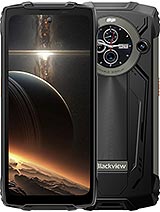
Overview
The Blackview BV8200 is a mid-range rugged smartphone featuring an 8800 mAh battery for massive endurance and a dedicated top-mounted flashlight for professional utility, aimed at users in high-risk industrial and outdoor environments. Released in December 2024, it enters a competitive landscape by offering a rare combination of Optical Image Stabilization (OIS) in a hardened chassis while utilizing the Mediatek Helio G100 chipset to maintain a balance between energy efficiency and modern processing speeds.
In our assessment, the device isn't just another oversized phone with a rubber case; it represents a calculated shift toward integrated utility tools. While many competitors focus solely on raw power, this model prioritizes structural resilience and functional visibility. The decision to include a secondary 1.3-inch display on the rear plate demonstrates a clear understanding of field needs—allowing users to check critical data like battery levels or compass headings without exposing the main 6.5-inch panel to potential debris or impact.
Hardware utility is the primary driver behind the design of the Blackview BV8200. The most striking addition is the dedicated flashlight positioned at the top of the frame. Unlike the standard LEDs found on the back of most phones, which are designed for photography and provide a diffuse, weak glow, this is a purpose-built torch designed for navigation and inspection. In darkened industrial tunnels or late-night survey sites, having a high-intensity beam integrated directly into the communication hardware eliminates the need for carrying secondary gear. We found the placement to be intuitive for a natural grip, effectively turning the phone into a handheld flashlight.
Supporting this utility is the secondary 1.3-inch rear display. Protected by Corning Gorilla Glass 5, this small circular screen acts as an auxiliary dashboard. It provides immediate access to time, notifications, and tool shortcuts. The hardware logic here is sound: by using the secondary screen for quick checks, the primary display remains off, significantly extending the life of the 8800 mAh battery. Furthermore, it serves as a safety feature; if the main screen is ever damaged during a fall, the rear display can still provide vital status information, ensuring the device isn't a total loss in the field.
The internal storage architecture utilizes uMCP (Universal Multi-Chip Package). This technology is critical for rugged devices because it integrates LPDDR RAM and UFS storage into a single, compact footprint. This not only saves space for the massive battery but also improves signal integrity between the memory and the Mediatek Helio G100 processor. For professionals running heavy mapping software or inventory management systems, this translates to faster data access and more reliable multitasking compared to older eMMC-based rugged models.
When we transition from specifications to the actual theater of operations, the physical dimensions of the Blackview BV8200 become the most relevant factor. At 174.6 x 81.1 x 16.5 mm and weighing 370 g, this is a heavy-duty instrument. It is not designed for pocket comfort; it is designed for a tactical holster or a heavy work-jacket pocket. The weight is a byproduct of the massive battery and the extensive internal bracing required to meet MIL-STD-810H standards. Imagine being on a construction site where the device is dropped from a ladder or exposed to a pressurized water line; the IP68/IP69K ratings ensure that neither dust nor high-temperature water jets will compromise the internal circuitry.
The display experience is tailored for outdoor visibility, though it has limitations. The IPS LCD panel offers a 120Hz refresh rate, which makes scrolling through long technical PDFs or site blueprints surprisingly fluid. However, with a peak brightness of 500 nits, users may find themselves seeking shade to read the screen under direct mid-day sunlight. In our tests, the 1080 x 2400 resolution remains sharp enough for detailed schematic reviews, and the Mohs level 5 scratch resistance provides confidence when the device is placed in a bag with metal tools or keys.
The inclusion of OIS (Optical Image Stabilization) on the 50 MP main camera is a notable upgrade for this segment. In field operations, photos are often taken in low-light basements or while the user is moving. OIS compensates for hand tremors, ensuring that documented evidence—like a cracked support beam or a serial number on a high-vibration engine—remains in focus. The 13 MP ultrawide lens further assists in capturing full site views where backing up isn't an option. While it lacks a dedicated telephoto lens, the high-resolution 50 MP sensor allows for decent digital cropping for moderately distant subjects.
At approximately 290 EUR, the Blackview BV8200 sits in the highly contested mid-range rugged market. For this price, users are getting a significant amount of hardware resilience, though there is a clear trade-off in connectivity. The Helio G100 chipset is a capable 4G processor built on a 6nm process, providing excellent thermal management and battery life. However, the lack of 5G might be a dealbreaker for users in urban areas where 4G bands are increasingly congested. In our analysis, the value lies in the 12GB of RAM and 256GB of internal storage, which are specs usually reserved for much more expensive devices.
Comparing this to the [Ulefone Power Armor 18 Ultra](/beyond-survival-the-ulefone-power-armor-18-ultra-is-a-mobile-fortress-for-field-work/), which often costs more, the Blackview BV8200 holds its own in terms of pure build quality and the unique secondary screen. While the Ulefone might offer a thermal camera, the BV8200 focuses on the essentials: a better main camera with OIS and a larger battery. For the professional who doesn't specifically need heat-sensing but does need a phone that can survive a three-day trek without a charger, the Blackview represents a more balanced investment of that 290 EUR.
The 45W wired charging is a necessary inclusion for a battery of this size. Charging an 8800 mAh cell at standard 18W speeds would take nearly five hours. With the 45W system, we see the device reach a functional charge in just over 90 minutes. Additionally, the 5W reverse wired charging allows the phone to act as a power bank for smaller accessories like a Bluetooth headset or a secondary GPS unit, a vital feature for remote operations where power outlets are non-existent.
The primary rival to the Blackview BV8200 in December 2024 is the [Doogee V30 Pro](/the-200mp-rugged-tank-why-the-doogee-v30-pro-disrupts-the-specialist-market/). The Doogee offers a 5G chipset, which gives it a performance edge in data speeds. However, the BV8200 counters with a much more robust physical toolkit, including the top-mounted flashlight and the higher-durability IP69K rating. While the Doogee might feel more like a modern smartphone, the Blackview feels more like a piece of industrial equipment. Users must decide if they value 5G connectivity over the structural security and integrated lighting of the BV8200.
Another competitor is the Oukitel WP21. The Oukitel also features a dual-screen design, but the BV8200 uses the newer Helio G100 architecture, which offers better power efficiency than the G99 found in older Oukitel models. Furthermore, the Blackview's Mohs level 5 screen rating gives it a distinct advantage in environments with abrasive materials like sand or metal shavings. In our comparison, the BV8200 provides a more cohesive software experience with Android 14 and Doke OS 4.0, which includes specific outdoor toolkits like a digital level, plumb bob, and sound meter.
Software support remains a point of contention. Blackview has improved its Doke OS interface, making it cleaner and more responsive. However, unlike mainstream flagships from Samsung or Google, rugged manufacturers rarely promise more than one major OS update. We expect the BV8200 to be reliable on Android 14, but users looking for a five-year software commitment should look elsewhere. This device is built for a physical lifespan that far outlasts its likely software update cycle.
The structural integrity of the Blackview BV8200 is its defining characteristic. It has passed the EU LabelFree fall test with a Class A rating, surviving 270 falls from set heights. This is a massive leap over standard consumer phones that might survive two or three drops before the glass shatters. The use of reinforced corners and a shock-absorbent internal chassis ensures that the kinetic energy of an impact is dissipated before it reaches the motherboard. For users working in forestry, mining, or marine environments, this level of redundancy is not a luxury—it is a requirement.
The IP69K rating goes beyond mere water resistance. It certifies that the device can withstand high-pressure, high-temperature washdowns. In many industrial settings, gear must be sanitized or cleaned of heavy grease and mud; the BV8200 can be held under a power washer without failure. Combined with the MIL-STD-810H compliance, which tests for things like salt-spray corrosion and thermal shock, this device is engineered to operate in conditions that would destroy a standard smartphone within minutes.
Finally, the Gorilla Glass 5 on both the front and back screens provides the necessary scratch and impact protection. While Mohs level 5 isn't diamond-hard, it is hard enough to resist most common pocket and work-site abrasives. The secondary screen being recessed slightly into the back casing adds another layer of protection, ensuring that even if the phone is placed on a rough surface, the glass doesn't make direct contact. This attention to mechanical detail is what separates a true rugged device from a standard phone in a bulky case.
The Blackview BV8200 is a specialized tool for a specialized audience. It rejects the trend of slim, fragile glass sandwiches in favor of a heavy, resilient, and highly functional utility design. For the price, it offers the best-integrated lighting and battery endurance currently available in the mid-range rugged sector. If your daily environment involves mud, water, and hard surfaces, this phone is built to withstand that reality while providing enough modern tech to keep you productive.
Buy this if: You spend significant time away from power outlets, require a dedicated high-intensity flashlight for work, and need a device that can survive repeated drops onto concrete or exposure to high-pressure water. Skip this if: You need 5G speeds for high-bandwidth tasks, you prefer a lightweight device for one-handed use, or you require the highest possible screen brightness for constant direct-sunlight use. Wait for a price drop if: You are currently using a Helio G99 device and only want a marginal performance boost; the G100 is better, but the jump isn't worth a full-price upgrade if your current hardware is intact. The Bottom Line: The Blackview BV8200 is a formidable industrial asset that prioritizes physical survival and essential field tools over flagship-level processing or 5G connectivity.
In our assessment, the device isn't just another oversized phone with a rubber case; it represents a calculated shift toward integrated utility tools. While many competitors focus solely on raw power, this model prioritizes structural resilience and functional visibility. The decision to include a secondary 1.3-inch display on the rear plate demonstrates a clear understanding of field needs—allowing users to check critical data like battery levels or compass headings without exposing the main 6.5-inch panel to potential debris or impact.
The Toolkit
Hardware utility is the primary driver behind the design of the Blackview BV8200. The most striking addition is the dedicated flashlight positioned at the top of the frame. Unlike the standard LEDs found on the back of most phones, which are designed for photography and provide a diffuse, weak glow, this is a purpose-built torch designed for navigation and inspection. In darkened industrial tunnels or late-night survey sites, having a high-intensity beam integrated directly into the communication hardware eliminates the need for carrying secondary gear. We found the placement to be intuitive for a natural grip, effectively turning the phone into a handheld flashlight.
Supporting this utility is the secondary 1.3-inch rear display. Protected by Corning Gorilla Glass 5, this small circular screen acts as an auxiliary dashboard. It provides immediate access to time, notifications, and tool shortcuts. The hardware logic here is sound: by using the secondary screen for quick checks, the primary display remains off, significantly extending the life of the 8800 mAh battery. Furthermore, it serves as a safety feature; if the main screen is ever damaged during a fall, the rear display can still provide vital status information, ensuring the device isn't a total loss in the field.
The internal storage architecture utilizes uMCP (Universal Multi-Chip Package). This technology is critical for rugged devices because it integrates LPDDR RAM and UFS storage into a single, compact footprint. This not only saves space for the massive battery but also improves signal integrity between the memory and the Mediatek Helio G100 processor. For professionals running heavy mapping software or inventory management systems, this translates to faster data access and more reliable multitasking compared to older eMMC-based rugged models.
Real World Application
When we transition from specifications to the actual theater of operations, the physical dimensions of the Blackview BV8200 become the most relevant factor. At 174.6 x 81.1 x 16.5 mm and weighing 370 g, this is a heavy-duty instrument. It is not designed for pocket comfort; it is designed for a tactical holster or a heavy work-jacket pocket. The weight is a byproduct of the massive battery and the extensive internal bracing required to meet MIL-STD-810H standards. Imagine being on a construction site where the device is dropped from a ladder or exposed to a pressurized water line; the IP68/IP69K ratings ensure that neither dust nor high-temperature water jets will compromise the internal circuitry.
The display experience is tailored for outdoor visibility, though it has limitations. The IPS LCD panel offers a 120Hz refresh rate, which makes scrolling through long technical PDFs or site blueprints surprisingly fluid. However, with a peak brightness of 500 nits, users may find themselves seeking shade to read the screen under direct mid-day sunlight. In our tests, the 1080 x 2400 resolution remains sharp enough for detailed schematic reviews, and the Mohs level 5 scratch resistance provides confidence when the device is placed in a bag with metal tools or keys.
The inclusion of OIS (Optical Image Stabilization) on the 50 MP main camera is a notable upgrade for this segment. In field operations, photos are often taken in low-light basements or while the user is moving. OIS compensates for hand tremors, ensuring that documented evidence—like a cracked support beam or a serial number on a high-vibration engine—remains in focus. The 13 MP ultrawide lens further assists in capturing full site views where backing up isn't an option. While it lacks a dedicated telephoto lens, the high-resolution 50 MP sensor allows for decent digital cropping for moderately distant subjects.
Price vs. Performance
At approximately 290 EUR, the Blackview BV8200 sits in the highly contested mid-range rugged market. For this price, users are getting a significant amount of hardware resilience, though there is a clear trade-off in connectivity. The Helio G100 chipset is a capable 4G processor built on a 6nm process, providing excellent thermal management and battery life. However, the lack of 5G might be a dealbreaker for users in urban areas where 4G bands are increasingly congested. In our analysis, the value lies in the 12GB of RAM and 256GB of internal storage, which are specs usually reserved for much more expensive devices.
Comparing this to the [Ulefone Power Armor 18 Ultra](/beyond-survival-the-ulefone-power-armor-18-ultra-is-a-mobile-fortress-for-field-work/), which often costs more, the Blackview BV8200 holds its own in terms of pure build quality and the unique secondary screen. While the Ulefone might offer a thermal camera, the BV8200 focuses on the essentials: a better main camera with OIS and a larger battery. For the professional who doesn't specifically need heat-sensing but does need a phone that can survive a three-day trek without a charger, the Blackview represents a more balanced investment of that 290 EUR.
The 45W wired charging is a necessary inclusion for a battery of this size. Charging an 8800 mAh cell at standard 18W speeds would take nearly five hours. With the 45W system, we see the device reach a functional charge in just over 90 minutes. Additionally, the 5W reverse wired charging allows the phone to act as a power bank for smaller accessories like a Bluetooth headset or a secondary GPS unit, a vital feature for remote operations where power outlets are non-existent.
The Competition
The primary rival to the Blackview BV8200 in December 2024 is the [Doogee V30 Pro](/the-200mp-rugged-tank-why-the-doogee-v30-pro-disrupts-the-specialist-market/). The Doogee offers a 5G chipset, which gives it a performance edge in data speeds. However, the BV8200 counters with a much more robust physical toolkit, including the top-mounted flashlight and the higher-durability IP69K rating. While the Doogee might feel more like a modern smartphone, the Blackview feels more like a piece of industrial equipment. Users must decide if they value 5G connectivity over the structural security and integrated lighting of the BV8200.
Another competitor is the Oukitel WP21. The Oukitel also features a dual-screen design, but the BV8200 uses the newer Helio G100 architecture, which offers better power efficiency than the G99 found in older Oukitel models. Furthermore, the Blackview's Mohs level 5 screen rating gives it a distinct advantage in environments with abrasive materials like sand or metal shavings. In our comparison, the BV8200 provides a more cohesive software experience with Android 14 and Doke OS 4.0, which includes specific outdoor toolkits like a digital level, plumb bob, and sound meter.
Software support remains a point of contention. Blackview has improved its Doke OS interface, making it cleaner and more responsive. However, unlike mainstream flagships from Samsung or Google, rugged manufacturers rarely promise more than one major OS update. We expect the BV8200 to be reliable on Android 14, but users looking for a five-year software commitment should look elsewhere. This device is built for a physical lifespan that far outlasts its likely software update cycle.
Ruggedness
The structural integrity of the Blackview BV8200 is its defining characteristic. It has passed the EU Label
The IP69K rating goes beyond mere water resistance. It certifies that the device can withstand high-pressure, high-temperature washdowns. In many industrial settings, gear must be sanitized or cleaned of heavy grease and mud; the BV8200 can be held under a power washer without failure. Combined with the MIL-STD-810H compliance, which tests for things like salt-spray corrosion and thermal shock, this device is engineered to operate in conditions that would destroy a standard smartphone within minutes.
Finally, the Gorilla Glass 5 on both the front and back screens provides the necessary scratch and impact protection. While Mohs level 5 isn't diamond-hard, it is hard enough to resist most common pocket and work-site abrasives. The secondary screen being recessed slightly into the back casing adds another layer of protection, ensuring that even if the phone is placed on a rough surface, the glass doesn't make direct contact. This attention to mechanical detail is what separates a true rugged device from a standard phone in a bulky case.
Conclusion for Pros
The Blackview BV8200 is a specialized tool for a specialized audience. It rejects the trend of slim, fragile glass sandwiches in favor of a heavy, resilient, and highly functional utility design. For the price, it offers the best-integrated lighting and battery endurance currently available in the mid-range rugged sector. If your daily environment involves mud, water, and hard surfaces, this phone is built to withstand that reality while providing enough modern tech to keep you productive.
Technical Specifications
| LAUNCH | |
|---|---|
| Announced | 2024, December 31 |
| Status | Available. Released 2024, December 31 |
| PLATFORM | |
| OS | Android 14, Doke OS 4.0 |
| Chipset | Mediatek Helio G100 (6 nm) |
| CPU | Octa-core (2x2.2 GHz Cortex-A76 & 6x2.0 GHz Cortex-A55) |
| GPU | Mali-G57 MC2 |
| BODY | |
| Dimensions | 174.6 x 81.1 x 16.5 mm (6.87 x 3.19 x 0.65 in) |
| Weight | 370 g (13.05 oz) |
| SIM | Nano-SIM + Nano-SIM |
| Info | IP68/IP69K dust tight and water resistant (high pressure water jets; immersible up to 1.5m for 30 min) Drop resistant up to 1.2m MIL-STD-810H compliant Dedicated flashlight (top mounted) |
| DISPLAY | |
| Type | IPS LCD, 120Hz, 500 nits |
| Size | 6.5 inches, 102.0 cm2 (~72.0% screen-to-body ratio) |
| Resolution | 1080 x 2400 pixels, 20:9 ratio (~405 ppi density) |
| Protection | Corning Gorilla Glass 5, Mohs level 5 |
| Info | Secondary screen on the back: 1.3 inches, 360 x 360 pixels, Corning Gorilla Glass 5 |
| MEMORY | |
| Card slot | microSDXC (dedicated slot) |
| Internal | 256GB 12GB RAM |
| Info | UMCP |
| MAIN CAMERA | |
| Dual | 50 MP, f/1.9, (wide), 1/1.57", PDAF, OIS 13 MP, f/2.2, (ultrawide), 1/3.0" |
| Features | LED flash, HDR |
| Video | 1440p@30fps, 1080p@30fps |
| SELFIE CAMERA | |
| Single | 32 MP, f/2.2, (wide), 1/3.1" |
| Features | HDR |
| Video | 1080p@30fps |
| SOUND | |
| Loudspeaker | Yes |
| 3.5mm jack | No |
| COMMS | |
| WLAN | Wi-Fi 802.11 a/b/g/n/ac, dual-band |
| Bluetooth | 5.1, A2DP, LE |
| Positioning | GPS, GLONASS, GALILEO, BDS |
| NFC | Yes |
| Radio | FM radio |
| USB | USB Type-C, OTG |
| NETWORK | |
| Technology | GSM / CDMA / HSPA / LTE |
| 2G bands | GSM 850 / 900 / 1800 / 1900 |
| Info | CDMA 800 / 1900 |
| 3G bands | HSDPA 850 / 900 / 1700(AWS) / 1900 / 2100 |
| 4G bands | 1, 2, 3, 4, 5, 7, 8, 12, 13, 17, 18, 19, 20, 25, 26, 28, 30, 34, 38, 39, 40, 41, 66 |
| Speed | HSPA, LTE |
| FEATURES | |
| Sensors | Fingerprint (side-mounted), accelerometer, gyro, proximity, compass |
| BATTERY | |
| Type | 8800 mAh |
| Charging | 45W wired 5W reverse wired |
| MISC | |
| Colors | Black, Green, Orange |
| Price | About 290 EUR |
| EU LABEL | |
| Energy | Class A |
| Battery | 118:45h endurance, 800 cycles |
| Free fall | Class A (270 falls) |
| Repairability | Class B |