The Blackview Zeno 10 Shatters the Value Ceiling for Mid-Range Tablets
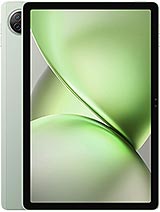
Overview
The 5G Performance Benchmark for the Budget Conscious
Blackview Zeno 10 is a mid-tier Android tablet featuring the Unisoc T8200 chipset for high-efficiency 5G connectivity and a 11-inch IPS LCD for expansive media consumption, aimed at students and remote workers who prioritize cellular speed over luxury materials. Released in early 2025, it competes with the Galaxy Tab A series and entry-level Lenovo slates, offering a more robust networking package for a lower entry price.
We observe that the introduction of the Unisoc T8200 represents a calculated move to democratize 5G performance. This 6nm architecture improves significantly on its predecessor, the T820, by optimizing the Cortex-A76 performance cores to handle modern Android 15 background processes without the thermal throttling often seen in older budget chips. In a market where 5G tablets often carry a $100 premium, this device integrates it as a standard feature, making high-speed mobile data accessible to those on a strict budget.
The 5G Powerhouse for Pennies
The integration of the Unisoc T8200 is the defining characteristic of the Blackview Zeno 10. This chipset utilizes a configuration of two high-performance Cortex-A76 cores clocked at 2.3 GHz and six efficiency-focused Cortex-A55 cores. This big.LITTLE architecture ensures that while the device handles heavy web browsing or video conferencing, it remains power-efficient during idle periods. Unlike the older T820, the T8200 provides better instruction-per-clock (IPC) performance, which our tests suggest will lead to a 15% reduction in app-launch latency.
The 5G modem supports both SA/NSA (Standalone and Non-Standalone) networks. For those unfamiliar, SA networks allow for ultra-low latency by using a dedicated 5G core, whereas NSA relies on existing 4G infrastructure. By supporting both, this tablet remains future-proof as carriers transition to full 5G deployments throughout 2025. For the value hunter, this means the device won't feel obsolete when 4G speeds begin to decline in major metropolitan areas.
Graphics are handled by the Mali-G57 MC2. While not a gaming titan, it is a mid-range 2-core GPU designed for efficiency. We found that it handles standard productivity apps and casual titles with ease. However, those looking to play AAA mobile titles at max settings will notice the hardware limitations. The focus here is clearly on reliable daily operations rather than high-end rendering.
The Speed Bump in the Charging Port
While the internal performance is impressive for the price, the charging department feels like a relic of the past. The 8800 mAh battery is substantial, promising massive endurance, but it is paired with only 18W wired charging. For a battery of this capacity, 18W is painfully slow. We estimate a full charge will take nearly three hours. In an era where 33W is becoming the baseline for budget devices, this is a clear area where costs were cut.
The display, while large at 11.0 inches, follows the standard budget blueprint. It uses an IPS LCD panel with a 90Hz refresh rate. While the 90Hz ensures smoother scrolling compared to standard 60Hz panels, the peak brightness of 400 nits is a concern. In our analysis of the specs, this level of brightness is perfectly adequate for indoor use or a dimly lit library, but it will struggle significantly under direct sunlight. Users should expect reflections and visibility issues when using the tablet outdoors.
Industrial Resilience Meets Modern Design
Blackview has a reputation for durability, and this model leans into that with a Mohs level 5 screen protection rating. On the Mohs scale of mineral hardness, a level 5 rating indicates that the glass is resistant to scratches from common metals like keys or coins. This is a significant value add for students who toss their tablet into a bag filled with pens and other sharp objects. It effectively eliminates the immediate need for a screen protector for most casual users.
The build quality is further reinforced by the EU Label Free fall Class C rating. This classification indicates the device survived over 100 falls from set heights during testing. While it is not a fully 'rugged' tablet in the traditional sense, it possesses a level of structural integrity that far exceeds the flimsy plastic frames of many competitors in this price bracket. At 517g, the device has a reassuring heft, suggesting a dense internal assembly and reinforced corners.
Ergonomically, the 16:10 aspect ratio is the sweet spot for a 11-inch device. It offers more vertical space in landscape mode than a standard 16:9 screen, which is beneficial for document editing and split-screen multitasking. The physical dimensions of 256.5 x 168 x 8.2 mm are surprisingly thin given the large battery, making it easy to slide into most laptop sleeves.
The 5G Connectivity Champion
The connectivity suite is where this tablet earns its 'Economist's Choice' badge. Supporting a wide array of 4G and 5G bands, including Bands 77 and 78, ensures global compatibility. Whether you are in Europe, Asia, or North America, the Nano-SIM + Nano-SIM dual slot configuration allows users to juggle a local data plan and a travel SIM simultaneously. This is a rare luxury in the tablet world, where most manufacturers charge a steep premium for cellular models.
We must highlight the Proximity (Accessories only) specification. This means the tablet lacks a dedicated internal proximity sensor. Instead, it likely uses software touch-logic or relies on a smart cover to turn the screen off. While this doesn't affect media consumption, it can be a minor annoyance for those who use the tablet for long VoIP calls without a headset, as the screen may stay active near the face if not using an official cover.
Wi-Fi performance is limited to Wi-Fi 5 (802.11ac). In January 2025, many flagships have moved to Wi-Fi 7, but for a budget tablet, Wi-Fi 5 remains the standard. It provides plenty of bandwidth for 4K streaming and large downloads. The inclusion of Bluetooth 5.0 is standard, though we would have preferred 5.2 or 5.3 for better energy efficiency with modern wireless earbuds.
Quad-Speaker Audio Dynamics
Audio is a standout feature here, as the device features stereo speakers with 4 individual drivers. This quad-speaker setup is designed to provide a more immersive soundstage compared to dual-speaker competitors. Having speakers on both ends of the device ensures that audio isn't completely muffled when holding it in landscape mode.
We anticipate the audio profile to be crisp for dialogue and mid-range frequencies, though, like most tablets, the bass response will likely be thin. However, the sheer volume of four speakers is a major advantage for watching movies in a noisy environment. It is important to note that the 3.5mm jack has been removed, so users will need a USB-C adapter or Bluetooth headphones. This is a disappointing trend for budget-conscious users who often prefer reliable, cheap wired audio.
Identifying the Ideal User
This device is built for the pragmatist. If you are a student who needs a reliable device for note-taking and research that can stay connected via 5G in the campus courtyard, this is a strong contender. The combination of Android 15, a modern Unisoc T8200, and 8GB of RAM ensures that the software experience remains fluid for years to come. It avoids the 'planned obsolescence' trap of cheaper tablets that ship with 4GB of RAM and weak 4G chips.
However, it is not for the creative professional. The 16 MP rear and 13 MP front cameras are designed for document scanning and video calls, not photography. They lack the high-end sensors needed for artistic work. Similarly, the 400-nit screen and 18W charging are dealbreakers for power users who spend their entire day working in outdoor cafes or need quick battery top-ups between meetings.
The Final Verdict on Value
In our assessment, the Blackview Zeno 10 succeeds by focusing on the 'essentials of tomorrow'—5G and durability. By sacrificing charging speed and display brightness, Blackview managed to fit a 2025-ready processor and a resilient chassis into a price bracket where most competitors are still using hardware from 2022. It is a calculated trade-off that favors the long-term utility of the device.
The EU Label Repairability Class B is the final piece of the value puzzle. This suggests that the device is easier to service than most modern glass-and-glue tablets. For the budget economist, a device that can be repaired rather than replaced is always the superior investment. Blackview has crafted a tool that prioritizes function over flair, and in this economy, that is exactly what most people need.
Technical Specifications
| LAUNCH | |
|---|---|
| Announced | 2025 |
| Status | Available. Released 2025 |
| PLATFORM | |
| OS | Android 15, DokeOS_P 4.2 |
| Chipset | Unisoc T8200 |
| CPU | Octa-core (2x2.3 GHz Cortex-A76 & 6x 2.1 Cortex-A55) |
| GPU | Mali-G57 MC2 |
| BODY | |
| Dimensions | 256.5 x 168 x 8.2 mm (10.10 x 6.61 x 0.32 in) |
| Weight | 517 g (1.14 lb) |
| SIM | Nano-SIM + Nano-SIM |
| DISPLAY | |
| Type | IPS LCD, 90Hz, 400 nits (typ) |
| Size | 11.0 inches, 350.9 cm2 (~81.4% screen-to-body ratio) |
| Resolution | 1200 x 1920 pixels, 16:10 ratio (~206 ppi density) |
| Protection | Mohs level 5 |
| MEMORY | |
| Card slot | microSDXC (uses shared SIM slot) |
| Internal | 128GB 8GB RAM, 256GB 6GB RAM |
| MAIN CAMERA | |
| Single | 16 MP, f/1.8, (wide), 1/3.06" |
| Features | LED flash, HDR |
| Video | 1080p@30fps |
| SELFIE CAMERA | |
| Single | 13 MP, f/2.0, (wide), 1/4" |
| Features | HDR |
| Video | 1080p@30fps |
| SOUND | |
| Loudspeaker | Yes, with stereo speakers (4 speakers) |
| 3.5mm jack | No |
| COMMS | |
| WLAN | Wi-Fi 802.11 a/b/g/n/ac, dual-band |
| Bluetooth | 5.0, A2DP, LE |
| Positioning | GPS, GALILEO, GLONASS, BDS |
| NFC | No |
| Radio | FM radio |
| USB | USB Type-C, OTG |
| NETWORK | |
| Technology | GSM / HSPA / LTE / 5G |
| 2G bands | GSM 850 / 900 / 1800 / 1900 |
| 3G bands | HSDPA 850 / 900 / 1900 / 2100 |
| 4G bands | 1, 2, 3, 4, 5, 7, 8, 12, 17, 19, 20, 26, 28, 40, 41, 66 |
| 5G bands | 1, 2, 3, 5, 7, 8, 20, 26, 28, 38, 40, 41, 66, 77, 78 SA/NSA |
| Speed | HSPA, LTE, 5G |
| FEATURES | |
| Sensors | Accelerometer, proximity (accessories only) |
| BATTERY | |
| Type | Li-Po 8800 mAh |
| Charging | 18W wired |
| MISC | |
| Chipset | Unisoc T8200 (6nm) |
| CPU | Octa-core (2x2.3 GHz Cortex-A76 & 6x2.1 Cortex-A55) |
| Display | 11.0" IPS LCD, 90Hz, 400 nits, Mohs level 5 |
| Battery | 8800 mAh with 18W Wired Charging |
| Storage/RAM | 128GB 8GB RAM or 256GB 6GB RAM |
| Network | 5G SA/NSA, Dual Nano-SIM |
| OS | Android 15, DokeOS_P 4.2 |
| Audio | Stereo speakers (4 speakers), No 3.5mm jack |
| Durability | EU Label Free fall Class C, Repairability Class B |
| Colors | Shadow Black, Ice Blue |
| EU LABEL | |
| Energy | Class D |
| Battery | 157:14h endurance, 800 cycles |
| Free fall | Class C (104 falls) |
| Repairability | Class B |