The Brutal Economic Reality Behind the Motorola Moto G (2024) Value Proposition
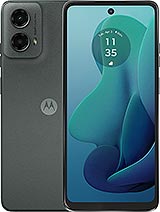
Overview
Motorola Moto G (2024) is a budget-tier 5G smartphone featuring a 6.6-inch 120Hz display for fluid visuals and a Snapdragon 4 Gen 1 chipset for efficient daily performance, aimed at cost-conscious consumers seeking essential 5G connectivity. Released in March 2024, it competes with entry-level offerings from Samsung and various carrier-locked alternatives in the North American market.
In the world of entry-level hardware, depreciation is usually a steep cliff. However, the Motorola Moto G (2024) occupies a unique niche where its starting price is already near the functional floor for a 5G device. If you acquire this handset for the reported carrier-subsidized price of around $55, the traditional concept of resale value becomes irrelevant. We view this as a 'zero-equity' asset. You aren't buying it to trade it in later; you're buying it to extract 100% of its utility over a 24-month period.
For those paying the full Canadian retail price of approximately C$134.99, the outlook remains similar. Most budget Android devices lose 60-70% of their market value within the first twelve months. Because the hardware relies on 4GB of RAM, it will likely struggle with future Android versions, further depressing its secondary market appeal. We predict that by early 2025, used units will circulate for less than $30. This is a terminal purchase, not a stepping stone in an upgrade cycle.
Motorola maintains a reputation for building 'clean' software experiences and durable, albeit plastic, hardware. This model avoids the flashy gimmicks of some international competitors, focusing instead on a pragmatic feature set. The manufacturer has a history of delivering reliable radios and call quality, which remains a primary concern for the target demographic of this device. While the brand doesn't command the premium aura of Apple or the ecosystem lock-in of Samsung, it offers a 'no-nonsense' alternative that appeals to pragmatic buyers.
Historically, the G series has been the workhorse of the prepaid market. This iteration continues that legacy but faces stiffer competition from the likes of the [Samsung Galaxy A15 5G](/samsung-galaxy-a15-5g-the-high-value-play-for-longevity-seekers/). The reliance on a plastic frame and silicone polymer back suggests a device that can survive a drop better than a glass-backed flagship, though the lack of a formal IP rating for full submersion remains a notable cost-saving measure. We consider Motorola a 'safe' choice for basic reliability, even if their software update track record is often criticized for being sluggish.
The handset arrives with Android 14, bringing modern security dashboards and granular permission controls to the budget segment. Users gain access to the 'Moto Secure' hub, which consolidates privacy settings and offers features like 'Secure Folder' for sensitive documents. This is a significant inclusion for a device at this price point, as privacy tools are often stripped out of entry-level firmware.
Furthermore, the device includes hardware-level security through its side-mounted fingerprint sensor. In our assessment, physical biometrics at this tier are often more reliable than the cheap under-display optical sensors found in mid-range competitors. The inclusion of a barometer is also a technical surprise. This sensor measures atmospheric pressure, which assists the GPS in determining altitude quickly. While seemingly minor, this improves location accuracy and emergency response speed, a vital security feature for elderly users or solo travelers.
Equipped with 128GB of internal storage, the device offers a generous amount of space for photos and apps compared to the 64GB standard often seen in cheap phones. However, the 4GB of RAM is the Achilles' heel. In the current app environment, 4GB is the absolute bare minimum for a functional experience. Expect the system to aggressively close background apps to keep the interface smooth. The 'RAM Boost' feature, which uses a portion of the storage as virtual memory, provides a minor buffer but cannot compensate for the lack of physical high-speed memory.
Thankfully, the inclusion of a dedicated microSDXC slot allows for massive expansion. Users can offload 1080p video recordings and photo libraries to a card, keeping the internal storage free for system updates and essential apps. This physical expansion is a dying feature in the flagship world, making this model an attractive 'digital vault' for users who don't want to pay monthly for cloud storage. The USB Type-C 2.0 port will be the primary bottleneck for data transfers, so don't expect rapid file moves when syncing to a PC.
The Snapdragon 4 Gen 1 chipset brings integrated 5G through the X51 modem. This ensures compatibility with both SA (Standalone) and NSA (Non-Standalone) networks. For users on T-Mobile, Verizon, or Canadian carriers like Rogers, the device supports a wide array of 4G and 5G bands, ensuring consistent signal penetration in suburban and rural areas. The inclusion of NFC is a critical 'Value Hunter' win, enabling contactless payments via Google Wallet—a feature often missing from budget Moto G models in previous years.
Wi-Fi performance is handled by a dual-band ac chip, which is standard for 2024 but lacks the future-proofing of Wi-Fi 6. For the target user, this is a minor trade-off. The real-world benefit lies in the stereo speakers and the 3.5mm headphone jack. In an era where Bluetooth dependency adds a 'hidden cost' to phone ownership, being able to plug in cheap wired earbuds is a major financial advantage for the budget-conscious consumer.
This is where the economic argument weakens. Motorola typically offers only one major Android OS update and two years of bimonthly security patches for its G series. If the device launches on Android 14, it might only see Android 15. This short lifespan creates a 'disposability' problem. By March 2026, this phone will likely be a security risk if used for banking or sensitive work.
From a repairability standpoint, the plastic construction is easier to open than glass sandwiches, but the availability of third-party parts for the 6.6-inch IPS LCD may be limited compared to higher-volume models. The 5000 mAh battery is large enough to sustain 1.5 to 2 days of light use, which should mitigate the wear-and-tear of frequent charging cycles. However, the 18W wired charging speed is archaic by 2024 standards, requiring nearly two hours for a full top-up.
The Motorola Moto G (2024) is a calculated compromise. It prioritizes the tactile feel of the eco leather back and the smoothness of a 120Hz display over raw processing power or high-resolution photography. The 720p resolution on a 6.6-inch screen results in a relatively low pixel density of 267 ppi, which means text will not be as crisp as it is on a 1080p panel. For those using the phone primarily for social media and navigation, this is acceptable. For those consuming high-definition video, it's a clear drawback.
In conclusion, the Motorola Moto G (2024) serves as a high-utility tool for those who view smartphones as a utility rather than a status symbol. It delivers the essential 2024 tech stack—5G, NFC, and a high-refresh screen—at a price point that is difficult to argue with, provided you understand its two-year effective lifespan.
The Depreciation Curve and Resale Forecast
In the world of entry-level hardware, depreciation is usually a steep cliff. However, the Motorola Moto G (2024) occupies a unique niche where its starting price is already near the functional floor for a 5G device. If you acquire this handset for the reported carrier-subsidized price of around $55, the traditional concept of resale value becomes irrelevant. We view this as a 'zero-equity' asset. You aren't buying it to trade it in later; you're buying it to extract 100% of its utility over a 24-month period.
For those paying the full Canadian retail price of approximately C$134.99, the outlook remains similar. Most budget Android devices lose 60-70% of their market value within the first twelve months. Because the hardware relies on 4GB of RAM, it will likely struggle with future Android versions, further depressing its secondary market appeal. We predict that by early 2025, used units will circulate for less than $30. This is a terminal purchase, not a stepping stone in an upgrade cycle.
Brand Reliability and Market Standing
Motorola maintains a reputation for building 'clean' software experiences and durable, albeit plastic, hardware. This model avoids the flashy gimmicks of some international competitors, focusing instead on a pragmatic feature set. The manufacturer has a history of delivering reliable radios and call quality, which remains a primary concern for the target demographic of this device. While the brand doesn't command the premium aura of Apple or the ecosystem lock-in of Samsung, it offers a 'no-nonsense' alternative that appeals to pragmatic buyers.
Historically, the G series has been the workhorse of the prepaid market. This iteration continues that legacy but faces stiffer competition from the likes of the [Samsung Galaxy A15 5G](/samsung-galaxy-a15-5g-the-high-value-play-for-longevity-seekers/). The reliance on a plastic frame and silicone polymer back suggests a device that can survive a drop better than a glass-backed flagship, though the lack of a formal IP rating for full submersion remains a notable cost-saving measure. We consider Motorola a 'safe' choice for basic reliability, even if their software update track record is often criticized for being sluggish.
Privacy and Security Architecture
The handset arrives with Android 14, bringing modern security dashboards and granular permission controls to the budget segment. Users gain access to the 'Moto Secure' hub, which consolidates privacy settings and offers features like 'Secure Folder' for sensitive documents. This is a significant inclusion for a device at this price point, as privacy tools are often stripped out of entry-level firmware.
Furthermore, the device includes hardware-level security through its side-mounted fingerprint sensor. In our assessment, physical biometrics at this tier are often more reliable than the cheap under-display optical sensors found in mid-range competitors. The inclusion of a barometer is also a technical surprise. This sensor measures atmospheric pressure, which assists the GPS in determining altitude quickly. While seemingly minor, this improves location accuracy and emergency response speed, a vital security feature for elderly users or solo travelers.
Storage Utility and the 4GB Bottleneck
Equipped with 128GB of internal storage, the device offers a generous amount of space for photos and apps compared to the 64GB standard often seen in cheap phones. However, the 4GB of RAM is the Achilles' heel. In the current app environment, 4GB is the absolute bare minimum for a functional experience. Expect the system to aggressively close background apps to keep the interface smooth. The 'RAM Boost' feature, which uses a portion of the storage as virtual memory, provides a minor buffer but cannot compensate for the lack of physical high-speed memory.
Thankfully, the inclusion of a dedicated microSDXC slot allows for massive expansion. Users can offload 1080p video recordings and photo libraries to a card, keeping the internal storage free for system updates and essential apps. This physical expansion is a dying feature in the flagship world, making this model an attractive 'digital vault' for users who don't want to pay monthly for cloud storage. The USB Type-C 2.0 port will be the primary bottleneck for data transfers, so don't expect rapid file moves when syncing to a PC.
Connectivity: 5G for the Masses
The Snapdragon 4 Gen 1 chipset brings integrated 5G through the X51 modem. This ensures compatibility with both SA (Standalone) and NSA (Non-Standalone) networks. For users on T-Mobile, Verizon, or Canadian carriers like Rogers, the device supports a wide array of 4G and 5G bands, ensuring consistent signal penetration in suburban and rural areas. The inclusion of NFC is a critical 'Value Hunter' win, enabling contactless payments via Google Wallet—a feature often missing from budget Moto G models in previous years.
Wi-Fi performance is handled by a dual-band ac chip, which is standard for 2024 but lacks the future-proofing of Wi-Fi 6. For the target user, this is a minor trade-off. The real-world benefit lies in the stereo speakers and the 3.5mm headphone jack. In an era where Bluetooth dependency adds a 'hidden cost' to phone ownership, being able to plug in cheap wired earbuds is a major financial advantage for the budget-conscious consumer.
Long Term Support and Maintenance
This is where the economic argument weakens. Motorola typically offers only one major Android OS update and two years of bimonthly security patches for its G series. If the device launches on Android 14, it might only see Android 15. This short lifespan creates a 'disposability' problem. By March 2026, this phone will likely be a security risk if used for banking or sensitive work.
From a repairability standpoint, the plastic construction is easier to open than glass sandwiches, but the availability of third-party parts for the 6.6-inch IPS LCD may be limited compared to higher-volume models. The 5000 mAh battery is large enough to sustain 1.5 to 2 days of light use, which should mitigate the wear-and-tear of frequent charging cycles. However, the 18W wired charging speed is archaic by 2024 standards, requiring nearly two hours for a full top-up.
Final Investment Summary
The Motorola Moto G (2024) is a calculated compromise. It prioritizes the tactile feel of the eco leather back and the smoothness of a 120Hz display over raw processing power or high-resolution photography. The 720p resolution on a 6.6-inch screen results in a relatively low pixel density of 267 ppi, which means text will not be as crisp as it is on a 1080p panel. For those using the phone primarily for social media and navigation, this is acceptable. For those consuming high-definition video, it's a clear drawback.
In conclusion, the Motorola Moto G (2024) serves as a high-utility tool for those who view smartphones as a utility rather than a status symbol. It delivers the essential 2024 tech stack—5G, NFC, and a high-refresh screen—at a price point that is difficult to argue with, provided you understand its two-year effective lifespan.
Technical Specifications
| LAUNCH | |
|---|---|
| Announced | 2024, March 12 |
| Status | Available. Released 2024, March 21 |
| PLATFORM | |
| OS | Android 14 |
| Chipset | Qualcomm SM4375 Snapdragon 4 Gen 1 (6 nm) |
| CPU | Octa-core (2x2.0 GHz Cortex-A78 & 6x1.8 GHz Cortex-A55) |
| GPU | Adreno 619 |
| BODY | |
| Dimensions | 164.4 x 75 x 8.2 mm (6.47 x 2.95 x 0.32 in) |
| Weight | 194 g (6.84 oz) |
| Build | Glass front, silicone polymer back (eco leather), plastic frame |
| SIM | Nano-SIM + eSIM |
| Info | Water-repellent design |
| DISPLAY | |
| Type | IPS LCD, 120Hz |
| Size | 6.6 inches, 104.6 cm2 (~84.9% screen-to-body ratio) |
| Resolution | 720 x 1612 pixels, 20:9 ratio (~267 ppi density) |
| MEMORY | |
| Card slot | microSDXC (dedicated slot) |
| Internal | 128GB 4GB RAM |
| MAIN CAMERA | |
| Dual | 50 MP, f/1.8, (wide), 0.64µm, PDAF 2 MP (macro) |
| Features | LED flash, HDR, panorama |
| Video | 1080p@30fps |
| SELFIE CAMERA | |
| Single | 8 MP, f/2.0, (wide), 1/4.0", 1.12µm |
| Features | HDR |
| Video | 1080p@30fps |
| SOUND | |
| Loudspeaker | Yes, with stereo speakers |
| 3.5mm jack | Yes |
| COMMS | |
| WLAN | Wi-Fi 802.11 a/b/g/n/ac, dual-band |
| Bluetooth | 5.1, A2DP, LE |
| Positioning | GPS, GLONASS, GALILEO |
| NFC | Yes |
| Radio | No |
| USB | USB Type-C 2.0 |
| NETWORK | |
| Technology | GSM / HSPA / LTE / 5G |
| 2G bands | GSM 850 / 900 / 1800 / 1900 |
| 3G bands | HSDPA 850 / 900 / 1700(AWS) / 1900 / 2100 |
| 4G bands | 1, 2, 3, 4, 5, 7, 8, 12, 13, 14, 17, 18, 20, 25, 26, 28, 29, 30, 38, 39, 40, 41, 48, 66, 71 |
| 5G bands | 2, 5, 7, 12, 14, 25, 26, 29, 30, 41, 48, 66, 70, 71, 77, 78 SA/NSA |
| Speed | HSPA, LTE, 5G |
| FEATURES | |
| Sensors | Fingerprint (side-mounted), accelerometer, gyro, proximity, compass, barometer |
| BATTERY | |
| Type | 5000 mAh |
| Charging | 18W wired |
| MISC | |
| Display | 6.6-inch IPS LCD, 120Hz, 720 x 1612 pixels |
| Processor | Qualcomm Snapdragon 4 Gen 1 (6 nm) |
| Memory | 4GB RAM, 128GB Internal Storage (expandable) |
| Main Camera | 50 MP, f/1.8 (wide) + 2 MP macro |
| Selfie Camera | 8 MP, f/2.0 |
| Battery | 5000 mAh with 18W wired charging |
| Software | Android 14 |
| Connectivity | 5G, NFC, Bluetooth 5.1, Wi-Fi 5 |
| Build | Plastic frame, Silicone polymer (Eco Leather) back |
| Colors | Sage Green |
| Models | XT2417-4, XT2417-1 |
| Price | $ 55.00 / C$ 134.99 |