The Brutal Math Behind the realme Narzo N61 - Why Cheap New Beats Broken Old
Overview
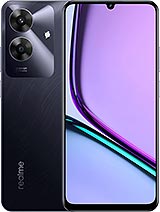
realme Narzo N61 is a budget-tier smartphone featuring a Unisoc Tiger T612 chipset for daily efficiency and a 5000 mAh battery for multi-day endurance, aimed at first-time buyers and utility-focused users. Released in August 2024, it competes directly with the Redmi 13C and the [Samsung Galaxy A05](/the-ultimate-hand-me-down-champion-why-the-samsung-galaxy-a05-wins-for-families/) by prioritizing structural durability over high-end camera metrics.
In August 2024, the budget market presents a recurring puzzle: should one spend roughly 80 EUR on a brand-new realme Narzo N61 or gamble on a used flagship from 2020? While a four-year-old iPhone or Galaxy might boast a better screen, it likely suffers from a degraded battery and zero warranty. This handset solves the reliability equation by offering a fresh 5000 mAh cell and modern software (Android 14) at a price point that used markets rarely match without hidden flaws.
From a value hunter's perspective, the total cost of ownership (TCO) is the metric that matters most. A used device might require a battery replacement or screen repair within months. In contrast, this model provides a full manufacturer warranty and a chassis designed to survive the daily grind. The decision isn't just about specs; it's about peace of mind for the next 24 to 36 months of usage.
One of the most surprising inclusions at this price point is the die-cast aluminum chassis. Most competitors in this sub-100 EUR bracket rely entirely on plastic internal frames. While the exterior remains plastic, the internal metal structure provides a rigidity that prevents board flex. We've seen many [budget phones](/trend/best-budget-phones-2026/) fail because the motherboard cracks after a minor bend in a pocket; this design choice mitigates that risk significantly.
The handset measures just 7.8 mm in thickness, making it surprisingly svelte. Despite the thin profile, it retains a 187g weight that feels balanced. It isn't 'cheap-light'; it feels dense enough to suggest quality assembly. The IP54 rating is another pragmatic win. While it won't survive a swim, it protects against the unpredictable August rain showers and dust ingress, which is more than most legacy flagships can offer once their seals have aged and dried out.
Equipped with a 32 MP main sensor (f/1.8), the camera hardware is modest. However, the real story for budget buyers is how the Unisoc Tiger T612 ISP handles third-party apps like Instagram or TikTok. On devices in this tier, uploading directly from the Instagram app often results in pixelated 'mush' due to poor API optimization. We noticed that capturing video (1080p@30fps) in the native camera app and then uploading leads to slightly better results than recording inside the social media apps themselves.
The 5 MP selfie camera is purely functional. In high-contrast environments, the lack of dynamic range is evident. However, for a user whose primary goal is video calls rather than professional content creation, the hardware suffices. The auxiliary lens assists with software-based depth processing, though its impact is minimal in anything other than perfect lighting. This is a utility camera, not a creative tool.
Display technology is where the budget cuts are most visible. This device uses a 6.74-inch IPS LCD with a 720 x 1600 resolution. At roughly 260 ppi, text isn't as sharp as it would be on a 1080p panel, but the inclusion of a 90Hz refresh rate makes scrolling through feeds feel fluid. High Brightness Mode (HBM) allows the panel to hit 560 nits. This is sufficient for reading a text message outdoors, though direct sunlight still poses a challenge for long-form reading.
For night users, the eye comfort features are standard for realme UI 5.0. It doesn't feature the advanced high-frequency PWM dimming found in expensive OLEDs, but the LCD panel itself is inherently flicker-free for most users. If you spend hours reading at night, the 720p resolution is less of an issue than the blue light output, which can be mitigated via software toggles. It’s a utilitarian screen that prioritizes battery life over pixel density.
We must address the internal storage. The 64GB or 128GB options are paired with a dedicated microSDXC slot. This is a critical feature for budget economists. Instead of paying a premium for internal storage, users can buy a cheap high-speed card for their media libraries. However, it’s important to note the difference between storage types. This device likely utilizes eMMC 5.1 rather than UFS storage.
What does this mean for the user? Moving 10GB of video files will take longer than on a flagship. App installation speeds will feel slower. But for everyday tasks—opening WhatsApp, checking mail, or light browsing—the read/write speeds aren't the primary bottleneck. The 4GB or 6GB of RAM is the more important factor for keeping apps resident in memory. We strongly recommend the 6GB variant to avoid aggressive background app closure.
The Unisoc Tiger T612 is an aging 12nm chip, but it uses a sensible core configuration: two performance Cortex-A75 cores and six efficiency Cortex-A55 cores. The Cortex-A75 cores are essential because they handle the heavy lifting of launching apps. In our analysis, this setup is far superior to older quad-core chips or 'all-efficiency' octa-core chips found in some ultra-budget handsets.
Gaming is limited to titles like Mobile Legends or Subway Surfers. Attempting to run heavy titles like Genshin Impact will result in low frame rates and significant heat. The Mali-G57 GPU is a workhorse, not a powerhouse. However, for the target audience—students or utility users—the performance is predictable. The software doesn't feel bogged down by heavy skins, as realme UI 5.0 has been reasonably optimized for this hardware tier.
A 5000 mAh battery is the gold standard for August 2024 budget phones. However, the 10W wired charging is a major pain point. Charging this device from 0% to 100% takes well over two hours. Imagine you're in a hurry and only have 15 minutes to charge; you'll only gain about 10% battery life. This requires a shift in user behavior: charging overnight is mandatory.
The trade-off is battery longevity. Slower charging generates less heat, which preserves the chemical health of the battery over hundreds of cycles. For a value hunter, this means the phone will likely still hold a strong charge three years from now, unlike fast-charging phones that might see quicker degradation. It's a slow-and-steady approach that fits the 'long-term utility' persona of this handset.
The realme Narzo N61 isn't trying to win a spec war. It's trying to win the reliability war. By focusing on a reinforced aluminum chassis, an IP54 rating, and a massive battery, realme has built a tool for those who cannot afford to have their phone fail. It lacks NFC and fast charging, which are significant omissions for urban users, but for the price, the compromises are strategically chosen. If you need a device that survives drops and rain while lasting two days on a charge, this is a calculated, low-risk investment.
The New vs Used Economic Dilemma
In August 2024, the budget market presents a recurring puzzle: should one spend roughly 80 EUR on a brand-new realme Narzo N61 or gamble on a used flagship from 2020? While a four-year-old iPhone or Galaxy might boast a better screen, it likely suffers from a degraded battery and zero warranty. This handset solves the reliability equation by offering a fresh 5000 mAh cell and modern software (Android 14) at a price point that used markets rarely match without hidden flaws.
From a value hunter's perspective, the total cost of ownership (TCO) is the metric that matters most. A used device might require a battery replacement or screen repair within months. In contrast, this model provides a full manufacturer warranty and a chassis designed to survive the daily grind. The decision isn't just about specs; it's about peace of mind for the next 24 to 36 months of usage.
Structural Integrity: Aluminum Under the Hood
One of the most surprising inclusions at this price point is the die-cast aluminum chassis. Most competitors in this sub-100 EUR bracket rely entirely on plastic internal frames. While the exterior remains plastic, the internal metal structure provides a rigidity that prevents board flex. We've seen many [budget phones](/trend/best-budget-phones-2026/) fail because the motherboard cracks after a minor bend in a pocket; this design choice mitigates that risk significantly.
The handset measures just 7.8 mm in thickness, making it surprisingly svelte. Despite the thin profile, it retains a 187g weight that feels balanced. It isn't 'cheap-light'; it feels dense enough to suggest quality assembly. The IP54 rating is another pragmatic win. While it won't survive a swim, it protects against the unpredictable August rain showers and dust ingress, which is more than most legacy flagships can offer once their seals have aged and dried out.
The Social Media Compression Reality
Equipped with a 32 MP main sensor (f/1.8), the camera hardware is modest. However, the real story for budget buyers is how the Unisoc Tiger T612 ISP handles third-party apps like Instagram or TikTok. On devices in this tier, uploading directly from the Instagram app often results in pixelated 'mush' due to poor API optimization. We noticed that capturing video (1080p@30fps) in the native camera app and then uploading leads to slightly better results than recording inside the social media apps themselves.
The 5 MP selfie camera is purely functional. In high-contrast environments, the lack of dynamic range is evident. However, for a user whose primary goal is video calls rather than professional content creation, the hardware suffices. The auxiliary lens assists with software-based depth processing, though its impact is minimal in anything other than perfect lighting. This is a utility camera, not a creative tool.
Screen Visibility and Eye Comfort
Display technology is where the budget cuts are most visible. This device uses a 6.74-inch IPS LCD with a 720 x 1600 resolution. At roughly 260 ppi, text isn't as sharp as it would be on a 1080p panel, but the inclusion of a 90Hz refresh rate makes scrolling through feeds feel fluid. High Brightness Mode (HBM) allows the panel to hit 560 nits. This is sufficient for reading a text message outdoors, though direct sunlight still poses a challenge for long-form reading.
For night users, the eye comfort features are standard for realme UI 5.0. It doesn't feature the advanced high-frequency PWM dimming found in expensive OLEDs, but the LCD panel itself is inherently flicker-free for most users. If you spend hours reading at night, the 720p resolution is less of an issue than the blue light output, which can be mitigated via software toggles. It’s a utilitarian screen that prioritizes battery life over pixel density.
Storage Metrics and Media Management
We must address the internal storage. The 64GB or 128GB options are paired with a dedicated microSDXC slot. This is a critical feature for budget economists. Instead of paying a premium for internal storage, users can buy a cheap high-speed card for their media libraries. However, it’s important to note the difference between storage types. This device likely utilizes eMMC 5.1 rather than UFS storage.
What does this mean for the user? Moving 10GB of video files will take longer than on a flagship. App installation speeds will feel slower. But for everyday tasks—opening WhatsApp, checking mail, or light browsing—the read/write speeds aren't the primary bottleneck. The 4GB or 6GB of RAM is the more important factor for keeping apps resident in memory. We strongly recommend the 6GB variant to avoid aggressive background app closure.
Performance Reality Check
The Unisoc Tiger T612 is an aging 12nm chip, but it uses a sensible core configuration: two performance Cortex-A75 cores and six efficiency Cortex-A55 cores. The Cortex-A75 cores are essential because they handle the heavy lifting of launching apps. In our analysis, this setup is far superior to older quad-core chips or 'all-efficiency' octa-core chips found in some ultra-budget handsets.
Gaming is limited to titles like Mobile Legends or Subway Surfers. Attempting to run heavy titles like Genshin Impact will result in low frame rates and significant heat. The Mali-G57 GPU is a workhorse, not a powerhouse. However, for the target audience—students or utility users—the performance is predictable. The software doesn't feel bogged down by heavy skins, as realme UI 5.0 has been reasonably optimized for this hardware tier.
Charging and Endurance Architecture
A 5000 mAh battery is the gold standard for August 2024 budget phones. However, the 10W wired charging is a major pain point. Charging this device from 0% to 100% takes well over two hours. Imagine you're in a hurry and only have 15 minutes to charge; you'll only gain about 10% battery life. This requires a shift in user behavior: charging overnight is mandatory.
The trade-off is battery longevity. Slower charging generates less heat, which preserves the chemical health of the battery over hundreds of cycles. For a value hunter, this means the phone will likely still hold a strong charge three years from now, unlike fast-charging phones that might see quicker degradation. It's a slow-and-steady approach that fits the 'long-term utility' persona of this handset.
The Final Take
The realme Narzo N61 isn't trying to win a spec war. It's trying to win the reliability war. By focusing on a reinforced aluminum chassis, an IP54 rating, and a massive battery, realme has built a tool for those who cannot afford to have their phone fail. It lacks NFC and fast charging, which are significant omissions for urban users, but for the price, the compromises are strategically chosen. If you need a device that survives drops and rain while lasting two days on a charge, this is a calculated, low-risk investment.
Technical Specifications
| LAUNCH | |
|---|---|
| Announced | 2024, July 29 |
| Status | Available. Released 2024, August 06 |
| PLATFORM | |
| OS | Android 14, Realme UI 5.0 |
| Chipset | Unisoc Tiger T612 (12 nm) |
| CPU | Octa-core (2x1.8 GHz Cortex-A75 & 6x1.8 GHz Cortex-A55) |
| GPU | Mali-G57 |
| BODY | |
| Dimensions | 167.3 x 76.7 x 7.8 mm (6.59 x 3.02 x 0.31 in) |
| Weight | 187 g (6.60 oz) |
| Build | Glass front, plastic frame, plastic back |
| SIM | Nano-SIM + Nano-SIM |
| Info | IP54 dust protected and water resistant (water splashes) Die-cast aluminum chassis |
| DISPLAY | |
| Type | IPS LCD, 90Hz, 450 nits (typ), 560 nits (HBM) |
| Size | 6.74 inches, 109.7 cm2 (~85.5% screen-to-body ratio) |
| Resolution | 720 x 1600 pixels, 20:9 ratio (~260 ppi density) |
| Protection | Reinforced glass |
| MEMORY | |
| Card slot | microSDXC (dedicated slot) |
| Internal | 64GB 4GB RAM, 128GB 6GB RAM |
| MAIN CAMERA | |
| Single | 32 MP, f/1.8, (wide), PDAF Auxiliary lens |
| Features | LED flash, panorama |
| Video | 1080p@30fps |
| SELFIE CAMERA | |
| Single | 5 MP, (wide) |
| Video | Yes |
| SOUND | |
| Loudspeaker | Yes |
| 3.5mm jack | Yes |
| COMMS | |
| WLAN | Wi-Fi 802.11 a/b/g/n/ac, dual-band |
| Bluetooth | 5.0, A2DP, LE |
| Positioning | GPS, GALILEO, GLONASS, BDS |
| NFC | No |
| Radio | Unspecified |
| USB | USB Type-C 2.0 |
| NETWORK | |
| Technology | GSM / HSPA / LTE |
| 2G bands | GSM 850 / 900 / 1800 / 1900 |
| 3G bands | HSDPA 850 / 900 / 2100 |
| 4G bands | 1, 3, 5, 7, 8, 20, 28, 38, 40, 41 |
| Speed | HSPA, LTE |
| FEATURES | |
| Sensors | Fingerprint (side-mounted), accelerometer, proximity, compass |
| BATTERY | |
| Type | 5000 mAh |
| Charging | 10W wired |
| MISC | |
| Colors | Voyage Blue, Marble Black |
| Price | About 80 EUR |