The Brutal Reality of the Blackview Wave 6C and the Tempting Zero-Dollar Carrier Contract
Overview
The Strategic Entry Point
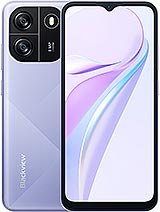
The Blackview Wave 6C is an ultra-budget smartphone designed for basic communication and essential app usage, specifically targeting users who prioritize battery longevity over processing power. Released in December 2023, it competes directly with other entry-level devices like the Redmi A2 and the Galaxy A04e, utilizing a Unisoc SC9863A chipset and a 5100 mAh battery to provide a low-cost mobile experience.
From a purely economic standpoint, this handset represents the floor of the 2023 smartphone market. We are looking at a device that stripped away every luxury to meet a price point that often allows it to be given away "free" with the most basic carrier contracts. However, free rarely means without cost. To understand if this model is a bargain or a burden, we must look at the long-term viability of its components in an increasingly demanding app ecosystem.
The Economics of the Zero-Dollar Offer
When we analyze the Blackview Wave 6C, the first thing that stands out isn't the hardware, but the fiscal strategy behind its existence. In December 2023, the cost of mobile components remained volatile, yet this manufacturer managed to package an octa-core experience for the price of a dinner for two in some regions. This is achieved through the use of the Unisoc SC9863A. This chipset is built on a 28nm process, which is ancient by modern standards where flagships are hitting 3nm.
Why does 28nm matter to your wallet? It implies that the processor is less efficient, generating more heat and consuming more power to perform the same tasks as a 12nm or 7nm chip. However, for a user who only checks WhatsApp and makes phone calls, this inefficiency is masked by the massive 5100 mAh battery. Our analysis suggests that while the silicon is old, the sheer volume of the battery compensates for the lack of architectural finesse, ensuring the phone stays powered through a full workday.
Plastic Foundations and Build Logistics
The physical construction of this model tells a story of pragmatic durability. Weighing in at 191g, it has a reassuring heft that prevents it from feeling like a hollow toy. The dimensions (164.7 x 76.5 x 9.7 mm) are substantial, making it a thick device by contemporary standards. This thickness isn't a design flaw; it's a necessity to house that large battery cell without compromising structural integrity.
We noticed the material choice is primarily reinforced polycarbonate. While some might scoff at plastic, from a value hunter's perspective, this is superior to cheap glass. A drop that would shatter a premium phone will likely only result in a scuff on this handset. The Lilac Purple and Mint Blue finishes add a touch of personality to an otherwise utilitarian frame, suggesting that even at the bottom of the price bracket, aesthetic effort isn't entirely absent.
The 380-Nit Sunlight Challenge
The 6.5-inch IPS LCD panel is a standard 720 x 1600 resolution affair. At roughly 270 ppi, text is legible but lacks the crispness found on 1080p displays. The critical metric here is the 380 nits of peak brightness. In the overcast winter light of December, this is perfectly adequate. However, users in high-glare environments will struggle.
Direct sunlight will easily overpower 380 nits, turning the screen into a dark mirror. We also have to consider the polarization. Cheap LCDs often have poor viewing angles where colors shift or wash out when the phone is tilted. This model is best suited for indoor use or shaded outdoor environments. The trade-off, of course, is that a lower-resolution 720p screen draws significantly less power than a high-refresh-rate 1080p panel, further extending that battery life.
Sensory Feedback and Haptic Resonance
One area where [budget phones](/trend/best-budget-phones-2026/) always reveal their true nature is the vibration motor. The Blackview Wave 6C likely utilizes a basic ERM (Eccentric Rotating Mass) motor. Unlike the sharp, precise "taps" of a high-end X-axis linear motor, this device will produce a buzzy, diffused vibration. When a notification arrives, the whole chassis tends to hum rather than click.
For the economist, this is an acceptable compromise. Precise haptics are a luxury. However, for those who rely on haptic feedback for typing, the experience might feel sluggish. The motor simply cannot keep up with rapid-fire thumb movements on a virtual keyboard. It serves its purpose for alarms and incoming calls, but it won't provide the tactile satisfaction of a mid-range or premium device.
Navigation Reliability and Global Bands
Connectivity is often the silent killer of cheap phones. This handset supports LTE bands 1, 3, 7, 8, 19, 20, and 40. For users in Europe and parts of Asia, this covers the essential bases. However, the lack of 5G means you are tethered to the aging 4G infrastructure. While 4G is plenty for 2023, the speed ceiling is much lower. In our view, the HSPA and LTE speeds are sufficient for the target audience, but don't expect to download large files in seconds.
GPS performance is handled by a standard suite (GPS, GLONASS, GALILEO, BDS). The Unisoc platform can sometimes take a few extra seconds to achieve a cold lock compared to Qualcomm's hardware. Once locked, navigation is stable enough for occasional driving directions, but we wouldn't recommend this as a primary tool for professional delivery drivers who need millisecond-accurate positioning in urban canyons.
Security Gates and Biometric Access
Surprisingly, Blackview didn't cut the biometric sensor. The side-mounted fingerprint scanner is a highlight. In a world where cheap phones often rely on insecure 2D face unlock, having a physical fingerprint sensor is a massive win for security. Side-mounted sensors are generally more reliable than the cheap under-display optical sensors found in slightly more expensive phones.
It doubles as the power button, creating a fluid transition from "off" to "home screen." The Android 13 (Go edition) software is specifically tuned to handle this hardware. By stripping away heavy animations and background processes, the OS feels more responsive than the full version of Android would on only 2GB of RAM. The 32GB of internal storage is tight—very tight—making the microSDXC slot an absolute requirement rather than an option.
The Budget Value Assessment
When we look at the Blackview Wave 6C, we aren't looking at a device that wants to change the world. It wants to survive it. The combination of a massive battery and a power-sipping (albeit old) processor creates a tool that is exceptionally reliable for standby and basic communication. It is a digital lifeline for those on a strict budget.
However, the 2GB RAM is the elephant in the room. Even with "Go edition" optimizations, modern apps are bloated. Opening more than three Chrome tabs or switching between Maps and Spotify will likely cause the phone to stutter. This is a "one task at a time" machine. If you can accept that pace, the value proposition is undeniable. If you expect the fluid multitasking of a $300 phone, you will be disappointed. The Blackview Wave 6C is a lesson in compromise, proving that while you can get a lot for a little, you cannot get everything.
Technical Specifications
| LAUNCH | |
|---|---|
| Announced | 2023, December |
| Status | Available. Released 2023, December |
| PLATFORM | |
| OS | Android 13 (Go edition), Doke OS 4.0 Go |
| Chipset | Unisoc SC9863A (28 nm) |
| CPU | Octa-core (4x1.6 GHz Cortex-A55 & 4x1.2 GHz Cortex-A55) |
| GPU | IMG8322 |
| BODY | |
| Dimensions | 164.7 x 76.5 x 9.7 mm (6.48 x 3.01 x 0.38 in) |
| Weight | 191 g (6.74 oz) |
| SIM | Nano-SIM + Nano-SIM |
| DISPLAY | |
| Type | IPS LCD, 380 nits |
| Size | 6.5 inches, 102.0 cm2 (~81.0% screen-to-body ratio) |
| Resolution | 720 x 1600 pixels, 20:9 ratio (~270 ppi density) |
| MEMORY | |
| Card slot | microSDXC (uses shared SIM slot) |
| Internal | 32GB 2GB RAM |
| MAIN CAMERA | |
| Single | 8 MP, (wide) |
| Features | LED flash, HDR, panorama |
| Video | 1080p@30fps |
| SELFIE CAMERA | |
| Single | 5 MP, (wide) |
| Video | Yes |
| SOUND | |
| Loudspeaker | Yes |
| 3.5mm jack | Yes |
| COMMS | |
| WLAN | Wi-Fi 802.11 b/g/n |
| Bluetooth | 4.2, A2DP |
| Positioning | GPS, GLONASS, GALILEO, BDS |
| NFC | No |
| Radio | FM radio |
| USB | USB Type-C 2.0, OTG |
| NETWORK | |
| Technology | GSM / HSPA / LTE |
| 2G bands | GSM 850 / 900 / 1800 / 1900 |
| 3G bands | HSDPA 900 / 2100 |
| 4G bands | 1, 3, 7, 8, 19, 20, 40 |
| Speed | HSPA, LTE |
| FEATURES | |
| Sensors | Fingerprint (side-mounted), accelerometer, proximity |
| BATTERY | |
| Type | 5100 mAh |
| MISC | |
| Colors | Lilac Purple, Mint Blue, Midnight Black |