The Brutal Truth About The vivo Y18 - Maximum Utility Or Rapid Depreciation
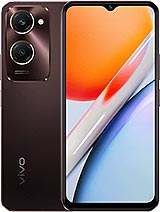
Overview
The vivo Y18 is a budget-tier smartphone featuring an IPS LCD with a 90Hz refresh rate for smoother navigation and a MediaTek Helio G85 chipset for consistent entry-level performance, aimed at cost-conscious users who prioritize battery life and essential durability. Released in May 2024, it competes in a crowded market where every dollar must justify its presence on the spec sheet.
Financial prudence dictates looking at a handset not just for what it costs today, but what it will be worth in twenty-four months. The vivo Y18 utilizes eMMC 5.1 storage, a standard that is increasingly becoming a relic in a world moving toward UFS 2.2 even at lower price points. This choice significantly impacts the depreciation curve. Because eMMC 5.1 lacks the simultaneous read-write capabilities of UFS, the system will inevitably slow down as the 128GB or 256GB storage fills up. We predict a sharp decline in resale value once the two-year mark hits, as the 12nm architecture of the Helio G85 begins to struggle with future application updates.
Investors in this price bracket should view this phone as a high-utility tool to be used until its end-of-life rather than an asset to be traded in later. The Li-Ion 5000 mAh battery provides a strong foundation for longevity, but the 15W wired charging speed is a bottleneck. In a market where competitors are starting to offer 33W charging, the slow replenishment cycle here reduces the overall liquid value of the device on the second-hand market. If you buy this, plan to own it until the hardware no longer meets your needs.
vivo has established a reputation for build quality that often exceeds the expectations of the sub-150 EUR segment. The Y-series, while not as flashy as the V or X series, benefits from the same manufacturing pipelines. This model incorporates an IP54 dust and water resistance rating. While this does not mean it can survive a swim in a pool, it provides protection against rain and accidental splashes. For a budget economist, this rating represents a lower risk of total loss due to environmental factors, which is a subtle but vital component of total cost of ownership.
Setting up this model is a straightforward process, though not without its friction points. Upon the first boot, users are greeted by Funtouch 14 sitting atop Android 14. The initial setup involves navigating through several pre-installed applications—often referred to as bloatware—which require a meticulous eye to decline during the configuration phase. We noticed that the initial system patches out of the box are relatively modest in size, usually under 1GB, which is a relief for those on metered data connections.
Included in the packaging, users typically find a silicone case and a charging cable, though the inclusion of the actual wall brick has become region-dependent. We recommend checking local listings carefully. The inclusion of a 3.5mm headphone jack is a major win for budget efficiency, as it eliminates the need for expensive wireless earbuds or dongles, allowing the use of reliable, low-cost wired peripherals.
Interaction with the 6.56-inch display is mostly fluid thanks to the 90Hz refresh rate. However, one must manage expectations regarding the 720 x 1612 resolution. At approximately 269 ppi density, text isn't as sharp as one might find on a 1080p panel. The gestures for back and home navigation are responsive, though we observed slight frame drops when quickly switching between heavy applications like Instagram and Google Maps. This is where the Mali-G52 MC2 GPU shows its limits; it handles the UI well but can stutter under sudden load.
False touch rejection on the edges is surprisingly competent for a flat-screen device. The plastic frame provides enough of a lip to prevent accidental palm inputs. This is crucial for a phone of this size, as it ensures that your scrolling remains intentional. The 840 nits (HBM) brightness is a standout feature here. HBM, or High Brightness Mode, allows the screen to spike its luminance when sensors detect direct sunlight. This ensures that the phone remains usable outdoors, a common failure point for cheaper LCD panels.
Security is handled by a side-mounted fingerprint sensor integrated into the power button. In our assessment, this is a superior choice for budget hardware compared to cheap under-display optical sensors. The physical contact allows for nearly instantaneous unlocking with high reliability. It avoids the high failure rates often seen with moisture or screen protectors on entry-level in-display solutions. Face recognition is also available via the 8 MP selfie camera, but as it relies solely on 2D software mapping, it is less secure and struggles in low-light environments.
The software roadmap for the Y-series is generally conservative. While it ships with the current Android 14, users should expect one, perhaps two, major OS updates. Security patches are likely to arrive on a quarterly basis rather than monthly. This limited support window reinforces our view that the handset is a short-to-medium-term investment. For a student or a gig worker, this fits the bill for a 24-month cycle, but it won't be a device you pass down to a relative four years from now and expect it to run modern apps securely.
When we look at the raw data, this model is a calculated compromise. It spends its budget on durability (IP54) and visibility (840 nits LCD) while cutting corners on storage speed (eMMC 5.1) and charging (15W). The Helio G85 is a proven, if aging, workhorse that provides enough power for social media, messaging, and light gaming. For those who need a reliable daily driver that won't die halfway through a shift, the 5000 mAh battery combined with the power-efficient 720p screen makes it a marathon runner.
Ultimately, the vivo Y18 succeeds as a utility-first device. It isn't trying to be a flagship killer; it is trying to be a "workday survivor." If your financial strategy involves minimizing upfront costs while ensuring basic environmental protection, this handset offers a justifiable return on investment. Just be prepared for the slow charging times and the eventual slowdown as the storage fills over the next two years.
The Resale Value Trajectory
Financial prudence dictates looking at a handset not just for what it costs today, but what it will be worth in twenty-four months. The vivo Y18 utilizes eMMC 5.1 storage, a standard that is increasingly becoming a relic in a world moving toward UFS 2.2 even at lower price points. This choice significantly impacts the depreciation curve. Because eMMC 5.1 lacks the simultaneous read-write capabilities of UFS, the system will inevitably slow down as the 128GB or 256GB storage fills up. We predict a sharp decline in resale value once the two-year mark hits, as the 12nm architecture of the Helio G85 begins to struggle with future application updates.
Investors in this price bracket should view this phone as a high-utility tool to be used until its end-of-life rather than an asset to be traded in later. The Li-Ion 5000 mAh battery provides a strong foundation for longevity, but the 15W wired charging speed is a bottleneck. In a market where competitors are starting to offer 33W charging, the slow replenishment cycle here reduces the overall liquid value of the device on the second-hand market. If you buy this, plan to own it until the hardware no longer meets your needs.
Brand Reliability And Market Position
vivo has established a reputation for build quality that often exceeds the expectations of the sub-150 EUR segment. The Y-series, while not as flashy as the V or X series, benefits from the same manufacturing pipelines. This model incorporates an IP54 dust and water resistance rating. While this does not mean it can survive a swim in a pool, it provides protection against rain and accidental splashes. For a budget economist, this rating represents a lower risk of total loss due to environmental factors, which is a subtle but vital component of total cost of ownership.
The Out of Box Experience
Setting up this model is a straightforward process, though not without its friction points. Upon the first boot, users are greeted by Funtouch 14 sitting atop Android 14. The initial setup involves navigating through several pre-installed applications—often referred to as bloatware—which require a meticulous eye to decline during the configuration phase. We noticed that the initial system patches out of the box are relatively modest in size, usually under 1GB, which is a relief for those on metered data connections.
Included in the packaging, users typically find a silicone case and a charging cable, though the inclusion of the actual wall brick has become region-dependent. We recommend checking local listings carefully. The inclusion of a 3.5mm headphone jack is a major win for budget efficiency, as it eliminates the need for expensive wireless earbuds or dongles, allowing the use of reliable, low-cost wired peripherals.
Navigation And Gesture Accuracy
Interaction with the 6.56-inch display is mostly fluid thanks to the 90Hz refresh rate. However, one must manage expectations regarding the 720 x 1612 resolution. At approximately 269 ppi density, text isn't as sharp as one might find on a 1080p panel. The gestures for back and home navigation are responsive, though we observed slight frame drops when quickly switching between heavy applications like Instagram and Google Maps. This is where the Mali-G52 MC2 GPU shows its limits; it handles the UI well but can stutter under sudden load.
False touch rejection on the edges is surprisingly competent for a flat-screen device. The plastic frame provides enough of a lip to prevent accidental palm inputs. This is crucial for a phone of this size, as it ensures that your scrolling remains intentional. The 840 nits (HBM) brightness is a standout feature here. HBM, or High Brightness Mode, allows the screen to spike its luminance when sensors detect direct sunlight. This ensures that the phone remains usable outdoors, a common failure point for cheaper LCD panels.
Biometric Security Infrastructure
Security is handled by a side-mounted fingerprint sensor integrated into the power button. In our assessment, this is a superior choice for budget hardware compared to cheap under-display optical sensors. The physical contact allows for nearly instantaneous unlocking with high reliability. It avoids the high failure rates often seen with moisture or screen protectors on entry-level in-display solutions. Face recognition is also available via the 8 MP selfie camera, but as it relies solely on 2D software mapping, it is less secure and struggles in low-light environments.
Long Term Software Support
The software roadmap for the Y-series is generally conservative. While it ships with the current Android 14, users should expect one, perhaps two, major OS updates. Security patches are likely to arrive on a quarterly basis rather than monthly. This limited support window reinforces our view that the handset is a short-to-medium-term investment. For a student or a gig worker, this fits the bill for a 24-month cycle, but it won't be a device you pass down to a relative four years from now and expect it to run modern apps securely.
Investment Summary
When we look at the raw data, this model is a calculated compromise. It spends its budget on durability (IP54) and visibility (840 nits LCD) while cutting corners on storage speed (eMMC 5.1) and charging (15W). The Helio G85 is a proven, if aging, workhorse that provides enough power for social media, messaging, and light gaming. For those who need a reliable daily driver that won't die halfway through a shift, the 5000 mAh battery combined with the power-efficient 720p screen makes it a marathon runner.
Ultimately, the vivo Y18 succeeds as a utility-first device. It isn't trying to be a flagship killer; it is trying to be a "workday survivor." If your financial strategy involves minimizing upfront costs while ensuring basic environmental protection, this handset offers a justifiable return on investment. Just be prepared for the slow charging times and the eventual slowdown as the storage fills over the next two years.
Technical Specifications
| LAUNCH | |
|---|---|
| Announced | 2024, May 06 |
| Status | Available. Released 2024, May |
| PLATFORM | |
| OS | Android 14, Funtouch 14 |
| Chipset | Mediatek Helio G85 (12 nm) |
| CPU | Octa-core (2x2.0 GHz Cortex-A75 & 6x1.8 GHz Cortex-A55) |
| GPU | Mali-G52 MC2 |
| BODY | |
| Dimensions | 163.6 x 75.6 x 8.4 mm (6.44 x 2.98 x 0.33 in) |
| Weight | 185 g (6.53 oz) |
| Build | Glass front, plastic frame, plastic back |
| SIM | Nano-SIM + Nano-SIM |
| Info | IP54 dust protected and water resistant (water splashes) |
| DISPLAY | |
| Type | IPS LCD, 90Hz, 840 nits (HBM) |
| Size | 6.56 inches, 103.4 cm2 (~83.6% screen-to-body ratio) |
| Resolution | 720 x 1612 pixels, 20:9 ratio (~269 ppi density) |
| MEMORY | |
| Card slot | microSDXC (dedicated slot) |
| Internal | 64GB 4GB RAM, 128GB 4GB RAM, 128GB 6GB RAM, 128GB 8GB RAM, 256GB 8GB RAM |
| Info | eMMC 5.1 |
| MAIN CAMERA | |
| Single | 50 MP, f/1.8, (wide), PDAF Auxiliary lens |
| Features | LED flash, panorama |
| Video | 1080p@30fps |
| SELFIE CAMERA | |
| Single | 8 MP, f/2.0, (wide) |
| Video | Yes |
| SOUND | |
| Loudspeaker | Yes |
| 3.5mm jack | Yes |
| COMMS | |
| WLAN | Wi-Fi 802.11 a/b/g/n/ac, dual-band |
| Bluetooth | 5.0, A2DP, LE |
| Positioning | GPS, GALILEO, GLONASS, BDS, QZSS |
| NFC | Yes (market/region dependent) |
| Radio | FM radio |
| USB | USB Type-C 2.0, OTG |
| NETWORK | |
| Technology | GSM / HSPA / LTE |
| 2G bands | GSM 850 / 900 / 1800 / 1900 |
| 3G bands | HSDPA 850 / 900 / 1700(AWS) / 1900 / 2100 |
| 4G bands | 1, 2, 3, 4, 5, 7, 8, 13, 18, 19, 26, 28, 38, 40, 41, 66 |
| Speed | HSPA, LTE |
| FEATURES | |
| Sensors | Fingerprint (side-mounted), accelerometer, proximity, compass |
| BATTERY | |
| Type | Li-Ion 5000 mAh |
| Charging | 15W wired |
| MISC | |
| Display | 6.56-inch IPS LCD, 90Hz, 840 nits (HBM) |
| Chipset | MediaTek Helio G85 (12nm) |
| Memory | Up to 256GB Storage (eMMC 5.1), 8GB RAM |
| Main Camera | 50 MP, f/1.8 (wide) + Auxiliary lens |
| Selfie Camera | 8 MP, f/2.0 |
| Battery | 5000 mAh Li-Ion |
| Charging | 15W wired |
| Durability | IP54 dust and water resistant |
| OS | Android 14, Funtouch 14 |
| Colors | Mocha Brown, Wave Aqua |
| Price | About 120 EUR |