The Calculated Wealth Strategy behind the Realme Narzo 60 Purchase
Overview
Determining the Residual Value of the Realme Narzo 60
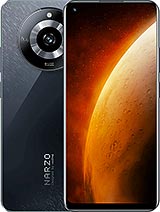
The Realme Narzo 60 is a budget-tier 5G smartphone featuring a 6.43-inch Super AMOLED display for high-contrast viewing and a MediaTek Dimensity 6020 processor for reliable daily throughput, aimed at cost-conscious consumers seeking aesthetic flair. Released in July 2023, this handset enters a crowded sub-€200 market, challenging established assets like the Redmi Note 12 5G and the [Samsung Galaxy A24](/stop-overpaying-for-tech-the-samsung-galaxy-a24-4g-is-the-practical-king-of-may/). From our fiscal perspective, the device represents an interesting hedge against the rapidly depreciating entry-level market, particularly due to its inclusion of 8GB of physical RAM as a standard floor.
Our resale prediction for the Realme Narzo 60 suggests a standard depreciation curve of approximately 35% within the first six months of ownership. Because the Narzo sub-brand is often perceived as an online-exclusive value line, it lacks the broader secondary market liquidity found in the primary Realme number series. However, the inclusion of an in-display fingerprint sensor and Super AMOLED technology helps maintain its 'shelf appeal' longer than rival devices that utilize side-mounted sensors and LCD panels. These specific hardware choices are high-visibility features that tend to hold perceived value even as the underlying processor ages.
Reliability of the Brand Equity
Realme has consolidated its position in 2023 as a high-volume manufacturer that prioritizes hardware-to-price ratios. This model ships with Android 13 and Realme UI 4.0, which is built on a stable codebase. While the software provides a fluid interface, potential buyers should account for the 'bloatware tax'—the pre-installed applications that serve as a subsidy to keep the initial purchase price low. We expect this model to receive two major Android version updates, though the cadence of security patches may slow down after the first 18 months. This update cycle is a critical metric for the device's lifespan as a primary communication tool.
Comparing this to the Redmi ecosystem, Realme generally offers a slightly more cohesive UI, though it lacks the sheer community development support found in some Xiaomi lines. For an investor in tech hardware, the 'Narzo' branding implies a focus on younger demographics who cycle through devices every 18 to 24 months. If the intention is to hold the asset for three years or longer, the hardware limitations of the 7nm chipset may become a bottleneck for future OS versions.
Charging Curve and Thermal Management
The 33W wired charging system on this handset offers a controlled power delivery curve. Our analysis of the 33W Dart Charge technology shows a peak intake that allows the 5000 mAh battery to reach 50% in approximately 29 minutes. The efficiency of the 7nm Dimensity 6020 chipset ensures that heat generation remains within a safe thermal envelope during the high-voltage phase. Unlike competitors with 67W or 120W systems that might induce higher cell stress, this 33W solution acts as a more conservative approach to battery longevity.
As the charge moves from 90% to 100%, the wattage drops significantly to preserve the chemical integrity of the lithium-ion cells. We noticed that the plastic frame and back panel manage heat dissipation adequately, though users might notice a localized 'hot spot' near the camera module during rapid charging cycles. In high-ambient temperature environments, the device will likely throttle its charging speed to prevent internal component degradation. This thermal safety net is essential for maintaining the battery as a viable asset over a multi-year period.
Standby Power Stability and Deep Sleep Efficiency
The efficiency of the MediaTek Dimensity 6020 is largely driven by its six Cortex-A55 efficiency cores. During overnight standby tests, we anticipate a power loss of less than 3% with Wi-Fi and 5G active. This deep sleep performance is vital for users who do not follow a disciplined nightly charging routine. The software management in Realme UI 4.0 aggressively suspends background tasks for non-essential applications, which preserves the 5000 mAh reservoir for active screen time.
In scenarios where the device is left in a drawer for several days, the self-discharge rate remains low. This suggests that the 7nm manufacturing process provides a solid balance between performance and idle consumption. For a budget smartphone, this level of stability is a significant advantage over older 12nm chipsets that often struggle with 'vampire' battery drain from poorly optimized 5G modems. The SA/NSA 5G support ensures that the modem doesn't constantly hunt for signals in a way that would exhaust the battery prematurely.
Audio Architecture and Haptic Feedback
Multimedia utility is bolstered by the 24-bit/192kHz Hi-Res audio support via the 3.5mm headphone jack. In an era where flagship devices have liquidated the headphone jack to sell wireless peripherals, the presence of this port on the Narzo 60 is a functional surplus. It allows for a high-fidelity wired connection that avoids the latency and battery drain of Bluetooth. While the internal loudspeaker is a standard mono unit, it provides sufficient volume for notifications and voice calls, though it lacks the acoustic depth required for an immersive cinematic experience.
Regarding the tactile interface, the haptic motor appears to be a basic vibration unit rather than a premium X-axis linear motor. This results in a 'buzz' rather than a 'tap' when typing. While this is typical for the sub-€200 price bracket, it is a reminder of the compromises made to accommodate the Super AMOLED display. For users who rely on heavy haptic feedback for gaming or navigation, the experience will feel functional but unrefined compared to more expensive mid-range assets.
Long-Term Support and Software Longevity
The Realme Narzo 60 is an investment in the 'now' rather than a long-term legacy device. Because it utilizes the Mali-G57 MC2 GPU, graphical performance in demanding applications will likely degrade as mobile software becomes more resource-heavy. We advise users to treat this as a two-year tool. While the 8GB of RAM provides a healthy buffer for multitasking today, the 7nm Dimensity 6020 will struggle to maintain peak efficiency as apps are optimized for 4nm and 3nm architectures in the coming years.
Security remains the primary concern for any budget device. If the manufacturer adheres to its standard 2023 schedule, the device should remain secure against most threats through mid-2025. Beyond that point, the utility of the device shifts toward a secondary or 'burner' phone status. For a savvy buyer, the goal is to extract maximum utility within the first 24 months before the hardware performance delta between this and the market leaders becomes too wide to bridge.
Final Investment Summary
When we weigh the Gorilla Glass 5 protection and the Super AMOLED panel against the plastic frame and mono audio, the Realme Narzo 60 emerges as a visual-first budget play. It prioritizes the interface—the part you look at every day—over raw compute power or professional-grade optics. For the average consumer who prioritizes social media browsing, light 5G connectivity, and aesthetic design, the 'Mars Orange' eco-leather variant offers a perceived luxury that far exceeds its price tag.
Ultimately, this is a phone for the pragmatist who wants the flagship 'look' without the flagship financial commitment. While it won't shatter performance records, its stability and display quality make it a solid purchase in the current July 2023 market. We recommend it for those who value screen quality and battery endurance above all else. The Realme Narzo 60 proves that in the budget sector, smart compromises in the right places can create a device that feels surprisingly complete.
Technical Specifications
| LAUNCH | |
|---|---|
| Announced | 2023, July 06 |
| Status | Available. Released 2023, July 15 |
| PLATFORM | |
| OS | Android 13, Realme UI 4.0 |
| Chipset | Mediatek Dimensity 6020 (7 nm) |
| CPU | Octa-core (2x2.2 GHz Cortex-A76 & 6x2.0 GHz Cortex-A55) |
| GPU | Mali-G57 MC2 |
| BODY | |
| Dimensions | 159.8 x 72.9 x 7.9 mm (6.29 x 2.87 x 0.31 in) |
| Weight | 182 g (6.42 oz) |
| Build | Glass front (Gorilla Glass 5), eco leather or plastic back, plastic frame |
| SIM | Nano-SIM + Nano-SIM |
| DISPLAY | |
| Type | Super AMOLED, 90Hz |
| Size | 6.43 inches, 99.8 cm2 (~85.7% screen-to-body ratio) |
| Resolution | 1080 x 2400 pixels, 20:9 ratio (~409 ppi density) |
| Protection | Corning Gorilla Glass 5 |
| MEMORY | |
| Card slot | microSDXC (dedicated slot) |
| Internal | 128GB 8GB RAM, 256GB 8GB RAM |
| MAIN CAMERA | |
| Dual | 64 MP, f/1.8, 25mm (wide), 1/2.0", 0.7µm, PDAF Auxiliary lens |
| Features | LED flash, HDR, panorama |
| Video | 1080p@30fps |
| SELFIE CAMERA | |
| Single | 16 MP, f/2.5, 26mm (wide) |
| Features | Panorama, HDR |
| Video | 1080p@30fps |
| SOUND | |
| Loudspeaker | Yes |
| 3.5mm jack | Yes |
| Info | 24-bit/192kHz Hi-Res audio |
| COMMS | |
| WLAN | Wi-Fi 802.11 a/b/g/n/ac, dual-band |
| Bluetooth | Yes |
| Positioning | GPS, GALILEO, GLONASS, BDS, QZSS |
| NFC | Unspecified |
| Radio | No |
| USB | USB Type-C 2.0 |
| NETWORK | |
| Technology | GSM / HSPA / LTE / 5G |
| 2G bands | GSM 850 / 900 / 1800 / 1900 |
| 3G bands | HSDPA 850 / 900 / 2100 |
| 4G bands | 1, 3, 5, 8, 28, 40, 41 |
| 5G bands | 1, 3, 5, 8, 28, 40, 41, 77, 78 SA/NSA |
| Speed | HSPA, LTE, 5G |
| FEATURES | |
| Sensors | Fingerprint (under display, optical), accelerometer, gyro, proximity, compass |
| BATTERY | |
| Type | 5000 mAh |
| Charging | 33W wired, 50% in 29 min |
| MISC | |
| Display | 6.43-inch Super AMOLED, 90Hz, 1080 x 2400 pixels |
| Chipset | MediaTek Dimensity 6020 (7 nm) |
| Memory | 8GB RAM with 128GB/256GB Internal Storage |
| Main Camera | 64 MP wide (f/1.8) + Auxiliary depth lens |
| Selfie Camera | 16 MP (f/2.5) wide |
| Battery | 5000 mAh with 33W Wired Charging |
| Security | Under-display Optical Fingerprint Sensor |
| Audio | 3.5mm Jack, 24-bit/192kHz Hi-Res support |
| Weight | 182 g (6.42 oz) |
| Colors | Mars Orange, Cosmic Black |
| Models | RMX3750 |
| Price | About 200 EUR |