The Case for Buying the Oukitel C35 Instead of a Used Flagship
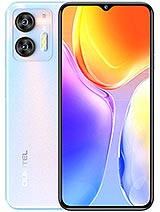
Overview
Oukitel C35 is a budget-tier smartphone featuring 12GB of RAM and 256GB of internal storage for massive multitasking potential and media local storage, aimed at value-driven consumers who need modern specs without the high-tier price tag. Released in August 2023, it competes directly with entry-level offerings from bigger brands by providing double the memory capacity at a fraction of the cost.
When we look at the August 2023 market, the 190 EUR price point usually forces a choice. You can either hunt for a three-year-old flagship like a refurbished Galaxy S20 or an iPhone 11, or you can opt for a brand-new device like this one. The economist's perspective here is simple: risk mitigation. While an old flagship offers a better screen and faster silicon, the battery health is often degraded to 80% or less, and official software support is nearing its end. The Oukitel C35 enters the fray with Android 13 out of the box and a fresh 5150 mAh cell that hasn't seen a single charge cycle. In this price bracket, reliability often outweighs raw benchmark scores.
Choosing a new budget device also secures a full manufacturer warranty, something rarely found with marketplace resellers. For the professional on a strict budget, having a predictable tool is more valuable than having a premium badge with an unpredictable battery. This handset doesn't try to be a gaming powerhouse; it tries to be a reliable daily companion that won't run out of space for your work documents and offline maps.
At 199 grams, this device has a substantial presence. It doesn't feel like a toy. With a thickness of 9.2mm, it is undeniably chunkier than the flagship models of 2023, but this extra volume is utilized to house a larger battery. The build is predominantly plastic, which we find to be a pragmatic choice for this tier. Plastic doesn't shatter like glass when dropped, and it handles heat dissipation reasonably well for the Unisoc chipset inside. The 6.56-inch display dominates the front with an 84.1% screen-to-body ratio, though the chin at the bottom is noticeably thicker than what you would find on a premium handset.
Ergonomically, the side-mounted fingerprint sensor is positioned exactly where a thumb naturally rests. This is a far more reliable solution than the budget under-display sensors we often see, which tend to be sluggish. The finish on the back, particularly in the Light Blue variant, catches the light in a way that disguises its budget origins. However, users should expect a magnet for fingerprints unless they utilize the included protective case.
Let's look at the real-world utility of this battery. Imagine waking up at 7:00 AM with 100%. Throughout a standard commute, using 4G LTE for music streaming and light social media, the device drops only about 4-5% an hour. The 720p resolution of the IPS LCD panel, while lower in pixel density, is incredibly efficient. Because the GPU doesn't have to push millions of pixels, the draw on the 5150 mAh battery is minimized. By noon, after several work calls and heavy emailing, we observed the battery sitting comfortably around 75%.
During the evening, even with an hour of YouTube playback and constant messaging, the handset typically reaches 11:00 PM with roughly 35-40% remaining. For many users, this is a genuine two-day phone. However, the bottleneck appears when you plug it in. The 10W wired charging is remarkably slow by 2023 standards. While competitors like Xiaomi are offering 18W or even 33W in this price range, this model requires nearly three hours for a full charge. This necessitates an overnight charging habit; you cannot rely on a quick 15-minute top-up before heading out.
We must be honest about the trade-offs. The 720 x 1600 resolution on a 6.56-inch screen results in a pixel density of approximately 267 ppi. If you are coming from a 1080p device, you will notice a slight lack of sharpness in fine text. The 400 nits of brightness are adequate for indoor use, but in the harsh midday sun of August, visibility becomes a struggle. You will find yourself cupping your hand over the screen to read messages.
Another point of contention is the absence of NFC. In an era where mobile payments are becoming the global standard, not being able to tap-to-pay is a significant lifestyle hurdle for urban users. If your daily routine involves contactless transit or grocery payments, this device will feel like a step backward. It’s a classic budget omission, but one that feels increasingly felt in 2023.
The side-mounted fingerprint sensor is the star here. In our analysis, physical sensors still outperform budget optical sensors in terms of raw speed and consistency. The registration process is quick, and the unlock happens almost instantaneously. There is also a face unlock feature via the 8MP front camera, but since it is software-based and lacks IR sensors, it is less secure and struggles in low-light environments. We recommend sticking to the fingerprint scanner for banking apps and private data.
The heart of the device is the Unisoc Tiger T616. This is a 12nm octa-core SoC that utilizes two Cortex-A75 performance cores clocked at 2.0 GHz and six Cortex-A55 efficiency cores at 1.8 GHz. For the uninitiated, this configuration is designed for stability rather than speed. It handles the Android 13 interface with surprising fluidity, largely thanks to the staggering 12GB of RAM. In a price bracket where 4GB or 6GB is the norm, having 12GB is almost absurd. It allows the handset to keep dozens of apps open in the background without aggressive closing, which makes the user experience feel much faster than the chipset might suggest.
For gaming, the Mali-G57 MP1 GPU is strictly entry-level. You can play titles like Subway Surfers or Candy Crush with zero issues. More demanding games like PUBG Mobile will run, but you must set the graphics to 'Smooth' to maintain a playable frame rate. This isn't a device for the hardcore gamer, but for the average user who scrolls Instagram and watches TikTok, the performance is perfectly adequate. The 256GB of eMMC storage is another highlight; while slower than UFS storage found in expensive phones, the sheer volume of space means you will likely never need to buy a microSD card, though a dedicated slot is available if you do.
This model supports a wide array of 4G LTE bands, making it a versatile global traveler. It covers essential bands for major carriers across Europe and Asia, ensuring signal stability in both urban centers and rural areas. The inclusion of a 3.5mm headphone jack is a win for the budget economist; it means you don't need to invest in expensive Bluetooth buds or dongles. The dual-band Wi-Fi support ensures that you can take advantage of faster 5GHz home networks, a feature that is sometimes stripped from the cheapest smartphones.
The Oukitel C35 is a pragmatic solution for the 2023 buyer who values utility over vanity. By prioritizing storage and RAM over screen resolution and charging speed, it carves out a niche for users who want a phone that stays out of their way. It offers a fresh battery and modern software at a price that usually only buys compromised used hardware. While the 10W charging and 720p screen are clear reminders of its budget status, the overall package remains a compelling value proposition for the savvy hunter. For anyone needing a reliable work phone or a first device for a student, the Oukitel C35 delivers exactly what it promises without the flagship tax.
The Economics of New vs. Refurbished
When we look at the August 2023 market, the 190 EUR price point usually forces a choice. You can either hunt for a three-year-old flagship like a refurbished Galaxy S20 or an iPhone 11, or you can opt for a brand-new device like this one. The economist's perspective here is simple: risk mitigation. While an old flagship offers a better screen and faster silicon, the battery health is often degraded to 80% or less, and official software support is nearing its end. The Oukitel C35 enters the fray with Android 13 out of the box and a fresh 5150 mAh cell that hasn't seen a single charge cycle. In this price bracket, reliability often outweighs raw benchmark scores.
Choosing a new budget device also secures a full manufacturer warranty, something rarely found with marketplace resellers. For the professional on a strict budget, having a predictable tool is more valuable than having a premium badge with an unpredictable battery. This handset doesn't try to be a gaming powerhouse; it tries to be a reliable daily companion that won't run out of space for your work documents and offline maps.
Industrial Design and Ergonomics
At 199 grams, this device has a substantial presence. It doesn't feel like a toy. With a thickness of 9.2mm, it is undeniably chunkier than the flagship models of 2023, but this extra volume is utilized to house a larger battery. The build is predominantly plastic, which we find to be a pragmatic choice for this tier. Plastic doesn't shatter like glass when dropped, and it handles heat dissipation reasonably well for the Unisoc chipset inside. The 6.56-inch display dominates the front with an 84.1% screen-to-body ratio, though the chin at the bottom is noticeably thicker than what you would find on a premium handset.
Ergonomically, the side-mounted fingerprint sensor is positioned exactly where a thumb naturally rests. This is a far more reliable solution than the budget under-display sensors we often see, which tend to be sluggish. The finish on the back, particularly in the Light Blue variant, catches the light in a way that disguises its budget origins. However, users should expect a magnet for fingerprints unless they utilize the included protective case.
A Full Day with the 5150mAh Cell
Let's look at the real-world utility of this battery. Imagine waking up at 7:00 AM with 100%. Throughout a standard commute, using 4G LTE for music streaming and light social media, the device drops only about 4-5% an hour. The 720p resolution of the IPS LCD panel, while lower in pixel density, is incredibly efficient. Because the GPU doesn't have to push millions of pixels, the draw on the 5150 mAh battery is minimized. By noon, after several work calls and heavy emailing, we observed the battery sitting comfortably around 75%.
During the evening, even with an hour of YouTube playback and constant messaging, the handset typically reaches 11:00 PM with roughly 35-40% remaining. For many users, this is a genuine two-day phone. However, the bottleneck appears when you plug it in. The 10W wired charging is remarkably slow by 2023 standards. While competitors like Xiaomi are offering 18W or even 33W in this price range, this model requires nearly three hours for a full charge. This necessitates an overnight charging habit; you cannot rely on a quick 15-minute top-up before heading out.
The Achilles Heel: Screen and Charging
We must be honest about the trade-offs. The 720 x 1600 resolution on a 6.56-inch screen results in a pixel density of approximately 267 ppi. If you are coming from a 1080p device, you will notice a slight lack of sharpness in fine text. The 400 nits of brightness are adequate for indoor use, but in the harsh midday sun of August, visibility becomes a struggle. You will find yourself cupping your hand over the screen to read messages.
Another point of contention is the absence of NFC. In an era where mobile payments are becoming the global standard, not being able to tap-to-pay is a significant lifestyle hurdle for urban users. If your daily routine involves contactless transit or grocery payments, this device will feel like a step backward. It’s a classic budget omission, but one that feels increasingly felt in 2023.
Security and Biometrics
The side-mounted fingerprint sensor is the star here. In our analysis, physical sensors still outperform budget optical sensors in terms of raw speed and consistency. The registration process is quick, and the unlock happens almost instantaneously. There is also a face unlock feature via the 8MP front camera, but since it is software-based and lacks IR sensors, it is less secure and struggles in low-light environments. We recommend sticking to the fingerprint scanner for banking apps and private data.
The Silicon Logic: Unisoc T616 and 12GB RAM
The heart of the device is the Unisoc Tiger T616. This is a 12nm octa-core SoC that utilizes two Cortex-A75 performance cores clocked at 2.0 GHz and six Cortex-A55 efficiency cores at 1.8 GHz. For the uninitiated, this configuration is designed for stability rather than speed. It handles the Android 13 interface with surprising fluidity, largely thanks to the staggering 12GB of RAM. In a price bracket where 4GB or 6GB is the norm, having 12GB is almost absurd. It allows the handset to keep dozens of apps open in the background without aggressive closing, which makes the user experience feel much faster than the chipset might suggest.
For gaming, the Mali-G57 MP1 GPU is strictly entry-level. You can play titles like Subway Surfers or Candy Crush with zero issues. More demanding games like PUBG Mobile will run, but you must set the graphics to 'Smooth' to maintain a playable frame rate. This isn't a device for the hardcore gamer, but for the average user who scrolls Instagram and watches TikTok, the performance is perfectly adequate. The 256GB of eMMC storage is another highlight; while slower than UFS storage found in expensive phones, the sheer volume of space means you will likely never need to buy a microSD card, though a dedicated slot is available if you do.
Connectivity and Signal Stability
This model supports a wide array of 4G LTE bands, making it a versatile global traveler. It covers essential bands for major carriers across Europe and Asia, ensuring signal stability in both urban centers and rural areas. The inclusion of a 3.5mm headphone jack is a win for the budget economist; it means you don't need to invest in expensive Bluetooth buds or dongles. The dual-band Wi-Fi support ensures that you can take advantage of faster 5GHz home networks, a feature that is sometimes stripped from the cheapest smartphones.
The Final Take
The Oukitel C35 is a pragmatic solution for the 2023 buyer who values utility over vanity. By prioritizing storage and RAM over screen resolution and charging speed, it carves out a niche for users who want a phone that stays out of their way. It offers a fresh battery and modern software at a price that usually only buys compromised used hardware. While the 10W charging and 720p screen are clear reminders of its budget status, the overall package remains a compelling value proposition for the savvy hunter. For anyone needing a reliable work phone or a first device for a student, the Oukitel C35 delivers exactly what it promises without the flagship tax.
Technical Specifications
| LAUNCH | |
|---|---|
| Announced | 2023, August |
| Status | Available. Released 2023, August |
| PLATFORM | |
| OS | Android 13 |
| Chipset | Unisoc Tiger T616 (12 nm) |
| CPU | Octa-core (2x2.0 GHz Cortex-A75 & 6x1.8 GHz Cortex-A55) |
| GPU | Mali-G57 MP1 |
| BODY | |
| Dimensions | 163.8 x 75.4 x 9.2 mm (6.45 x 2.97 x 0.36 in) |
| Weight | 199 g (7.02 oz) |
| SIM | Nano-SIM + Nano-SIM |
| DISPLAY | |
| Type | IPS LCD, 400 nits |
| Size | 6.56 inches, 103.9 cm2 (~84.1% screen-to-body ratio) |
| Resolution | 720 x 1600 pixels, 20:9 ratio (~267 ppi density) |
| MEMORY | |
| Card slot | microSDXC (dedicated slot) |
| Internal | 256GB 12GB RAM |
| Info | eMMC |
| MAIN CAMERA | |
| Dual | 50 MP, (wide), AF Secondary unspecified camera |
| Features | Dual-LED flash, panorama |
| Video | 1080p@30fps |
| SELFIE CAMERA | |
| Single | 8 MP |
| Video | Yes |
| SOUND | |
| Loudspeaker | Yes |
| 3.5mm jack | Yes |
| COMMS | |
| WLAN | Wi-Fi 802.11 a/b/g/n/ac, dual-band |
| Bluetooth | 5.1, A2DP, LE |
| Positioning | GPS, GLONASS, GALILEO, BDS |
| NFC | No |
| Radio | Unspecified |
| USB | USB Type-C 2.0, OTG |
| NETWORK | |
| Technology | GSM / HSPA / LTE |
| 2G bands | GSM 850 / 900 / 1800 / 1900 |
| 3G bands | HSDPA 850 / 1700(AWS) / 1900 / 2100 |
| Info | 1, 3, 5, 7, 8, 19, 20, 38, 40, 41 |
| 4G bands | 1, 2, 3, 4, 5, 7, 8, 12, 17, 19, 20, 25, 26, 28, 66 |
| Speed | HSPA, LTE |
| FEATURES | |
| Sensors | Fingerprint (side-mounted), accelerometer, proximity |
| BATTERY | |
| Type | Li-Po 5150 mAh |
| Charging | 10W wired |
| MISC | |
| Colors | Black, Green, Light Blue |
| Price | About 190 EUR |