The Depreciation Gamble - Is the Honor X6a a Smart Asset or a Sunk Cost
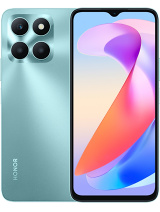
Overview
The Projected Resale Curve
Honor X6a is a budget-tier smartphone featuring a 5200 mAh battery for multi-day endurance and a 50 MP triple camera for high-resolution daily captures, aimed at users prioritizing utility and battery longevity over raw processing power. Released in July 2023, it enters a volatile entry-level market where it must compete with established value leaders from the Redmi and Galaxy A-series. We anticipate a standard depreciation curve for this segment, likely losing 40% of its initial market value within the first six months. This is standard for devices utilizing plastic builds and entry-level silicon.
From a financial perspective, the resale value of this handset will rely heavily on its storage configuration. The 128GB storage base model provides a better buffer against obsolescence than 64GB rivals. In the secondary market, buyers often prioritize storage and battery health. Since this device boasts a larger-than-average 5200 mAh cell, it maintains a slight edge in long-term value retention compared to standard 5000 mAh competitors. However, the lack of 5G connectivity in July 2023 will accelerate its price drop as 5G networks continue to expand.
Comparing this to the previous year's budget offerings, the brand has made a clear choice to prioritize battery and screen refresh rate over display resolution. This trade-off is a calculation aimed at younger users or delivery professionals who value fluid scrolling and uptime. We expect the trade-in value to remain stable for approximately 12 months before the Helio G36 chipset begins to feel the weight of newer, heavier software updates.
Infrastructure of Reliability
The choice of the Mediatek Helio G36 chipset built on a 12nm process indicates a focus on thermal stability and efficiency rather than peak performance. This processor uses eight Cortex-A53 cores. While these cores are power-efficient, they are aging technology. In our assessment, this infrastructure is designed for low-impact tasks like WhatsApp, browsing, and light social media. The PowerVR GE8320 GPU handles basic UI animations well, particularly when paired with the 90Hz refresh rate, but gaming should be limited to casual titles.
Build reliability is another pillar of the value proposition. While the device uses a plastic frame and back, the construction appears tight. We do not observe the creaking associated with lower-end white-label phones. Honor has regained its footing after separating from its former parent company, and the integration of Google Mobile Services is a critical factor for the longevity of this asset. Without these services, the resale value would be near zero; with them, it remains a viable global product.
Network reliability is ensured by support for standard LTE bands, which provides stable signals for major operators. The inclusion of NFC is a surprising and welcome addition in this price bracket. Many competitors omit this sensor to save costs, but its presence here makes the handset a more versatile tool for digital payments and transit cards, increasing its utility for urban commuters.
Accessory Equilibrium
In terms of protection and peripherals, the handset follows a standard design language that ensures high compatibility with third-party accessories. The flat screen design makes the application of tempered glass screen protectors straightforward, avoiding the lifting issues seen with curved panels. Given the July 2023 launch, we expect a wide variety of silicone and rugged cases to be available immediately from major online retailers.
One significant value-add is the presence of the 3.5mm headphone jack. In an era where budget wireless earbuds still suffer from latency and battery degradation, the ability to use reliable wired audio is a win for the cost-conscious buyer. It also means users don't need to purchase USB-C dongles, which are often fragile and easily lost. This compatibility simplifies the ownership experience.
The charging situation is also favorable. The 22.5W wired charging speed is faster than the 10W or 15W standard found on many ultra-[budget phones](/trend/best-budget-phones-2026/). While it isn't "fast" by flagship standards, it strikes a balance that preserves battery chemistry over time. Rapid charging generates heat, which is the primary enemy of lithium-polymer longevity. By capping at 22.5W, Honor likely aims to keep the 5200 mAh cell healthy for a three-year lifecycle.
Unboxing the Value Proposition
The unboxing experience remains pragmatic. Opening the retail packaging reveals the handset, a USB Type-C 2.0 cable, and the 22.5W SuperCharge power adapter. Including the brick in the box is a significant financial saving for the consumer, as many brands are now removing chargers even in the budget segment. This adds roughly $15 to $20 of immediate value to the purchase.
Software-wise, it ships with MagicOS 7.1 based on Android 13. The interface is heavily skinned, which might be polarizing, but it includes several battery management tools that complement the large hardware capacity. During the initial setup, users will notice several pre-installed applications. While this bloatware is common in this price tier to subsidize the hardware cost, most can be uninstalled or disabled to reclaim storage space.
The 6.56-inch display uses TFT LCD technology. While this offers better durability than cheap OLEDs, which are prone to burn-in, it lacks the deep blacks and vibrant contrast of higher-end panels. The 720 x 1612 resolution results in a pixel density of approximately 269 ppi. Text remains legible, but fine details in high-resolution images will appear soft. This is a clear area where the economist's red pen has struck to keep the price at approximately 150 EUR.
The Lifespan of the Helio G36
We must address the elephant in the room: the processor. The Helio G36 is an entry-level chip. If you are a power user or a gamer, this is a sunk cost. However, for a user who needs a reliable communication tool that doesn't die before dinner, the trade-off makes sense. The 90Hz refresh rate masks some of the chipset's sluggishness by making the UI feel more responsive than it actually is. It's a clever trick of perception.
The 50 MP f/1.8 main camera is the star of the imaging setup. With PDAF (Phase Detection Auto Focus), it can lock onto subjects relatively quickly in daylight. The sensor size and aperture suggest the hardware potential for decent social media shots, though we expect the ISP (Image Signal Processor) in the G36 to struggle with complex HDR scenes or low-light noise reduction. The secondary 2 MP macro and auxiliary lenses are essentially filler to reach a "triple camera" marketing claim; they offer minimal photographic utility.
Battery endurance is where this device justifies its existence. A 5200 mAh battery paired with a low-resolution screen and a power-sipping CPU is a recipe for a two-day phone. In a world where people are increasingly tethered to power banks, the independence offered by this handset is its strongest selling point. For a student or a senior, this reliability often outweighs the need for high-end gaming performance.
Strategic Investment Summary
The Honor X6a is not a device bought for prestige; it is a tool bought for a purpose. It represents a conservative investment in uptime. While the TFT 720p screen and Helio G36 limit its appeal to enthusiasts, the 5200 mAh battery, 128GB storage, and NFC inclusion make it a very competitive package for the 150 EUR price point.
Is it a smart asset? If your goal is a secondary work phone or a primary device for someone with basic needs, yes. It avoids the pitfalls of under-specced 2GB RAM phones that become e-waste within months. By providing 4GB or 6GB of RAM, Honor has ensured this device can handle the increasing RAM demands of modern apps for at least a couple of years. It is a pragmatic choice for the current economic climate of mid-2023.
In the long run, the Honor X6a will be remembered as a battery champion of its era. It doesn't try to be a flagship killer. It tries to be a phone that is always on when you need it. For many buyers, that is the only metric that matters.
Technical Specifications
| LAUNCH | |
|---|---|
| Announced | 2023, July 28 |
| Status | Available. Released 2023, July 28 |
| PLATFORM | |
| OS | Android 13, upgradable to Android 14, MagicOS 8 |
| Chipset | Mediatek Helio G36 (12 nm) |
| CPU | Octa-core (4x2.2 GHz Cortex-A53 & 4x1.7 GHz Cortex-A53) |
| GPU | PowerVR GE8320 |
| BODY | |
| Dimensions | 163.3 x 75.1 x 8.4 mm (6.43 x 2.96 x 0.33 in) |
| Weight | 188 g (6.63 oz) |
| SIM | Nano-SIM + Nano-SIM |
| DISPLAY | |
| Type | TFT LCD, 90Hz |
| Size | 6.56 inches, 103.4 cm2 (~84.3% screen-to-body ratio) |
| Resolution | 720 x 1612 pixels, 20:9 ratio (~269 ppi density) |
| MEMORY | |
| Card slot | microSDXC |
| Internal | 128GB 4GB RAM, 128GB 6GB RAM, 256GB 6GB RAM |
| MAIN CAMERA | |
| Triple | 50 MP, f/1.8, (wide), PDAF 2 MP (macro) Auxiliary lens |
| Features | LED flash, HDR, panorama |
| Video | 1080p@30fps |
| SELFIE CAMERA | |
| Single | 5 MP, f/2.2, (wide) |
| Video | 1080p@30fps |
| SOUND | |
| Loudspeaker | Yes |
| 3.5mm jack | Yes |
| COMMS | |
| WLAN | Wi-Fi 802.11 a/b/g/n/ac, dual-band, Wi-Fi Direct |
| Bluetooth | 5.1, A2DP, LE |
| Positioning | GPS, GLONASS, GALILEO, BDS |
| NFC | Yes |
| Radio | No |
| USB | USB Type-C 2.0, OTG |
| NETWORK | |
| Technology | GSM / HSPA / LTE |
| 2G bands | GSM 850 / 900 / 1800 / 1900 |
| 3G bands | HSDPA 850 / 900 / 1900 / 2100 |
| 4G bands | LTE |
| Speed | HSPA, LTE |
| FEATURES | |
| Sensors | Fingerprint (side-mounted), accelerometer, proximity, gyro |
| BATTERY | |
| Type | Li-Po 5200 mAh |
| Charging | 22.5W wired, 31% in 20 min |
| MISC | |
| Display | 6.56-inch TFT LCD, 90Hz, 720 x 1612 pixels |
| Chipset | Mediatek Helio G36 (12 nm) |
| Memory | 128GB Storage, 4GB/6GB RAM |
| Main Camera | 50 MP, f/1.8 (wide) + 2 MP (macro) + Auxiliary |
| Selfie Camera | 5 MP, f/2.2 |
| Battery | 5200 mAh, 22.5W Wired Charging |
| OS | Android 13, MagicOS 7.1 |
| Dimensions | 163.3 x 75.1 x 8.4 mm, 188 g |
| Features | NFC, Side-mounted Fingerprint, 3.5mm Jack |
| Colors | Cyan Lake, Midnight Black |
| Models | WDY-LX1, WDY-LX2 |
| Price | About 150 EUR |