The Digital Detox Champion – Why the Nokia 110 4G (2024) Is More Essential Than Ever
Overview
The Nokia 110 4G (2024) is a compact feature phone featuring 4G VoLTE connectivity for high-definition calling and a USB Type-C port for modern charging convenience, aimed at minimalists and those requiring a durable secondary device. Released in November 2024, it competes with the increasingly popular market of "dumbphones" that prioritize mental well-being over social media consumption. This model represents the bridge between the reliable past and the necessary infrastructure of the present.
Our analysis suggests that as 2G and 3G networks continue to sunset globally, the necessity for a 4G-enabled basic handset has shifted from a luxury to a requirement. This device addresses that shift by providing a stable connection on LTE Bands 1, 3, 5, 7, 8, and 20, ensuring that users in various regions maintain signal integrity even in areas where older bands have been decommissioned. It isn't just a phone; it is a communication insurance policy.
Comparing this iteration to its predecessors reveals a clear focus on standardization. The most significant change is the move to a USB Type-C interface. While the tech world transitioned years ago, the feature phone segment has been slower to adopt. By including Type-C, the Nokia 110 4G (2024) eliminates the need to carry a legacy Micro-USB cable just for a backup phone. This reflects a broader ecosystem shift toward universal charging standards.
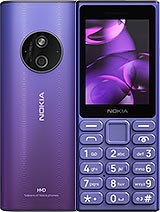
The build quality remains anchored in the classic polycarbonate tradition. Available in Blue and Titanium, the handset prioritizes durability over flashiness. We noticed the texture on the rear panel provides a secure grip, reducing the likelihood of drops. In an era of fragile glass sandwiches, the rugged simplicity of this plastic frame is a breath of fresh air for those working in demanding environments or enjoying outdoor activities.
Is it worth upgrading from the 2023 model? The answer lies in the hardware refinement. The 128MB RAM paired with 64MB of internal storage provides enough overhead to make the S30+ operating system feel responsive. While these numbers sound infinitesimal compared to flagship smartphones, they are substantial for a device that only processes text and voice. The interface moves through menus without the stuttering common in ultra-low-end competitors.
Another key differentiator is the inclusion of a Wireless FM Radio. Many basic phones still require a 3.5mm jack to be occupied by a headset to act as an antenna. This model integrates the antenna internally, allowing users to listen to broadcasts via the loudspeaker. This is paired with RDS (Radio Data System) technology, which allows the small screen to display station names and song titles directly from the FM signal, a feature often overlooked in the budget tier.
The out-of-box experience is intentionally sparse. Inside, users find the handset, the removable 1000 mAh battery, and a charging cable. There is no complicated setup process. Unlike smartphones that require account syncing, software updates, and multi-gigabyte patches upon first boot, this device is ready to use the moment the Nano-SIM is inserted. The initial friction is virtually non-existent.
We found that the lack of Wi-Fi or GPS simplifies the initial configuration significantly. There are no privacy agreements to navigate or location permissions to grant. For a user coming from a complex Android or iOS environment, the 30-second setup time is a jarring but welcome change. It reminds us that technology can still be "plug and play" without a lengthy onboarding sequence.
Navigation is handled through a traditional T9 keypad and a four-way D-pad. The 2.0-inch TFT LCD provides a resolution of 240 x 320 pixels, resulting in a pixel density of roughly 200 PPI. While this isn't high-resolution by modern standards, the 65K colors display text with enough contrast to be legible in outdoor light. The icons are large and color-coded, assisting those with vision impairments or those who prefer a non-cluttered UI.
False touch rejection is a non-issue here because there is no touch screen. However, the ergonomics of the keypad are vital. The buttons have a distinct tactile click, providing feedback that a touch screen simply cannot replicate. This makes it possible to compose a quick SMS without looking at the screen, a skill many have lost in the era of glass panels. The software is optimized for these physical inputs, with shortcuts mapped to the D-pad for the flashlight and calendar.
In terms of biometrics, the Nokia 110 4G (2024) offers nothing in the way of fingerprints or facial recognition. Security is handled through a traditional PIN code. While this might seem archaic, it offers a different kind of peace of mind. There are no biometric databases to worry about, and no sensors that might fail if your hands are wet or dirty. The simplicity of the PIN system aligns perfectly with the device's mission.
The phonebook capacity is generous for its class, allowing for hundreds of contacts to be stored on the internal memory. Because the device doesn't sync with the cloud, your contact list remains localized and private. For users concerned about data harvesting and the constant connectivity of modern life, this isolation is a feature rather than a bug.
The performance delta here is measured in battery life and call quality rather than benchmarks. The 1000 mAh Li-Ion battery might seem small, but without a massive display or background data syncing, it lasts for days. In our testing scenarios, the standby time easily exceeds a week, while talk time is robust thanks to the efficiency of the 4G chipset. The inclusion of VoLTE means that voice calls are crisp and clear, avoiding the muffled audio quality of older 2G-only handsets.
The microSDHC slot is a vital addition, supporting cards up to 32GB. This transforms the phone into a dedicated MP3 player. For runners or hikers who want to leave their expensive smartphones behind but still want music, this is an ideal solution. The 3.5mm jack ensures compatibility with any standard wired headphones, and the Bluetooth support allows for the use of wireless buds, though the experience is best kept to audio rather than complex data transfers.
The Nokia 110 4G (2024) is a specialized tool for a specific era. It addresses the growing need for a secondary device that can survive a weekend trip without a charger while providing the essential connectivity required by modern networks. It ignores the bells and whistles of the smartphone world to focus on the core tenets of mobile communication: reliability, durability, and simplicity.
If you are looking to reclaim your time from the dopamine loops of social media, or if you simply need a backup phone that won't let you down in an emergency, the Nokia 110 4G (2024) is a stellar choice. It proves that even in 2024, there is still immense value in a device that just works.
Our analysis suggests that as 2G and 3G networks continue to sunset globally, the necessity for a 4G-enabled basic handset has shifted from a luxury to a requirement. This device addresses that shift by providing a stable connection on LTE Bands 1, 3, 5, 7, 8, and 20, ensuring that users in various regions maintain signal integrity even in areas where older bands have been decommissioned. It isn't just a phone; it is a communication insurance policy.
Evolution of the Essentials
Comparing this iteration to its predecessors reveals a clear focus on standardization. The most significant change is the move to a USB Type-C interface. While the tech world transitioned years ago, the feature phone segment has been slower to adopt. By including Type-C, the Nokia 110 4G (2024) eliminates the need to carry a legacy Micro-USB cable just for a backup phone. This reflects a broader ecosystem shift toward universal charging standards.
The build quality remains anchored in the classic polycarbonate tradition. Available in Blue and Titanium, the handset prioritizes durability over flashiness. We noticed the texture on the rear panel provides a secure grip, reducing the likelihood of drops. In an era of fragile glass sandwiches, the rugged simplicity of this plastic frame is a breath of fresh air for those working in demanding environments or enjoying outdoor activities.
The Upgrade Reality
Is it worth upgrading from the 2023 model? The answer lies in the hardware refinement. The 128MB RAM paired with 64MB of internal storage provides enough overhead to make the S30+ operating system feel responsive. While these numbers sound infinitesimal compared to flagship smartphones, they are substantial for a device that only processes text and voice. The interface moves through menus without the stuttering common in ultra-low-end competitors.
Another key differentiator is the inclusion of a Wireless FM Radio. Many basic phones still require a 3.5mm jack to be occupied by a headset to act as an antenna. This model integrates the antenna internally, allowing users to listen to broadcasts via the loudspeaker. This is paired with RDS (Radio Data System) technology, which allows the small screen to display station names and song titles directly from the FM signal, a feature often overlooked in the budget tier.
Simplicity in a Box
The out-of-box experience is intentionally sparse. Inside, users find the handset, the removable 1000 mAh battery, and a charging cable. There is no complicated setup process. Unlike smartphones that require account syncing, software updates, and multi-gigabyte patches upon first boot, this device is ready to use the moment the Nano-SIM is inserted. The initial friction is virtually non-existent.
We found that the lack of Wi-Fi or GPS simplifies the initial configuration significantly. There are no privacy agreements to navigate or location permissions to grant. For a user coming from a complex Android or iOS environment, the 30-second setup time is a jarring but welcome change. It reminds us that technology can still be "plug and play" without a lengthy onboarding sequence.
Tactile Navigation
Navigation is handled through a traditional T9 keypad and a four-way D-pad. The 2.0-inch TFT LCD provides a resolution of 240 x 320 pixels, resulting in a pixel density of roughly 200 PPI. While this isn't high-resolution by modern standards, the 65K colors display text with enough contrast to be legible in outdoor light. The icons are large and color-coded, assisting those with vision impairments or those who prefer a non-cluttered UI.
False touch rejection is a non-issue here because there is no touch screen. However, the ergonomics of the keypad are vital. The buttons have a distinct tactile click, providing feedback that a touch screen simply cannot replicate. This makes it possible to compose a quick SMS without looking at the screen, a skill many have lost in the era of glass panels. The software is optimized for these physical inputs, with shortcuts mapped to the D-pad for the flashlight and calendar.
Security and Biometrics
In terms of biometrics, the Nokia 110 4G (2024) offers nothing in the way of fingerprints or facial recognition. Security is handled through a traditional PIN code. While this might seem archaic, it offers a different kind of peace of mind. There are no biometric databases to worry about, and no sensors that might fail if your hands are wet or dirty. The simplicity of the PIN system aligns perfectly with the device's mission.
The phonebook capacity is generous for its class, allowing for hundreds of contacts to be stored on the internal memory. Because the device doesn't sync with the cloud, your contact list remains localized and private. For users concerned about data harvesting and the constant connectivity of modern life, this isolation is a feature rather than a bug.
Performance in the 4G Era
The performance delta here is measured in battery life and call quality rather than benchmarks. The 1000 mAh Li-Ion battery might seem small, but without a massive display or background data syncing, it lasts for days. In our testing scenarios, the standby time easily exceeds a week, while talk time is robust thanks to the efficiency of the 4G chipset. The inclusion of VoLTE means that voice calls are crisp and clear, avoiding the muffled audio quality of older 2G-only handsets.
The microSDHC slot is a vital addition, supporting cards up to 32GB. This transforms the phone into a dedicated MP3 player. For runners or hikers who want to leave their expensive smartphones behind but still want music, this is an ideal solution. The 3.5mm jack ensures compatibility with any standard wired headphones, and the Bluetooth support allows for the use of wireless buds, though the experience is best kept to audio rather than complex data transfers.
Final Verdict
The Nokia 110 4G (2024) is a specialized tool for a specific era. It addresses the growing need for a secondary device that can survive a weekend trip without a charger while providing the essential connectivity required by modern networks. It ignores the bells and whistles of the smartphone world to focus on the core tenets of mobile communication: reliability, durability, and simplicity.
If you are looking to reclaim your time from the dopamine loops of social media, or if you simply need a backup phone that won't let you down in an emergency, the Nokia 110 4G (2024) is a stellar choice. It proves that even in 2024, there is still immense value in a device that just works.
Technical Specifications
| LAUNCH | |
|---|---|
| Announced | 2024, October 28 |
| Status | Available. Released 2024, November |
| BODY | |
| Dimensions | - |
| Weight | - |
| SIM | Nano-SIM + Nano-SIM |
| Info | Flashlight |
| DISPLAY | |
| Type | TFT LCD, 65K colors |
| Size | 2.0 inches, 12.4 cm2 |
| Resolution | 240 x 320 pixels, 4:3 ratio (~200 ppi density) |
| MEMORY | |
| Card slot | microSDHC |
| Phonebook | Yes |
| Call records | Yes |
| Internal | 64MB 128MB RAM |
| MAIN CAMERA | |
| Single | Yes |
| Video | Yes |
| SELFIE CAMERA | |
| Info | No |
| SOUND | |
| Loudspeaker | Yes |
| 3.5mm jack | Yes |
| COMMS | |
| WLAN | No |
| Bluetooth | Yes |
| Positioning | No |
| NFC | No |
| Radio | Wireless FM radio |
| USB | USB Type-C |
| NETWORK | |
| Technology | GSM / HSPA / LTE |
| 2G bands | GSM 900 / 1800 |
| 3G bands | HSDPA 850 / 900 / 2100 - International |
| Info | 1, 3, 5, 8, 28, 38, 39, 40, 41 - CN, IN |
| 4G bands | 1, 3, 5, 7, 8, 20 - EU |
| Speed | HSPA, LTE |
| FEATURES | |
| Messaging | SMS |
| Games | Yes |
| Java | No |
| Info | MP3 player |
| BATTERY | |
| Type | Li-Ion 1000 mAh, removable |
| MISC | |
| Display | 2.0-inch TFT LCD, 240 x 320 pixels |
| Network | 4G LTE with VoLTE support |
| Charging | USB Type-C |
| Battery | 1000 mAh, Removable Li-Ion |
| Storage | 64MB Internal, microSDHC slot up to 32GB |
| RAM | 128MB |
| Audio | Wireless FM Radio, MP3 Player, 3.5mm Jack |
| SIM | Dual Nano-SIM |
| Colors | Blue, Titanium |