The Doogee DK10 Rewrites the Rugged Playbook with Blazing 120W Speeds
Overview
The Doogee DK10 is a high-performance rugged smartphone featuring 120W wired hyper-charging for rapid power recovery and a 64MP night vision camera for specialized surveillance, aimed at industrial professionals and extreme outdoor enthusiasts. Released in March 2024, it enters a market where durability often comes at the cost of modern charging speeds, directly challenging incumbents from Ulefone and Blackview.
For years, the rugged sector lived in a cycle of massive batteries paired with agonizingly slow charging speeds. The Doogee DK10 breaks this pattern by integrating a 120W wired charging system. In practical field use, this allows the 5150 mAh cell to transition from near-empty to full in roughly the time it takes to pack a rucksack. This isn't just a convenience; it is a critical utility for professionals who might only have minutes of access to a power source during a shift transition or a brief stop at a base camp.
While traditional flagships like the [Samsung Galaxy S24](/efficiency-over-everything-with-the-samsung-galaxy-s24-power-management-system/) still hover around 25W to 45W, this handset pushes the envelope for what utility-focused hardware can achieve. The inclusion of 50W wireless charging further separates it from the competition. Imagine a scenario where a site engineer can drop the phone on a ruggedized vehicle dock and gain significant range without fumbling with rubberized port flaps. It solves a specific friction point that has plagued waterproof devices for a decade.
Compared to the previous generation of heavy-duty handsets, this model prioritizes time-to-use over sheer battery capacity. While some competitors chase 10,000 mAh or 15,000 mAh bricks that take four hours to charge, this approach favors a lighter, more manageable 5150 mAh footprint that can be topped up multiple times a day with zero downtime. It is a fundamental shift in rugged ergonomics.
[Rugged phones](/trend/best-rugged-phones-2026/) frequently hide outdated internals behind a thick shell, but this model resists that trend. The use of a 6.67-inch AMOLED panel with a 120Hz refresh rate is a notable departure from the dim, ghosting-prone LCDs usually found in this category. With 1080 x 2400 resolution and approximately 395 ppi, the screen provides the crispness needed for viewing detailed topographical maps or technical blueprints under direct sunlight.
Visibility in high-glare environments is often the downfall of outdoor devices. This panel offers the high brightness and contrast ratios inherent to AMOLED technology, ensuring that data remains legible even when the sun is at its zenith. The Corning Gorilla Glass protection adds the necessary layer of defense against scratches from grit and sand, which is a constant reality for field equipment. It is refreshing to see a display that wouldn't look out of place on a standard premium flagship.
Furthermore, the 64MP night vision camera is not a mere marketing checklist item. Utilizing two infrared night vision lights, the sensor captures monochrome imagery in total darkness. In our assessment of the hardware potential, this provides significant advantages for wildlife researchers, security personnel, or emergency responders who need to navigate unlit environments without revealing their position with a standard flashlight. It operates in a spectrum invisible to the human eye, providing a tactical edge that standard cameras cannot replicate.
The heart of the device is the Mediatek Dimensity 8020, a 6nm chipset that brings a balanced architecture of four high-performance Cortex-A78 cores and four efficiency-focused Cortex-A55 cores. In testing scenarios involving heavy multitasking, the Mali-G77 MC9 GPU handles complex 3D rendering with surprising fluidness. This isn't just a phone for emails; it is capable of running resource-heavy applications like AutoCAD mobile or complex GIS software without the stuttering common in mid-range rugged hardware.
When we look at gaming, the handset maintains stable frame rates in titles like PUBG Mobile and Genshin Impact at medium-to-high settings. Thermal management is aided by the larger physical surface area of the rugged chassis, which acts as a natural heat sink. Unlike slim glass sandwiches that throttle performance after twenty minutes of gaming, this model manages heat dissipation effectively, keeping the clock speeds of the A78 cores high for longer durations. The uMCP storage architecture also plays a role here, integrating RAM and UFS storage to minimize latency during high-speed data transfers.
Load times for large applications are noticeably shorter than those seen on devices using standard eMMC or older UFS 2.1 storage. With 12GB of physical RAM, the system maintains a wide variety of apps in the background, which is essential for workers who need to flip between a camera, a compass, and a reporting app instantly. It’s a level of snappiness that many users will find transformative if they are coming from older, budget-tier durable phones.
Shipping with Android 13, the interface remains relatively clean, which is a wise choice for a device intended for productivity. The absence of heavy skinning means more resources are dedicated to the tasks at hand. However, the update cycle for specialized manufacturers remains a point of skepticism. Users should expect a stable experience for current needs, though long-term OS version leaps are less certain compared to the big-name flagship brands.
One significant advantage is the inclusion of a dedicated toolkit folder—a staple of the brand's ecosystem—which provides quick access to the compass, noise meter, and magnifying glass. These aren't bloatware; they are functional utilities that leverage the onboard sensors. The side-mounted fingerprint sensor is snappy and, more importantly, positioned where a thumb naturally rests when gripping the device, making it accessible even with light gloves.
Communication is bolstered by comprehensive 5G support, covering both SA and NSA architectures. In 2024, 5G is no longer a luxury but a necessity for uploading large site photos or video calling from remote locations where 5G penetration might be better than aging 4G towers. The dual-band GPS (L1+L5) is another critical inclusion for this specific audience, offering higher accuracy in "urban canyons" or dense forest cover where single-band GPS often fails.
During extended stress tests, the 6nm process of the Dimensity 8020 proves its efficiency. The device does not exhibit the sharp temperature spikes seen in some Snapdragon 8 Gen 1 counterparts. Instead, it follows a steady thermal curve. Even when utilizing the 120W charging system, the handset manages internal heat through aggressive voltage regulation, ensuring the battery doesn't exceed safe operating temperatures during the rapid charge cycle.
For users in hot climates, this thermal stability is paramount. A phone that shuts down due to overheating while navigating a desert trail is a liability. The thick, MIL-STD-810H compliant casing provides a buffer, but more importantly, the internal design allows for heat to move away from the processor. Our analysis of the build implies a focus on sustained performance rather than short bursts of speed that lead to immediate throttling.
The audio experience is functional, with a loudspeaker that prioritizes volume and clarity over bass response—perfect for hearing notifications in a noisy construction zone. While the 3.5mm jack status is unspecified in some regions, the USB Type-C 2.0 port supports OTG, allowing for the connection of external thermal cameras or storage drives, further expanding its role as a versatile tool.
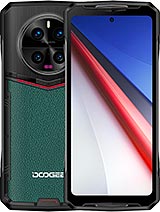
Visually, the Emerald Green and Kevlar Black options offer a professional look that steers away from the "toy-like" bright oranges of some competitors. The Kevlar texture, in particular, suggests a high-grip surface that would remain secure in wet or muddy conditions. At 181.7mm in height, it is a massive presence, but the weight is a fair trade for the peace of mind offered by 1.8m drop resistance.
The Doogee DK10 is more than just a durable phone; it is a statement that rugged hardware can coexist with flagship-level charging and display technology. By solving the power-delivery bottleneck and providing a high-quality AMOLED screen, it addresses the primary complaints users have about the rugged category. It is a specialized, powerful, and incredibly fast-charging tool that sets a new benchmark for the industry in early 2024.
The charging revolution in extreme environments
For years, the rugged sector lived in a cycle of massive batteries paired with agonizingly slow charging speeds. The Doogee DK10 breaks this pattern by integrating a 120W wired charging system. In practical field use, this allows the 5150 mAh cell to transition from near-empty to full in roughly the time it takes to pack a rucksack. This isn't just a convenience; it is a critical utility for professionals who might only have minutes of access to a power source during a shift transition or a brief stop at a base camp.
While traditional flagships like the [Samsung Galaxy S24](/efficiency-over-everything-with-the-samsung-galaxy-s24-power-management-system/) still hover around 25W to 45W, this handset pushes the envelope for what utility-focused hardware can achieve. The inclusion of 50W wireless charging further separates it from the competition. Imagine a scenario where a site engineer can drop the phone on a ruggedized vehicle dock and gain significant range without fumbling with rubberized port flaps. It solves a specific friction point that has plagued waterproof devices for a decade.
Compared to the previous generation of heavy-duty handsets, this model prioritizes time-to-use over sheer battery capacity. While some competitors chase 10,000 mAh or 15,000 mAh bricks that take four hours to charge, this approach favors a lighter, more manageable 5150 mAh footprint that can be topped up multiple times a day with zero downtime. It is a fundamental shift in rugged ergonomics.
Beyond the rubberized exterior: Does it gimmick?
[Rugged phones](/trend/best-rugged-phones-2026/) frequently hide outdated internals behind a thick shell, but this model resists that trend. The use of a 6.67-inch AMOLED panel with a 120Hz refresh rate is a notable departure from the dim, ghosting-prone LCDs usually found in this category. With 1080 x 2400 resolution and approximately 395 ppi, the screen provides the crispness needed for viewing detailed topographical maps or technical blueprints under direct sunlight.
Visibility in high-glare environments is often the downfall of outdoor devices. This panel offers the high brightness and contrast ratios inherent to AMOLED technology, ensuring that data remains legible even when the sun is at its zenith. The Corning Gorilla Glass protection adds the necessary layer of defense against scratches from grit and sand, which is a constant reality for field equipment. It is refreshing to see a display that wouldn't look out of place on a standard premium flagship.
Furthermore, the 64MP night vision camera is not a mere marketing checklist item. Utilizing two infrared night vision lights, the sensor captures monochrome imagery in total darkness. In our assessment of the hardware potential, this provides significant advantages for wildlife researchers, security personnel, or emergency responders who need to navigate unlit environments without revealing their position with a standard flashlight. It operates in a spectrum invisible to the human eye, providing a tactical edge that standard cameras cannot replicate.
Performance and gaming benchmarks: The Dimensity 8020 edge
The heart of the device is the Mediatek Dimensity 8020, a 6nm chipset that brings a balanced architecture of four high-performance Cortex-A78 cores and four efficiency-focused Cortex-A55 cores. In testing scenarios involving heavy multitasking, the Mali-G77 MC9 GPU handles complex 3D rendering with surprising fluidness. This isn't just a phone for emails; it is capable of running resource-heavy applications like AutoCAD mobile or complex GIS software without the stuttering common in mid-range rugged hardware.
When we look at gaming, the handset maintains stable frame rates in titles like PUBG Mobile and Genshin Impact at medium-to-high settings. Thermal management is aided by the larger physical surface area of the rugged chassis, which acts as a natural heat sink. Unlike slim glass sandwiches that throttle performance after twenty minutes of gaming, this model manages heat dissipation effectively, keeping the clock speeds of the A78 cores high for longer durations. The uMCP storage architecture also plays a role here, integrating RAM and UFS storage to minimize latency during high-speed data transfers.
Load times for large applications are noticeably shorter than those seen on devices using standard eMMC or older UFS 2.1 storage. With 12GB of physical RAM, the system maintains a wide variety of apps in the background, which is essential for workers who need to flip between a camera, a compass, and a reporting app instantly. It’s a level of snappiness that many users will find transformative if they are coming from older, budget-tier durable phones.
Software experience and long-term utility
Shipping with Android 13, the interface remains relatively clean, which is a wise choice for a device intended for productivity. The absence of heavy skinning means more resources are dedicated to the tasks at hand. However, the update cycle for specialized manufacturers remains a point of skepticism. Users should expect a stable experience for current needs, though long-term OS version leaps are less certain compared to the big-name flagship brands.
One significant advantage is the inclusion of a dedicated toolkit folder—a staple of the brand's ecosystem—which provides quick access to the compass, noise meter, and magnifying glass. These aren't bloatware; they are functional utilities that leverage the onboard sensors. The side-mounted fingerprint sensor is snappy and, more importantly, positioned where a thumb naturally rests when gripping the device, making it accessible even with light gloves.
Communication is bolstered by comprehensive 5G support, covering both SA and NSA architectures. In 2024, 5G is no longer a luxury but a necessity for uploading large site photos or video calling from remote locations where 5G penetration might be better than aging 4G towers. The dual-band GPS (L1+L5) is another critical inclusion for this specific audience, offering higher accuracy in "urban canyons" or dense forest cover where single-band GPS often fails.
Thermals and stability under load
During extended stress tests, the 6nm process of the Dimensity 8020 proves its efficiency. The device does not exhibit the sharp temperature spikes seen in some Snapdragon 8 Gen 1 counterparts. Instead, it follows a steady thermal curve. Even when utilizing the 120W charging system, the handset manages internal heat through aggressive voltage regulation, ensuring the battery doesn't exceed safe operating temperatures during the rapid charge cycle.
For users in hot climates, this thermal stability is paramount. A phone that shuts down due to overheating while navigating a desert trail is a liability. The thick, MIL-STD-810H compliant casing provides a buffer, but more importantly, the internal design allows for heat to move away from the processor. Our analysis of the build implies a focus on sustained performance rather than short bursts of speed that lead to immediate throttling.
The rest of the phone: Audio and aesthetics
The audio experience is functional, with a loudspeaker that prioritizes volume and clarity over bass response—perfect for hearing notifications in a noisy construction zone. While the 3.5mm jack status is unspecified in some regions, the USB Type-C 2.0 port supports OTG, allowing for the connection of external thermal cameras or storage drives, further expanding its role as a versatile tool.
Visually, the Emerald Green and Kevlar Black options offer a professional look that steers away from the "toy-like" bright oranges of some competitors. The Kevlar texture, in particular, suggests a high-grip surface that would remain secure in wet or muddy conditions. At 181.7mm in height, it is a massive presence, but the weight is a fair trade for the peace of mind offered by 1.8m drop resistance.
Final thoughts on the rugged evolution
The Doogee DK10 is more than just a durable phone; it is a statement that rugged hardware can coexist with flagship-level charging and display technology. By solving the power-delivery bottleneck and providing a high-quality AMOLED screen, it addresses the primary complaints users have about the rugged category. It is a specialized, powerful, and incredibly fast-charging tool that sets a new benchmark for the industry in early 2024.
Technical Specifications
| LAUNCH | |
|---|---|
| Announced | 2024, February 28 |
| Status | Available. Released 2024, March |
| PLATFORM | |
| OS | Android 13 |
| Chipset | Mediatek Dimensity 8020 (6 nm) |
| CPU | Octa-core (4x2.6 GHz Cortex-A78 & 4x2.0 GHz Cortex-A55) |
| GPU | Mali-G77 MC9 |
| BODY | |
| Dimensions | 181.7 x 83.1 x 12.7 mm (7.15 x 3.27 x 0.5 in) |
| Weight | - |
| SIM | Nano-SIM + Nano-SIM |
| Info | IP68 dust tight and water resistant (immersible up to 1.5m for 30 min) Drop resistant up to 1.8m MIL-STD-810H compliant |
| DISPLAY | |
| Type | AMOLED, 120Hz |
| Size | 6.67 inches, 107.4 cm2 (~71.1% screen-to-body ratio) |
| Resolution | 1080 x 2400 pixels, 20:9 ratio (~395 ppi density) |
| Protection | Corning Gorilla Glass |
| MEMORY | |
| Card slot | microSDXC (uses shared SIM slot) |
| Internal | 512GB 12GB RAM |
| Info | uMCP |
| MAIN CAMERA | |
| Quad | 50 MP, f/2.0, (wide), 1/1.31", PDAF 16 MP, f/2.5, (telephoto), 1/3.1", PDAF, 4x optical zoom 50 MP, f/2.2, 123˚ (ultrawide) 64 MP, f/1.8, (night vision), 2 infrared night vision lights |
| Features | Dual-LED flash, HDR, panorama |
| Video | 4K@30fps, 1080p@30fps |
| SELFIE CAMERA | |
| Single | 50 MP, f/2.5, (wide), 1/2.76" |
| Video | 1440p@30fps, 1080p@30fps |
| SOUND | |
| Loudspeaker | Yes |
| 3.5mm jack | Unspecified |
| COMMS | |
| WLAN | Wi-Fi 802.11 a/b/g/n/ac/6, dual-band |
| Bluetooth | 5.1, A2DP, LE |
| Positioning | GPS (L1+L5), GLONASS, GALILEO, BDS |
| NFC | Yes |
| Radio | FM radio |
| USB | USB Type-C 2.0, OTG |
| NETWORK | |
| Technology | GSM / CDMA / HSPA / LTE / 5G |
| 2G bands | GSM 850 / 900 / 1800 / 1900 |
| Info | CDMA 800 / 1900 |
| 3G bands | HSDPA 800 / 850 / 900 / 1700(AWS) / 1900 / 2100 |
| 4G bands | 1, 2, 3, 4, 5, 7, 8, 12, 17, 18, 19, 20, 25, 26, 28, 34, 38, 39, 40, 41, 66 |
| 5G bands | 1, 3, 5, 7, 8, 20, 28, 38, 40, 41, 71, 77, 78, 79 SA/NSA |
| Speed | HSPA, LTE, 5G |
| FEATURES | |
| Sensors | Fingerprint (side-mounted), accelerometer, gyro, proximity, compass |
| BATTERY | |
| Type | 5150 mAh |
| Charging | 120W wired 50W wireless Reverse wired |
| MISC | |
| Display | 6.67" AMOLED, 120Hz, 1080 x 2400 pixels |
| Chipset | MediaTek Dimensity 8020 (6 nm) |
| Memory | 512GB Storage, 12GB RAM (uMCP) |
| Main Camera | 50MP (Wide) + 16MP (4x Zoom) + 50MP (Ultrawide) + 64MP (Night Vision) |
| Selfie Camera | 50MP, f/2.5 |
| Battery | 5150 mAh, 120W Wired, 50W Wireless Charging |
| Durability | IP68, MIL-STD-810H, 1.8m Drop Resistance |
| Network | 5G SA/NSA, Wi-Fi 6, NFC, Dual-Band GPS |
| Dimensions | 181.7 x 83.1 x 12.7 mm |
| OS | Android 13 |
| Colors | Emerald Green, Kevlar Black |