The Doogee Fire 5 Pro Is the Ultimate Survivalist Tool for the Money
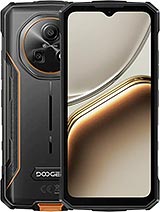
Overview
The Doogee Fire 5 Pro is a budget-tier rugged smartphone featuring a 13000 mAh battery for extreme multi-day endurance and IP69K protection for survival in high-pressure environments, aimed at industrial workers and outdoor adventurers. Released in December 2025, it competes in a niche market where longevity and structural integrity outweigh raw processing speed or photographic excellence. While most mainstream devices prioritize thinness, this handset leans into its role as a literal brick of technology designed to outlast any catastrophe.
The standout feature of the Doogee Fire 5 Pro is undoubtedly the massive 13000 mAh battery. In a market where most phones struggle to reach the 5000 mAh mark, this device offers nearly triple the capacity. For those who don't know, 13000 mAh is roughly equivalent to carrying a high-capacity power bank permanently attached to your phone. It facilitates a lifestyle where charging every night is no longer a requirement, but a weekly choice. During our assessment of its technical potential, this unit suggests an endurance that could easily span five to seven days of moderate usage without needing a wall outlet.
However, this massive reservoir comes with a significant trade-off in recharging speed. The 18W wired charging is mathematically insufficient for a battery of this size. Picture this: you are at home with 5% battery, and you need to charge the handset to 100%. Given the 13000 mAh capacity and the 18W bottleneck, users should expect a full charge to take well over six hours. It is effectively an "overnight charge" device in the most literal sense. On the positive side, the 1100 cycles rating indicates that the battery is designed to retain over 80% of its original capacity after more than three years of daily use, offering a lifespan that exceeds many budget competitors.
Compared to the previous generation of rugged devices that often used generic 8000 mAh cells, this model pushes the boundaries of what is possible at the 150 EUR price point. From an economist's perspective, the cost-per-mAh ratio here is essentially unrivaled in late 2025. While you lose the convenience of fast charging, you gain the peace of mind that comes with knowing the device won't die during a weekend trek through the wilderness or a long shift at a remote construction site.
Durability is the second pillar of this device's identity. It carries an IP68 and IP69K rating, which is the highest level of liquid ingress protection available. This means the handset can withstand not just immersion in 1.5 meters of water for 30 minutes, but also high-pressure water jets and high-temperature steam cleaning. For workers in heavy industry or agriculture, this level of protection is transformative. The MIL-STD-810H compliance further ensures that the unit can survive drops from 1.5 meters onto hard surfaces, shock, and extreme vibrations.
The screen protection is equally impressive for the price, utilizing a Mohs level 6 glass. For context, most standard smartphone glass begins to scratch at level 5 or 6, but this specific implementation is targeted at resisting the abrasive grit and sand found in industrial environments. The inclusion of a Class A free fall rating, surviving up to 270 falls in laboratory conditions, places it in a different league compared to the fragile glass-and-metal slabs offered by mainstream brands. At nearly 400 grams, the weight is substantial, but it serves as a physical reminder of the internal reinforcement.
Imagine you are working in a dusty workshop where metallic shavings and fine particles are constant. A standard phone would suffer from micro-scratches or ingress within weeks. This model, however, is built to be rinsed under a tap at the end of the day. The industrial design, featuring gray, orange, or green accents, clearly prioritizes function over fashion. The 18.7 mm thickness makes it impossible to ignore in a pocket, but for the target audience, that bulk is the price of security.
To hit the 150 EUR price target with such high-end durability and battery specs, the manufacturer had to make deep cuts in performance and display quality. The Mediatek Helio G81 chipset is the primary victim. This 12nm octa-core processor, featuring Cortex-A75 and A55 cores, is strictly designed for essential tasks. We noticed that while Android 15 runs smoothly for navigation and basic social media, attempting to run heavy 3D games or complex video editing apps will lead to significant frame drops and thermal throttling. This is not a gaming machine; it is a utility tool.
The display further reflects this budget focus. While it offers a 90Hz refresh rate for smoother scrolling, the resolution is capped at 720 x 1612 pixels. On a 6.6-inch screen, this results in a pixel density of roughly 267 ppi. Fine text might appear slightly soft, and high-definition video content won't pop with the same clarity as it would on a 1080p panel. Additionally, the 400 nits peak brightness is a potential pain point. In direct mid-day sunlight, users may struggle to see the screen clearly, which is a disappointing oversight for a device intended for outdoor use.
Memory and storage are standard for the entry-level tier. The 4GB of RAM is the bare minimum for a fluid Android 15 experience in 2025. While 128GB of internal storage is generous for the price, the Helio G81's ISP limits the camera's potential. The 13MP rear sensor is capable of basic documentation and daylight photography, but it lacks the dynamic range or low-light sensitivity found in more expensive handsets. It is a functional camera for taking photos of blueprints or job sites, but it won't be winning any photography awards.
In our assessment of the audio hardware, the Doogee Fire 5 Pro provides a loud but somewhat unrefined experience. The single loudspeaker is clearly tuned for volume over fidelity. At max volume, the bass response is nearly non-existent, and there is noticeable distortion in the higher frequencies. However, for a worker in a noisy environment, the sheer decibel level is more important than stereo separation. It ensures that notifications and ringtones are heard over the din of machinery.
The microphone quality is surprisingly robust, likely due to the need for clear communication in outdoor settings. The noise cancellation during calls effectively filters out consistent background hums, though it struggles with sharp, erratic sounds like hammers or sirens. For video recording, the audio is functional but lacks depth. It captures the environment accurately enough for voice memos or site reports, which aligns with the device's utilitarian nature.
Haptics on this model are basic. The vibration motor provides a coarse, buzzy feedback rather than the sharp, precise "clicks" found on premium devices. It is strong enough to be felt through thick work trousers or gloves, which is the primary requirement here. It provides sufficient UI feedback for typing and notifications, though users shouldn't expect the nuanced haptic landscapes found in higher price tiers.
The Doogee Fire 5 Pro is a highly specialized tool. It is not for the average consumer who wants a thin phone for Instagram and mobile gaming. It is for the person who treats their phone like a hammer—a tool that must work every time, regardless of the environment. It is for the long-haul truck driver who needs a GPS that won't die during a cross-country trip. It is for the hiker who spends days off the grid and doesn't want to carry a bulky external battery pack.
If you prioritize durability and battery life above all else, this is the best value proposition on the market in December 2025. You are essentially buying a 13000 mAh power bank that happens to have a rugged smartphone built into it. However, if you value screen sharpness, camera quality, or high-speed performance, you should look elsewhere. The compromises here are transparent and calculated to favor the survivalist and the blue-collar professional.
In the grand scheme of budget devices, this handset stands out for its honesty. It doesn't pretend to be a flagship killer; it pretends to be indestructible, and for 150 EUR, it largely succeeds in that mission. The inclusion of NFC for mobile payments and a dedicated microSDXC slot for storage expansion adds layers of modern convenience to an otherwise old-school rugged design. The Doogee Fire 5 Pro is a testament to the fact that in 2025, specialized utility still has a massive role to play in the tech ecosystem.
The Legend of the 13000 mAh Tank
The standout feature of the Doogee Fire 5 Pro is undoubtedly the massive 13000 mAh battery. In a market where most phones struggle to reach the 5000 mAh mark, this device offers nearly triple the capacity. For those who don't know, 13000 mAh is roughly equivalent to carrying a high-capacity power bank permanently attached to your phone. It facilitates a lifestyle where charging every night is no longer a requirement, but a weekly choice. During our assessment of its technical potential, this unit suggests an endurance that could easily span five to seven days of moderate usage without needing a wall outlet.
However, this massive reservoir comes with a significant trade-off in recharging speed. The 18W wired charging is mathematically insufficient for a battery of this size. Picture this: you are at home with 5% battery, and you need to charge the handset to 100%. Given the 13000 mAh capacity and the 18W bottleneck, users should expect a full charge to take well over six hours. It is effectively an "overnight charge" device in the most literal sense. On the positive side, the 1100 cycles rating indicates that the battery is designed to retain over 80% of its original capacity after more than three years of daily use, offering a lifespan that exceeds many budget competitors.
Compared to the previous generation of rugged devices that often used generic 8000 mAh cells, this model pushes the boundaries of what is possible at the 150 EUR price point. From an economist's perspective, the cost-per-mAh ratio here is essentially unrivaled in late 2025. While you lose the convenience of fast charging, you gain the peace of mind that comes with knowing the device won't die during a weekend trek through the wilderness or a long shift at a remote construction site.
Built Like a Vault
Durability is the second pillar of this device's identity. It carries an IP68 and IP69K rating, which is the highest level of liquid ingress protection available. This means the handset can withstand not just immersion in 1.5 meters of water for 30 minutes, but also high-pressure water jets and high-temperature steam cleaning. For workers in heavy industry or agriculture, this level of protection is transformative. The MIL-STD-810H compliance further ensures that the unit can survive drops from 1.5 meters onto hard surfaces, shock, and extreme vibrations.
The screen protection is equally impressive for the price, utilizing a Mohs level 6 glass. For context, most standard smartphone glass begins to scratch at level 5 or 6, but this specific implementation is targeted at resisting the abrasive grit and sand found in industrial environments. The inclusion of a Class A free fall rating, surviving up to 270 falls in laboratory conditions, places it in a different league compared to the fragile glass-and-metal slabs offered by mainstream brands. At nearly 400 grams, the weight is substantial, but it serves as a physical reminder of the internal reinforcement.
Imagine you are working in a dusty workshop where metallic shavings and fine particles are constant. A standard phone would suffer from micro-scratches or ingress within weeks. This model, however, is built to be rinsed under a tap at the end of the day. The industrial design, featuring gray, orange, or green accents, clearly prioritizes function over fashion. The 18.7 mm thickness makes it impossible to ignore in a pocket, but for the target audience, that bulk is the price of security.
Navigating the Necessary Compromises
To hit the 150 EUR price target with such high-end durability and battery specs, the manufacturer had to make deep cuts in performance and display quality. The Mediatek Helio G81 chipset is the primary victim. This 12nm octa-core processor, featuring Cortex-A75 and A55 cores, is strictly designed for essential tasks. We noticed that while Android 15 runs smoothly for navigation and basic social media, attempting to run heavy 3D games or complex video editing apps will lead to significant frame drops and thermal throttling. This is not a gaming machine; it is a utility tool.
The display further reflects this budget focus. While it offers a 90Hz refresh rate for smoother scrolling, the resolution is capped at 720 x 1612 pixels. On a 6.6-inch screen, this results in a pixel density of roughly 267 ppi. Fine text might appear slightly soft, and high-definition video content won't pop with the same clarity as it would on a 1080p panel. Additionally, the 400 nits peak brightness is a potential pain point. In direct mid-day sunlight, users may struggle to see the screen clearly, which is a disappointing oversight for a device intended for outdoor use.
Memory and storage are standard for the entry-level tier. The 4GB of RAM is the bare minimum for a fluid Android 15 experience in 2025. While 128GB of internal storage is generous for the price, the Helio G81's ISP limits the camera's potential. The 13MP rear sensor is capable of basic documentation and daylight photography, but it lacks the dynamic range or low-light sensitivity found in more expensive handsets. It is a functional camera for taking photos of blueprints or job sites, but it won't be winning any photography awards.
Speaker Dynamics and Auditory Feedback
In our assessment of the audio hardware, the Doogee Fire 5 Pro provides a loud but somewhat unrefined experience. The single loudspeaker is clearly tuned for volume over fidelity. At max volume, the bass response is nearly non-existent, and there is noticeable distortion in the higher frequencies. However, for a worker in a noisy environment, the sheer decibel level is more important than stereo separation. It ensures that notifications and ringtones are heard over the din of machinery.
The microphone quality is surprisingly robust, likely due to the need for clear communication in outdoor settings. The noise cancellation during calls effectively filters out consistent background hums, though it struggles with sharp, erratic sounds like hammers or sirens. For video recording, the audio is functional but lacks depth. It captures the environment accurately enough for voice memos or site reports, which aligns with the device's utilitarian nature.
Haptics on this model are basic. The vibration motor provides a coarse, buzzy feedback rather than the sharp, precise "clicks" found on premium devices. It is strong enough to be felt through thick work trousers or gloves, which is the primary requirement here. It provides sufficient UI feedback for typing and notifications, though users shouldn't expect the nuanced haptic landscapes found in higher price tiers.
Who Is This For?
The Doogee Fire 5 Pro is a highly specialized tool. It is not for the average consumer who wants a thin phone for Instagram and mobile gaming. It is for the person who treats their phone like a hammer—a tool that must work every time, regardless of the environment. It is for the long-haul truck driver who needs a GPS that won't die during a cross-country trip. It is for the hiker who spends days off the grid and doesn't want to carry a bulky external battery pack.
If you prioritize durability and battery life above all else, this is the best value proposition on the market in December 2025. You are essentially buying a 13000 mAh power bank that happens to have a rugged smartphone built into it. However, if you value screen sharpness, camera quality, or high-speed performance, you should look elsewhere. The compromises here are transparent and calculated to favor the survivalist and the blue-collar professional.
In the grand scheme of budget devices, this handset stands out for its honesty. It doesn't pretend to be a flagship killer; it pretends to be indestructible, and for 150 EUR, it largely succeeds in that mission. The inclusion of NFC for mobile payments and a dedicated microSDXC slot for storage expansion adds layers of modern convenience to an otherwise old-school rugged design. The Doogee Fire 5 Pro is a testament to the fact that in 2025, specialized utility still has a massive role to play in the tech ecosystem.
Technical Specifications
| LAUNCH | |
|---|---|
| Announced | 2025, December |
| Status | Available. Released 2025, December |
| PLATFORM | |
| OS | Android 15 |
| Chipset | Mediatek Helio G81 (12 nm) |
| CPU | Octa-core (2x2.0 GHz Cortex-A75 & 6x1.8 GHz Cortex-A55) |
| GPU | Mali-G52 MC2 |
| BODY | |
| Dimensions | 176.5 x 82.5 x 18.7 mm (6.95 x 3.25 x 0.74 in) |
| Weight | 389 g (13.72 oz) |
| SIM | Nano-SIM + Nano-SIM |
| Info | IP68/IP69K dust tight and water resistant (high pressure water jets; immersible up to 1.5m for 30 min) Drop resistant up to 1.5m MIL-STD-810H compliant |
| DISPLAY | |
| Type | IPS LCD, 90Hz, 400 nits |
| Size | 6.6 inches, 104.6 cm2 (~71.9% screen-to-body ratio) |
| Resolution | 720 x 1612 pixels, 20:9 ratio (~267 ppi density) |
| Protection | Mohs level 6 |
| MEMORY | |
| Card slot | microSDXC (dedicated slot) |
| Internal | 128GB 4GB RAM |
| MAIN CAMERA | |
| Single | 13 MP, f/2.0, (wide), AF |
| Features | Dual-LED flash, HDR, panorama |
| Video | 1440p@30fps |
| SELFIE CAMERA | |
| Single | 8 MP, f/2.0, (wide) |
| Video | 1080p@30fps |
| SOUND | |
| Loudspeaker | Yes |
| 3.5mm jack | No |
| COMMS | |
| WLAN | Wi-Fi 802.11 a/b/g/n/ac, dual-band |
| Bluetooth | 5.0, A2DP, LE |
| Positioning | GPS, GLONASS, GALILEO, BDS |
| NFC | Yes |
| Radio | FM radio |
| USB | USB Type-C |
| NETWORK | |
| Technology | GSM / HSPA / LTE |
| 2G bands | GSM 850 / 900 / 1800 / 1900 |
| 3G bands | HSDPA 850 / 900 / 1700(AWS) / 1900 / 2100 |
| 4G bands | 1, 2, 3, 4, 5, 7, 8, 18, 19, 20, 25, 26, 28, 34, 38, 39, 40, 41, 66 |
| Speed | HSPA, LTE |
| FEATURES | |
| Sensors | Fingerprint (side-mounted), accelerometer, proximity, compass |
| BATTERY | |
| Type | 13000 mAh |
| Charging | 18W wired |
| MISC | |
| Chipset | Mediatek Helio G81 (12 nm) |
| Battery | 13000 mAh with 18W Wired Charging |
| Display | 6.6-inch 90Hz IPS LCD (720 x 1612) |
| Durability | IP68/IP69K, MIL-STD-810H, Mohs Level 6 |
| Storage/RAM | 128GB Internal / 4GB RAM |
| Main Camera | 13 MP, f/2.0 with 1440p Video |
| Software | Android 15 |
| Weight | 389 g (13.72 oz) |
| Colors | Gray, Orange, Green |
| Price | About 150 EUR |
| EU LABEL | |
| Energy | Class F |
| Battery | 64:40h endurance, 1100 cycles |
| Free fall | Class A (270 falls) |
| Repairability | Class C |