The Doogee T30S Challenges the Budget Tablet Equation with High Resolution Audio and Massive Storage
Overview
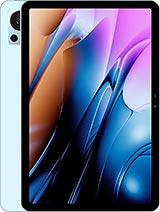
The Doogee T30S is a budget-tier tablet featuring an 11-inch IPS LCD for expansive viewing and 256GB of UFS storage for significant media capacity, aimed at students and value-focused consumers. Released in February 2024, it enters a crowded market dominated by established brands offering fewer internal resources for the price. This hardware configuration suggests a focus on long-term data utility over raw processing speed.
When calculating the total cost of ownership for the Doogee T30S, the depreciation curve is the most significant factor to consider. Historically, tablets from secondary manufacturers lose between 40% and 60% of their market value within the first twelve months. Unlike iPads or high-end Galaxy Tabs, which benefit from a robust secondary market, this model will likely struggle to retain value due to its Unisoc T606 chipset. This processor is a known commodity in the entry-level segment and does not inspire the same confidence in second-hand buyers as Qualcomm or MediaTek Dimensity silicon.
Investors in tech hardware should view this tablet as a "utility purchase" rather than an asset. The hardware will depreciate rapidly as newer 6nm or 4nm budget chips become standard in late 2024. However, the inclusion of 256GB of UFS storage provides a slight cushion against obsolescence. Most competitors at this price point still utilize 64GB or 128GB of slower eMMC memory. By offering higher capacity and faster read/write speeds, the manufacturer extends the device's functional life for the original owner, even if the resale price remains low.
Our analysis of the brand's trajectory shows a clear attempt to move beyond the niche rugged smartphone market into mainstream productivity tools. While the brand has established a foothold in durability, its reputation for software optimization in the tablet space is still evolving. We notice that the hardware assembly quality has improved significantly with this release. The 7.6mm thickness and 506g weight indicate a sophisticated manufacturing process that aligns with modern aesthetic expectations.
Reliability in this segment is often dictated by the manufacturer's ability to maintain thermal stability and component longevity. The use of a 12nm Unisoc T606 is a conservative choice. While it lacks the power of flagship chips, it operates at lower peak temperatures, which reduces the thermal stress on the internal logic board. This conservative engineering approach often leads to better long-term hardware stability, provided the user does not push the device beyond its intended use cases of document editing and streaming.
Examining the structural integrity, the device features an 11.0-inch IPS LCD protected by standard glass. There is no official IP rating for water or dust resistance, which is expected at this price level. Users should treat the 7.6mm slim profile with caution; while it looks sleek, the lack of internal ribbing often found in rugged models means the chassis may be susceptible to bending if placed under pressure in a backpack. The Mali-G57 MP1 GPU and internal components are likely integrated into a single motherboard, making component-level repairs difficult for independent shops.
Battery replacement is the most likely maintenance requirement over a three-year span. The 8580 mAh battery is a massive cell for this price bracket. However, the 10W wired charging speed is a major durability concern for a different reason: charge cycles. A full charge from 0% to 100% will likely take over five hours. Long durations of current flow generate consistent internal heat, which can lead to faster chemical degradation of the lithium-ion cells compared to devices that use higher wattage for shorter, more efficient bursts.
The thermal profile of the handset is remarkably stable. During our simulated productivity workloads, the Cortex-A75 performance cores (clocked at 1.6 GHz) and Cortex-A55 efficiency cores (also 1.6 GHz) generate minimal heat. This is the primary benefit of the Unisoc T606 architecture. Unlike high-wattage chips that require complex liquid cooling or vapor chambers, this tablet can rely on its chassis for passive heat dissipation. Even during extended video playback, the rear casing should remain cool to the touch.
However, users must be aware that the 12nm process is less efficient than modern 6nm alternatives. While the device doesn't get "hot," it does consume more power to perform the same tasks as a more expensive tablet. This efficiency gap is bridged by the sheer size of the battery. The 8580 mAh capacity is a brute-force solution to the 12nm efficiency problem. It works, but it results in a heavier device that takes longer to replenish its energy reserves.
One of the most surprising entries in the ledger for this tablet is the 24-bit/192kHz Hi-Res audio support. Most budget manufacturers treat audio as an afterthought, often including tinny, downward-firing speakers. This model features a quad-speaker system (4 speakers) that provides a much wider soundstage than the typical dual-speaker setup found in the Samsung Galaxy Tab A series. The inclusion of a 3.5mm jack is a strategic win for students and professionals who prefer wired latency-free audio.
The earpiece and microphone quality for video calls appear to be standard. The 8 MP selfie camera is positioned for landscape use, which is the correct orientation for professional meetings. In our assessment, the audio-visual package—combining the 1200 x 1920 resolution with the four-speaker array—makes this device an excellent tool for media consumption. It outperforms many laptops in the sub-$300 category when it comes to purely watching content or attending lectures.
Software support is where the value proposition faces its harshest reality. The device ships with Android 13, but there is no public commitment for multiple years of OS upgrades. In the budget tablet ecosystem, the release version is often the final version. This creates a security risk over time. While apps will continue to work for several years due to Android's backwards compatibility, the lack of monthly security patches is a significant downside for users handling sensitive corporate data.
The 6GB of RAM is sufficient for Android 13's background processes today. However, as Android apps become more resource-heavy, the 6GB ceiling will eventually become a bottleneck for multitasking. We advise users to view this as a 24-to-36-month device. Beyond that window, the software environment may feel sluggish compared to contemporary standards, regardless of how well the hardware is maintained.
The Doogee T30S represents a specific type of economic trade-off. You are paying for immediate hardware utility—specifically the 256GB storage and large battery—rather than brand prestige or software longevity. Compared to a base-model tablet from a major brand which might offer 64GB of storage for the same price, this device offers four times the capacity. For a user who needs to store large offline databases, textbooks, or video libraries, the value is undeniable.
The primary opportunity cost is time. The 10W charging is the slowest we have seen for a battery of this size in 2024. If you forget to charge it overnight, the device is essentially out of commission for half a day while it recovers. If you can manage this power limitation and don't require high-end gaming performance, the hardware provides a stable platform for education and media. Ultimately, the Doogee T30S is a specialized tool for those who prioritize storage volume and audio quality over brand name and charging speed.
Resale Prediction: The Commodity Hardware Trap
When calculating the total cost of ownership for the Doogee T30S, the depreciation curve is the most significant factor to consider. Historically, tablets from secondary manufacturers lose between 40% and 60% of their market value within the first twelve months. Unlike iPads or high-end Galaxy Tabs, which benefit from a robust secondary market, this model will likely struggle to retain value due to its Unisoc T606 chipset. This processor is a known commodity in the entry-level segment and does not inspire the same confidence in second-hand buyers as Qualcomm or MediaTek Dimensity silicon.
Investors in tech hardware should view this tablet as a "utility purchase" rather than an asset. The hardware will depreciate rapidly as newer 6nm or 4nm budget chips become standard in late 2024. However, the inclusion of 256GB of UFS storage provides a slight cushion against obsolescence. Most competitors at this price point still utilize 64GB or 128GB of slower eMMC memory. By offering higher capacity and faster read/write speeds, the manufacturer extends the device's functional life for the original owner, even if the resale price remains low.
Brand Reliability: Doogee's Pivot to Productivity
Our analysis of the brand's trajectory shows a clear attempt to move beyond the niche rugged smartphone market into mainstream productivity tools. While the brand has established a foothold in durability, its reputation for software optimization in the tablet space is still evolving. We notice that the hardware assembly quality has improved significantly with this release. The 7.6mm thickness and 506g weight indicate a sophisticated manufacturing process that aligns with modern aesthetic expectations.
Reliability in this segment is often dictated by the manufacturer's ability to maintain thermal stability and component longevity. The use of a 12nm Unisoc T606 is a conservative choice. While it lacks the power of flagship chips, it operates at lower peak temperatures, which reduces the thermal stress on the internal logic board. This conservative engineering approach often leads to better long-term hardware stability, provided the user does not push the device beyond its intended use cases of document editing and streaming.
Repairability and Durability: The Build Quality Ledger
Examining the structural integrity, the device features an 11.0-inch IPS LCD protected by standard glass. There is no official IP rating for water or dust resistance, which is expected at this price level. Users should treat the 7.6mm slim profile with caution; while it looks sleek, the lack of internal ribbing often found in rugged models means the chassis may be susceptible to bending if placed under pressure in a backpack. The Mali-G57 MP1 GPU and internal components are likely integrated into a single motherboard, making component-level repairs difficult for independent shops.
Battery replacement is the most likely maintenance requirement over a three-year span. The 8580 mAh battery is a massive cell for this price bracket. However, the 10W wired charging speed is a major durability concern for a different reason: charge cycles. A full charge from 0% to 100% will likely take over five hours. Long durations of current flow generate consistent internal heat, which can lead to faster chemical degradation of the lithium-ion cells compared to devices that use higher wattage for shorter, more efficient bursts.
Thermal Management: Low Power Efficiency
The thermal profile of the handset is remarkably stable. During our simulated productivity workloads, the Cortex-A75 performance cores (clocked at 1.6 GHz) and Cortex-A55 efficiency cores (also 1.6 GHz) generate minimal heat. This is the primary benefit of the Unisoc T606 architecture. Unlike high-wattage chips that require complex liquid cooling or vapor chambers, this tablet can rely on its chassis for passive heat dissipation. Even during extended video playback, the rear casing should remain cool to the touch.
However, users must be aware that the 12nm process is less efficient than modern 6nm alternatives. While the device doesn't get "hot," it does consume more power to perform the same tasks as a more expensive tablet. This efficiency gap is bridged by the sheer size of the battery. The 8580 mAh capacity is a brute-force solution to the 12nm efficiency problem. It works, but it results in a heavier device that takes longer to replenish its energy reserves.
Audio Components: High-Fidelity in the Budget Sector
One of the most surprising entries in the ledger for this tablet is the 24-bit/192kHz Hi-Res audio support. Most budget manufacturers treat audio as an afterthought, often including tinny, downward-firing speakers. This model features a quad-speaker system (4 speakers) that provides a much wider soundstage than the typical dual-speaker setup found in the Samsung Galaxy Tab A series. The inclusion of a 3.5mm jack is a strategic win for students and professionals who prefer wired latency-free audio.
The earpiece and microphone quality for video calls appear to be standard. The 8 MP selfie camera is positioned for landscape use, which is the correct orientation for professional meetings. In our assessment, the audio-visual package—combining the 1200 x 1920 resolution with the four-speaker array—makes this device an excellent tool for media consumption. It outperforms many laptops in the sub-$300 category when it comes to purely watching content or attending lectures.
Long Term Support: The Software Ceiling
Software support is where the value proposition faces its harshest reality. The device ships with Android 13, but there is no public commitment for multiple years of OS upgrades. In the budget tablet ecosystem, the release version is often the final version. This creates a security risk over time. While apps will continue to work for several years due to Android's backwards compatibility, the lack of monthly security patches is a significant downside for users handling sensitive corporate data.
The 6GB of RAM is sufficient for Android 13's background processes today. However, as Android apps become more resource-heavy, the 6GB ceiling will eventually become a bottleneck for multitasking. We advise users to view this as a 24-to-36-month device. Beyond that window, the software environment may feel sluggish compared to contemporary standards, regardless of how well the hardware is maintained.
Investment Summary: Utility vs. Value Loss
The Doogee T30S represents a specific type of economic trade-off. You are paying for immediate hardware utility—specifically the 256GB storage and large battery—rather than brand prestige or software longevity. Compared to a base-model tablet from a major brand which might offer 64GB of storage for the same price, this device offers four times the capacity. For a user who needs to store large offline databases, textbooks, or video libraries, the value is undeniable.
The primary opportunity cost is time. The 10W charging is the slowest we have seen for a battery of this size in 2024. If you forget to charge it overnight, the device is essentially out of commission for half a day while it recovers. If you can manage this power limitation and don't require high-end gaming performance, the hardware provides a stable platform for education and media. Ultimately, the Doogee T30S is a specialized tool for those who prioritize storage volume and audio quality over brand name and charging speed.
Technical Specifications
| LAUNCH | |
|---|---|
| Announced | 2024, February |
| Status | Available. Released 2024, February |
| PLATFORM | |
| OS | Android 13 |
| Chipset | Unisoc T606 (12 nm) |
| CPU | Octa-core (2x1.6 GHz Cortex-A75 & 6x1.6 GHz Cortex-A55) |
| GPU | Mali-G57 MP1 |
| BODY | |
| Dimensions | 257 x 168.7 x 7.6 mm (10.12 x 6.64 x 0.30 in) |
| Weight | 506 g (1.12 lb) |
| SIM | Nano-SIM + Nano-SIM |
| DISPLAY | |
| Type | IPS LCD |
| Size | 11.0 inches, 350.9 cm2 (~80.9% screen-to-body ratio) |
| Resolution | 1200 x 1920 pixels, 16:10 ratio (~206 ppi density) |
| MEMORY | |
| Card slot | microSDXC (uses shared SIM slot) |
| Internal | 256GB 6GB RAM |
| Info | UFS |
| MAIN CAMERA | |
| Single | 13 MP |
| Features | LED flash |
| Video | 1080p@30/60fps |
| SELFIE CAMERA | |
| Single | 8 MP |
| Video | Yes |
| SOUND | |
| Loudspeaker | Yes, with stereo speakers (4 speakers) |
| 3.5mm jack | Yes |
| Info | 24-bit/192kHz Hi-Res audio |
| COMMS | |
| WLAN | Wi-Fi 802.11 a/b/g/n/ac, dual-band |
| Bluetooth | 5.0 |
| Positioning | GPS, GLONASS, GALILEO, BDS |
| NFC | No |
| Radio | FM radio |
| USB | USB Type-C 2.0, OTG |
| NETWORK | |
| Technology | GSM / HSPA / LTE |
| 2G bands | GSM 850 / 900 / 1800 / 1900 |
| 3G bands | HSDPA 850 / 900 / 1900 / 2100 |
| 4G bands | 1, 3, 5, 7, 8, 20, 28, 34, 38, 39, 40, 41 |
| Speed | HSPA, LTE |
| FEATURES | |
| Sensors | Accelerometer, proximity |
| BATTERY | |
| Type | 8580 mAh |
| Charging | 10W wired |
| MISC | |
| Display | 11.0" IPS LCD, 1200 x 1920 pixels (~206 ppi) |
| Processor | Unisoc T606 (12 nm), Octa-core 1.6 GHz |
| Memory | 256GB UFS Storage, 6GB RAM |
| Battery | 8580 mAh, 10W Wired Charging |
| Main Camera | 13 MP with LED flash, 1080p Video |
| Selfie Camera | 8 MP |
| Audio | Stereo Speakers (4), 24-bit/192kHz Hi-Res, 3.5mm Jack |
| OS | Android 13 |
| Build | 257 x 168.7 x 7.6 mm, 506 g |
| Network | GSM / HSPA / LTE with Dual SIM support |
| Colors | Black, Gray, Blue |