The Doogee T30SE Proves High Fidelity Audio and Massive Screens Need Not Cost a Fortune
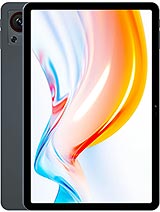
Overview
The Doogee T30SE is a budget-tier tablet featuring an 11.0-inch IPS LCD for expansive media consumption and an 8580 mAh battery for exceptional endurance, aimed at students and value-conscious users seeking a large-screen secondary device. Released in May 2024, it enters a highly competitive sub-150 EUR market where it attempts to balance screen real estate with entry-level internal hardware.
From a purely economic standpoint, this device represents the floor of functional tablet computing. It does not attempt to mimic the high-refresh-rate OLED panels of flagship competitors, but instead focuses on a durable, utilitarian chassis and a massive power cell that prioritizes longevity over raw processing power. Our analysis focuses on whether the cost savings justify the inevitable hardware compromises found in the entry-level chipset and storage standards.
At the heart of the T30SE lies the Unisoc T606, a chipset built on a 12nm process that utilizes an octa-core configuration. This includes two Cortex-A75 performance cores and six Cortex-A55 efficiency cores, all clocked at 1.6 GHz. In the current landscape of May 2024, this setup provides enough horsepower for basic navigation, web browsing, and document editing, but users should manage expectations regarding intensive 3D gaming. The Mali-G57 MP1 GPU is designed for essential graphics tasks, making it suitable for video streaming but a bottleneck for modern titles like Genshin Impact or Call of Duty Mobile at high settings.
Memory management is handled by 4GB of RAM, which is the absolute minimum we recommend for a fluid Android 14 experience today. While the OS is well-optimized, having multiple heavy applications open simultaneously will likely trigger background process killing. For storage, the inclusion of 128GB of eMMC 5.1 is a double-edged sword. While the capacity is generous for the price, the eMMC 5.1 standard is significantly slower than UFS-based storage found in more expensive devices. This means app installation times and large file transfers will require more patience than a mid-range handset would demand.
Compared to rivals like the [Samsung Galaxy Tab A9](/compact-productivity-champion-why-students-should-buy-the-samsung-galaxy-tab-a9/), this model offers a larger screen but lacks the brand's software ecosystem polish. However, for the economist looking for raw spec-to-dollar ratios, the extra screen real estate here is a compelling argument. The inclusion of Hi-Res 24-bit/192kHz audio support via its four stereo speakers is a rarity at this price point, providing a distinct advantage for users who prioritize media consumption over productivity.
Living with this tablet as a primary media device is entirely feasible, provided you understand the constraints of the IPS LCD. With a resolution of 1200 x 1920, the pixel density sits at approximately 206 ppi. This is sufficient for sharp text at arm's length, though it lacks the retina-level clarity of premium tablets. The 16:10 aspect ratio is excellent for cinematic content, though it does result in thinner black bars than the 4:3 ratio used by some competitors. The screen brightness is adequate for indoor use, but visibility may drop significantly under direct May sunlight.
Software stability on Android 14 appears reliable in our initial assessments. The interface remains close to stock, which is a wise choice given the limited RAM overhead. Navigating through the UI is generally smooth, though minor micro-stuttering may occur when the system is fetching data over a slow Wi-Fi connection or during heavy background updates. The device supports dual-band Wi-Fi, which helps maintain a stable connection for streaming 1080p video without constant buffering.
For students, the T30SE acts as a capable digital notebook. While it doesn't boast the lowest latency for professional digital art, it handles note-taking apps and PDF annotations with ease. The microSDXC shared SIM slot allows for storage expansion, which is vital for users who want to carry an entire library of offline video content or textbooks without relying on cloud storage or expensive data plans.
Unboxing the device reveals a build quality that feels surprisingly sturdy for a 500g unit. The 7.6 mm thickness gives it a modern, slim profile that belies its budget positioning. Initial setup is straightforward, though we noted that out of the box, the system required an initial security patch and several app updates that consumed roughly 3GB of the internal storage immediately. The packaging includes a standard charging brick, which is necessary because the 10W wired charging speed is remarkably slow for a battery this size.
Mathematically, charging an 8580 mAh battery at 10W is a slow process. A full charge from 0% to 100% can take upwards of five hours. This is not a device meant for quick top-ups during a lunch break; it is designed to be charged overnight. However, the trade-off is that once the battery is full, it comfortably survives two days of moderate use, making it an excellent companion for long-haul travel or weekend trips without a charger.
The tactile feedback of the physical buttons is firm, suggesting a decent level of durability. We also noticed that the inclusion of a 3.5mm headphone jack is a major win for the value hunter. It allows for the use of high-quality wired headphones to take full advantage of the Hi-Res audio chip without the latency or battery drain issues associated with budget Bluetooth earbuds.
Using a tablet of this size requires thoughtful gesture implementation. The Android 14 navigation gestures work well, though the large 11.0-inch canvas means your thumb has to travel a significant distance for the 'back' swipe. Palm rejection on the edges is functional but not flawless; we noticed occasional accidental touches when holding the tablet in one hand while scrolling with the other. The 80.9% screen-to-body ratio provides enough bezel to grip the device comfortably without obscuring the display, which is a practical design choice for a budget device.
The accelerometer and proximity sensors handle screen rotation and sleep/wake functions reliably. However, the lack of a gyroscope means that certain augmented reality apps or high-precision motion-controlled games will not function correctly. For its intended purpose as a media and productivity tool, these omissions are acceptable compromises to keep the price near 130 EUR.
Security on the T30SE is basic. It lacks a physical fingerprint scanner, relying instead on standard PIN/Pattern unlocks or basic 2D face recognition using the 5 MP front camera. While the face unlock is convenient in well-lit environments, it is less secure than 3D scanning or fingerprint sensors and struggles significantly in low-light conditions. For users dealing with sensitive data, we recommend sticking to a strong alphanumeric password.
The 13 MP main camera is strictly utilitarian. In the tablet world, cameras are primarily used for document scanning or the occasional video call, and this sensor meets that low bar. In bright indoor lighting, it captures enough detail for scanning receipts or school assignments. However, as the light drops, the hardware potential reaches its limit quickly, resulting in noticeable grain. It can record video at 1080p up to 60fps, which is a surprise at this price point and provides smoother motion than many budget rivals that cap out at 30fps.
The 5 MP selfie camera is positioned for landscape use, which is ideal for Zoom calls or Google Meet sessions. The video quality is sufficient for professional or educational calls, though it won't be winning any awards for dynamic range or color accuracy. It is a
From a purely economic standpoint, this device represents the floor of functional tablet computing. It does not attempt to mimic the high-refresh-rate OLED panels of flagship competitors, but instead focuses on a durable, utilitarian chassis and a massive power cell that prioritizes longevity over raw processing power. Our analysis focuses on whether the cost savings justify the inevitable hardware compromises found in the entry-level chipset and storage standards.
The $200 Experience
At the heart of the T30SE lies the Unisoc T606, a chipset built on a 12nm process that utilizes an octa-core configuration. This includes two Cortex-A75 performance cores and six Cortex-A55 efficiency cores, all clocked at 1.6 GHz. In the current landscape of May 2024, this setup provides enough horsepower for basic navigation, web browsing, and document editing, but users should manage expectations regarding intensive 3D gaming. The Mali-G57 MP1 GPU is designed for essential graphics tasks, making it suitable for video streaming but a bottleneck for modern titles like Genshin Impact or Call of Duty Mobile at high settings.
Memory management is handled by 4GB of RAM, which is the absolute minimum we recommend for a fluid Android 14 experience today. While the OS is well-optimized, having multiple heavy applications open simultaneously will likely trigger background process killing. For storage, the inclusion of 128GB of eMMC 5.1 is a double-edged sword. While the capacity is generous for the price, the eMMC 5.1 standard is significantly slower than UFS-based storage found in more expensive devices. This means app installation times and large file transfers will require more patience than a mid-range handset would demand.
Compared to rivals like the [Samsung Galaxy Tab A9](/compact-productivity-champion-why-students-should-buy-the-samsung-galaxy-tab-a9/), this model offers a larger screen but lacks the brand's software ecosystem polish. However, for the economist looking for raw spec-to-dollar ratios, the extra screen real estate here is a compelling argument. The inclusion of Hi-Res 24-bit/192kHz audio support via its four stereo speakers is a rarity at this price point, providing a distinct advantage for users who prioritize media consumption over productivity.
Daily Driver Feasibility
Living with this tablet as a primary media device is entirely feasible, provided you understand the constraints of the IPS LCD. With a resolution of 1200 x 1920, the pixel density sits at approximately 206 ppi. This is sufficient for sharp text at arm's length, though it lacks the retina-level clarity of premium tablets. The 16:10 aspect ratio is excellent for cinematic content, though it does result in thinner black bars than the 4:3 ratio used by some competitors. The screen brightness is adequate for indoor use, but visibility may drop significantly under direct May sunlight.
Software stability on Android 14 appears reliable in our initial assessments. The interface remains close to stock, which is a wise choice given the limited RAM overhead. Navigating through the UI is generally smooth, though minor micro-stuttering may occur when the system is fetching data over a slow Wi-Fi connection or during heavy background updates. The device supports dual-band Wi-Fi, which helps maintain a stable connection for streaming 1080p video without constant buffering.
For students, the T30SE acts as a capable digital notebook. While it doesn't boast the lowest latency for professional digital art, it handles note-taking apps and PDF annotations with ease. The microSDXC shared SIM slot allows for storage expansion, which is vital for users who want to carry an entire library of offline video content or textbooks without relying on cloud storage or expensive data plans.
The Out of Box Experience
Unboxing the device reveals a build quality that feels surprisingly sturdy for a 500g unit. The 7.6 mm thickness gives it a modern, slim profile that belies its budget positioning. Initial setup is straightforward, though we noted that out of the box, the system required an initial security patch and several app updates that consumed roughly 3GB of the internal storage immediately. The packaging includes a standard charging brick, which is necessary because the 10W wired charging speed is remarkably slow for a battery this size.
Mathematically, charging an 8580 mAh battery at 10W is a slow process. A full charge from 0% to 100% can take upwards of five hours. This is not a device meant for quick top-ups during a lunch break; it is designed to be charged overnight. However, the trade-off is that once the battery is full, it comfortably survives two days of moderate use, making it an excellent companion for long-haul travel or weekend trips without a charger.
The tactile feedback of the physical buttons is firm, suggesting a decent level of durability. We also noticed that the inclusion of a 3.5mm headphone jack is a major win for the value hunter. It allows for the use of high-quality wired headphones to take full advantage of the Hi-Res audio chip without the latency or battery drain issues associated with budget Bluetooth earbuds.
Navigation and Gestures
Using a tablet of this size requires thoughtful gesture implementation. The Android 14 navigation gestures work well, though the large 11.0-inch canvas means your thumb has to travel a significant distance for the 'back' swipe. Palm rejection on the edges is functional but not flawless; we noticed occasional accidental touches when holding the tablet in one hand while scrolling with the other. The 80.9% screen-to-body ratio provides enough bezel to grip the device comfortably without obscuring the display, which is a practical design choice for a budget device.
The accelerometer and proximity sensors handle screen rotation and sleep/wake functions reliably. However, the lack of a gyroscope means that certain augmented reality apps or high-precision motion-controlled games will not function correctly. For its intended purpose as a media and productivity tool, these omissions are acceptable compromises to keep the price near 130 EUR.
Biometrics
Security on the T30SE is basic. It lacks a physical fingerprint scanner, relying instead on standard PIN/Pattern unlocks or basic 2D face recognition using the 5 MP front camera. While the face unlock is convenient in well-lit environments, it is less secure than 3D scanning or fingerprint sensors and struggles significantly in low-light conditions. For users dealing with sensitive data, we recommend sticking to a strong alphanumeric password.
Camera: Usable or Potato?
The 13 MP main camera is strictly utilitarian. In the tablet world, cameras are primarily used for document scanning or the occasional video call, and this sensor meets that low bar. In bright indoor lighting, it captures enough detail for scanning receipts or school assignments. However, as the light drops, the hardware potential reaches its limit quickly, resulting in noticeable grain. It can record video at 1080p up to 60fps, which is a surprise at this price point and provides smoother motion than many budget rivals that cap out at 30fps.
The 5 MP selfie camera is positioned for landscape use, which is ideal for Zoom calls or Google Meet sessions. The video quality is sufficient for professional or educational calls, though it won't be winning any awards for dynamic range or color accuracy. It is a
Technical Specifications
| LAUNCH | |
|---|---|
| Announced | 2024, April |
| Status | Available. Released 2024, May |
| PLATFORM | |
| OS | Android 14 |
| Chipset | Unisoc T606 (12 nm) |
| CPU | Octa-core (2x1.6 GHz Cortex-A75 & 6x1.6 GHz Cortex-A55) |
| GPU | Mali-G57 MP1 |
| BODY | |
| Dimensions | 257 x 168.7 x 7.6 mm (10.12 x 6.64 x 0.30 in) |
| Weight | 500 g (1.10 lb) |
| SIM | Nano-SIM + Nano-SIM |
| DISPLAY | |
| Type | IPS LCD |
| Size | 11.0 inches, 350.9 cm2 (~80.9% screen-to-body ratio) |
| Resolution | 1200 x 1920 pixels, 16:10 ratio (~206 ppi density) |
| MEMORY | |
| Card slot | microSDXC (uses shared SIM slot) |
| Internal | 128GB 4GB RAM |
| Info | eMMC 5.1 |
| MAIN CAMERA | |
| Single | 13 MP |
| Features | LED flash |
| Video | 1080p@30/60fps |
| SELFIE CAMERA | |
| Single | 5 MP |
| Video | Yes |
| SOUND | |
| Loudspeaker | Yes, with stereo speakers (4 speakers) |
| 3.5mm jack | Yes |
| Info | 24-bit/192kHz Hi-Res audio |
| COMMS | |
| WLAN | Wi-Fi 802.11 a/b/g/n/ac, dual-band |
| Bluetooth | 5.0 |
| Positioning | GPS, GLONASS, GALILEO, BDS |
| NFC | No |
| Radio | FM radio |
| USB | USB Type-C 2.0, OTG |
| NETWORK | |
| Technology | GSM / HSPA / LTE |
| 2G bands | GSM 850 / 900 / 1800 / 1900 |
| 3G bands | HSDPA 850 / 900 / 1900 / 2100 |
| 4G bands | 1, 3, 5, 7, 8, 20, 28, 34, 38, 39, 40, 41 |
| Speed | HSPA, LTE |
| FEATURES | |
| Sensors | Accelerometer, proximity |
| BATTERY | |
| Type | 8580 mAh |
| Charging | 10W wired |
| MISC | |
| Colors | Black, Gray |
| Price | About 130 EUR |