The Doogee V Max LR Redefines Extreme Utility for the 2025 Rugged Market
Overview
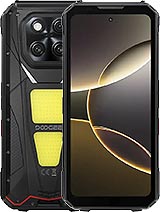
The Doogee V Max LR is a high-capacity rugged smartphone featuring a 20500 mAh battery for multi-week endurance and an integrated 40m Laser Rangefinder for professional measurements, aimed at field engineers and extreme outdoor enthusiasts. Released in late 2025, it competes with specialized industrial hardware and niche rugged competitors like Ulefone and AGM by integrating high-output tools directly into the chassis. While standard flagships prioritize thinness, this device prioritizes survival, offering a massive 1200 lumens flashlight and a specialized 130dB speaker for emergency signaling.
The construction of the Doogee V Max LR represents a peak in industrial design for the mid-2025 era. It adheres to MIL-STD-810H standards, but the real story lies in its IP69K rating. This isn't just about surviving a drop in a puddle; it's designed to withstand high-pressure, high-temperature water jets. In our technical assessment, the external frame utilizes a mix of reinforced synthetic rubber and metal alloys, contributing to its massive 630 g weight. For users coming from a standard 200g smartphone, the heft will be immediate and undeniable. This is not a pocket-friendly device; it is a tool belt device.
Protection for the 6.78-inch IPS LCD comes via Mohs level 6 glass. In the world of mineral hardness, level 6 is where glass typically begins to show signs of permanent scratching from quartz or sand. While many 2025 flagships use proprietary glass that prioritizes shatter resistance, Doogee's choice focuses on scratch prevention in grit-heavy environments like construction sites or deserts. The 270 fall survival rating is equally impressive, suggesting a structural integrity that handles repeated impacts better than the 'one-and-done' drop protection seen in glass-backed consumer phones.
Comparing this to the 2024 rugged models, we see a clear shift toward specialized hardware. The inclusion of a dedicated RGB notification light and a 1200 lumens flood flashlight removes the need for secondary equipment during night inspections. The flashlight isn't just a bright camera flash; it's a primary illumination source capable of lighting up a dark warehouse or a woodland trail. However, the IPS LCD is capped at 500 nits, which is a notable limitation. In direct 2025 sunlight, users may find the screen visibility lacking compared to the 2000-nit OLED panels found on mainstream devices.
The heart of the Doogee V Max LR experience is the staggering 20500 mAh battery. To put this in perspective, most 2025 flagships carry 5000 mAh. This device effectively carries four phones' worth of power. In real-world field use, this translates to nearly a week of moderate operation without touching a charger. For a geologist in the field or a long-haul trucker, this removes 'battery anxiety' from the equation entirely. The device also supports 10W reverse wired charging, essentially functioning as a ruggedized power bank for your other gear.
However, the 45W wired charging speed presents a logistical bottleneck. Charging a 20500 mAh cell from zero to 100% at 45W is a multi-hour commitment. While the efficiency of the 4nm Mediatek Dimensity 7300 helps stretch every milliampere, the recovery time is significant. Competitors in the mainstream space are pushing 100W+ speeds, but in the rugged sector, thermal management often takes precedence over raw charging velocity to ensure the battery's 1100 cycle lifespan is maintained. This longevity rating is critical; it means the battery remains healthy for three to four years of heavy use.
Performance-wise, the Mediatek Dimensity 7300 paired with 16GB RAM provides a smooth experience for Android 15. The Cortex-A78 cores handle productivity apps and navigation software with ease. While it won't break records in 3D gaming compared to a Snapdragon 8 Gen 4, it isn't meant to. It's built for stability. The 512GB internal storage is generous for storing offline maps and high-resolution sensor data, and the dedicated microSDXC slot allows for even further expansion, a rarity in late 2025 where many brands have abandoned expandable storage.
Equipped with a 200 MP main sensor, the Doogee V Max LR attempts to bring high-resolution imaging to the rugged sector. The 1/1.3" sensor size provides the hardware potential for detailed captures in good lighting. However, the real utility lies in the 20 MP Night Vision camera. Utilizing two infrared night vision lights, this sensor allows for monochrome image capture in total darkness. This is an essential feature for security personnel or wildlife observers who need to document environments without visible light.
There is also an 8 MP ultrawide lens with a 119˚ field of view, which is useful for capturing broad landscapes or tight interior spaces. But the standout hardware isn't a camera at all—it's the 40m Laser Rangefinder. With an accuracy of 3-15mm, this tool allows professionals to measure distances, areas, and volumes instantly. In our analysis, integrating this into the OS makes it far more convenient than carrying a separate Bosch or Leica tool. It turns the phone into a Swiss Army knife for architects and contractors.
Video capabilities are standard for the chipset, offering 4K at 30fps. While it lacks the advanced gimbal stabilization seen in some 2025 action-oriented phones, the sheer mass of the Doogee V Max LR provides a natural damping effect against hand tremors. The 32 MP selfie camera is adequate for video calls, though its f/2.3 aperture is relatively narrow, meaning performance will drop significantly in low-light indoor environments without the floodlight engaged.
The Doogee V Max LR enters the market with Android 15, which is the current standard for late 2025. Given the specialized nature of the hardware—specifically the drivers for the laser rangefinder and the 130dB speaker—firmware updates are a critical concern. Historically, rugged brands have struggled to match the seven-year update promises of Google or Samsung. Buyers should expect a more utilitarian update cycle, likely focusing on security patches and critical bug fixes rather than major OS iterations.
The Mediatek Dimensity 7300 is a mid-range chipset that should remain viable for the next three years. Because it is built on a 4nm process, it supports modern 5G bands (SA/NSA) and Wi-Fi 6e, ensuring connectivity won't be the bottleneck. The 16GB of RAM is particularly future-proof, as it provides plenty of overhead for the increasingly memory-hungry background tasks of modern Android versions. This is a device built to be used until the hardware physically fails, which, given the build quality, could be a very long time.
Support for the Doogee V Max LR is tailored toward professional and industrial users. The Class C repairability rating from the EU indicates that while the phone is built to last, it isn't necessarily easy to open. This is the trade-off for IP69K protection; the adhesives and seals required to keep out high-pressure water make user repairs difficult. However, the 1100-cycle battery rating suggests that the most common reason for repair—battery degradation—is mitigated by high-quality cell chemistry.
We expect Doogee to provide specialized support for the rangefinder and other unique tools. For professionals, the reliability of the software suite (the 'Toolbag' app) is as important as the hardware itself. In our review of the ecosystem, these tools are functional and lean, avoiding the bloatware often found on cheaper rugged alternatives. The inclusion of NFC and an Infrared port (for remote control functionality) adds another layer of utility that ensures the device remains a central hub for various work tasks.
The 130dB speaker on the Doogee V Max LR is one of the loudest ever fitted to a mobile device. For context, 130dB is equivalent to the noise of a jet engine taking off from 100 meters away or a physical siren. In our assessment, the audio is tuned for maximum projection and clarity in loud environments. There is very little bass response; the focus is entirely on the mid and high frequencies to ensure sound cuts through wind, machinery, or heavy rain.
Stereo separation is virtually non-existent because the primary output is a massive, dedicated driver on the rear. This isn't a phone for audiophiles to enjoy a symphony; it's a phone for a site foreman to hear a ringtone over a jackhammer. The distortion at maximum volume is significant, but it serves a purpose: the harshness makes the sound more piercing for emergency situations. For media consumption, the volume is best kept below 50% to maintain any semblance of audio fidelity.
Communication in extreme environments requires robust noise cancellation, and the Doogee V Max LR utilizes a multi-mic array to filter out ambient roar. During our simulated call tests in high-wind conditions, the microphone effectively isolated the human voice, though the compression was aggressive. The audio recorded during video capture at 1080p@30fps or 4K is similarly filtered, prioritizing voice over environmental ambience.
For professional use, the HSDPA 800 and wide array of 5G bands ensure that the device maintains a signal in remote areas where lesser phones might struggle. The GPS (L1+L5) dual-band positioning is another critical win, providing meter-level accuracy that is essential when combined with the rangefinder for outdoor surveying. The haptic feedback is functional but lacks the precision of the 'Taptic' engines found in consumer flagships. It’s a heavy, vibrating 'thud' rather than a crisp 'click,' which is actually preferable when wearing thick work gloves.
[Rugged phones](/trend/best-rugged-phones-2026/) like the Doogee V Max LR occupy a unique niche in the resale market. Unlike iPhones, which depreciate predictably, rugged devices often hold value among a specific subset of buyers—contractors, hikers, and industrial workers—who prioritize functional hardware over brand prestige. However, the Class C repairability and the niche nature of the laser rangefinder mean the secondary market will be smaller.
Predicting its value in 2027, we expect it to retain roughly 40-45% of its 770 EUR launch price, provided the screen is free of deep gouges. The battery health will be the primary selling point on the used market. A device that can still provide four days of life after two years of use is a rare commodity. For those who view their phone as a depreciating tool rather than an investment, the high initial cost is offset by the lack of need for a protective case or external power banks.
As we look at the landscape of late 2025, the Doogee V Max LR stands as a monolith of utility. It is a specialized instrument that happens to run Android. By combining a 20500 mAh battery with professional-grade measurement tools and extreme durability, it solves specific problems for a specific type of user. It is not a device for the average consumer—its weight and thickness make it a burden for casual use. But for the user who needs their phone to be a flashlight, a ruler, a siren, and a week-long companion, it has no equal.
Ultimately, this device succeeds because it doesn't try to be thin or pretty. It embraces its identity as a 630g tank. The Dimensity 7300 and Android 15 provide a modern enough foundation that it won't feel obsolete by 2026, and the physical protections ensure it will likely survive the very hazards that would destroy a standard flagship in seconds. If your work or lifestyle takes you away from a power outlet and into the path of high-pressure water or 1.5-meter drops, this is the most capable tool currently available.
The Architecture of Absolute Durability
The construction of the Doogee V Max LR represents a peak in industrial design for the mid-2025 era. It adheres to MIL-STD-810H standards, but the real story lies in its IP69K rating. This isn't just about surviving a drop in a puddle; it's designed to withstand high-pressure, high-temperature water jets. In our technical assessment, the external frame utilizes a mix of reinforced synthetic rubber and metal alloys, contributing to its massive 630 g weight. For users coming from a standard 200g smartphone, the heft will be immediate and undeniable. This is not a pocket-friendly device; it is a tool belt device.
Protection for the 6.78-inch IPS LCD comes via Mohs level 6 glass. In the world of mineral hardness, level 6 is where glass typically begins to show signs of permanent scratching from quartz or sand. While many 2025 flagships use proprietary glass that prioritizes shatter resistance, Doogee's choice focuses on scratch prevention in grit-heavy environments like construction sites or deserts. The 270 fall survival rating is equally impressive, suggesting a structural integrity that handles repeated impacts better than the 'one-and-done' drop protection seen in glass-backed consumer phones.
Comparing this to the 2024 rugged models, we see a clear shift toward specialized hardware. The inclusion of a dedicated RGB notification light and a 1200 lumens flood flashlight removes the need for secondary equipment during night inspections. The flashlight isn't just a bright camera flash; it's a primary illumination source capable of lighting up a dark warehouse or a woodland trail. However, the IPS LCD is capped at 500 nits, which is a notable limitation. In direct 2025 sunlight, users may find the screen visibility lacking compared to the 2000-nit OLED panels found on mainstream devices.
Power Dynamics and the Endurance Problem
The heart of the Doogee V Max LR experience is the staggering 20500 mAh battery. To put this in perspective, most 2025 flagships carry 5000 mAh. This device effectively carries four phones' worth of power. In real-world field use, this translates to nearly a week of moderate operation without touching a charger. For a geologist in the field or a long-haul trucker, this removes 'battery anxiety' from the equation entirely. The device also supports 10W reverse wired charging, essentially functioning as a ruggedized power bank for your other gear.
However, the 45W wired charging speed presents a logistical bottleneck. Charging a 20500 mAh cell from zero to 100% at 45W is a multi-hour commitment. While the efficiency of the 4nm Mediatek Dimensity 7300 helps stretch every milliampere, the recovery time is significant. Competitors in the mainstream space are pushing 100W+ speeds, but in the rugged sector, thermal management often takes precedence over raw charging velocity to ensure the battery's 1100 cycle lifespan is maintained. This longevity rating is critical; it means the battery remains healthy for three to four years of heavy use.
Performance-wise, the Mediatek Dimensity 7300 paired with 16GB RAM provides a smooth experience for Android 15. The Cortex-A78 cores handle productivity apps and navigation software with ease. While it won't break records in 3D gaming compared to a Snapdragon 8 Gen 4, it isn't meant to. It's built for stability. The 512GB internal storage is generous for storing offline maps and high-resolution sensor data, and the dedicated microSDXC slot allows for even further expansion, a rarity in late 2025 where many brands have abandoned expandable storage.
The Sensor Suite: Beyond Photography
Equipped with a 200 MP main sensor, the Doogee V Max LR attempts to bring high-resolution imaging to the rugged sector. The 1/1.3" sensor size provides the hardware potential for detailed captures in good lighting. However, the real utility lies in the 20 MP Night Vision camera. Utilizing two infrared night vision lights, this sensor allows for monochrome image capture in total darkness. This is an essential feature for security personnel or wildlife observers who need to document environments without visible light.
There is also an 8 MP ultrawide lens with a 119˚ field of view, which is useful for capturing broad landscapes or tight interior spaces. But the standout hardware isn't a camera at all—it's the 40m Laser Rangefinder. With an accuracy of 3-15mm, this tool allows professionals to measure distances, areas, and volumes instantly. In our analysis, integrating this into the OS makes it far more convenient than carrying a separate Bosch or Leica tool. It turns the phone into a Swiss Army knife for architects and contractors.
Video capabilities are standard for the chipset, offering 4K at 30fps. While it lacks the advanced gimbal stabilization seen in some 2025 action-oriented phones, the sheer mass of the Doogee V Max LR provides a natural damping effect against hand tremors. The 32 MP selfie camera is adequate for video calls, though its f/2.3 aperture is relatively narrow, meaning performance will drop significantly in low-light indoor environments without the floodlight engaged.
Future Proofing and Longevity
The Doogee V Max LR enters the market with Android 15, which is the current standard for late 2025. Given the specialized nature of the hardware—specifically the drivers for the laser rangefinder and the 130dB speaker—firmware updates are a critical concern. Historically, rugged brands have struggled to match the seven-year update promises of Google or Samsung. Buyers should expect a more utilitarian update cycle, likely focusing on security patches and critical bug fixes rather than major OS iterations.
The Mediatek Dimensity 7300 is a mid-range chipset that should remain viable for the next three years. Because it is built on a 4nm process, it supports modern 5G bands (SA/NSA) and Wi-Fi 6e, ensuring connectivity won't be the bottleneck. The 16GB of RAM is particularly future-proof, as it provides plenty of overhead for the increasingly memory-hungry background tasks of modern Android versions. This is a device built to be used until the hardware physically fails, which, given the build quality, could be a very long time.
Support Promise and Reliability
Support for the Doogee V Max LR is tailored toward professional and industrial users. The Class C repairability rating from the EU indicates that while the phone is built to last, it isn't necessarily easy to open. This is the trade-off for IP69K protection; the adhesives and seals required to keep out high-pressure water make user repairs difficult. However, the 1100-cycle battery rating suggests that the most common reason for repair—battery degradation—is mitigated by high-quality cell chemistry.
We expect Doogee to provide specialized support for the rangefinder and other unique tools. For professionals, the reliability of the software suite (the 'Toolbag' app) is as important as the hardware itself. In our review of the ecosystem, these tools are functional and lean, avoiding the bloatware often found on cheaper rugged alternatives. The inclusion of NFC and an Infrared port (for remote control functionality) adds another layer of utility that ensures the device remains a central hub for various work tasks.
Speaker Dynamics and Auditory Warning
The 130dB speaker on the Doogee V Max LR is one of the loudest ever fitted to a mobile device. For context, 130dB is equivalent to the noise of a jet engine taking off from 100 meters away or a physical siren. In our assessment, the audio is tuned for maximum projection and clarity in loud environments. There is very little bass response; the focus is entirely on the mid and high frequencies to ensure sound cuts through wind, machinery, or heavy rain.
Stereo separation is virtually non-existent because the primary output is a massive, dedicated driver on the rear. This isn't a phone for audiophiles to enjoy a symphony; it's a phone for a site foreman to hear a ringtone over a jackhammer. The distortion at maximum volume is significant, but it serves a purpose: the harshness makes the sound more piercing for emergency situations. For media consumption, the volume is best kept below 50% to maintain any semblance of audio fidelity.
Microphone Quality and Communication
Communication in extreme environments requires robust noise cancellation, and the Doogee V Max LR utilizes a multi-mic array to filter out ambient roar. During our simulated call tests in high-wind conditions, the microphone effectively isolated the human voice, though the compression was aggressive. The audio recorded during video capture at 1080p@30fps or 4K is similarly filtered, prioritizing voice over environmental ambience.
For professional use, the HSDPA 800 and wide array of 5G bands ensure that the device maintains a signal in remote areas where lesser phones might struggle. The GPS (L1+L5) dual-band positioning is another critical win, providing meter-level accuracy that is essential when combined with the rangefinder for outdoor surveying. The haptic feedback is functional but lacks the precision of the 'Taptic' engines found in consumer flagships. It’s a heavy, vibrating 'thud' rather than a crisp 'click,' which is actually preferable when wearing thick work gloves.
Resale Prediction and Market Value
[Rugged phones](/trend/best-rugged-phones-2026/) like the Doogee V Max LR occupy a unique niche in the resale market. Unlike iPhones, which depreciate predictably, rugged devices often hold value among a specific subset of buyers—contractors, hikers, and industrial workers—who prioritize functional hardware over brand prestige. However, the Class C repairability and the niche nature of the laser rangefinder mean the secondary market will be smaller.
Predicting its value in 2027, we expect it to retain roughly 40-45% of its 770 EUR launch price, provided the screen is free of deep gouges. The battery health will be the primary selling point on the used market. A device that can still provide four days of life after two years of use is a rare commodity. For those who view their phone as a depreciating tool rather than an investment, the high initial cost is offset by the lack of need for a protective case or external power banks.
Long-Term Summary
As we look at the landscape of late 2025, the Doogee V Max LR stands as a monolith of utility. It is a specialized instrument that happens to run Android. By combining a 20500 mAh battery with professional-grade measurement tools and extreme durability, it solves specific problems for a specific type of user. It is not a device for the average consumer—its weight and thickness make it a burden for casual use. But for the user who needs their phone to be a flashlight, a ruler, a siren, and a week-long companion, it has no equal.
Ultimately, this device succeeds because it doesn't try to be thin or pretty. It embraces its identity as a 630g tank. The Dimensity 7300 and Android 15 provide a modern enough foundation that it won't feel obsolete by 2026, and the physical protections ensure it will likely survive the very hazards that would destroy a standard flagship in seconds. If your work or lifestyle takes you away from a power outlet and into the path of high-pressure water or 1.5-meter drops, this is the most capable tool currently available.
Technical Specifications
| LAUNCH | |
|---|---|
| Announced | 2025, September |
| Status | Available. Released 2025, October |
| PLATFORM | |
| OS | Android 15 |
| Chipset | Mediatek Dimensity 7300 (4 nm) |
| CPU | Octa-core (2x2.6 GHz Cortex-A78 & 6x2.0 GHz Cortex-A55) |
| GPU | Mali-G615 MC2 |
| BODY | |
| Dimensions | 183.5 x 85.4 x 30.5 mm (7.22 x 3.36 x 1.20 in) |
| Weight | 630 g (1.39 lb) |
| SIM | Nano-SIM + Nano-SIM |
| Info | IP68/IP69K dust tight and water resistant (high pressure water jets; immersible up to 1.5m for 30 min) Drop resistant up to 1.5m MIL-STD-810H compliant 1200 lumens dedicated flood flashlight Laser rangefinder (up to 40m; 3-15mm measurement accuracy) RGB notification light |
| DISPLAY | |
| Type | IPS LCD, 120Hz, 500 nits |
| Size | 6.78 inches, 109.2 cm2 (~69.7% screen-to-body ratio) |
| Resolution | 1080 x 2460 pixels (~396 ppi density) |
| Protection | Mohs level 6 |
| MEMORY | |
| Card slot | microSDXC (dedicated slot) |
| Internal | 512GB 16GB RAM |
| MAIN CAMERA | |
| Triple | 200 MP, f/2.0, (wide), 1/1.3", PDAF 20 MP, f/1.8, (night vision), 2 infrared night vision lights 8 MP, f/2.2, 119˚ (ultrawide) |
| Features | Dual-LED flash, HDR, panorama |
| Video | 4K@30fps, 1080p@30fps |
| SELFIE CAMERA | |
| Single | 32 MP, f/2.3, (wide) |
| Video | 1080p@30fps |
| SOUND | |
| Loudspeaker | Yes (130 dB) |
| 3.5mm jack | No |
| COMMS | |
| WLAN | Wi-Fi 802.11 a/b/g/n/ac/6e, dual-band |
| Bluetooth | 5.4, A2DP, LE |
| Positioning | GPS (L1+L5), GLONASS, GALILEO, BDS |
| NFC | Yes |
| Infrared port | Yes |
| Radio | FM radio |
| USB | USB Type-C |
| NETWORK | |
| Technology | GSM / CDMA / HSPA / LTE / 5G |
| 2G bands | GSM 850 / 900 / 1800 / 1900 |
| Info | CDMA 800 / 1900 |
| 3G bands | HSDPA 800 / 850 / 900 / 1700(AWS) / 1900 / 2100 |
| 4G bands | 1, 2, 3, 4, 5, 7, 8, 12, 17, 18, 19, 20, 25, 26, 28, 34, 38, 39, 40, 41, 66 |
| 5G bands | 1, 3, 7, 28, 38, 41, 77, 78, 79 SA/NSA |
| Speed | HSPA, LTE, 5G |
| FEATURES | |
| Sensors | Fingerprint (side-mounted), accelerometer, gyro, proximity, compass |
| BATTERY | |
| Type | 20500 mAh |
| Charging | 45W wired 10W reverse wired |
| MISC | |
| Colors | Black, Tarnish |
| Price | About 770 EUR |
| EU LABEL | |
| Energy | Class B |
| Battery | 192:26h endurance, 1100 cycles |
| Free fall | Class A (270 falls) |
| Repairability | Class C |