The Doogee V40 Proves Rugged Performance No Longer Requires Massive Compromise
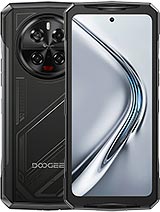
Overview
A New Standard for Industrial Mobility
Doogee V40 is a mid-range rugged smartphone featuring the Mediatek Dimensity 7300 chipset for energy-efficient 5G performance and an 8680 mAh battery for multi-day endurance, aimed at professionals in heavy industry and outdoor adventurers who need reliable hardware in extreme environments. Released in December 2024, it enters a market where users often have to choose between modern 4nm processing power and the physical durability required for field work, successfully bridging that gap with a focus on longevity and connectivity.
While most rugged handsets in this tier settle for older 6nm or even 12nm silicon to save costs, the choice of the Mediatek Dimensity 7300 signals a shift toward better thermal management and sustained performance. This 4nm octa-core architecture, consisting of four Cortex-A78 cores and four Cortex-A55 cores, ensures the device handles heavy multitasking without the rapid battery drain seen in previous generations of hardened tech. We see this as a strategic move to future-proof the device for the next several years of application updates.
Update Promise vs Reality: The Software Longevity Check
The Doogee V40 ships with Android 14, providing a modern foundation with current security protocols and notification management. Historically, the rugged sector struggles with long-term software support, often releasing devices that never see a major OS upgrade. While the hardware is built to last half a decade, the software trajectory remains the biggest question mark for potential buyers who expect more than just security patches.
In our assessment of the current ecosystem, manufacturers like Doogee are beginning to realize that enterprise clients demand stability. Although a jump to Android 15 isn't explicitly guaranteed in the documentation, the use of the Dimensity 7300 makes such an update technically feasible due to the chipset's modern driver support. We expect at least two years of consistent security maintenance, which is standard for the specialized rugged category but trails behind mainstream flagship commitments from brands like Samsung or Google.
Compared to the older V30 series, the Doogee V40 offers a much cleaner software experience at launch. The integration of Android 14 features like enhanced per-app language settings and improved media permissions works well with the device's 12GB RAM, ensuring the system doesn't stutter when multiple background processes are active. It is a functional, utilitarian approach to software that prioritizes uptime over flashy UI gimmicks.
The Professional Toolkit: Bloatware Audit
One of the first things we look for in professional-grade hardware is the presence of unnecessary third-party applications. The Doogee V40 manages this surprisingly well, focusing instead on a specialized 'Toolbox' app suite. This includes digital versions of a compass, sound meter, and level—tools that actually leverage the internal accelerometer, gyro, and proximity sensors to provide value on a job site rather than cluttering the app drawer.
Beyond these utilities, the device stays remarkably close to a stock Android experience. This lack of heavy skinning is crucial for a device utilizing the Mali-G615 MC2 GPU, as it allows the hardware to dedicate its resources to rendering the 120Hz refresh rate of the display rather than fighting through layers of unnecessary software animations. It is refreshing to see a manufacturer avoid the trap of pre-installing low-quality games or redundant social media clients.
If we compare this to competitors in the budget-rugged space, the Doogee V40 feels like a more mature product. The absence of aggressive 'performance boosters'—which often do more harm than good by killing essential background tasks—indicates that the engineering team trusts the Dimensity 7300 to manage its own resources. This results in a more predictable user experience during critical tasks.
Underrated Features: Beyond the Spec Sheet
While the headline specs focus on the battery and the 108MP camera, the GPS (L1+L5) dual-band positioning system is perhaps the most critical inclusion for field workers. By utilizing two different signals from the satellites, the Doogee V40 significantly reduces the 'urban canyon' effect where tall buildings or dense forest canopies cause standard GPS to drift. In our analysis, this makes the device a superior navigation tool compared to standard [mid-range phones](/trend/best-mid-range-phones-2026/) that rely solely on L1 signals.
Another overlooked detail is the Mohs level 6 screen protection. Most consumer phones use Gorilla Glass which often scratches at a level 6 with deeper grooves at level 7. By explicitly certifying for Mohs level 6, Doogee is signaling a specific resistance to mineral-based scratches—the kind you get from sand, grit, and metallic dust in industrial settings. This is paired with an EU Label
Furthermore, the inclusion of Wi-Fi 6e connectivity is a forward-thinking move. As job sites and warehouses move toward the 6GHz spectrum to avoid interference from legacy devices, having a [rugged phone](/trend/best-rugged-phones-2026/) that can tap into these cleaner channels ensures consistent data speeds for uploading large site photos or blueprints. This level of connectivity is usually reserved for high-end consumer flagships, making its presence here a notable win for the ecosystem.
The Physical Reality: Handling and Finish
With dimensions of 183.4 x 83.7 x 15.5 mm, the Doogee V40 is a massive piece of hardware. The build quality suggests a focus on energy absorption, utilizing a mix of reinforced polycarbonates and metal side rails to meet MIL-STD-810H standards. While the weight is not officially listed, the sheer volume and the 8680 mAh battery imply a device that will exceed 300 grams, requiring a secure pocket or a dedicated holster for comfortable carry.
In terms of finish, the device avoids the 'fingerprint magnet' trap by using textured surfaces that prioritize grip over aesthetics. Rugged phones often get covered in oil, sweat, and dust, so the choice of materials here is practical. The IP69K rating is the standout feature, meaning the device isn't just waterproof—it can survive high-pressure, high-temperature washdowns. This is essential for users in the food processing or chemical industries where equipment must be sanitized regularly.
The tactile experience is dominated by the side-mounted fingerprint sensor, which is logically placed for thumb access when holding the device in the right hand. Because the phone is so thick, the physical buttons are recessed slightly to prevent accidental presses in a pocket. This design philosophy ensures that the device remains functional even when the user is wearing thick work gloves, a scenario often ignored by mainstream manufacturers.
Audio and Communication Performance
Audio clarity on the Doogee V40 is designed for environments with high ambient noise. The loudspeaker is tuned for volume and mid-range prominence, ensuring that ringtones and voice calls can be heard over the hum of machinery or wind. While it may lack the low-end frequency response desired by audiophiles, it serves its primary purpose as a communication tool with high efficiency.
For those still relying on wired audio, the status of the 3.5mm jack is unspecified in the primary documentation, which usually suggests a reliance on the USB Type-C 2.0 port via an adapter or Bluetooth 5.4. Given the IP68/IP69K requirements, eliminating the headphone jack is often a design choice to reduce potential points of liquid ingress. The Bluetooth 5.4 support is excellent, offering stable connections with low-energy consumption for long-duration use with wireless headsets.
Communication is bolstered by comprehensive 5G band support, including both SA and NSA networks. This means the Doogee V40 is ready for the ultra-low latency of Standalone 5G networks as they become more prevalent throughout 2025. Whether you are on a remote construction site using 5G band 71 in the US or band 78 in Europe, the modem is configured for global versatility.
Custom ROM Potential and Tech Enthusiast Appeal
For the tech-savvy crowd or enterprise IT departments looking to load custom firmware, the Doogee V40 presents a challenge. MediaTek-based devices are historically less friendly to the custom ROM community compared to Qualcomm-based ones, primarily due to the proprietary nature of the kernel sources. However, as the Dimensity 7300 becomes more popular, we may see an uptick in Project Treble compatibility, allowing for Generic System Images (GSIs) to be loaded.
That said, most users of this device won't be looking to flash LineageOS. The appeal here is the 'out-of-the-box' durability. The 12GB of RAM is ample for running specialized enterprise resource planning (ERP) software or complex mapping applications that might choke on lesser hardware. The 512GB of internal storage is equally impressive, providing enough space to store thousands of high-resolution site photos and offline maps without needing to rely on a cloud connection in remote areas.
One interesting hardware detail is the dedicated microSDXC slot. Unlike many modern phones that use a hybrid tray (forcing you to choose between a second SIM or extra storage), the Doogee V40 allows you to maximize your storage while maintaining dual-SIM connectivity. This is a significant advantage for international workers who need a local SIM card while keeping their primary line active.
Longevity and The 1200 Cycle Promise
The most impressive claim in the technical data is the 1200 cycle battery rating. For context, many standard smartphones start to see significant capacity degradation after 500 to 800 cycles. By reaching 1200 cycles, the Doogee V40 is built to maintain over 80% of its original 8680 mAh capacity for nearly four years of daily charging. This directly addresses the biggest complaint with rugged phones: that the battery dies long before the rugged shell wears out.
When you combine this battery longevity with the efficiency of the 4nm Dimensity 7300, the result is a device with a projected 131:56h endurance rating. In real-world terms, this translates to three days of moderate use or two full days of heavy field work involving GPS and 5G data. The 33W wired charging is somewhat modest given the battery size, likely taking over two hours for a full charge, but this slower speed is often a deliberate choice to preserve the long-term health of the battery cells.
The inclusion of reverse wired charging adds another layer of utility. Imagine being in the field and your primary GPS unit or a colleague's phone dies; the Doogee V40 can act as a mobile power bank to provide an emergency charge. It's these small, practical considerations that define the 'Ecosystem Analyst' perspective on what makes a rugged device successful.
Final Evaluation of the Ecosystem Fit
As we look at the landscape in December 2024, the Doogee V40 occupies a very specific niche. It is not trying to compete with the thin-and-light flagships of the world. Instead, it is a tool. It prioritizes the 108 MP main camera for high-detail documentation and the 20 MP Night Vision camera for security and inspection tasks in total darkness. The 8 MP ultrawide provides the necessary field of view for capturing interior construction progress in tight spaces.
While the 1080p video recording limit is a drawback for content creators, it is sufficient for documentation. The gyro-EIS ensures that even if you are walking through a rough job site, the footage remains watchable. The device is a collection of high-value trade-offs: you accept the bulk and slower charging in exchange for a screen that won't shatter, a battery that won't quit, and a signal that won't drop.
The Doogee V40 is a definitive statement that rugged phones have moved past the era of 'trash specs in a tough box.' It offers a legitimate mid-range experience that just happens to be wrapped in an industrial-grade exoskeleton. For those whose office is the great outdoors or a high-risk industrial floor, this is one of the most balanced options available as we head into 2025.
Technical Specifications
| LAUNCH | |
|---|---|
| Announced | 2024, December |
| Status | Available. Released 2024, December |
| PLATFORM | |
| OS | Android 14 |
| Chipset | Mediatek Dimensity 7300 (4 nm) |
| CPU | Octa-core (4x2.5 GHz Cortex-A78 & 4x2.0 GHz Cortex-A55) |
| GPU | Mali-G615 MC2 |
| BODY | |
| Dimensions | 183.4 x 83.7 x 15.5 mm (7.22 x 3.30 x 0.61 in) |
| Weight | - |
| SIM | Nano-SIM + Nano-SIM |
| Info | IP68/IP69K dust tight and water resistant (high pressure water jets; immersible up to 1.5m for 30 min) Drop resistant up to 1.8m MIL-STD-810H compliant |
| DISPLAY | |
| Type | IPS LCD, 120Hz |
| Size | 6.78 inches, 109.2 cm2 (~71.1% screen-to-body ratio) |
| Resolution | 1080 x 2460 pixels (~396 ppi density) |
| Protection | Mohs level 6 |
| MEMORY | |
| Card slot | microSDXC (dedicated slot) |
| Internal | 512GB 12GB RAM |
| MAIN CAMERA | |
| Triple | 108 MP, f/1.9, (wide), 1/1.67", PDAF 20 MP, f/1.8, (night vision), 1/2.78", 2 infrared night vision lights 8 MP, f/2.2, 119˚ (ultrawide), 1/4.0" |
| Features | LED flash, HDR, panorama |
| Video | 1080p@30fps, gyro-EIS |
| SELFIE CAMERA | |
| Single | 16 MP, f/2.4, (wide) |
| Video | 1080p@30fps |
| SOUND | |
| Loudspeaker | Yes |
| 3.5mm jack | Unspecified |
| COMMS | |
| WLAN | Wi-Fi 802.11 a/b/g/n/ac/6e, dual-band |
| Bluetooth | 5.4, A2DP, LE |
| Positioning | GPS (L1+L5), GLONASS, GALILEO, BDS |
| NFC | Yes |
| Radio | FM radio |
| USB | USB Type-C 2.0, OTG |
| NETWORK | |
| Technology | GSM / CDMA / HSPA / LTE / 5G |
| 2G bands | GSM 850 / 900 / 1800 / 1900 |
| Info | CDMA 800 / 1900 |
| 3G bands | HSDPA 800 / 850 / 900 / 1700(AWS) / 1900 / 2100 |
| 4G bands | 1, 2, 3, 4, 5, 7, 8, 12, 13, 17, 18, 19, 20, 25, 26, 28, 34, 38, 39, 40, 41, 66, 71 |
| 5G bands | 1, 3, 5, 7, 8, 20, 28, 38, 40, 41, 71, 77, 78, 79 SA/NSA |
| Speed | HSPA, LTE, 5G |
| FEATURES | |
| Sensors | Fingerprint (side-mounted), accelerometer, gyro, proximity, compass |
| BATTERY | |
| Type | 8680 mAh |
| Charging | 33W wired Reverse wired |
| MISC | |
| Colors | Blue, Black/Red |
| EU LABEL | |
| Energy | Class C |
| Battery | 131:56h endurance, 1200 cycles |
| Free fall | Class A (270 falls) |
| Repairability | Class C |