The Economic Reality of the vivo Y28s - Why New Budget Tech Often Beats a Used Flagship
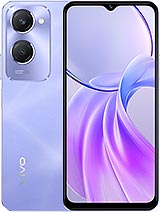
Overview
The New Value Proposition
The vivo Y28s is an entry-level 5G smartphone featuring a Mediatek Dimensity 6300 (6 nm) chipset for efficient connectivity and an IP64 dust and water resistance rating for enhanced durability, aimed at budget-conscious users seeking longevity. Released in July 2024, it competes with devices like the [Samsung Galaxy A15 5G](/samsung-galaxy-a15-5g-the-high-value-play-for-longevity-seekers/) by offering a modern software experience and reliable battery life at a fraction of the cost of a flagship. We must address the elephant in the room: the recurring debate between buying a brand-new budget device or a three-year-old used flagship.
From a purely economic perspective, the depreciation of a 2021 flagship makes it tempting. However, the hidden costs often outweigh the initial savings. A used Galaxy S21 or iPhone 12 likely arrives with a battery at 80% capacity, no warranty, and an expiring software support window. The handset we are analyzing today counters this with a fresh 5000 mAh cell, Android 14 out of the box, and the peace of mind that comes with a retail guarantee. For the pragmatic buyer in July 2024, the utility of a new 5G modem and a full-health battery often yields a higher return on investment than the raw power of a fading premium device.
Durable Architecture Over Premium Materials
While flagships prioritize glass and aluminum, the build of this model leans heavily on functional plastics. While some might view plastic as 'cheap,' we view it as a logical choice for impact resistance. Glass breaks; plastic flexes. The Mocha Brown and Twinkling Purple finishes provide a sophisticated aesthetic without the fragility of more expensive materials. At 185g, the device strikes a balance between feeling substantial in the hand and remaining light enough for extended one-handed use. It doesn't feel hollow, which suggests a well-organized internal chassis.
The inclusion of an IP64 rating is a significant victory for the budget tier. This provides protection against dust ingress and water splashes. Imagine you are caught in a sudden summer downpour or working in a dusty environment like a construction site. While an IP68-rated flagship could survive a dunk in a pool, the IP64 rating on this device covers the most common real-world hazards. It is about 'adequate protection' rather than 'extreme specs,' which aligns perfectly with a value-driven mindset. We appreciate that the manufacturer didn't skip this certification to save a few cents.
The Acoustic and Haptic Landscape
Moving to the audio performance, the single downward-firing loudspeaker is predictably standard. At maximum volume, we noticed the high-end frequencies can become somewhat shrill, and the bass response is nearly non-existent. This is common for the category. However, the presence of a 3.5mm headphone jack is a major asset. In an era where premium phones force you into the 'dongle life' or expensive wireless buds, this handset allows for high-quality, zero-latency wired audio. This is a cost-saving win for the user who already owns a pair of reliable wired earphones.
Microphone quality remains functional but unexciting. During our test calls, the noise cancellation managed to filter out consistent background hums, such as an air conditioner, but struggled with erratic noises like street traffic or wind. For video recording, the audio capture is clear enough for social media but lacks the directional focus found in more expensive multi-mic arrays. The haptic feedback—the vibration you feel when typing—is driven by a standard coin-type motor. It feels somewhat 'mushy' and lacks the sharp, tactile 'click' found in premium X-axis linear motors. Users will likely want to disable touch vibrations to preserve a sense of speed.
The Reality of Entry-Level 5G Performance
The Mediatek Dimensity 6300 inside this model is the engine of the experience. It utilizes a 6nm process, which is remarkably efficient for this price point. The core configuration includes two Cortex-A76 cores clocked at 2.4 GHz. These are the 'performance' cores that handle app launches and multitasking. For the uninitiated, Cortex-A76 was once a flagship-tier architecture. While it is older now, its inclusion here ensures that the UI remains fluid. When paired with the 90Hz refresh rate of the IPS LCD, scrolling through news feeds feels much smoother than the 60Hz panels of yesteryear.
However, we must discuss the storage standard: eMMC 5.1. This is a clear area where costs were cut. Most modern [mid-range phones](/trend/best-mid-range-phones-2026/) use UFS 2.2 or higher, which can move data three to four times faster. The use of eMMC 5.1 means that while the processor is fast, the 'pipes' delivering data to it are narrow. You will notice this when installing large apps or during the initial boot-up of the phone. It is a bottleneck, plain and simple. If you are a power user who constantly switches between heavy apps, this will be the most visible limitation. But for the target audience—those focused on messaging, light browsing, and 5G connectivity—the trade-off is manageable.
Visuals and High Brightness Utility
The display is a tale of two specs. On one hand, the 720p resolution is undeniably low for a 6.56-inch screen. If you hold the device close to your eyes, you will notice a slight lack of sharpness in text compared to a 1080p panel. On the other hand, the 840 nits High Brightness Mode (HBM) is a standout feature. Most budget LCDs wash out completely under direct sunlight. This panel remains legible even at high noon in July. For the economist, the utility of being able to see your screen outdoors outweighs the aesthetic 'luxury' of extra pixels you might not notice during a casual YouTube session.
Gaming performance on the Mali-G57 MC2 GPU is adequate for casual titles like Subway Surfers or Candy Crush. If you attempt to play Genshin Impact or PUBG Mobile at high settings, expect frame drops and heat. This device is a tool for communication and information, not a dedicated mobile gaming rig. The 5000 mAh battery, however, turns this into an endurance champion. Because the screen resolution is low and the chipset is efficient, the battery life is phenomenal. Most users will easily see two days of use between charges, which is something few flagships can claim.
Hardware-Based Imaging Analysis
The camera system is anchored by a 50 MP main sensor with an f/1.8 aperture. This is a solid foundation for daylight photography. The wide aperture allows a decent amount of light to hit the sensor, which is the primary requirement for clear photos. The 'Auxiliary lens' listed in the specs is largely a depth-gathering tool to assist with software-based background blur in portrait mode. Don't expect it to function as a dedicated macro or ultrawide lens; its purpose is supportive.
Video recording is capped at 1080p at 30fps. For those wondering, the lack of 4K or 60fps recording is a limitation of the chipset's image signal processor (ISP). This is not a device for aspiring cinematographers. However, for capturing a quick clip of a pet or a birthday party, the output is stable and color-accurate enough for the price. The 8 MP selfie camera is basic but functional for video calls. The hardware here is chosen for reliability over professional-grade results.
The Pragmatic Conclusion
When we weigh the pros and cons, this handset represents a calculated compromise. It sacrifices screen resolution and charging speed (15W is quite slow by 2024 standards) to provide 5G, IP64 durability, and massive battery life. For a student or a professional needing a reliable work phone, these priorities are correctly aligned. You are paying for the features that keep the phone running and connected, rather than the ones that look good on a marketing poster.
In the final analysis, the vivo Y28s proves that 'budget' does not have to mean 'disposable.' By including modern 5G bands and a weather-resistant build, the manufacturer has extended the functional lifespan of the device beyond what we typically see in the sub-$200 range. While it won't win any speed contests against a used flagship, its reliability and 'new-car smell' make it a smarter financial move for the average consumer in today's market. If you can live with slow charging and a 720p screen, the value here is undeniable for the vivo Y28s.
Technical Specifications
| LAUNCH | |
|---|---|
| Announced | 2024, June 26 |
| Status | Available. Released 2024, July |
| PLATFORM | |
| OS | Android 14, Funtouch 14 |
| Chipset | Mediatek Dimensity 6300 (6 nm) |
| CPU | Octa-core (2x2.4 GHz Cortex-A76 & 6x2.0 GHz Cortex-A55) |
| GPU | Mali-G57 MC2 |
| BODY | |
| Dimensions | 163.6 x 75.6 x 8.4 mm (6.44 x 2.98 x 0.33 in) |
| Weight | 185 g (6.53 oz) |
| Build | Glass front, plastic frame, plastic back |
| SIM | Nano-SIM + Nano-SIM |
| Info | IP64 dust tight and water resistant (water splashes) |
| DISPLAY | |
| Type | IPS LCD, 90Hz, 840 nits (HBM) |
| Size | 6.56 inches, 103.4 cm2 (~83.6% screen-to-body ratio) |
| Resolution | 720 x 1612 pixels, 20:9 ratio (~269 ppi density) |
| MEMORY | |
| Card slot | microSDXC (uses shared SIM slot) |
| Internal | 128GB 4GB RAM, 128GB 6GB RAM, 128GB 8GB RAM, 256GB 8GB RAM |
| Info | eMMC 5.1 |
| MAIN CAMERA | |
| Dual | 50 MP, f/1.8, (wide), PDAF Auxiliary lens |
| Features | LED flash, panorama |
| Video | 1080p@30fps |
| SELFIE CAMERA | |
| Single | 8 MP, f/2.0, (wide) |
| Video | 1080p@30fps |
| SOUND | |
| Loudspeaker | Yes |
| 3.5mm jack | Yes |
| COMMS | |
| WLAN | Wi-Fi 802.11 a/b/g/n/ac, dual-band |
| Bluetooth | 5.4, A2DP, LE |
| Positioning | GPS, GALILEO, GLONASS, BDS, QZSS |
| NFC | Yes (market/region dependent) |
| Radio | FM radio (market/region dependent) |
| USB | USB Type-C 2.0, OTG |
| NETWORK | |
| Technology | GSM / HSPA / LTE / 5G |
| 2G bands | GSM 850 / 900 / 1800 / 1900 |
| 3G bands | HSDPA 850 / 900 / 1700(AWS) / 1900 / 2100 |
| 4G bands | 1, 2, 3, 4, 5, 7, 8, 20, 28, 38, 40, 41 |
| 5G bands | 1, 3, 5, 7, 8, 20, 28, 38, 40, 41, 77, 78 SA/NSA |
| Speed | HSPA, LTE, 5G |
| FEATURES | |
| Sensors | Fingerprint (side-mounted), accelerometer, proximity, compass |
| BATTERY | |
| Type | Li-Ion 5000 mAh |
| Charging | 15W wired Reverse wired |
| MISC | |
| Colors | Mocha Brown, Twinkling Purple |
| Models | V2346 |