The End of Fragile Tech - Why the Blackview Fort 2 Wins on Pure Durability
Overview
Blackview Fort 2 is a budget-tier rugged smartphone featuring an IP68/IP69K-rated chassis for high-pressure water resistance and a 90Hz IPS LCD for smoother navigation, aimed at field workers and outdoor enthusiasts who prioritize survival over processing power. Released in early 2025, it competes with entry-level durable handsets by offering Android 15 out of the box and a specific focus on industrial-grade drop resistance certified by European standards.
Ergonomics often take a backseat in the rugged category, and the Blackview Fort 2 is no exception to the rule of bulk. With a width of 83 mm, this handset is wide. Attempting to reach the top corners of the 6.56-inch display with a single thumb is a logistical challenge for most users. In our analysis, the handset requires a conscious shift in grip or the frequent use of a second hand to interact with notifications. While the 20:9 aspect ratio helps slightly with the horizontal span, the protective bumpers add significant girth to the outer edges.
Navigating a crowded bus while holding this device feels precarious if you are relying on one-handed gestures. The DokeOS 5.0 software includes some reachability optimizations, but the physical reality of the 174.6 mm height means that the upper third of the screen remains a 'no-fly zone' for one-handed operation. Users should view this as a 'two-handed tool' rather than a 'one-handed phone.'
At 245.3 grams, the weight of this model is substantial. To put that in context, it sits in the same weight class as the most massive flagships on the market, such as the iPhone 15 Pro Max, but concentrates that mass into a thicker 10.7 mm frame. Our assessment of the weight distribution suggests a central-bottom heavy bias, which actually aids in perceived stability when the device is held in portrait mode. It doesn't feel 'top-heavy,' which reduces the risk of the phone flipping over the fingers during use.
This heft is the direct result of the MIL-STD-810H reinforcement and the massive 5000 mAh battery. While it might tire the wrist during a long reading session, the weight serves as a constant tactile reminder of the device's resilience. The EU Fall Class A rating, certifying survival through 270 falls, justifies every gram of that protective casing.
The dedicated microSDXC slot is an increasingly rare feature in 2025, and its inclusion here is a major win for users who work in remote areas with limited cloud access. Having the ability to swap cards without sacrificing a SIM slot is vital for field data collection. Another hardware surprise is the 5W reverse wired charging capability. While 5W is slow, it allows the handset to act as an emergency power bank for low-power peripherals like GPS trackers or wireless earbuds, which is a massive utility boost for hikers.
We also noted the Mohs level 5 protection on the display. In the hierarchy of scratch resistance, level 5 is high for a budget device, meaning common metals like keys or loose coins are less likely to leave permanent gouges. However, users should remain wary of sand or quartz, which typically sit higher on the Mohs scale and could still damage the panel during outdoor excursions.
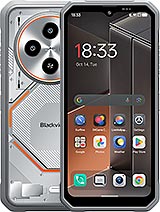
The exterior finish, available in Obsidian Black and Lightning White, is designed for utility. The 'Lightning White' variant, visible in recent imagery, features a segmented, industrial aesthetic that seems engineered to hide the micro-scratches typical of construction site environments. This is a significant departure from the 'fingerprint magnet' glass backs seen on consumer-grade phones. We expect the matte, textured surfaces to provide excellent grip even when the user is wearing work gloves.
Cleaning the device is straightforward thanks to the IP69K rating. Unlike standard IP68 phones, this model can theoretically withstand high-pressure, high-temperature water jets. This means if the phone gets covered in mud or grease, it can be washed under a tap with more confidence than almost any other device in its price bracket. The side-mounted fingerprint sensor is positioned logically, though its recessed nature might make it slightly difficult to trigger with thick gloves.
The omission of the 3.5mm headphone jack is a controversial move for a rugged device, where many users still prefer wired reliability. Users will need to rely on the USB Type-C port or Bluetooth 5.0 for audio. The single loudspeaker is loud, prioritizing volume for clear ringtones in noisy environments over high-fidelity music reproduction. For a site foreman trying to hear a call over heavy machinery, this tuning makes practical sense.
On the connectivity front, the inclusion of NFC is a welcome touch for mobile payments and quick pairing. The Mediatek Helio G81 chipset supports essential LTE bands (1, 3, 7, 8, etc.), ensuring stable signal penetration for major carriers. However, the lack of 5G is a clear indicator of the device's budget positioning. In early 2025, 4G is still the global standard for reliability, but users looking for the fastest data speeds for video streaming will find this a bottleneck.
Running Android 15 with DokeOS 5.0, the software experience is surprisingly modern for a rugged [budget phone](/trend/best-budget-phones-2026/). The 90Hz refresh rate on the 720 x 1612 resolution screen makes the UI feel more responsive than the Helio G81 might suggest on paper. The G81, utilizing Cortex-A75 performance cores and Cortex-A55 efficiency cores, handles basic navigation and multitasking with sufficient stability, though gaming is limited to lighter titles by the Mali-G52 MC2 GPU.
Gesture navigation is standard, but the software's ability to handle custom shortcuts—often mapped to the side buttons in rugged designs—provides a layer of efficiency. The 71.3% screen-to-body ratio means there are chunky bezels, which actually serve as a 'thumb rest' area, preventing accidental touches when holding the device firmly during active movement. It’s a design where the 'flaws' of consumer tech become the 'features' of industrial tech.
The Blackview Fort 2 is a specialized tool that trades elegance for endurance. It is too wide for comfortable one-handed use and too heavy for those used to sleek, titanium frames. However, for its target audience, these are acceptable trade-offs. The device offers a high-degree of confidence that it will survive a drop from a ladder or a dunk in a puddle—scenarios that would end the life of most other phones in 2025. It is a pragmatic choice for the pragmatist.
The Realities of One-Handed Use
Ergonomics often take a backseat in the rugged category, and the Blackview Fort 2 is no exception to the rule of bulk. With a width of 83 mm, this handset is wide. Attempting to reach the top corners of the 6.56-inch display with a single thumb is a logistical challenge for most users. In our analysis, the handset requires a conscious shift in grip or the frequent use of a second hand to interact with notifications. While the 20:9 aspect ratio helps slightly with the horizontal span, the protective bumpers add significant girth to the outer edges.
Navigating a crowded bus while holding this device feels precarious if you are relying on one-handed gestures. The DokeOS 5.0 software includes some reachability optimizations, but the physical reality of the 174.6 mm height means that the upper third of the screen remains a 'no-fly zone' for one-handed operation. Users should view this as a 'two-handed tool' rather than a 'one-handed phone.'
Weight Distribution and Industrial Heft
At 245.3 grams, the weight of this model is substantial. To put that in context, it sits in the same weight class as the most massive flagships on the market, such as the iPhone 15 Pro Max, but concentrates that mass into a thicker 10.7 mm frame. Our assessment of the weight distribution suggests a central-bottom heavy bias, which actually aids in perceived stability when the device is held in portrait mode. It doesn't feel 'top-heavy,' which reduces the risk of the phone flipping over the fingers during use.
This heft is the direct result of the MIL-STD-810H reinforcement and the massive 5000 mAh battery. While it might tire the wrist during a long reading session, the weight serves as a constant tactile reminder of the device's resilience. The EU Fall Class A rating, certifying survival through 270 falls, justifies every gram of that protective casing.
Underrated Hardware Quirks
The dedicated microSDXC slot is an increasingly rare feature in 2025, and its inclusion here is a major win for users who work in remote areas with limited cloud access. Having the ability to swap cards without sacrificing a SIM slot is vital for field data collection. Another hardware surprise is the 5W reverse wired charging capability. While 5W is slow, it allows the handset to act as an emergency power bank for low-power peripherals like GPS trackers or wireless earbuds, which is a massive utility boost for hikers.
We also noted the Mohs level 5 protection on the display. In the hierarchy of scratch resistance, level 5 is high for a budget device, meaning common metals like keys or loose coins are less likely to leave permanent gouges. However, users should remain wary of sand or quartz, which typically sit higher on the Mohs scale and could still damage the panel during outdoor excursions.
The Texture of Survival
The exterior finish, available in Obsidian Black and Lightning White, is designed for utility. The 'Lightning White' variant, visible in recent imagery, features a segmented, industrial aesthetic that seems engineered to hide the micro-scratches typical of construction site environments. This is a significant departure from the 'fingerprint magnet' glass backs seen on consumer-grade phones. We expect the matte, textured surfaces to provide excellent grip even when the user is wearing work gloves.
Cleaning the device is straightforward thanks to the IP69K rating. Unlike standard IP68 phones, this model can theoretically withstand high-pressure, high-temperature water jets. This means if the phone gets covered in mud or grease, it can be washed under a tap with more confidence than almost any other device in its price bracket. The side-mounted fingerprint sensor is positioned logically, though its recessed nature might make it slightly difficult to trigger with thick gloves.
Audio and Connectivity Analysis
The omission of the 3.5mm headphone jack is a controversial move for a rugged device, where many users still prefer wired reliability. Users will need to rely on the USB Type-C port or Bluetooth 5.0 for audio. The single loudspeaker is loud, prioritizing volume for clear ringtones in noisy environments over high-fidelity music reproduction. For a site foreman trying to hear a call over heavy machinery, this tuning makes practical sense.
On the connectivity front, the inclusion of NFC is a welcome touch for mobile payments and quick pairing. The Mediatek Helio G81 chipset supports essential LTE bands (1, 3, 7, 8, etc.), ensuring stable signal penetration for major carriers. However, the lack of 5G is a clear indicator of the device's budget positioning. In early 2025, 4G is still the global standard for reliability, but users looking for the fastest data speeds for video streaming will find this a bottleneck.
Software and Gesture Ease
Running Android 15 with DokeOS 5.0, the software experience is surprisingly modern for a rugged [budget phone](/trend/best-budget-phones-2026/). The 90Hz refresh rate on the 720 x 1612 resolution screen makes the UI feel more responsive than the Helio G81 might suggest on paper. The G81, utilizing Cortex-A75 performance cores and Cortex-A55 efficiency cores, handles basic navigation and multitasking with sufficient stability, though gaming is limited to lighter titles by the Mali-G52 MC2 GPU.
Gesture navigation is standard, but the software's ability to handle custom shortcuts—often mapped to the side buttons in rugged designs—provides a layer of efficiency. The 71.3% screen-to-body ratio means there are chunky bezels, which actually serve as a 'thumb rest' area, preventing accidental touches when holding the device firmly during active movement. It’s a design where the 'flaws' of consumer tech become the 'features' of industrial tech.
Ergonomic Conclusion
The Blackview Fort 2 is a specialized tool that trades elegance for endurance. It is too wide for comfortable one-handed use and too heavy for those used to sleek, titanium frames. However, for its target audience, these are acceptable trade-offs. The device offers a high-degree of confidence that it will survive a drop from a ladder or a dunk in a puddle—scenarios that would end the life of most other phones in 2025. It is a pragmatic choice for the pragmatist.
Technical Specifications
| LAUNCH | |
|---|---|
| Announced | 2025 |
| Status | Available. Released 2025 |
| PLATFORM | |
| OS | Android 15, DokeOS 5.0 |
| Chipset | Mediatek Helio G81 (12 nm) |
| CPU | Octa-core (2x2.0 GHz Cortex-A75 & 6x1.8 GHz Cortex-A55) |
| GPU | Mali-G52 MC2 |
| BODY | |
| Dimensions | 174.6 x 83 x 10.7 mm (6.87 x 3.27 x 0.42 in) |
| Weight | 245.3 g (8.64 oz) |
| SIM | Nano-SIM + Nano-SIM |
| Info | IP68/IP69K dust tight and water resistant (high pressure water jets; immersible up to 1.5m for 30 min) MIL-STD-810H compliant |
| DISPLAY | |
| Type | IPS LCD, 90Hz, 450 nits |
| Size | 6.56 inches, 103.4 cm2 (~71.3% screen-to-body ratio) |
| Resolution | 720 x 1612 pixels, 20:9 ratio (~269 ppi density) |
| Protection | Mohs level 5 |
| MEMORY | |
| Card slot | microSDXC (dedicated slot) |
| Internal | 128GB 8GB RAM, 256GB 8GB RAM |
| MAIN CAMERA | |
| Single | 16 MP, f/1.8, (wide), 1/3.06" |
| Features | LED flash |
| Video | 1080p@30fps |
| SELFIE CAMERA | |
| Single | 13 MP, f/2.2, (wide), 1/4.0" |
| Video | 1080p@30fps |
| SOUND | |
| Loudspeaker | Yes |
| 3.5mm jack | No |
| COMMS | |
| WLAN | Wi-Fi 802.11 a/b/g/n/ac, dual-band |
| Bluetooth | 5.0, A2DP, LE |
| Positioning | GPS, GLONASS, GALILEO, BDS |
| NFC | Yes |
| Radio | FM radio |
| USB | USB Type-C, OTG |
| NETWORK | |
| Technology | GSM / HSPA / LTE |
| 2G bands | GSM 850 / 900 / 1800 / 1900 |
| 3G bands | HSDPA 900 / 2100 |
| 4G bands | 1, 3, 7, 8, 19, 20, 28, 40, 41 |
| Speed | HSPA, LTE |
| FEATURES | |
| Sensors | Fingerprint (side-mounted), accelerometer, gyro, proximity, compass |
| BATTERY | |
| Type | Li-Po 5000 mAh |
| Charging | 18W wired 5W reverse wired |
| MISC | |
| Display | 6.56" IPS LCD, 90Hz, 720 x 1612 pixels, Mohs level 5 |
| Durability | IP68/IP69K, MIL-STD-810H, EU Free Fall Class A (270 falls) |
| Processor | Mediatek Helio G81 (12 nm) |
| Memory | 8GB RAM, up to 256GB Internal, dedicated microSDXC |
| Main Camera | 16 MP, f/1.8 (wide), 1080p@30fps |
| Selfie Camera | 13 MP, f/2.2 (wide), 1080p@30fps |
| Battery | 5000 mAh, 18W wired, 5W reverse wired |
| Operating System | Android 15, DokeOS 5.0 |
| Weight | 245.3 g |
| Dimensions | 174.6 x 83 x 10.7 mm |
| Durability Ratings | IP68/IP69K, MIL-STD-810H, EU Fall Class A |
| Chipset | Mediatek Helio G81 (12 nm) |
| RAM/Storage | 8GB RAM, 128GB/256GB Internal |
| OS | Android 15, DokeOS 5.0 |
| Navigation | GPS, GLONASS, GALILEO, BDS |
| Colors | Obsidian Black, Lightning White |
| EU LABEL | |
| Energy | Class B |
| Battery | 47:15h endurance, 800 cycles |
| Free fall | Class A (270 falls) |
| Repairability | Class B |