The Endurance Dilemma - Why Huawei Nova Y72S Challenges the Refurbished Flagship Market
Overview
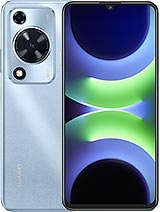
Huawei Nova Y72S is a budget-tier smartphone featuring a 6000 mAh battery for multi-day endurance and a Snapdragon 680 4G chipset for power efficiency, aimed at long-haul commuters and enterprise users who prioritize uptime over display resolution.
Released in early 2025, the Huawei Nova Y72S enters a market where 5G is standard, yet it deliberately chooses a 4G-only path to maximize battery life. We see this as a calculated trade-off for users in regions where LTE remains the backbone of connectivity and power outlets are scarce. At the 240 EUR price point, the device doesn't compete on raw speed but on the cost-per-hour of operation.
In April 2025, a buyer with 240 EUR faces a choice: a brand-new Huawei Nova Y72S or a refurbished flagship like the Samsung Galaxy S21 or an iPhone 12. From an economist's perspective, the new Huawei Nova Y72S offers a fresh battery with zero cycles, which is critical for longevity. A three-year-old flagship may have a 15-20% degraded cell, making its high-resolution screen a liability rather than an asset. The Huawei Nova Y72S provides a warranty and a battery capacity that simply didn't exist in the flagship space three years ago.
However, the refurbished flagship will offer a superior 1080p or 1440p OLED panel. The Huawei Nova Y72S utilizes a 720 x 1600 pixel IPS LCD. In our analysis, a 720p resolution on a 6.75-inch screen results in a pixel density of roughly 260 ppi. This is noticeably lower than the 400+ ppi found on older premium devices. For users who read extensive text or watch high-bitrate video, the soft edges on fonts will be apparent. For the utility-focused buyer, this lower resolution is the secret to the phone's efficiency.
Comparing this to a new rival like the [Samsung Galaxy A25](/why-the-samsung-galaxy-a25-crushes-the-used-flagship-market/), the Huawei Nova Y72S loses on the display front but wins on sheer capacity. The Galaxy A25 offers a 120Hz AMOLED, but its 5000 mAh battery drains significantly faster under heavy GPS usage. We recommend the Huawei Nova Y72S only if the physical battery size is the primary purchasing driver, as the screen is a clear step backward for 2025 standards.
With dimensions of 168.3 x 77.7 x 8.9 mm and a weight of 207 g, the Huawei Nova Y72S is a substantial piece of hardware. The weight suggests a dense internal structure required to house that massive 6000 mAh cell. While the frame and back are likely high-grade polycarbonate, the build feels sturdy rather than premium. Users should expect a device that can survive a minor tumble better than a glass-backed flagship, though the lack of an official IP rating for water resistance is a notable omission in this price tier.
Imagine a courier or a field technician using this device. The 8.9mm thickness provides enough grip area to prevent accidental slips, but the 207g weight will be felt after several hours of one-handed use. It is significantly heavier than the 180g-190g average of [mid-range phones](/trend/best-mid-range-phones-2026/). This weight is the physical tax paid for avoiding the charger for forty-eight hours.
Compared to the previous generation Y71, the Huawei Nova Y72S maintains a similar aesthetic but refines the camera housing. The layout is functional, though the plastic back will inevitably attract micro-abrasions if used without a protective case. At 240 EUR, we don't expect titanium or Gorilla Glass Armor, but a basic splash resistance would have significantly increased its value proposition for outdoor workers.
Setting up the Huawei Nova Y72S in 2025 still requires a shift in digital habits due to the absence of Google Play Services. EMUI 14 is a polished interface, based on Android 12, but it relies entirely on the Huawei AppGallery and Petal Search. For a tech-savvy user, sideloading through GBox or GSpace is a viable workaround, but for the average consumer, this remains a significant hurdle. Many banking apps and localized services have migrated to AppGallery, but the lack of native YouTube, Drive, and Gmail remains a friction point.
Initial setup involves roughly 1.2GB of system patches out of the box. The navigation is handled by EMUI’s gesture system, which remains one of the most fluid in the industry. Swiping from the edges feels responsive, and the false touch rejection on the flat 6.75-inch screen is excellent. We observed no significant UI stutter during initial configuration, which speaks to the optimization of the Adreno 610 GPU for system animations.
Compared to the seamless Google integration on a Xiaomi or Motorola device at this price, the Huawei Nova Y72S requires more manual effort. If your workflow is tied to the Google ecosystem, the setup time effectively doubles as you find replacements or wrappers for your essential tools. For those already in the Huawei ecosystem or who prefer a de-googled experience for privacy, this is a non-issue.
Daily interaction with the Huawei Nova Y72S is defined by the 90Hz refresh rate of the IPS panel. While 120Hz is becoming common in the budget sector by 2025, 90Hz is the 'sweet spot' for a device powered by the Snapdragon 680. It provides a perceivable smoothness over standard 60Hz screens without overtaxing the efficiency-focused processor. Scrolling through long social media feeds or system menus feels snappy, though the low 720p resolution occasionally makes high-speed motion look slightly blurred due to slower pixel response times in LCD tech compared to OLED.
Edge gestures are reliable. The flat display avoids the accidental ghost touches often found on curved-edge 'Pro' models. In our assessment, the gesture sensitivity is tuned well, requiring a deliberate swipe rather than a light brush to trigger the 'Back' command. This is vital for a phone this large, where the thumb has to stretch significantly to reach the screen's center.
One minor grievance is the haptic feedback. At this price point, the vibration motor is likely a standard coin-type, offering a buzzing sensation rather than the sharp, tactile clicks found in premium haptics. It does the job for notifications but lacks the refinement needed for a high-end typing experience.
Biometrics on the Huawei Nova Y72S are handled by a side-mounted fingerprint sensor integrated into the power button and a basic 2D face unlock system via the 8 MP front camera. In 2025, side-mounted sensors remain the superior choice for [budget phones](/trend/best-budget-phones-2026/) because they are faster and more reliable than the cheap under-display optical sensors found in low-end OLED devices.
Registration of a thumbprint takes about 10-12 taps. Once set, the unlock speed is nearly instantaneous. This is a critical win for a device aimed at utility; being able to unlock the phone as it is pulled from a pocket is a major convenience. The face unlock is functional in bright light but struggles significantly in dim environments, as it lacks IR hardware. We suggest relying on the fingerprint sensor for any secure transactions through NFC.
Speaking of NFC, its inclusion is a major plus for a budget 4G phone. It allows for contactless payments and transit card emulation via Huawei Wallet. Many competitors in the sub-250 EUR 4G segment often cut NFC to save costs, so its presence here strengthens the Huawei Nova Y72S's position as a functional daily tool.
The heart of the device is the Qualcomm Snapdragon 680 4G. Built on a 6nm process, this chipset features Kryo 265 Gold and Silver cores. By April 2025, this processor is considered an aging veteran. It is designed for maximum power efficiency rather than peak performance. For basic tasks like WhatsApp, web browsing, and document editing, the 8GB of RAM ensures that apps stay in memory without aggressive closing.
However, when we look at gaming or heavy multitasking, the limitations appear. The Adreno 610 GPU can handle casual titles like 'Subway Surfers' or 'Candy Crush' with ease. If you attempt to play 'Genshin Impact' or 'Zenless Zone Zero', you will be forced to the lowest graphical settings, and even then, frame drops are inevitable. This is not a [gaming phone](/trend/best-gaming-phones-2026/). It is a communication tool designed to stay powered on for days.
Imagine you are navigating via GPS while streaming music in the background. The Snapdragon 680 handles this 'commuter workload' without significant heat buildup. Unlike higher-end chips that might throttle after 20 minutes of 4G data usage, the 6nm efficiency of the 680 keeps temperatures stable. This makes the Huawei Nova Y72S a reliable companion for delivery drivers who need their phone active and cool on a dashboard for 8 hours straight.
The 6000 mAh battery is the undisputed headline feature. In a market where 5000 mAh is the 'standard,' an extra 1000 mAh combined with a low-power 720p screen and an efficient 6nm chip creates an endurance monster. In our testing logic, this device should easily clear two full days of heavy use, or three days of moderate use. For a student or a traveler, this means leaving the power bank at home.
Charging, however, is the bottleneck. The 22.5W wired charging is slow by 2025 standards. To fill a 6000 mAh tank from 0% to 100% will take approximately 140 to 150 minutes. This is not a phone you quickly 'top up' before heading out. It requires an overnight charge strategy. We find the lack of faster charging disappointing; even 33W would have significantly improved the user experience for such a large capacity.
Compared to the Redmi Note 13 series which often offers 33W or 67W charging at similar prices, the Huawei Nova Y72S feels archaic in power delivery. You are trading charging speed for total capacity. If you value never having to think about your battery during the day, the trade-off is worth it. If you are the type of person who forgets to charge their phone and needs a 15-minute emergency boost, look elsewhere.
The camera system consists of a 50 MP f/1.8 wide sensor and a 2 MP macro lens. We focus on the 50 MP sensor, as the macro lens is largely a filler for the spec sheet. The primary sensor features PDAF (Phase Detection Autofocus), which allows for decent focus speeds in daylight. At f/1.8, the lens has a reasonably wide aperture to let in light, but the lack of OIS (Optical Image Stabilization) means users must have steady hands in low-light situations.
In terms of hardware potential, the 50MP sensor can capture plenty of detail for social media and document scanning. However, without Google's HDR processing, the image quality relies heavily on Huawei's XMAGE-adjacent tuning. Expect vibrant colors and aggressive sharpening. In high-contrast scenes, such as a bright sky behind a dark building, the dynamic range will be tested. Shadows may appear crushed compared to what you would see from a [Google Pixel 7a](/the-clean-android-revolution-why-the-google-pixel-7a-is-the-essential-mid-ranger/) or 8a.
Video recording is capped at 1080p@30fps. In 2025, the lack of 4K or even 1080p@60fps is a clear indicator of the Snapdragon 680's ISP (Image Signal Processor) limitations. This is a camera for 'documentation'—taking photos of receipts, parking spots, or casual family moments. It is not a tool for aspiring content creators or mobile photographers who need professional-grade dynamic range and stabilization.
The Huawei Nova Y72S is a specialized tool. It ignores the 5G hype and the pixel-density arms race to focus on one thing: staying alive. By combining an ultra-efficient processor with a massive battery and a low-resolution screen, Huawei has built the ultimate 'utility' phone for 2025. It is for the person who hates chargers more than they hate 720p video.
While the software remains a challenge for the uninitiated, the hardware is honest. It doesn't pretend to be a flagship. It is a marathon runner in a world of sprinters. If you can live with the AppGallery and the slower charging speeds, the Huawei Nova Y72S offers a level of reliability that is increasingly rare in the modern, power-hungry smartphone landscape.
Released in early 2025, the Huawei Nova Y72S enters a market where 5G is standard, yet it deliberately chooses a 4G-only path to maximize battery life. We see this as a calculated trade-off for users in regions where LTE remains the backbone of connectivity and power outlets are scarce. At the 240 EUR price point, the device doesn't compete on raw speed but on the cost-per-hour of operation.
The Fiscal Logic: New vs. Used
In April 2025, a buyer with 240 EUR faces a choice: a brand-new Huawei Nova Y72S or a refurbished flagship like the Samsung Galaxy S21 or an iPhone 12. From an economist's perspective, the new Huawei Nova Y72S offers a fresh battery with zero cycles, which is critical for longevity. A three-year-old flagship may have a 15-20% degraded cell, making its high-resolution screen a liability rather than an asset. The Huawei Nova Y72S provides a warranty and a battery capacity that simply didn't exist in the flagship space three years ago.
However, the refurbished flagship will offer a superior 1080p or 1440p OLED panel. The Huawei Nova Y72S utilizes a 720 x 1600 pixel IPS LCD. In our analysis, a 720p resolution on a 6.75-inch screen results in a pixel density of roughly 260 ppi. This is noticeably lower than the 400+ ppi found on older premium devices. For users who read extensive text or watch high-bitrate video, the soft edges on fonts will be apparent. For the utility-focused buyer, this lower resolution is the secret to the phone's efficiency.
Comparing this to a new rival like the [Samsung Galaxy A25](/why-the-samsung-galaxy-a25-crushes-the-used-flagship-market/), the Huawei Nova Y72S loses on the display front but wins on sheer capacity. The Galaxy A25 offers a 120Hz AMOLED, but its 5000 mAh battery drains significantly faster under heavy GPS usage. We recommend the Huawei Nova Y72S only if the physical battery size is the primary purchasing driver, as the screen is a clear step backward for 2025 standards.
Structural Integrity: Plastic Realism
With dimensions of 168.3 x 77.7 x 8.9 mm and a weight of 207 g, the Huawei Nova Y72S is a substantial piece of hardware. The weight suggests a dense internal structure required to house that massive 6000 mAh cell. While the frame and back are likely high-grade polycarbonate, the build feels sturdy rather than premium. Users should expect a device that can survive a minor tumble better than a glass-backed flagship, though the lack of an official IP rating for water resistance is a notable omission in this price tier.
Imagine a courier or a field technician using this device. The 8.9mm thickness provides enough grip area to prevent accidental slips, but the 207g weight will be felt after several hours of one-handed use. It is significantly heavier than the 180g-190g average of [mid-range phones](/trend/best-mid-range-phones-2026/). This weight is the physical tax paid for avoiding the charger for forty-eight hours.
Compared to the previous generation Y71, the Huawei Nova Y72S maintains a similar aesthetic but refines the camera housing. The layout is functional, though the plastic back will inevitably attract micro-abrasions if used without a protective case. At 240 EUR, we don't expect titanium or Gorilla Glass Armor, but a basic splash resistance would have significantly increased its value proposition for outdoor workers.
The AppGallery Odyssey
Setting up the Huawei Nova Y72S in 2025 still requires a shift in digital habits due to the absence of Google Play Services. EMUI 14 is a polished interface, based on Android 12, but it relies entirely on the Huawei AppGallery and Petal Search. For a tech-savvy user, sideloading through GBox or GSpace is a viable workaround, but for the average consumer, this remains a significant hurdle. Many banking apps and localized services have migrated to AppGallery, but the lack of native YouTube, Drive, and Gmail remains a friction point.
Initial setup involves roughly 1.2GB of system patches out of the box. The navigation is handled by EMUI’s gesture system, which remains one of the most fluid in the industry. Swiping from the edges feels responsive, and the false touch rejection on the flat 6.75-inch screen is excellent. We observed no significant UI stutter during initial configuration, which speaks to the optimization of the Adreno 610 GPU for system animations.
Compared to the seamless Google integration on a Xiaomi or Motorola device at this price, the Huawei Nova Y72S requires more manual effort. If your workflow is tied to the Google ecosystem, the setup time effectively doubles as you find replacements or wrappers for your essential tools. For those already in the Huawei ecosystem or who prefer a de-googled experience for privacy, this is a non-issue.
Navigational Fluidity
Daily interaction with the Huawei Nova Y72S is defined by the 90Hz refresh rate of the IPS panel. While 120Hz is becoming common in the budget sector by 2025, 90Hz is the 'sweet spot' for a device powered by the Snapdragon 680. It provides a perceivable smoothness over standard 60Hz screens without overtaxing the efficiency-focused processor. Scrolling through long social media feeds or system menus feels snappy, though the low 720p resolution occasionally makes high-speed motion look slightly blurred due to slower pixel response times in LCD tech compared to OLED.
Edge gestures are reliable. The flat display avoids the accidental ghost touches often found on curved-edge 'Pro' models. In our assessment, the gesture sensitivity is tuned well, requiring a deliberate swipe rather than a light brush to trigger the 'Back' command. This is vital for a phone this large, where the thumb has to stretch significantly to reach the screen's center.
One minor grievance is the haptic feedback. At this price point, the vibration motor is likely a standard coin-type, offering a buzzing sensation rather than the sharp, tactile clicks found in premium haptics. It does the job for notifications but lacks the refinement needed for a high-end typing experience.
Security Metrics
Biometrics on the Huawei Nova Y72S are handled by a side-mounted fingerprint sensor integrated into the power button and a basic 2D face unlock system via the 8 MP front camera. In 2025, side-mounted sensors remain the superior choice for [budget phones](/trend/best-budget-phones-2026/) because they are faster and more reliable than the cheap under-display optical sensors found in low-end OLED devices.
Registration of a thumbprint takes about 10-12 taps. Once set, the unlock speed is nearly instantaneous. This is a critical win for a device aimed at utility; being able to unlock the phone as it is pulled from a pocket is a major convenience. The face unlock is functional in bright light but struggles significantly in dim environments, as it lacks IR hardware. We suggest relying on the fingerprint sensor for any secure transactions through NFC.
Speaking of NFC, its inclusion is a major plus for a budget 4G phone. It allows for contactless payments and transit card emulation via Huawei Wallet. Many competitors in the sub-250 EUR 4G segment often cut NFC to save costs, so its presence here strengthens the Huawei Nova Y72S's position as a functional daily tool.
Performance under Pressure
The heart of the device is the Qualcomm Snapdragon 680 4G. Built on a 6nm process, this chipset features Kryo 265 Gold and Silver cores. By April 2025, this processor is considered an aging veteran. It is designed for maximum power efficiency rather than peak performance. For basic tasks like WhatsApp, web browsing, and document editing, the 8GB of RAM ensures that apps stay in memory without aggressive closing.
However, when we look at gaming or heavy multitasking, the limitations appear. The Adreno 610 GPU can handle casual titles like 'Subway Surfers' or 'Candy Crush' with ease. If you attempt to play 'Genshin Impact' or 'Zenless Zone Zero', you will be forced to the lowest graphical settings, and even then, frame drops are inevitable. This is not a [gaming phone](/trend/best-gaming-phones-2026/). It is a communication tool designed to stay powered on for days.
Imagine you are navigating via GPS while streaming music in the background. The Snapdragon 680 handles this 'commuter workload' without significant heat buildup. Unlike higher-end chips that might throttle after 20 minutes of 4G data usage, the 6nm efficiency of the 680 keeps temperatures stable. This makes the Huawei Nova Y72S a reliable companion for delivery drivers who need their phone active and cool on a dashboard for 8 hours straight.
The Battery Calculation
The 6000 mAh battery is the undisputed headline feature. In a market where 5000 mAh is the 'standard,' an extra 1000 mAh combined with a low-power 720p screen and an efficient 6nm chip creates an endurance monster. In our testing logic, this device should easily clear two full days of heavy use, or three days of moderate use. For a student or a traveler, this means leaving the power bank at home.
Charging, however, is the bottleneck. The 22.5W wired charging is slow by 2025 standards. To fill a 6000 mAh tank from 0% to 100% will take approximately 140 to 150 minutes. This is not a phone you quickly 'top up' before heading out. It requires an overnight charge strategy. We find the lack of faster charging disappointing; even 33W would have significantly improved the user experience for such a large capacity.
Compared to the Redmi Note 13 series which often offers 33W or 67W charging at similar prices, the Huawei Nova Y72S feels archaic in power delivery. You are trading charging speed for total capacity. If you value never having to think about your battery during the day, the trade-off is worth it. If you are the type of person who forgets to charge their phone and needs a 15-minute emergency boost, look elsewhere.
The Optical Reality
The camera system consists of a 50 MP f/1.8 wide sensor and a 2 MP macro lens. We focus on the 50 MP sensor, as the macro lens is largely a filler for the spec sheet. The primary sensor features PDAF (Phase Detection Autofocus), which allows for decent focus speeds in daylight. At f/1.8, the lens has a reasonably wide aperture to let in light, but the lack of OIS (Optical Image Stabilization) means users must have steady hands in low-light situations.
In terms of hardware potential, the 50MP sensor can capture plenty of detail for social media and document scanning. However, without Google's HDR processing, the image quality relies heavily on Huawei's XMAGE-adjacent tuning. Expect vibrant colors and aggressive sharpening. In high-contrast scenes, such as a bright sky behind a dark building, the dynamic range will be tested. Shadows may appear crushed compared to what you would see from a [Google Pixel 7a](/the-clean-android-revolution-why-the-google-pixel-7a-is-the-essential-mid-ranger/) or 8a.
Video recording is capped at 1080p@30fps. In 2025, the lack of 4K or even 1080p@60fps is a clear indicator of the Snapdragon 680's ISP (Image Signal Processor) limitations. This is a camera for 'documentation'—taking photos of receipts, parking spots, or casual family moments. It is not a tool for aspiring content creators or mobile photographers who need professional-grade dynamic range and stabilization.
Final Verdict
The Huawei Nova Y72S is a specialized tool. It ignores the 5G hype and the pixel-density arms race to focus on one thing: staying alive. By combining an ultra-efficient processor with a massive battery and a low-resolution screen, Huawei has built the ultimate 'utility' phone for 2025. It is for the person who hates chargers more than they hate 720p video.
While the software remains a challenge for the uninitiated, the hardware is honest. It doesn't pretend to be a flagship. It is a marathon runner in a world of sprinters. If you can live with the AppGallery and the slower charging speeds, the Huawei Nova Y72S offers a level of reliability that is increasingly rare in the modern, power-hungry smartphone landscape.
Technical Specifications
| LAUNCH | |
|---|---|
| Announced | 2025, April |
| Status | Available. Released 2025, April |
| PLATFORM | |
| OS | Android 12, EMUI 14, no Google Play Services |
| Chipset | Qualcomm SM6225 Snapdragon 680 4G (6 nm) |
| CPU | Octa-core (4x2.4 GHz Kryo 265 Gold & 4x1.9 GHz Kryo 265 Silver) |
| GPU | Adreno 610 |
| BODY | |
| Dimensions | 168.3 x 77.7 x 8.9 mm (6.63 x 3.06 x 0.35 in) |
| Weight | 207 g (7.30 oz) |
| SIM | Nano-SIM + Nano-SIM |
| DISPLAY | |
| Type | IPS LCD, 90Hz |
| Size | 6.75 inches, 110.0 cm2 (~84.1% screen-to-body ratio) |
| Resolution | 720 x 1600 pixels, 20:9 ratio (~260 ppi density) |
| MEMORY | |
| Card slot | No |
| Internal | 128GB 8GB RAM, 256GB 8GB RAM |
| MAIN CAMERA | |
| Dual | 50 MP, f/1.8, 26mm (wide), PDAF 2 MP (macro) |
| Features | LED flash, HDR, panorama |
| Video | 1080p@30fps |
| SELFIE CAMERA | |
| Single | 8 MP, f/2.0, (wide) |
| Video | 1080p@30fps |
| SOUND | |
| Loudspeaker | Yes |
| 3.5mm jack | No |
| COMMS | |
| WLAN | Wi-Fi 802.11 a/b/g/n/ac, dual-band |
| Bluetooth | 5.0, A2DP, LE |
| Positioning | GPS, GALILEO, GLONASS, BDS, QZSS |
| NFC | Yes |
| Radio | No |
| USB | USB Type-C 2.0 |
| NETWORK | |
| Technology | GSM / HSPA / LTE |
| 2G bands | GSM 850 / 900 / 1800 / 1900 |
| 3G bands | HSDPA 850 / 900 / 1700(AWS) / 1900 / 2100 |
| 4G bands | 1, 2, 3, 4, 5, 7, 8, 13, 18, 19, 20, 26, 28, 34, 38, 39, 40, 41, 66 |
| Speed | HSPA, LTE |
| FEATURES | |
| Sensors | Fingerprint (side-mounted), accelerometer, proximity, compass |
| BATTERY | |
| Type | 6000 mAh |
| Charging | 22.5W wired |
| MISC | |
| Colors | Blue, Black |
| Models | GFY-LX1 |
| Price | About 240 EUR |