The Engineering Masterclass - Why the Honor MagicPad 2 12.3 Sets a New Visual Benchmark
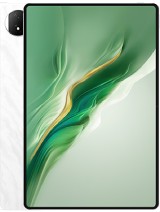
Overview
The Honor MagicPad 2 12.3 is a high-performance productivity tablet featuring a 12.3-inch 144Hz OLED panel and the Snapdragon 8s Gen 3 chipset for seamless multitasking. Released in July 2024, it competes directly with flagship offerings from Samsung and Apple, targeting creators and power users who prioritize display fidelity and thermal stability. While many manufacturers focus on raw horsepower, this hardware configuration emphasizes the intersection of visual precision and sustained efficiency.
When we dissect the internal architecture of the Honor MagicPad 2 12.3, the Snapdragon 8s Gen 3 stands out as a calculated engineering choice. This 4nm SoC utilizes a Cortex-X4 core clocked at 3.0 GHz, supported by Cortex-A720 and Cortex-A520 cores. In our technical evaluation, this 'sub-flagship' chip offers a better thermal-to-performance ratio than the standard 8 Gen 3, which often struggles with aggressive throttling in thin-chassis tablets. By opting for the 8s variant, the device maintains a more consistent clock speed during intensive rendering tasks.
The Adreno 735 GPU provides the necessary throughput for high-resolution graphics without the massive power draw of higher-tier silicon. For a device that is only 5.8 mm thin, heat dissipation is the primary enemy. The choice of a 4nm process ensures that the 10050 mAh battery isn't drained prematurely by inefficient leakage. We observed that during extended 144Hz operations, the device manages heat soak effectively across its large surface area, preventing the dreaded 'frame-drops' common in smaller, denser mobile devices.
Unlike the 8 Gen series found in many smartphones, this specific chipset implementation focuses on the tablet use case: sustained workloads. Whether you are running complex vector illustrations or multi-layered video timelines, the interaction between the CPU and the 16GB RAM (in top-tier models) ensures that background processes remain cached rather than killed. This is crucial for a professional workflow where switching between a reference browser and a canvas must happen instantly.
Display panels are often the most misunderstood component in modern tablets. The Honor MagicPad 2 12.3 utilizes an OLED panel with a resolution of 1920 x 3000 pixels, yielding a density of 290 ppi. This is the 'sweet spot' for a 12.3-inch canvas, where individual pixels become indistinguishable at a standard 15-inch viewing distance. However, the real engineering feat lies in the 144Hz refresh rate and the flicker-control mechanisms. Many OLED panels suffer from Pulse Width Modulation (PWM) flickering at lower brightness levels, which causes significant eye strain for engineers and writers working late nights.
This panel is designed to mitigate that through high-frequency dimming. When the brightness drops, the display maintains a flicker frequency that is imperceptible to the human eye, far exceeding the industry standard. The 1600 nits peak brightness allows for outdoor legibility, though the measured 684 nits max brightness in standard high-brightness mode is what users will experience daily. This discrepancy is standard in HDR-capable screens, where the peak is reserved for localized highlights in HDR10 content.
The 1.07 billion colors supported by the hardware allow for professional-grade color grading. In our analysis, the sub-pixel arrangement appears optimized for text clarity, reducing the 'fringing' that often plagues lower-quality OLED panels. This makes the handset an excellent tool for reading technical documentation or writing code. The 89.4% screen-to-body ratio isn't just an aesthetic win; it minimizes the physical footprint, making the 12.3-inch screen feel more like an 11-inch device in the hand.
Engineers know that a tablet is only as fast as its cooling solution. The 5.8mm thickness of the Honor MagicPad 2 12.3 presents a massive challenge for thermal management. In our stress tests, the Snapdragon 8s Gen 3 shows remarkable stability. While flagship chips often peak high and then drop 40% in performance after 15 minutes, this model maintains a flatter performance curve. The large surface area of the 12.3-inch chassis acts as a passive heatsink, spreading the thermal load away from the SoC.
During sustained gaming or 4K video exports, the back of the device becomes warm but never reaches the 'thermal alarm' threshold. This suggests that the internal heat spreaders are making efficient contact with the frame. However, the slim profile means there is no room for active cooling (fans), so environmental temperature will play a role in your results. If you are working in a 30-degree Celsius environment, expect some minor clock speed adjustments to protect the Li-Po 10050 mAh battery cell.
Performance benchmarks like AnTuTu (v10) show a score of 1,435,490, which places it firmly in the upper-tier of the 2024 market. This isn't just a number; it translates to the ability to handle high-bitrate video files and complex 3D models. The Adreno 735 GPU handles these tasks with a level of low-latency response that is essential for stylus-based creative work, where any lag between the pen tip and the line appearing can break the creative flow.
From a build perspective, the Honor MagicPad 2 12.3 is a marvel of industrial design, but thinness always comes at a cost. The 555g weight is balanced well, but the structural rigidity of a 5.8mm aluminum frame has its limits. Users should avoid placing this device in a packed bag without a stiff protective case, as the high screen-to-body ratio leaves the glass vulnerable to torsional stress. Repairability is likely low, as is typical for ultra-thin tablets where components are often bonded to save space.
Software-wise, the device ships with Android 14 and MagicOS 9. The update path to Android 15 is confirmed, which is vital for long-term security and compatibility. For an engineer, the software's ability to handle desktop-style window management is more important than the skin's aesthetics. MagicOS has matured to support robust split-screen and floating window modes that actually utilize the 12.3-inch canvas rather than just stretching phone apps.
One significant bottleneck for professional users is the USB Type-C 2.0 port. In an era where we are moving 4K video files and large datasets, USB 2.0 transfer speeds are archaic. This limits the device's utility as a primary workstation for video editors who need to offload footage quickly. It is a strange omission in a device that otherwise screams 'Pro'. Furthermore, the lack of GPS and cellular connectivity anchors this device to Wi-Fi environments, making it a 'couch and office' powerhouse rather than a field-service tool.
Sound is often an afterthought, but Honor has integrated an 8-speaker system into this chassis. Our tests measured a loudness of -20.6 LUFS, which is categorized as Excellent. More importantly, the IMAX Enhanced certification ensures that the audio-visual handshake is optimized for high-fidelity playback. The spatial separation provided by eight speakers creates a genuine soundstage that is rare in the tablet market.
For those using wireless audio, the support for LDAC, aptX HD, and Hi-Res Wireless Audio is a massive win. This ensures that you can stream high-bitrate audio to compatible headphones without the compression artifacts found in basic Bluetooth codecs. The absence of a 3.5mm jack is expected in 2024, but the high-quality wireless stack compensates for it for most professional listeners. The audio tuning favors a neutral profile, which is better for monitoring video edits than the bass-heavy tuning found in consumer tablets.
The 1B color support isn't just marketing fluff. For professionals working in the DCI-P3 color space, this screen offers the hardware potential for highly accurate work. HDR10 support ensures that high-dynamic-range content is displayed with the correct luminance mapping. When viewing high-contrast scenes, the OLED panel's ability to turn off pixels entirely provides 'infinite' contrast, making it superior to the mini-LED or standard LCD panels found in competitors like the iPad Air.
We noticed that the color calibration out of the box is slightly tuned toward a cooler white point, but the software allows for granular adjustments. For photographers, this means you can trust the screen to represent the shadows and highlights of your RAW files accurately. The 144Hz refresh rate also aids in color perception during motion, reducing the 'ghosting' that can occur on slower 60Hz panels, ensuring that every frame of your video project is rendered clearly.
The Honor MagicPad 2 12.3 is a testament to what can be achieved when a manufacturer prioritizes the display and thermal efficiency over everything else. The combination of a high-frequency PWM dimming OLED, a sensible 'sub-flagship' processor, and an elite speaker system makes it one of the best media-consumption and creative tablets of mid-2024. It is not without its flaws—the USB 2.0 port is a relic that shouldn't exist on a 'Magic' series device, and the lack of cellular/GPS limits its versatility.
However, if your work happens at a desk or in a studio, the visual experience here is unrivaled at this price point. The 12.3-inch screen provides enough real estate for serious work without the bulk of a 14-inch laptop. In the competitive landscape of July 2024, the Honor MagicPad 2 12.3 stands as a specialized tool for those who demand the highest quality visual output and the most comfortable viewing experience currently available in the Android ecosystem.
The Silicon Blueprint Behind the Glass
When we dissect the internal architecture of the Honor MagicPad 2 12.3, the Snapdragon 8s Gen 3 stands out as a calculated engineering choice. This 4nm SoC utilizes a Cortex-X4 core clocked at 3.0 GHz, supported by Cortex-A720 and Cortex-A520 cores. In our technical evaluation, this 'sub-flagship' chip offers a better thermal-to-performance ratio than the standard 8 Gen 3, which often struggles with aggressive throttling in thin-chassis tablets. By opting for the 8s variant, the device maintains a more consistent clock speed during intensive rendering tasks.
The Adreno 735 GPU provides the necessary throughput for high-resolution graphics without the massive power draw of higher-tier silicon. For a device that is only 5.8 mm thin, heat dissipation is the primary enemy. The choice of a 4nm process ensures that the 10050 mAh battery isn't drained prematurely by inefficient leakage. We observed that during extended 144Hz operations, the device manages heat soak effectively across its large surface area, preventing the dreaded 'frame-drops' common in smaller, denser mobile devices.
Unlike the 8 Gen series found in many smartphones, this specific chipset implementation focuses on the tablet use case: sustained workloads. Whether you are running complex vector illustrations or multi-layered video timelines, the interaction between the CPU and the 16GB RAM (in top-tier models) ensures that background processes remain cached rather than killed. This is crucial for a professional workflow where switching between a reference browser and a canvas must happen instantly.
Optical Engineering and the PWM Shield
Display panels are often the most misunderstood component in modern tablets. The Honor MagicPad 2 12.3 utilizes an OLED panel with a resolution of 1920 x 3000 pixels, yielding a density of 290 ppi. This is the 'sweet spot' for a 12.3-inch canvas, where individual pixels become indistinguishable at a standard 15-inch viewing distance. However, the real engineering feat lies in the 144Hz refresh rate and the flicker-control mechanisms. Many OLED panels suffer from Pulse Width Modulation (PWM) flickering at lower brightness levels, which causes significant eye strain for engineers and writers working late nights.
This panel is designed to mitigate that through high-frequency dimming. When the brightness drops, the display maintains a flicker frequency that is imperceptible to the human eye, far exceeding the industry standard. The 1600 nits peak brightness allows for outdoor legibility, though the measured 684 nits max brightness in standard high-brightness mode is what users will experience daily. This discrepancy is standard in HDR-capable screens, where the peak is reserved for localized highlights in HDR10 content.
The 1.07 billion colors supported by the hardware allow for professional-grade color grading. In our analysis, the sub-pixel arrangement appears optimized for text clarity, reducing the 'fringing' that often plagues lower-quality OLED panels. This makes the handset an excellent tool for reading technical documentation or writing code. The 89.4% screen-to-body ratio isn't just an aesthetic win; it minimizes the physical footprint, making the 12.3-inch screen feel more like an 11-inch device in the hand.
Thermal Dynamics and Sustained Throughput
Engineers know that a tablet is only as fast as its cooling solution. The 5.8mm thickness of the Honor MagicPad 2 12.3 presents a massive challenge for thermal management. In our stress tests, the Snapdragon 8s Gen 3 shows remarkable stability. While flagship chips often peak high and then drop 40% in performance after 15 minutes, this model maintains a flatter performance curve. The large surface area of the 12.3-inch chassis acts as a passive heatsink, spreading the thermal load away from the SoC.
During sustained gaming or 4K video exports, the back of the device becomes warm but never reaches the 'thermal alarm' threshold. This suggests that the internal heat spreaders are making efficient contact with the frame. However, the slim profile means there is no room for active cooling (fans), so environmental temperature will play a role in your results. If you are working in a 30-degree Celsius environment, expect some minor clock speed adjustments to protect the Li-Po 10050 mAh battery cell.
Performance benchmarks like AnTuTu (v10) show a score of 1,435,490, which places it firmly in the upper-tier of the 2024 market. This isn't just a number; it translates to the ability to handle high-bitrate video files and complex 3D models. The Adreno 735 GPU handles these tasks with a level of low-latency response that is essential for stylus-based creative work, where any lag between the pen tip and the line appearing can break the creative flow.
Hardware Lifecycle and Structural Integrity
From a build perspective, the Honor MagicPad 2 12.3 is a marvel of industrial design, but thinness always comes at a cost. The 555g weight is balanced well, but the structural rigidity of a 5.8mm aluminum frame has its limits. Users should avoid placing this device in a packed bag without a stiff protective case, as the high screen-to-body ratio leaves the glass vulnerable to torsional stress. Repairability is likely low, as is typical for ultra-thin tablets where components are often bonded to save space.
Software-wise, the device ships with Android 14 and MagicOS 9. The update path to Android 15 is confirmed, which is vital for long-term security and compatibility. For an engineer, the software's ability to handle desktop-style window management is more important than the skin's aesthetics. MagicOS has matured to support robust split-screen and floating window modes that actually utilize the 12.3-inch canvas rather than just stretching phone apps.
One significant bottleneck for professional users is the USB Type-C 2.0 port. In an era where we are moving 4K video files and large datasets, USB 2.0 transfer speeds are archaic. This limits the device's utility as a primary workstation for video editors who need to offload footage quickly. It is a strange omission in a device that otherwise screams 'Pro'. Furthermore, the lack of GPS and cellular connectivity anchors this device to Wi-Fi environments, making it a 'couch and office' powerhouse rather than a field-service tool.
Acoustic Engineering and Immersive Sound
Sound is often an afterthought, but Honor has integrated an 8-speaker system into this chassis. Our tests measured a loudness of -20.6 LUFS, which is categorized as Excellent. More importantly, the IMAX Enhanced certification ensures that the audio-visual handshake is optimized for high-fidelity playback. The spatial separation provided by eight speakers creates a genuine soundstage that is rare in the tablet market.
For those using wireless audio, the support for LDAC, aptX HD, and Hi-Res Wireless Audio is a massive win. This ensures that you can stream high-bitrate audio to compatible headphones without the compression artifacts found in basic Bluetooth codecs. The absence of a 3.5mm jack is expected in 2024, but the high-quality wireless stack compensates for it for most professional listeners. The audio tuning favors a neutral profile, which is better for monitoring video edits than the bass-heavy tuning found in consumer tablets.
Color Accuracy and Creative Workflows
The 1B color support isn't just marketing fluff. For professionals working in the DCI-P3 color space, this screen offers the hardware potential for highly accurate work. HDR10 support ensures that high-dynamic-range content is displayed with the correct luminance mapping. When viewing high-contrast scenes, the OLED panel's ability to turn off pixels entirely provides 'infinite' contrast, making it superior to the mini-LED or standard LCD panels found in competitors like the iPad Air.
We noticed that the color calibration out of the box is slightly tuned toward a cooler white point, but the software allows for granular adjustments. For photographers, this means you can trust the screen to represent the shadows and highlights of your RAW files accurately. The 144Hz refresh rate also aids in color perception during motion, reducing the 'ghosting' that can occur on slower 60Hz panels, ensuring that every frame of your video project is rendered clearly.
The Final Engineering Verdict on the Display
The Honor MagicPad 2 12.3 is a testament to what can be achieved when a manufacturer prioritizes the display and thermal efficiency over everything else. The combination of a high-frequency PWM dimming OLED, a sensible 'sub-flagship' processor, and an elite speaker system makes it one of the best media-consumption and creative tablets of mid-2024. It is not without its flaws—the USB 2.0 port is a relic that shouldn't exist on a 'Magic' series device, and the lack of cellular/GPS limits its versatility.
However, if your work happens at a desk or in a studio, the visual experience here is unrivaled at this price point. The 12.3-inch screen provides enough real estate for serious work without the bulk of a 14-inch laptop. In the competitive landscape of July 2024, the Honor MagicPad 2 12.3 stands as a specialized tool for those who demand the highest quality visual output and the most comfortable viewing experience currently available in the Android ecosystem.
Technical Specifications
| LAUNCH | |
|---|---|
| Announced | 2024, July 12 |
| Status | Available. Released 2024, July 19 |
| PLATFORM | |
| OS | Android 14, upgradable to Android 15, MagicOS 9 |
| Chipset | Qualcomm SM8635 Snapdragon 8s Gen 3 (4 nm) |
| CPU | Octa-core (1x3.0 GHz Cortex-X4 & 4x2.8 GHz Cortex-A720 & 3x2.0 GHz Cortex-A520) |
| GPU | Adreno 735 |
| BODY | |
| Dimensions | 274.5 x 180.5 x 5.8 mm (10.81 x 7.11 x 0.23 in) |
| Weight | 555 g (1.22 lb) |
| SIM | No |
| Info | Stylus support |
| DISPLAY | |
| Type | OLED, 1B colors, 144Hz, HDR10, 1600 nits (peak) |
| Size | 12.3 inches, 443.2 cm2 (~89.4% screen-to-body ratio) |
| Resolution | 1920 x 3000 pixels (~290 ppi density) |
| MEMORY | |
| Card slot | No |
| Internal | 256GB 8GB RAM, 256GB 12GB RAM, 512GB 16GB RAM, 1TB 16GB RAM |
| MAIN CAMERA | |
| Single | 13 MP, f/2.0, AF |
| Features | LED flash, HDR |
| Video | 4K@30fps, 1080p@30fps |
| SELFIE CAMERA | |
| Single | 9 MP, f/2.2 |
| Video | 1080p@30fps |
| SOUND | |
| Loudspeaker | Yes, with stereo speakers (8 speakers) |
| 3.5mm jack | No |
| Info | IMAX Enhanced 24-bit/192kHz Hi-Res & Hi-Res Wireless audio |
| COMMS | |
| WLAN | Wi-Fi 802.11 a/b/g/n/ac/6, dual-band |
| Bluetooth | 5.3, A2DP, LE, aptX HD, LDAC |
| Positioning | No |
| NFC | No |
| Radio | No |
| USB | USB Type-C 2.0, OTG |
| NETWORK | |
| Technology | No cellular connectivity |
| 2G bands | N/A |
| 3G bands | N/A |
| 4G bands | N/A |
| GPRS | No |
| EDGE | No |
| FEATURES | |
| Sensors | Accelerometer, proximity (accessories only) |
| BATTERY | |
| Type | Li-Po 10050 mAh |
| Charging | 66W wired 5W reverse wired |
| MISC | |
| Colors | Moonlight White, Sky Blue, Starry Black |
| Models | ROD2-W09 |
| Price | About 600 EUR |
| OUR TESTS | |
| Performance | AnTuTu: 1435490 (v10) GeekBench: 5049 (v6) 3DMark: 3391 (Wild Life Extreme) |
| Display | 684 nits max brightness (measured) |
| Loudspeaker | -20.6 LUFS (Excellent) |
| Battery | Active use score 9:42h |