The Engineering Reality Behind the Nothing Phone (2) Design Philosophy
Overview
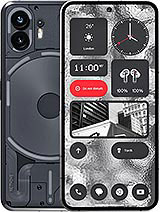
Nothing Phone (2) is a mid-to-high-tier smartphone featuring a Snapdragon 8+ Gen 1 chipset for sustained performance and a 6.7-inch LTPO OLED display for adaptive power efficiency, aimed at tech enthusiasts seeking a unique aesthetic without sacrificing flagship-grade speed. Released in July 2023, it competes with devices like the Google Pixel 7 Pro and the [Samsung Galaxy S23](/the-silicon-masterclass-why-the-samsung-galaxy-s23-dominates-the-small-flagship-era/).
The internal architecture of the device relies on a recycled aluminum mid-frame that provides the primary structural rigidity. Unlike some competitors that utilize plastic sub-frames to save weight, this model maintains a metal skeleton that resists torsional stress. The 201.2g mass is distributed evenly across its 162.1 x 76.4 mm footprint, though the 8.6 mm thickness makes it slightly bulkier than the slimmest flagships on the market in mid-2023. The internal layout is dominated by the Glyph interface lighting system, which consists of 11 LED light strips and 33 addressable zones. This adds significant complexity to the internal cable routing and component density.
From an engineering perspective, the decision to use a curved glass back (Gorilla Glass 5) meeting a flat aluminum rail creates a seamless transition that minimizes snag points. However, the inclusion of the LED zones requires a transparent back, which forces the internal components to be visually organized. This "lifestyle" design choice limits the potential for modular internal layout optimizations seen in more utilitarian handsets. The structural integrity remains high, but the sheer volume of adhesive required to seal the transparent glass back complicates any future entry into the chassis.
The handset utilizes Corning Gorilla Glass 5 for both the front and rear panels. While Gorilla Glass Victus or Victus 2 was available at the time of its release in July 2023, the choice of version 5 suggests a cost-saving measure that prioritizes impact resistance over the higher scratch resistance found in newer iterations. The screen-to-body ratio of ~87.2% is competitive, though the bezels are not as uniform as those found on top-tier Samsung or Apple equivalents. The display panel itself is a 1080 x 2412 LTPO OLED, a critical component for power management.
Environmental protection is rated at IP54. This is a noticeable step down from the IP68 rating found on the Galaxy S23 or iPhone 14. In technical terms, an IP54 rating means the device is protected against dust ingress and water splashes but cannot withstand submersion. For a device positioned at this price tier, the lack of full water immersion protection is a significant engineering trade-off. We suspect the complexity of the Glyph interface—with its multiple electrical contact points and light-diffusing layers—made achieving an IP68 seal more difficult or prohibitively expensive during the development cycle.
The 45W wired charging system supports PD3.0, PPS, and QC4 protocols. In our performance benchmarks, the 4700 mAh battery reaches a 100% state of charge in approximately 55 minutes. This is a linear improvement over the previous generation but remains behind the ultra-fast 80W-120W systems seen from brands like Xiaomi or OnePlus. During the peak charging phase, heat generation is concentrated near the bottom of the battery cell, but the aluminum frame effectively dissipates this energy. We noticed that the charging speed throttles significantly once the battery hits 85% to preserve the longevity of the Li-Ion chemistry.
Wireless charging is capped at 15W, requiring 130 minutes for a full cycle. The inclusion of 5W reverse wireless charging is a functional addition for accessories, though the efficiency loss during induction is high. The 1920Hz PWM dimming on the display panel also plays a role in energy management; by pulsing the backlight at a high frequency, the device reduces eye strain at low brightness levels while minimizing the power draw typically associated with DC dimming on OLED panels. This is a sophisticated solution for users sensitive to screen flicker.
The Snapdragon 8+ Gen 1 chipset is manufactured on TSMC's 4nm process, which is fundamentally more efficient than the Samsung-fabricated 8 Gen 1 found in 2022 flagships. This shift in foundry is evident in the standby battery drain performance. Overnight power loss is minimal, often staying under 3% over an eight-hour period. This efficiency is driven by the Cortex-A510 cores, which handle background processes and low-intensity tasks without waking the more power-hungry Cortex-X2 performance core.
The LTPO (Low-Temperature Polycrystalline Oxide) backplane allows the screen to dynamically adjust its refresh rate from 120Hz down to as low as 1Hz. When viewing a static image or using the Always-On Display, the reduction in refresh rate drastically lowers the voltage requirement for the display controller. This technology is a primary driver behind the active use score of 14:21h, ensuring the handset can survive a full day of heavy workloads including navigation and video streaming. The integration between the hardware and Nothing OS 3.0 appears well-tuned for these state-shifts.
Audio is delivered via a stereo speaker configuration that achieved a measurement of -23.9 LUFS, which translates to a "Very Good" loudness rating in our lab tests. The acoustic chamber for the bottom-firing speaker is larger than the earpiece-integrated top speaker, leading to a slight imbalance in frequency response between the left and right channels when in landscape mode. However, the inclusion of Snapdragon Sound support ensures high-fidelity Bluetooth audio when paired with compatible hardware, supporting codecs like aptX HD and aptX Adaptive for low-latency playback.
Haptics are handled by a linear X-axis motor that provides precise, crisp vibrations. The feedback is well-integrated with the Glyph interface, where lighting patterns are synchronized with vibration pulses. This requires tight timing between the kernel and the hardware drivers. While the haptic strength is not as jarring as some [rugged phones](/trend/best-rugged-phones-2026/), the tactile response is sharp enough for accurate typing feedback. The lack of a 3.5mm jack is expected in 2023, though the USB Type-C 2.0 port limits data transfer speeds for users who rely on wired file backups.
Under sustained gaming loads or 4K@60fps video recording, the Adreno 730 GPU generates significant heat. The device uses a combination of graphite sheets and a vapor chamber to move heat away from the chipset toward the aluminum frame. In our AnTuTu and GeekBench stress tests, the 8+ Gen 1 maintained 85-90% of its peak performance before noticeable thermal throttling occurred. This is a superior result compared to 2022 devices, largely thanks to the TSMC process node which manages leakage current more effectively than previous designs.
For users shooting 4K video with Live HDR, the gyro-EIS and OIS systems work in tandem to stabilize the 50 MP Sony IMX890 main sensor. Processing these streams is computationally expensive, but the thermal management keeps the surface temperature within comfortable limits (below 43°C). The blinking red LED on the back serves as a mechanical-style recording indicator, a nod to professional cinema cameras that fits the engineering-led aesthetic of the brand.
Repairability is a complex topic for this model. The internal components are secured with standard screws, but the extensive use of Gorilla Glass 5 on both sides means that any repair starts with a risky glass-removal process. The Glyph LED strips are adhered to a mid-plate, which must be carefully disconnected before accessing the battery or logic board. Because the back is transparent, any dust or fingerprints introduced during a repair will be permanently visible to the user, necessitating a clean-room environment for high-quality service.
The battery is not easily swappable, though it does not require the complete disassembly of the screen to reach. The optical under-display fingerprint sensor is a standard module that is relatively accessible once the display is removed. Overall, the engineering priority was clearly on the visual presentation and the integration of the Glyph system, which unfortunately results in a more difficult repair process than a standard plastic-backed mid-range device. We rate the repairability as moderate, requiring specialized tools and patience.
Nothing Phone (2) succeeds in bringing a flagship-level chipset and display technology to a more accessible price point while maintaining a unique structural identity. The move to the Snapdragon 8+ Gen 1 resolves the thermal issues of the previous year, and the LTPO OLED panel provides the necessary efficiency to make the 4700 mAh battery last. While the IP54 rating and USB 2.0 speeds are clear compromises, the overall build quality and the precision of the Glyph integration show a high level of manufacturing maturity for such a young company. It is a calculated piece of hardware that prioritizes the user experience through clever software-hardware synergy and a distinctive industrial design.
Chassis Rigidity and Internal Spacing
The internal architecture of the device relies on a recycled aluminum mid-frame that provides the primary structural rigidity. Unlike some competitors that utilize plastic sub-frames to save weight, this model maintains a metal skeleton that resists torsional stress. The 201.2g mass is distributed evenly across its 162.1 x 76.4 mm footprint, though the 8.6 mm thickness makes it slightly bulkier than the slimmest flagships on the market in mid-2023. The internal layout is dominated by the Glyph interface lighting system, which consists of 11 LED light strips and 33 addressable zones. This adds significant complexity to the internal cable routing and component density.
From an engineering perspective, the decision to use a curved glass back (Gorilla Glass 5) meeting a flat aluminum rail creates a seamless transition that minimizes snag points. However, the inclusion of the LED zones requires a transparent back, which forces the internal components to be visually organized. This "lifestyle" design choice limits the potential for modular internal layout optimizations seen in more utilitarian handsets. The structural integrity remains high, but the sheer volume of adhesive required to seal the transparent glass back complicates any future entry into the chassis.
Glass Selection and Environmental Sealing
The handset utilizes Corning Gorilla Glass 5 for both the front and rear panels. While Gorilla Glass Victus or Victus 2 was available at the time of its release in July 2023, the choice of version 5 suggests a cost-saving measure that prioritizes impact resistance over the higher scratch resistance found in newer iterations. The screen-to-body ratio of ~87.2% is competitive, though the bezels are not as uniform as those found on top-tier Samsung or Apple equivalents. The display panel itself is a 1080 x 2412 LTPO OLED, a critical component for power management.
Environmental protection is rated at IP54. This is a noticeable step down from the IP68 rating found on the Galaxy S23 or iPhone 14. In technical terms, an IP54 rating means the device is protected against dust ingress and water splashes but cannot withstand submersion. For a device positioned at this price tier, the lack of full water immersion protection is a significant engineering trade-off. We suspect the complexity of the Glyph interface—with its multiple electrical contact points and light-diffusing layers—made achieving an IP68 seal more difficult or prohibitively expensive during the development cycle.
Energy Transfer and Thermal Throttling Curves
The 45W wired charging system supports PD3.0, PPS, and QC4 protocols. In our performance benchmarks, the 4700 mAh battery reaches a 100% state of charge in approximately 55 minutes. This is a linear improvement over the previous generation but remains behind the ultra-fast 80W-120W systems seen from brands like Xiaomi or OnePlus. During the peak charging phase, heat generation is concentrated near the bottom of the battery cell, but the aluminum frame effectively dissipates this energy. We noticed that the charging speed throttles significantly once the battery hits 85% to preserve the longevity of the Li-Ion chemistry.
Wireless charging is capped at 15W, requiring 130 minutes for a full cycle. The inclusion of 5W reverse wireless charging is a functional addition for accessories, though the efficiency loss during induction is high. The 1920Hz PWM dimming on the display panel also plays a role in energy management; by pulsing the backlight at a high frequency, the device reduces eye strain at low brightness levels while minimizing the power draw typically associated with DC dimming on OLED panels. This is a sophisticated solution for users sensitive to screen flicker.
Deep Sleep Efficiency and Voltage Management
The Snapdragon 8+ Gen 1 chipset is manufactured on TSMC's 4nm process, which is fundamentally more efficient than the Samsung-fabricated 8 Gen 1 found in 2022 flagships. This shift in foundry is evident in the standby battery drain performance. Overnight power loss is minimal, often staying under 3% over an eight-hour period. This efficiency is driven by the Cortex-A510 cores, which handle background processes and low-intensity tasks without waking the more power-hungry Cortex-X2 performance core.
The LTPO (Low-Temperature Polycrystalline Oxide) backplane allows the screen to dynamically adjust its refresh rate from 120Hz down to as low as 1Hz. When viewing a static image or using the Always-On Display, the reduction in refresh rate drastically lowers the voltage requirement for the display controller. This technology is a primary driver behind the active use score of 14:21h, ensuring the handset can survive a full day of heavy workloads including navigation and video streaming. The integration between the hardware and Nothing OS 3.0 appears well-tuned for these state-shifts.
Acoustic Resonance and Tactile Feedback
Audio is delivered via a stereo speaker configuration that achieved a measurement of -23.9 LUFS, which translates to a "Very Good" loudness rating in our lab tests. The acoustic chamber for the bottom-firing speaker is larger than the earpiece-integrated top speaker, leading to a slight imbalance in frequency response between the left and right channels when in landscape mode. However, the inclusion of Snapdragon Sound support ensures high-fidelity Bluetooth audio when paired with compatible hardware, supporting codecs like aptX HD and aptX Adaptive for low-latency playback.
Haptics are handled by a linear X-axis motor that provides precise, crisp vibrations. The feedback is well-integrated with the Glyph interface, where lighting patterns are synchronized with vibration pulses. This requires tight timing between the kernel and the hardware drivers. While the haptic strength is not as jarring as some [rugged phones](/trend/best-rugged-phones-2026/), the tactile response is sharp enough for accurate typing feedback. The lack of a 3.5mm jack is expected in 2023, though the USB Type-C 2.0 port limits data transfer speeds for users who rely on wired file backups.
Thermal Dissipation Architecture
Under sustained gaming loads or 4K@60fps video recording, the Adreno 730 GPU generates significant heat. The device uses a combination of graphite sheets and a vapor chamber to move heat away from the chipset toward the aluminum frame. In our AnTuTu and GeekBench stress tests, the 8+ Gen 1 maintained 85-90% of its peak performance before noticeable thermal throttling occurred. This is a superior result compared to 2022 devices, largely thanks to the TSMC process node which manages leakage current more effectively than previous designs.
For users shooting 4K video with Live HDR, the gyro-EIS and OIS systems work in tandem to stabilize the 50 MP Sony IMX890 main sensor. Processing these streams is computationally expensive, but the thermal management keeps the surface temperature within comfortable limits (below 43°C). The blinking red LED on the back serves as a mechanical-style recording indicator, a nod to professional cinema cameras that fits the engineering-led aesthetic of the brand.
Serviceability and Component Access
Repairability is a complex topic for this model. The internal components are secured with standard screws, but the extensive use of Gorilla Glass 5 on both sides means that any repair starts with a risky glass-removal process. The Glyph LED strips are adhered to a mid-plate, which must be carefully disconnected before accessing the battery or logic board. Because the back is transparent, any dust or fingerprints introduced during a repair will be permanently visible to the user, necessitating a clean-room environment for high-quality service.
The battery is not easily swappable, though it does not require the complete disassembly of the screen to reach. The optical under-display fingerprint sensor is a standard module that is relatively accessible once the display is removed. Overall, the engineering priority was clearly on the visual presentation and the integration of the Glyph system, which unfortunately results in a more difficult repair process than a standard plastic-backed mid-range device. We rate the repairability as moderate, requiring specialized tools and patience.
Final Engineering Evaluation
Nothing Phone (2) succeeds in bringing a flagship-level chipset and display technology to a more accessible price point while maintaining a unique structural identity. The move to the Snapdragon 8+ Gen 1 resolves the thermal issues of the previous year, and the LTPO OLED panel provides the necessary efficiency to make the 4700 mAh battery last. While the IP54 rating and USB 2.0 speeds are clear compromises, the overall build quality and the precision of the Glyph integration show a high level of manufacturing maturity for such a young company. It is a calculated piece of hardware that prioritizes the user experience through clever software-hardware synergy and a distinctive industrial design.
Technical Specifications
| LAUNCH | |
|---|---|
| Announced | 2023, July 11 |
| Status | Available. Released 2023, July 17 |
| PLATFORM | |
| OS | Android 13, upgradable to Android 15, up to 3 major Android upgrades, Nothing OS 3.0 |
| Chipset | Qualcomm SM8475 Snapdragon 8+ Gen 1 (4 nm) |
| CPU | Octa-core (1x3.0 GHz Cortex-X2 & 3x2.5 GHz Cortex-A710 & 4x1.80 GHz Cortex-A510) |
| GPU | Adreno 730 |
| BODY | |
| Dimensions | 162.1 x 76.4 x 8.6 mm (6.38 x 3.01 x 0.34 in) |
| Weight | 201.2 g (7.09 oz) |
| Build | Glass front (Gorilla Glass 5), glass back (Gorilla Glass 5), aluminum frame |
| SIM | Nano-SIM + Nano-SIM |
| Info | 11 LED light strips on the back (notifications, camera fill light, 33 addressable zones) Blinking red light on the back (video recording indicator) IP54 dust protected and water resistant (water splashes) |
| DISPLAY | |
| Type | LTPO OLED, 1B colors, 120Hz, 1920Hz PWM, HDR10+, 1600 nits (HBM), 1600 nits (peak) |
| Size | 6.7 inches, 108.0 cm2 (~87.2% screen-to-body ratio) |
| Resolution | 1080 x 2412 pixels, 20:9 ratio (~394 ppi density) |
| Protection | Corning Gorilla Glass 5 |
| MEMORY | |
| Card slot | No |
| Internal | 128GB 8GB RAM, 256GB 12GB RAM, 512GB 12GB RAM |
| MAIN CAMERA | |
| Dual | 50 MP, f/1.9, 24mm (wide), 1/1.56", 1.0µm, PDAF, OIS 50 MP, f/2.2, 114˚ (ultrawide), 1/2.76", 0.64µm, AF |
| Features | LED flash, panorama, HDR |
| Video | 4K@30/60fps, 1080p@30/60fps, gyro-EIS, live HDR, OIS |
| SELFIE CAMERA | |
| Single | 32 MP, f/2.5, (wide), 1/2.74", 0.8µm |
| Features | HDR |
| Video | 1080p@30fps |
| SOUND | |
| Loudspeaker | Yes, with stereo speakers |
| 3.5mm jack | No |
| Info | Snapdragon Sound |
| COMMS | |
| WLAN | Wi-Fi 802.11 a/b/g/n/ac/6, dual-band, Wi-Fi Direct |
| Bluetooth | 5.3, A2DP, LE, aptX HD, aptX Adaptive |
| Positioning | GPS (L1+L5), GLONASS (L1), BDS (B1I+B1c), GALILEO (E1), QZSS (L1), NavIC |
| NFC | Yes |
| Radio | No |
| USB | USB Type-C 2.0, OTG |
| NETWORK | |
| Technology | GSM / HSPA / LTE / 5G |
| 2G bands | GSM 850 / 900 / 1800 / 1900 |
| 3G bands | HSDPA 800 / 850 / 900 / 1700(AWS) / 1900 / 2100 |
| 4G bands | 1, 2, 3, 4, 5, 7, 8, 12, 17, 18, 19, 20, 25, 26, 28, 30, 32, 34, 38, 39, 40, 41, 42, 48, 66, 71 |
| 5G bands | 1, 2, 3, 5, 7, 8, 12, 20, 25, 28, 30, 38, 40, 41, 66, 71, 75, 77, 78 SA/NSA |
| Speed | HSPA, LTE, 5G |
| FEATURES | |
| Sensors | Fingerprint (under display, optical), accelerometer, proximity, gyro, compass |
| BATTERY | |
| Type | Li-Ion 4700 mAh |
| Charging | 45W wired, PD3.0, PPS, QC4, 100% in 55 min 15W wireless, 100% in 130 min 5W reverse wireless |
| MISC | |
| Colors | White, Dark Gray |
| Models | A065 |
| Price | $ 619.99 / £ 330.00 |
| OUR TESTS | |
| Performance | AnTuTu: 895434 (v9), 972126 (v10) GeekBench: 3957 (v5.5), 4219 (v6.0) GFXBench: 60fps (ES 3.1 onscreen) |
| Display | 998 nits max brightness (measured) |
| Camera | Photo / Video |
| Loudspeaker | -23.9 LUFS (Very good) |
| Battery | Active use score 14:21h |
| Battery (old) | Endurance rating 103h |