The Enterprise Foldable That Justifies Its Cost - Huawei Mate X7
Overview
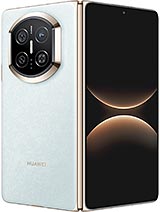
The Huawei Mate X7 is a premium foldable smartphone featuring an 8.0-inch Foldable LTPO OLED display for expansive productivity and IP59 dust and water resistance for enhanced field reliability, aimed at mobile professionals and executives. Released in November 2025, it competes directly with the Samsung Galaxy Z Fold 7 and [Google Pixel Fold](/why-the-google-pixel-fold-is-the-new-standard-for-mobile-productivity/) 3 in the high-end foldable market.
For an enterprise mobility consultant, the primary evaluation criteria extend beyond raw specifications to encompass total cost of ownership, operational longevity, and the tangible impact on workforce productivity. The Huawei Mate X7 presents a compelling proposition in these areas, particularly for organizations seeking to equip their teams with a single device capable of replacing both a smartphone and a small tablet.
The initial investment in a flagship foldable like the Huawei Mate X7 is substantial, with a price point around 1590 EUR. However, the total cost of ownership (TCO) extends far beyond the purchase price, encompassing durability, repairability, and the device's lifespan. The Huawei Mate X7 addresses these concerns with its robust IP58/IP59 dust and water resistance rating, signifying protection against both immersion and high-pressure water jets, a critical feature for field personnel operating in diverse environments. The aerospace-grade aluminum frame and the choice of a nylon fiber or silicone polymer back (eco leather) further contribute to its physical resilience, minimizing the likelihood of costly repairs or premature replacements.
Considering the device's advanced build materials and ingress protection, the Huawei Mate X7 is engineered for a longer operational life cycle compared to many traditional smartphones. The Kunlun Glass 2 on the cover display, an advanced proprietary glass-ceramic material, offers ultra-high drop and scratch resistance, directly reducing screen replacement frequency—a common and expensive repair point for mobile devices. This superior physical durability translates into fewer device failures, lower maintenance costs, and reduced downtime for employees, ultimately providing a more favorable TCO over a three to five-year deployment period.
When compared to other leading foldables available in late 2025, the Huawei Mate X7's IP59 rating sets a new benchmark for environmental protection. While many competitors offer IPX8 water resistance, the additional protection against high-pressure water jets means the Mate X7 can withstand more rigorous cleaning protocols or accidental exposure to industrial sprays. This enhanced durability profile positions the Mate X7 as a more resilient asset, potentially outlasting devices with lesser protection and thereby extending its useful life within an enterprise fleet.
The longevity of a device in an enterprise setting is heavily influenced by its software lifecycle and sustained performance. The Huawei Mate X7 runs on EMUI 15 (International) or HarmonyOS 6.0 (China). HarmonyOS 6.0, the 2026 iteration of Huawei's cross-device operating system, features a unified kernel architecture and advanced AI-driven system resource allocation, promising sustained performance and security updates for an extended period. While international users receive EMUI 15, Huawei's commitment to long-term software support for its flagship devices is generally strong, ensuring critical security patches and feature enhancements are delivered promptly.
The device is powered by the Kirin 9030 Pro (6 nm) chipset, Huawei's 2025 high-end proprietary silicon. This 9-core processor, with its custom Taishan CPU cores, delivers high-performance computing without relying on standard ARM designs, providing a distinct performance profile. Coupled with the Maleoon 935 GPU and memory configurations up to 1TB 20GB RAM utilizing UFS 4.x storage, the Huawei Mate X7 is equipped to handle demanding enterprise applications and multitasking workflows for years to come. This hardware foundation ensures that the device will not become obsolete prematurely due to insufficient processing power or memory constraints.
Compared to previous generations of Huawei devices or even some competitors, the combination of the Kirin 9030 Pro and the generous RAM options signifies a commitment to future-proofing. Organizations investing in the Huawei Mate X7 can expect consistent application performance and responsiveness, even as software requirements evolve. This robust internal architecture minimizes the need for frequent hardware upgrades, aligning with a strategy of maximizing asset utilization and reducing the overall refresh cycle for mobile endpoints.
For productivity, the Huawei Mate X7's large foldable display is its most significant asset. The 8.0-inch Foldable LTPO OLED main screen, with its 2210 x 2416 pixels resolution, provides an expansive canvas for simultaneous application usage. The LTPO OLED technology allows the screen to dynamically adjust its refresh rate up to 120Hz, significantly improving power efficiency by dropping to lower refresh rates when displaying static content. This large display, combined with up to 20GB of RAM, facilitates superior multitasking capabilities, allowing users to run multiple applications in split-screen or floating window modes without performance degradation.
Imagine a scenario where a sales executive needs to simultaneously view a client presentation, reference a CRM database, and respond to emails. The Huawei Mate X7's large internal display makes this workflow seamless, eliminating the constant need to switch between apps or rely on a secondary device. The ample RAM ensures that applications remain active in the background, preventing frustrating reloads and maintaining workflow continuity. This capability is crucial for professionals who require immediate access to information across various platforms throughout their workday.
In comparison to traditional slab smartphones, even those with large screens, the Huawei Mate X7's foldable form factor offers a distinct advantage in screen real estate for true side-by-side application usage. While devices like the [Samsung Galaxy S25 Ultra](/redefining-the-mobile-portrait-studio-why-the-samsung-galaxy-s25-ultra-is-essential-for-creators/) offer powerful performance, their single-screen design inherently limits the efficiency of complex multitasking. The Mate X7, by contrast, provides a tablet-like experience in a pocketable form factor, making it a more versatile tool for mobile professionals who frequently engage with complex data or multiple documents concurrently.
Battery life and efficient charging are paramount for enterprise users who are often on the move and away from power outlets. The Huawei Mate X7 is equipped with a substantial 5600 mAh battery (or 5525 mAh for the 12GB RAM model), providing considerable endurance. Our tests indicate an Active use score of 11:51h, a modern standardized battery benchmark that simulates a realistic mix of web browsing, video streaming, gaming, and social media to provide a more accurate daily battery life estimate. This score suggests the device can comfortably last a full workday for most users, even with intensive use.
When power is low, the Huawei Mate X7 supports 66W wired charging, enabling rapid replenishment of the battery. Additionally, it offers 50W wireless charging for convenient desktop or in-vehicle power-ups, and 7.5W reverse wireless charging and 5W reverse wired charging to power accessories or other devices in emergency situations. This comprehensive charging ecosystem ensures that users have multiple flexible options to keep their device powered, whether at their desk, in a meeting, or in the field. The inclusion of reverse charging capabilities can be particularly useful for powering smaller peripherals like Bluetooth headsets or smartwatches, reducing the number of chargers an employee needs to carry.
Compared to many competitor foldables, the Huawei Mate X7's battery capacity and charging speeds are highly competitive. While some flagships might offer marginally faster wired charging, the combination of a large battery, efficient wired charging, and robust wireless options positions the Mate X7 as a reliable companion for demanding schedules. The 11:51h active use score surpasses many traditional flagships, let alone other foldables, which often compromise on battery size due to design constraints. This extended endurance minimizes range anxiety for mobile workers and reduces the frequency of needing to seek out power sources.
Reliable and high-speed connectivity is the backbone of modern enterprise mobility. The Huawei Mate X7 offers a comprehensive suite of communication technologies, including Wi-Fi 802.11 a/b/g/n/ac/6/7 with dual-band support and Wi-Fi Direct. The inclusion of Wi-Fi 7 ensures future-proof wireless networking, providing significantly faster speeds and lower latency in compatible environments, which is crucial for large file transfers and real-time collaboration tools. For cellular connectivity, it supports GSM / CDMA / HSPA / EVDO / LTE / 5G, with 5G SA/NSA capabilities for the China model, ensuring broad network compatibility.
For precise location services, the device supports a wide array of global navigation satellite systems: GPS (L1+L5), GLONASS (L1), BDS (B1I+B1c+B2a+B2b), GALILEO (E1+E5a+E5b), QZSS (L1+L5), and NavIC. NavIC, the Navigation with Indian Constellation, is an independent regional satellite navigation system developed by India, providing precise positioning services. This multi-constellation support, especially with advanced dual-frequency signals like GPS L1+L5 and Galileo E1+E5a+E5b, ensures superior accuracy and reliability for navigation, asset tracking, and location-based services, even in challenging urban environments. The integrated barometer further enhances GPS accuracy by providing relative altitude data.
The Huawei Mate X7's connectivity extends beyond wireless data. It features Bluetooth 6.0 with L2HC, a proprietary high-definition wireless audio codec supporting bitrates between 320-960 kbps for near-lossless audio quality, ideal for clear conference calls. NFC is present for secure payments and access control, and an infrared port allows the device to function as a universal remote. The USB Type-C 3.1 port supports OTG and DisplayPort 1.2, enabling direct high-resolution video and audio output to external monitors, transforming the phone into a portable workstation. This comprehensive suite ensures that the Huawei Mate X7 is not just a communication device but a central hub for all enterprise connectivity needs.
Durability is a non-negotiable requirement for enterprise devices, particularly for those deployed in field service, logistics, or manufacturing. The Huawei Mate X7's construction prioritizes this with its aerospace-grade aluminum frame and the choice of a nylon fiber or silicone polymer back (eco leather). These materials are selected not only for their premium feel but also for their resistance to impact and wear. The silicone polymer back, often marketed as 'vegan leather', offers a high-grip, soft-touch texture resistant to fingerprints and shattering, providing both aesthetic appeal and practical resilience.
The standout feature for hardware protection is the IP58/IP59 dust protected and water resistant rating. IP59 is a high-tier ingress protection rating indicating the device can withstand high-pressure and high-temperature water jets, in addition to dust immersion and being immersible up to 2m for 30 minutes. This level of protection is exceptional for a foldable device and significantly reduces the risk of damage from environmental factors, such as accidental spills, heavy rain, or even industrial cleaning processes. For organizations, this translates directly into reduced repair costs and increased device uptime.
Comparing the Huawei Mate X7's durability to other foldables, its IP59 rating is a distinct differentiator. While many foldables have achieved IPX8 water resistance, the additional '9' rating for high-pressure water jets is rare and speaks to a more robust sealing and internal design. This makes the Mate X7 particularly well-suited for demanding environments where other devices might fail. The use of Kunlun Glass 2 on the cover display further reinforces its front-line defense against daily wear and accidental drops, providing a level of screen protection that surpasses standard chemically strengthened glass found on many competitors.
The Huawei Mate X7, launched in November 2025, represents a significant evolution in the foldable smartphone segment, particularly for enterprise applications. Its blend of a large, high-quality foldable display, robust internal specifications, and industry-leading durability features makes it a compelling choice for organizations seeking to enhance employee productivity and reduce long-term operational costs. The device's ability to seamlessly transition between a compact smartphone and a powerful tablet-like interface offers unparalleled flexibility for mobile professionals.
The investment in the Huawei Mate X7 is justified by its projected longevity, reduced repair frequency due to superior build quality and IP59 rating, and its capacity to streamline workflows through advanced multitasking and connectivity. While the absence of a microSD card slot might require careful consideration for specific data management policies, the generous internal storage options mitigate this concern for most use cases. The Kirin 9030 Pro and extensive RAM ensure that the device will remain performant for several years, supporting the latest enterprise applications without compromise.
Ultimately, the Huawei Mate X7 is more than just a premium smartphone; it is a strategic enterprise asset. Its design philosophy aligns with the demands of a modern, mobile workforce, offering a device that is as resilient as it is powerful. For companies looking to equip their teams with a single, versatile, and durable device that can handle the rigors of daily business operations while maximizing efficiency, the Mate X7 presents a strong return on investment. The device's comprehensive feature set, from its advanced display to its robust connectivity and charging capabilities, positions it as a top-tier contender in the enterprise foldable market of late 2025.
For an enterprise mobility consultant, the primary evaluation criteria extend beyond raw specifications to encompass total cost of ownership, operational longevity, and the tangible impact on workforce productivity. The Huawei Mate X7 presents a compelling proposition in these areas, particularly for organizations seeking to equip their teams with a single device capable of replacing both a smartphone and a small tablet.
The Business Case for Foldables
Cost of Ownership
The initial investment in a flagship foldable like the Huawei Mate X7 is substantial, with a price point around 1590 EUR. However, the total cost of ownership (TCO) extends far beyond the purchase price, encompassing durability, repairability, and the device's lifespan. The Huawei Mate X7 addresses these concerns with its robust IP58/IP59 dust and water resistance rating, signifying protection against both immersion and high-pressure water jets, a critical feature for field personnel operating in diverse environments. The aerospace-grade aluminum frame and the choice of a nylon fiber or silicone polymer back (eco leather) further contribute to its physical resilience, minimizing the likelihood of costly repairs or premature replacements.
Considering the device's advanced build materials and ingress protection, the Huawei Mate X7 is engineered for a longer operational life cycle compared to many traditional smartphones. The Kunlun Glass 2 on the cover display, an advanced proprietary glass-ceramic material, offers ultra-high drop and scratch resistance, directly reducing screen replacement frequency—a common and expensive repair point for mobile devices. This superior physical durability translates into fewer device failures, lower maintenance costs, and reduced downtime for employees, ultimately providing a more favorable TCO over a three to five-year deployment period.
When compared to other leading foldables available in late 2025, the Huawei Mate X7's IP59 rating sets a new benchmark for environmental protection. While many competitors offer IPX8 water resistance, the additional protection against high-pressure water jets means the Mate X7 can withstand more rigorous cleaning protocols or accidental exposure to industrial sprays. This enhanced durability profile positions the Mate X7 as a more resilient asset, potentially outlasting devices with lesser protection and thereby extending its useful life within an enterprise fleet.
Lifecycle & Support
The longevity of a device in an enterprise setting is heavily influenced by its software lifecycle and sustained performance. The Huawei Mate X7 runs on EMUI 15 (International) or HarmonyOS 6.0 (China). HarmonyOS 6.0, the 2026 iteration of Huawei's cross-device operating system, features a unified kernel architecture and advanced AI-driven system resource allocation, promising sustained performance and security updates for an extended period. While international users receive EMUI 15, Huawei's commitment to long-term software support for its flagship devices is generally strong, ensuring critical security patches and feature enhancements are delivered promptly.
The device is powered by the Kirin 9030 Pro (6 nm) chipset, Huawei's 2025 high-end proprietary silicon. This 9-core processor, with its custom Taishan CPU cores, delivers high-performance computing without relying on standard ARM designs, providing a distinct performance profile. Coupled with the Maleoon 935 GPU and memory configurations up to 1TB 20GB RAM utilizing UFS 4.x storage, the Huawei Mate X7 is equipped to handle demanding enterprise applications and multitasking workflows for years to come. This hardware foundation ensures that the device will not become obsolete prematurely due to insufficient processing power or memory constraints.
Compared to previous generations of Huawei devices or even some competitors, the combination of the Kirin 9030 Pro and the generous RAM options signifies a commitment to future-proofing. Organizations investing in the Huawei Mate X7 can expect consistent application performance and responsiveness, even as software requirements evolve. This robust internal architecture minimizes the need for frequent hardware upgrades, aligning with a strategy of maximizing asset utilization and reducing the overall refresh cycle for mobile endpoints.
Multitasking & RAM Management
For productivity, the Huawei Mate X7's large foldable display is its most significant asset. The 8.0-inch Foldable LTPO OLED main screen, with its 2210 x 2416 pixels resolution, provides an expansive canvas for simultaneous application usage. The LTPO OLED technology allows the screen to dynamically adjust its refresh rate up to 120Hz, significantly improving power efficiency by dropping to lower refresh rates when displaying static content. This large display, combined with up to 20GB of RAM, facilitates superior multitasking capabilities, allowing users to run multiple applications in split-screen or floating window modes without performance degradation.
Imagine a scenario where a sales executive needs to simultaneously view a client presentation, reference a CRM database, and respond to emails. The Huawei Mate X7's large internal display makes this workflow seamless, eliminating the constant need to switch between apps or rely on a secondary device. The ample RAM ensures that applications remain active in the background, preventing frustrating reloads and maintaining workflow continuity. This capability is crucial for professionals who require immediate access to information across various platforms throughout their workday.
In comparison to traditional slab smartphones, even those with large screens, the Huawei Mate X7's foldable form factor offers a distinct advantage in screen real estate for true side-by-side application usage. While devices like the [Samsung Galaxy S25 Ultra](/redefining-the-mobile-portrait-studio-why-the-samsung-galaxy-s25-ultra-is-essential-for-creators/) offer powerful performance, their single-screen design inherently limits the efficiency of complex multitasking. The Mate X7, by contrast, provides a tablet-like experience in a pocketable form factor, making it a more versatile tool for mobile professionals who frequently engage with complex data or multiple documents concurrently.
Charging Ecosystem
Battery life and efficient charging are paramount for enterprise users who are often on the move and away from power outlets. The Huawei Mate X7 is equipped with a substantial 5600 mAh battery (or 5525 mAh for the 12GB RAM model), providing considerable endurance. Our tests indicate an Active use score of 11:51h, a modern standardized battery benchmark that simulates a realistic mix of web browsing, video streaming, gaming, and social media to provide a more accurate daily battery life estimate. This score suggests the device can comfortably last a full workday for most users, even with intensive use.
When power is low, the Huawei Mate X7 supports 66W wired charging, enabling rapid replenishment of the battery. Additionally, it offers 50W wireless charging for convenient desktop or in-vehicle power-ups, and 7.5W reverse wireless charging and 5W reverse wired charging to power accessories or other devices in emergency situations. This comprehensive charging ecosystem ensures that users have multiple flexible options to keep their device powered, whether at their desk, in a meeting, or in the field. The inclusion of reverse charging capabilities can be particularly useful for powering smaller peripherals like Bluetooth headsets or smartwatches, reducing the number of chargers an employee needs to carry.
Compared to many competitor foldables, the Huawei Mate X7's battery capacity and charging speeds are highly competitive. While some flagships might offer marginally faster wired charging, the combination of a large battery, efficient wired charging, and robust wireless options positions the Mate X7 as a reliable companion for demanding schedules. The 11:51h active use score surpasses many traditional flagships, let alone other foldables, which often compromise on battery size due to design constraints. This extended endurance minimizes range anxiety for mobile workers and reduces the frequency of needing to seek out power sources.
Connectivity Suite
Reliable and high-speed connectivity is the backbone of modern enterprise mobility. The Huawei Mate X7 offers a comprehensive suite of communication technologies, including Wi-Fi 802.11 a/b/g/n/ac/6/7 with dual-band support and Wi-Fi Direct. The inclusion of Wi-Fi 7 ensures future-proof wireless networking, providing significantly faster speeds and lower latency in compatible environments, which is crucial for large file transfers and real-time collaboration tools. For cellular connectivity, it supports GSM / CDMA / HSPA / EVDO / LTE / 5G, with 5G SA/NSA capabilities for the China model, ensuring broad network compatibility.
For precise location services, the device supports a wide array of global navigation satellite systems: GPS (L1+L5), GLONASS (L1), BDS (B1I+B1c+B2a+B2b), GALILEO (E1+E5a+E5b), QZSS (L1+L5), and NavIC. NavIC, the Navigation with Indian Constellation, is an independent regional satellite navigation system developed by India, providing precise positioning services. This multi-constellation support, especially with advanced dual-frequency signals like GPS L1+L5 and Galileo E1+E5a+E5b, ensures superior accuracy and reliability for navigation, asset tracking, and location-based services, even in challenging urban environments. The integrated barometer further enhances GPS accuracy by providing relative altitude data.
The Huawei Mate X7's connectivity extends beyond wireless data. It features Bluetooth 6.0 with L2HC, a proprietary high-definition wireless audio codec supporting bitrates between 320-960 kbps for near-lossless audio quality, ideal for clear conference calls. NFC is present for secure payments and access control, and an infrared port allows the device to function as a universal remote. The USB Type-C 3.1 port supports OTG and DisplayPort 1.2, enabling direct high-resolution video and audio output to external monitors, transforming the phone into a portable workstation. This comprehensive suite ensures that the Huawei Mate X7 is not just a communication device but a central hub for all enterprise connectivity needs.
Hardware Durability
Durability is a non-negotiable requirement for enterprise devices, particularly for those deployed in field service, logistics, or manufacturing. The Huawei Mate X7's construction prioritizes this with its aerospace-grade aluminum frame and the choice of a nylon fiber or silicone polymer back (eco leather). These materials are selected not only for their premium feel but also for their resistance to impact and wear. The silicone polymer back, often marketed as 'vegan leather', offers a high-grip, soft-touch texture resistant to fingerprints and shattering, providing both aesthetic appeal and practical resilience.
The standout feature for hardware protection is the IP58/IP59 dust protected and water resistant rating. IP59 is a high-tier ingress protection rating indicating the device can withstand high-pressure and high-temperature water jets, in addition to dust immersion and being immersible up to 2m for 30 minutes. This level of protection is exceptional for a foldable device and significantly reduces the risk of damage from environmental factors, such as accidental spills, heavy rain, or even industrial cleaning processes. For organizations, this translates directly into reduced repair costs and increased device uptime.
Comparing the Huawei Mate X7's durability to other foldables, its IP59 rating is a distinct differentiator. While many foldables have achieved IPX8 water resistance, the additional '9' rating for high-pressure water jets is rare and speaks to a more robust sealing and internal design. This makes the Mate X7 particularly well-suited for demanding environments where other devices might fail. The use of Kunlun Glass 2 on the cover display further reinforces its front-line defense against daily wear and accidental drops, providing a level of screen protection that surpasses standard chemically strengthened glass found on many competitors.
The Final Business Case
The Huawei Mate X7, launched in November 2025, represents a significant evolution in the foldable smartphone segment, particularly for enterprise applications. Its blend of a large, high-quality foldable display, robust internal specifications, and industry-leading durability features makes it a compelling choice for organizations seeking to enhance employee productivity and reduce long-term operational costs. The device's ability to seamlessly transition between a compact smartphone and a powerful tablet-like interface offers unparalleled flexibility for mobile professionals.
The investment in the Huawei Mate X7 is justified by its projected longevity, reduced repair frequency due to superior build quality and IP59 rating, and its capacity to streamline workflows through advanced multitasking and connectivity. While the absence of a microSD card slot might require careful consideration for specific data management policies, the generous internal storage options mitigate this concern for most use cases. The Kirin 9030 Pro and extensive RAM ensure that the device will remain performant for several years, supporting the latest enterprise applications without compromise.
Ultimately, the Huawei Mate X7 is more than just a premium smartphone; it is a strategic enterprise asset. Its design philosophy aligns with the demands of a modern, mobile workforce, offering a device that is as resilient as it is powerful. For companies looking to equip their teams with a single, versatile, and durable device that can handle the rigors of daily business operations while maximizing efficiency, the Mate X7 presents a strong return on investment. The device's comprehensive feature set, from its advanced display to its robust connectivity and charging capabilities, positions it as a top-tier contender in the enterprise foldable market of late 2025.
Technical Specifications
| LAUNCH | |
|---|---|
| Announced | 2025, November 25 |
| Status | Available. Released 2025, November 26 |
| PLATFORM | |
| OS | EMUI 15 (International), HarmonyOS 6.0 (China) |
| Chipset | Kirin 9030 Pro (6 nm) |
| CPU | 9-core (1x2.75 GHz & 4x2.27 GHz & 4x1.72 GHz) |
| GPU | Maleoon 935 |
| BODY | |
| Dimensions | Unfolded: 156.8 x 144.2 x 4.5 mmFolded: 156.8 x 73.8 x 9.5 mm |
| Weight | 236 g (8.32 oz) |
| Build | Glass front, nylon fiber or silicone polymer back (eco leather), aluminum frame |
| SIM | · Nano-SIM + Nano-SIM + eSIM (max 2 at a time) - International· Nano-SIM + Nano-SIM - China |
| Info | IP58/IP59 dust protected and water resistant (high pressure water jets; immersible up to 2m for 30 min) Aerospace-grade aluminum |
| DISPLAY | |
| Type | Foldable LTPO OLED, 1B colors, 120Hz, 1440Hz PWM, HDR Vivid, 2500 nits (peak) |
| Size | 8.0 inches, 202.7 cm2 (~89.6% screen-to-body ratio) |
| Resolution | 2210 x 2416 pixels (~412 ppi density) |
| Info | Cover display: LTPO OLED, 120Hz, 1440Hz PWM, HDR, 3000 nits (peak), 6.49 inches, 1080 x 2444 pixels, Kunlun Glass 2, 412 ppi |
| MEMORY | |
| Card slot | No |
| Internal | 256GB 12GB RAM, 512GB 12GB RAM, 512GB 16GB RAM, 1TB 16GB RAM, 1TB 20GB RAM |
| Info | UFS 4.x |
| MAIN CAMERA | |
| Triple | 50 MP, f/1.5-f/4.0, 24mm (wide), 1/1.28", PDAF, OIS* 50 MP, f/2.2, 81mm (periscope telephoto), PDAF, OIS, 3.5x optical zoom 40 MP, f/2.2, 13mm, 120˚ (ultrawide), PDAF *f/1.4-f/4.0 and 1/1.56" sensor size for 12GB RAM model (China only) |
| Features | Laser AF, color spectrum sensor, LED flash, panorama, HDR |
| Video | 4K, 1080p, 1080p@960fps, HDR, gyro-EIS, OIS, HDR Vivid |
| SELFIE CAMERA | |
| Single | 8 MP, f/2.2, (wide) Cover camera: 8 MP, f/2.4, (wide) |
| Features | HDR, panorama |
| Video | 4K, 1080p |
| SOUND | |
| Loudspeaker | Yes, with stereo speakers |
| 3.5mm jack | No |
| COMMS | |
| WLAN | Wi-Fi 802.11 a/b/g/n/ac/6/7, dual-band, Wi-Fi Direct |
| Bluetooth | 6.0, A2DP, LE, L2HC |
| Positioning | GPS (L1+L5), GLONASS (L1), BDS (B1I+B1c+B2a+B2b), GALILEO (E1+E5a+E5b), QZSS (L1+L5), NavIC |
| NFC | Yes |
| Infrared port | Yes |
| Radio | No |
| USB | USB Type-C 3.1, OTG, DisplayPort 1.2 |
| NETWORK | |
| Technology | GSM / CDMA / HSPA / EVDO / LTE / 5G |
| 2G bands | GSM 850 / 900 / 1800 / 1900 |
| Info | CDMA2000 1xEV-DO |
| 3G bands | HSDPA 800 / 850 / 900 / 1700(AWS) / 1900 / 2100 |
| 4G bands | 1, 2, 3, 4, 5, 6, 7, 8, 9, 12, 13, 17, 18, 19, 20, 26, 28, 34, 38, 39, 40, 41, 42, 48, 66 |
| 5G bands | SA/NSA - China model only |
| Speed | HSPA, LTE, 5G (China only) |
| FEATURES | |
| Sensors | Fingerprint (side-mounted), accelerometer, gyro, proximity, compass, barometer |
| Info | BDS Satellite and Messaging - China only |
| BATTERY | |
| Type | 5600 mAh or 5525 mAh (12GB RAM model only) |
| Charging | 66W wired 50W wireless 7.5W reverse wireless 5W reverse wired |
| MISC | |
| Display Type | Foldable LTPO OLED, 1B colors, 120Hz, 1440Hz PWM, HDR Vivid, 2500 nits (peak) |
| Main Display Size | 8.0 inches, 202.7 cm2 (~89.6% screen-to-body ratio) |
| Cover Display Info | LTPO OLED, 120Hz, 1440Hz PWM, HDR, 3000 nits (peak), 6.49 inches, 1080 x 2444 pixels, Kunlun Glass 2, 412 ppi |
| Chipset | Kirin 9030 Pro (6 nm) |
| RAM & Storage | 256GB 12GB RAM, 512GB 12GB RAM, 512GB 16GB RAM, 1TB 16GB RAM, 1TB 20GB RAM (UFS 4.x) |
| Battery Type & Capacity | 5600 mAh or 5525 mAh (12GB RAM model only) |
| Charging | 66W wired, 50W wireless, 7.5W reverse wireless, 5W reverse wired |
| Ingress Protection | IP58/IP59 dust protected and water resistant (high pressure water jets; immersible up to 2m for 30 min) |
| Dimensions (Folded) | 156.8 x 73.8 x 9.5 mm |
| Weight | 236 g (8.32 oz) |
| Colors | Black, Brocade White, Nebula Red, Purple, Blue |
| Models | DEL-AL10, DEL-LX9 |
| Price | About 1590 EUR |
| OUR TESTS | |
| Loudspeaker | -25.1 LUFS (Very good) |
| Battery | Active use score 11:51h |