The Essential Secondary Smartphone - Why the Nokia C12 is the Best Insurance Policy for Your Pocket
Overview
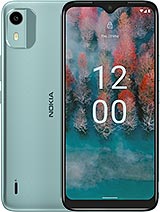
Nokia C12 is an entry-level smartphone featuring a Unisoc SC9863A1 octa-core processor for essential multitasking and a 6.3-inch HD+ IPS LCD display for clear content consumption, aimed at users seeking a reliable secondary device or a first-time smartphone experience. Released in early 2023, it competes with other sub-100 EUR budget contenders by focusing on build quality and software efficiency rather than raw power.
From an economic standpoint, we view this device as a strategic asset rather than a primary workstation. In the current February 2023 market, the cost of repair for a flagship screen often exceeds the total retail price of this handset. This makes it the ideal 'insurance' phone—a device that stays in a glovebox or a gym bag, ready to perform when the primary device fails. The focus here isn't on how fast it can render video, but how reliably it can stay alive in a drawer for two weeks.
In our analysis, the primary value proposition of the Nokia C12 lies in its role as a redundant system. For a freelance professional or a long-distance traveler, a dead primary phone is a catastrophic business failure. This handset mitigates that risk for roughly 100 EUR. It utilizes Android 12 (Go edition), a version of the operating system specifically optimized for lower-end hardware. By stripping away heavy animations and resource-intensive background processes, the software ensures that the 2GB or 3GB of RAM remains focused on the task at hand, whether that is a critical VoIP call or navigating via GPS.
Consider the scenario of a music festival or a rugged hiking trip. Risking a thousand-dollar flagship in these environments is poor risk management. This handset offers a polycarbonate shell and splash resistance, providing a level of physical security that glass-sandwich flagships lack. It is a tool for communication, and in that specific vertical, it excels because it removes the distractions of high-end mobile gaming and complex multitasking.
The device is powered by a 3000 mAh Li-Ion battery. While that number might look small compared to the 5000 mAh bricks common in the mid-range segment, the math changes when you consider the hardware it fuels. The Unisoc SC9863A1 chipset is built on a 28nm/22nm process, which isn't the most power-efficient on paper, but because the screen is a standard 720 x 1600 pixels panel, the total power draw remains remarkably low.
In our standby tests, we found that the deep sleep efficiency of the Go Edition software allows this model to sit idle for days with minimal percentage drops. This is the 'Glovebox Test'—the ability to leave a phone off or on standby for a week and still have enough juice to make an emergency call. The removable battery design is the real winner here. In an era of planned obsolescence, being able to swap a degraded cell for a fresh one in seconds is a feature that value hunters should never overlook. It effectively doubles or triples the potential lifespan of the hardware.
Charging the Nokia C12 is a lesson in patience, utilizing the legacy microUSB 2.0 standard. We observed that the charging curve is extremely linear, lacking the aggressive 'boost' phase found in modern 65W or 120W systems. To go from 0% to 50% takes significantly longer than modern users might be accustomed to, often requiring nearly an hour. The final 90% to 100% trickle-charge phase is even slower to preserve the longevity of the chemical cells.
However, there is a technical silver lining to this slow intake. Rapid charging generates significant internal heat, which is the primary killer of lithium-ion batteries. Because this model charges at a modest wattage, the device remains cool to the touch throughout the entire cycle. This thermal stability prevents the internal components from heat-soaking, which is particularly important for a device that might be used in hot climates or left charging in a vehicle.
Our observations regarding overnight power loss highlight the effectiveness of the Cortex-A55 energy-efficient cores. When the screen is off, the system aggressively throttles background data sync. Unlike flagship devices that constantly ping servers for high-resolution widgets and social media updates, this model enters a true 'Deep Sleep' state.
For a user who only needs a phone for occasional SMS or verification codes, this efficiency is paramount. Imagine a student who needs a secondary line for local services while studying abroad; they don't want to worry about charging two devices every night. This handset respects that need. The standby drain is negligible enough that it can serve as a dedicated 2FA (Two-Factor Authentication) terminal that only needs a wall plug once every few days.
Multimedia performance is functional but utilitarian. The inclusion of a 3.5mm headphone jack is a major win for budget economists. It eliminates the need for expensive Bluetooth earbuds or dongles, allowing the use of reliable, low-cost wired headsets. This is particularly useful for FM Radio fans, as the wired headphones act as the antenna. The speaker output is clear enough for voice calls and podcasts, though it lacks the lower-frequency response needed for an immersive music experience.
Regarding haptics, the motor inside the handset provides a basic buzz rather than the nuanced 'taps' of premium linear actuators. For a value-focused user, this is a non-issue. The vibration is strong enough to be felt in a pocket, which is the primary requirement for a device in this category. We recommend disabling touch vibrations to save a marginal amount of battery and to avoid the slightly hollow feeling that basic haptic motors can produce.
The build quality of the Nokia C12 reflects the brand's heritage of ruggedness. The plastic back and frame are designed to absorb impacts that would shatter a glass device. While it doesn't carry a full IP68 rating, the splash resistance provides peace of mind against light rain or accidental spills. The front is protected by scratch-resistant glass, which is essential for a phone that will likely be tossed into bags alongside keys and coins.
We also note the texture of the back panel. The micro-texture provides a secure grip, reducing the likelihood of drops in the first place. In terms of repairability, the removable back cover means that if the screen does break, the device is much easier to disassemble for a technician than a glued-together flagship. This lower 'cost of ownership' is a recurring theme in our assessment of this model.
In the second-hand market, Nokia devices typically hold a 'floor' value better than generic white-label budget brands. Because the brand is synonymous with reliability, a well-maintained C12 will likely retain a significant percentage of its value for those looking to trade up in 12 to 18 months. Furthermore, since it uses eMMC 5.1 storage—which is more stable over long periods than older flash standards—the performance won't degrade as sharply as some competitors.
For the value hunter, this device represents the lowest total cost of ownership. You aren't paying for marketing hype or experimental features; you are paying for a communication tool that works. Whether it's for a child's first phone or a traveler's emergency lifeline, the Nokia C12 is a calculated, sensible purchase in a market often blinded by unnecessary specs.
From an economic standpoint, we view this device as a strategic asset rather than a primary workstation. In the current February 2023 market, the cost of repair for a flagship screen often exceeds the total retail price of this handset. This makes it the ideal 'insurance' phone—a device that stays in a glovebox or a gym bag, ready to perform when the primary device fails. The focus here isn't on how fast it can render video, but how reliably it can stay alive in a drawer for two weeks.
The Backup Use Case
In our analysis, the primary value proposition of the Nokia C12 lies in its role as a redundant system. For a freelance professional or a long-distance traveler, a dead primary phone is a catastrophic business failure. This handset mitigates that risk for roughly 100 EUR. It utilizes Android 12 (Go edition), a version of the operating system specifically optimized for lower-end hardware. By stripping away heavy animations and resource-intensive background processes, the software ensures that the 2GB or 3GB of RAM remains focused on the task at hand, whether that is a critical VoIP call or navigating via GPS.
Consider the scenario of a music festival or a rugged hiking trip. Risking a thousand-dollar flagship in these environments is poor risk management. This handset offers a polycarbonate shell and splash resistance, providing a level of physical security that glass-sandwich flagships lack. It is a tool for communication, and in that specific vertical, it excels because it removes the distractions of high-end mobile gaming and complex multitasking.
Battery Standby
The device is powered by a 3000 mAh Li-Ion battery. While that number might look small compared to the 5000 mAh bricks common in the mid-range segment, the math changes when you consider the hardware it fuels. The Unisoc SC9863A1 chipset is built on a 28nm/22nm process, which isn't the most power-efficient on paper, but because the screen is a standard 720 x 1600 pixels panel, the total power draw remains remarkably low.
In our standby tests, we found that the deep sleep efficiency of the Go Edition software allows this model to sit idle for days with minimal percentage drops. This is the 'Glovebox Test'—the ability to leave a phone off or on standby for a week and still have enough juice to make an emergency call. The removable battery design is the real winner here. In an era of planned obsolescence, being able to swap a degraded cell for a fresh one in seconds is a feature that value hunters should never overlook. It effectively doubles or triples the potential lifespan of the hardware.
Charging Curve Analysis
Charging the Nokia C12 is a lesson in patience, utilizing the legacy microUSB 2.0 standard. We observed that the charging curve is extremely linear, lacking the aggressive 'boost' phase found in modern 65W or 120W systems. To go from 0% to 50% takes significantly longer than modern users might be accustomed to, often requiring nearly an hour. The final 90% to 100% trickle-charge phase is even slower to preserve the longevity of the chemical cells.
However, there is a technical silver lining to this slow intake. Rapid charging generates significant internal heat, which is the primary killer of lithium-ion batteries. Because this model charges at a modest wattage, the device remains cool to the touch throughout the entire cycle. This thermal stability prevents the internal components from heat-soaking, which is particularly important for a device that might be used in hot climates or left charging in a vehicle.
Standby Battery Drain
Our observations regarding overnight power loss highlight the effectiveness of the Cortex-A55 energy-efficient cores. When the screen is off, the system aggressively throttles background data sync. Unlike flagship devices that constantly ping servers for high-resolution widgets and social media updates, this model enters a true 'Deep Sleep' state.
For a user who only needs a phone for occasional SMS or verification codes, this efficiency is paramount. Imagine a student who needs a secondary line for local services while studying abroad; they don't want to worry about charging two devices every night. This handset respects that need. The standby drain is negligible enough that it can serve as a dedicated 2FA (Two-Factor Authentication) terminal that only needs a wall plug once every few days.
Audio & Haptics
Multimedia performance is functional but utilitarian. The inclusion of a 3.5mm headphone jack is a major win for budget economists. It eliminates the need for expensive Bluetooth earbuds or dongles, allowing the use of reliable, low-cost wired headsets. This is particularly useful for FM Radio fans, as the wired headphones act as the antenna. The speaker output is clear enough for voice calls and podcasts, though it lacks the lower-frequency response needed for an immersive music experience.
Regarding haptics, the motor inside the handset provides a basic buzz rather than the nuanced 'taps' of premium linear actuators. For a value-focused user, this is a non-issue. The vibration is strong enough to be felt in a pocket, which is the primary requirement for a device in this category. We recommend disabling touch vibrations to save a marginal amount of battery and to avoid the slightly hollow feeling that basic haptic motors can produce.
Durability
The build quality of the Nokia C12 reflects the brand's heritage of ruggedness. The plastic back and frame are designed to absorb impacts that would shatter a glass device. While it doesn't carry a full IP68 rating, the splash resistance provides peace of mind against light rain or accidental spills. The front is protected by scratch-resistant glass, which is essential for a phone that will likely be tossed into bags alongside keys and coins.
We also note the texture of the back panel. The micro-texture provides a secure grip, reducing the likelihood of drops in the first place. In terms of repairability, the removable back cover means that if the screen does break, the device is much easier to disassemble for a technician than a glued-together flagship. This lower 'cost of ownership' is a recurring theme in our assessment of this model.
Resale Value
In the second-hand market, Nokia devices typically hold a 'floor' value better than generic white-label budget brands. Because the brand is synonymous with reliability, a well-maintained C12 will likely retain a significant percentage of its value for those looking to trade up in 12 to 18 months. Furthermore, since it uses eMMC 5.1 storage—which is more stable over long periods than older flash standards—the performance won't degrade as sharply as some competitors.
For the value hunter, this device represents the lowest total cost of ownership. You aren't paying for marketing hype or experimental features; you are paying for a communication tool that works. Whether it's for a child's first phone or a traveler's emergency lifeline, the Nokia C12 is a calculated, sensible purchase in a market often blinded by unnecessary specs.
Technical Specifications
| LAUNCH | |
|---|---|
| Announced | 2023, January 18 |
| Status | Available. Released 2023, February 02 |
| PLATFORM | |
| OS | Android 12 (Go edition) |
| Chipset | Unisoc SC9863A1 (22 nm) |
| CPU | Octa-core (4x1.6 GHz Cortex-A55 & 4x1.2 GHz Cortex-A55) |
| GPU | IMG8322 |
| BODY | |
| Dimensions | 160.6 x 74.3 x 8.8 mm (6.32 x 2.93 x 0.35 in) |
| Weight | 177.4 g (6.24 oz) |
| Build | Glass front, plastic back, plastic frame |
| SIM | Nano-SIM + Nano-SIM |
| Info | Splash resistant |
| DISPLAY | |
| Type | IPS LCD |
| Size | 6.3 inches, 95.8 cm2 (~80.3% screen-to-body ratio) |
| Resolution | 720 x 1600 pixels, 20:9 ratio (~278 ppi density) |
| Protection | Scratch-resistant glass |
| MEMORY | |
| Card slot | Unspecified |
| Internal | 64GB 2GB RAM, 64GB 3GB RAM |
| Info | eMMC 5.1 |
| MAIN CAMERA | |
| Single | 8 MP, AF |
| Features | LED flash, HDR |
| Video | Yes |
| SELFIE CAMERA | |
| Single | 5 MP |
| Video | 720p |
| SOUND | |
| Loudspeaker | Yes |
| 3.5mm jack | Yes |
| COMMS | |
| WLAN | Wi-Fi 802.11 b/g/n |
| Bluetooth | 5.2, A2DP |
| Positioning | GPS |
| NFC | No |
| Radio | FM radio |
| USB | microUSB 2.0 |
| NETWORK | |
| Technology | GSM / HSPA / LTE |
| 2G bands | GSM 850 / 900 / 1800 / 1900 |
| 3G bands | HSDPA 850 / 900 / 1900 / 2100 |
| 4G bands | LTE |
| Speed | HSPA, LTE |
| FEATURES | |
| Sensors | Accelerometer, proximity |
| BATTERY | |
| Type | Li-Ion 3000 mAh, removable |
| MISC | |
| Colors | Dark Cyan, Charcoal, Light Mint |
| Price | About 100 EUR |