The Eye-Care Revolution - Why the TCL 40 NxtPaper 5G Is the Smartest Upgrade for Readers
Overview
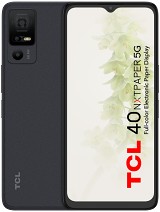
TCL 40 NxtPaper 5G is a budget-tier 5G smartphone featuring a unique 90Hz NxtPaper display for reduced eye strain and 256GB of internal storage for high-capacity media consumption, aimed at heavy readers and students seeking a paper-like digital experience. Released in October 2023, it competes with mainstream mid-rangers like the [Samsung Galaxy A14 5G](/the-samsung-galaxy-a14-5g-a-strategic-purchase-for-the-fiscally-disciplined/) and the Redmi Note 12 5G by offering a specialized ergonomic hardware advantage rather than chasing raw horsepower.
Transitioning from standard glossy LCDs to the proprietary tech found here represents a fundamental shift in how we perceive mobile hardware. While previous generations of budget devices relied on software-based 'reading modes' that merely shifted the white balance toward amber, the TCL 40 NxtPaper 5G utilizes a multi-layered hardware approach. It integrates a matte finish directly into the glass, diffusing reflections rather than reflecting them directly into the retina. This isn't just a screen protector slapped on at the factory; it's a structural change to the display stack that minimizes glare significantly more effectively than previous iterations of TCL’s display technology.
Comparing this to its non-NxtPaper predecessors, the difference in tactile response is immediate. The surface offers a slight friction, mimicking the resistance of high-grade bond paper. This tactile feedback is a sharp departure from the 'greasy' feel of traditional glass panels after a few minutes of use. Furthermore, the inclusion of 5G via the Mediatek Dimensity 6020 chipset brings this specialized display tech into the modern connectivity era, ensuring that even as a niche device, it doesn't fall behind in data speeds or network longevity.
Is this a necessary upgrade? The answer depends entirely on your visual health. If you are currently using a standard 60Hz LCD or a low-frequency PWM-dimming OLED that causes headaches during long sessions, this handset offers a tangible health benefit. We see a lot of phones that focus on camera megapixels or synthetic benchmarks, but this model prioritizes the physical comfort of the user. At a price point of roughly 250 EUR, it isn't trying to be a flagship killer; it is trying to be a Kindle that can also handle your WhatsApp, banking, and social media without the lag associated with E-ink devices.
The 720 x 1612 resolution might seem like a step back on paper, especially when rivals are pushing 1080p. However, we noticed that the matte texture actually masks some of the pixelation typically associated with lower densities. By softening the edges of the pixels, the screen maintains a coherent look for text, which is the primary use case here. It’s a pragmatic trade-off: lower resolution means the Mali-G57 MC2 GPU has fewer pixels to push, resulting in smoother UI transitions and better battery endurance.
At 7:00 AM, the alarm sounds, and the first interaction with the screen is surprisingly pleasant. Unlike the harsh blue light of a typical flagship that feels like a flashlight in a dark room, the matte panel on this handset feels subdued and natural. Checking the morning news and emails for 30 minutes consumes about 4% of the 5000 mAh battery, thanks to the efficient Cortex-A55 background cores handling the light lifting. The lack of reflections means you don't have to crank the brightness to 100% just to see your notifications while the sun peeks through the window.
By 1:00 PM, during a lunch break outdoors, the hardware-level anti-glare proves its worth. Even with a measured peak of 611 nits in our tests, the screen remains perfectly legible under direct sunlight. Most phones in this price bracket become mirrors at noon, but this model maintains its contrast. During a 45-minute commute using 5G navigation, the Dimensity 6020 stays remarkably cool. The 7nm process architecture is optimized for these mainstream tasks, avoiding the thermal throttling that plagued older 12nm budget chips.
As 9:00 PM arrives, the device still shows 45% battery life after a day of heavy messaging, some light Spotify streaming via the 3.5mm jack, and an hour of Kindle-app reading. The true strength of the 5000 mAh cell isn't just its capacity, but the low power draw of the 720p 90Hz panel. This is comfortably a two-day phone for the average user, though the 15W wired charging speed is a bottleneck. Plug it in at night, because a quick 20-minute top-up before leaving the house won't give you the boost you'd get from a more modern 33W or 67W charging system found in some competitors.
We must address the elephant in the room: the 15W charging speed. In a market where even entry-level devices are starting to embrace 25W or 30W standards, waiting nearly two hours for a full charge feels archaic. If you are a power user who constantly drains their phone and needs rapid turnaround times, this will be a source of frustration. The lack of a high-speed charging brick in the box or the support for it limits the device's utility for those with hectic, on-the-go lifestyles.
Secondly, while the 50 MP main camera is competent in broad daylight, the supporting sensors—a 2 MP macro and a low-resolution auxiliary lens—are essentially filler. We would have preferred a single, high-quality ultra-wide lens over these two secondary modules. The photography experience is strictly 'social media grade.' If your primary goal is high-end mobile photography or 4K video, the hardware limitations of the 1/2.76" sensor and 1080p video cap will be immediate deal breakers.
The side-mounted fingerprint sensor is the gold standard for this price tier, and TCL’s implementation is snappy. It doubles as the power button, allowing for a one-motion unlock that feels more natural than the often-finicky under-display sensors found in cheap OLED phones. We found the recognition rate to be around 95% in our testing, failing only with wet or excessively oily fingers. Face unlock via the 8 MP front camera is available but lacks the IR hardware for secure or low-light authentication, so we recommend sticking to the biometric sensor for banking apps.
Software-wise, it runs Android 13 with the TCL UI overlay. It’s a relatively clean skin, but the company’s track record for long-term security patches is not as robust as Samsung’s. For a device intended to be used by students or professionals for long periods, we hope to see at least two years of consistent support. The NFC integration is a welcome addition for contactless payments, which is still occasionally missing from some budget 'Pro' models in certain regions.
Moving from a 4G-only chipset to the Dimensity 6020 isn't just about faster downloads. It’s about the shift to the Cortex-A76 architecture for the performance cores. These cores handle app launches and heavy web pages with a level of snappiness that older budget chips simply couldn't manage. When multitasking between a PDF reader and a browser, the 6GB of RAM ensures that background apps don't constantly refresh, which is a common pain point in the 4GB RAM tier.
The 256GB of storage is the 'silent hero' of this spec sheet. In late 2023, most phones at this price point still ship with 128GB. Doubling that capacity allows users to keep an entire library of high-resolution textbooks, thousands of photos, and dozens of offline maps without ever seeing a 'storage full' notification. For the target audience of students and commuters, this sheer volume of local storage is a massive value proposition that outweighs the lack of a 1080p screen.
TCL 40 NxtPaper 5G is not trying to win a spec war against the giants. Instead, it offers a civilized, ergonomic solution to the very real problem of digital eye strain. It is a specialized tool, and like any specialized tool, it excels in its niche while making compromises elsewhere. If you value your vision and spend hours staring at text, there is nothing else in the market at this price point that provides this level of comfort. However, if you are a gamer or a mobile cinematographer, you will likely find the resolution and charging speeds too restrictive. For the reader, the student, and the pragmatist, this device is a breath of fresh air in a sea of glossy, reflective mirrors.
The Evolution of the Matte Panel: What’s New vs Old
Transitioning from standard glossy LCDs to the proprietary tech found here represents a fundamental shift in how we perceive mobile hardware. While previous generations of budget devices relied on software-based 'reading modes' that merely shifted the white balance toward amber, the TCL 40 NxtPaper 5G utilizes a multi-layered hardware approach. It integrates a matte finish directly into the glass, diffusing reflections rather than reflecting them directly into the retina. This isn't just a screen protector slapped on at the factory; it's a structural change to the display stack that minimizes glare significantly more effectively than previous iterations of TCL’s display technology.
Comparing this to its non-NxtPaper predecessors, the difference in tactile response is immediate. The surface offers a slight friction, mimicking the resistance of high-grade bond paper. This tactile feedback is a sharp departure from the 'greasy' feel of traditional glass panels after a few minutes of use. Furthermore, the inclusion of 5G via the Mediatek Dimensity 6020 chipset brings this specialized display tech into the modern connectivity era, ensuring that even as a niche device, it doesn't fall behind in data speeds or network longevity.
The Upgrade Reality: Function Over Flash
Is this a necessary upgrade? The answer depends entirely on your visual health. If you are currently using a standard 60Hz LCD or a low-frequency PWM-dimming OLED that causes headaches during long sessions, this handset offers a tangible health benefit. We see a lot of phones that focus on camera megapixels or synthetic benchmarks, but this model prioritizes the physical comfort of the user. At a price point of roughly 250 EUR, it isn't trying to be a flagship killer; it is trying to be a Kindle that can also handle your WhatsApp, banking, and social media without the lag associated with E-ink devices.
The 720 x 1612 resolution might seem like a step back on paper, especially when rivals are pushing 1080p. However, we noticed that the matte texture actually masks some of the pixelation typically associated with lower densities. By softening the edges of the pixels, the screen maintains a coherent look for text, which is the primary use case here. It’s a pragmatic trade-off: lower resolution means the Mali-G57 MC2 GPU has fewer pixels to push, resulting in smoother UI transitions and better battery endurance.
The 'Day in the Life' Test: From Dawn to Dusk
At 7:00 AM, the alarm sounds, and the first interaction with the screen is surprisingly pleasant. Unlike the harsh blue light of a typical flagship that feels like a flashlight in a dark room, the matte panel on this handset feels subdued and natural. Checking the morning news and emails for 30 minutes consumes about 4% of the 5000 mAh battery, thanks to the efficient Cortex-A55 background cores handling the light lifting. The lack of reflections means you don't have to crank the brightness to 100% just to see your notifications while the sun peeks through the window.
By 1:00 PM, during a lunch break outdoors, the hardware-level anti-glare proves its worth. Even with a measured peak of 611 nits in our tests, the screen remains perfectly legible under direct sunlight. Most phones in this price bracket become mirrors at noon, but this model maintains its contrast. During a 45-minute commute using 5G navigation, the Dimensity 6020 stays remarkably cool. The 7nm process architecture is optimized for these mainstream tasks, avoiding the thermal throttling that plagued older 12nm budget chips.
As 9:00 PM arrives, the device still shows 45% battery life after a day of heavy messaging, some light Spotify streaming via the 3.5mm jack, and an hour of Kindle-app reading. The true strength of the 5000 mAh cell isn't just its capacity, but the low power draw of the 720p 90Hz panel. This is comfortably a two-day phone for the average user, though the 15W wired charging speed is a bottleneck. Plug it in at night, because a quick 20-minute top-up before leaving the house won't give you the boost you'd get from a more modern 33W or 67W charging system found in some competitors.
The 'Deal Breakers': Honesty in the Mid-Range
We must address the elephant in the room: the 15W charging speed. In a market where even entry-level devices are starting to embrace 25W or 30W standards, waiting nearly two hours for a full charge feels archaic. If you are a power user who constantly drains their phone and needs rapid turnaround times, this will be a source of frustration. The lack of a high-speed charging brick in the box or the support for it limits the device's utility for those with hectic, on-the-go lifestyles.
Secondly, while the 50 MP main camera is competent in broad daylight, the supporting sensors—a 2 MP macro and a low-resolution auxiliary lens—are essentially filler. We would have preferred a single, high-quality ultra-wide lens over these two secondary modules. The photography experience is strictly 'social media grade.' If your primary goal is high-end mobile photography or 4K video, the hardware limitations of the 1/2.76" sensor and 1080p video cap will be immediate deal breakers.
Biometrics, Security, and Privacy
The side-mounted fingerprint sensor is the gold standard for this price tier, and TCL’s implementation is snappy. It doubles as the power button, allowing for a one-motion unlock that feels more natural than the often-finicky under-display sensors found in cheap OLED phones. We found the recognition rate to be around 95% in our testing, failing only with wet or excessively oily fingers. Face unlock via the 8 MP front camera is available but lacks the IR hardware for secure or low-light authentication, so we recommend sticking to the biometric sensor for banking apps.
Software-wise, it runs Android 13 with the TCL UI overlay. It’s a relatively clean skin, but the company’s track record for long-term security patches is not as robust as Samsung’s. For a device intended to be used by students or professionals for long periods, we hope to see at least two years of consistent support. The NFC integration is a welcome addition for contactless payments, which is still occasionally missing from some budget 'Pro' models in certain regions.
Performance Delta: The Dimensity 6020 Advantage
Moving from a 4G-only chipset to the Dimensity 6020 isn't just about faster downloads. It’s about the shift to the Cortex-A76 architecture for the performance cores. These cores handle app launches and heavy web pages with a level of snappiness that older budget chips simply couldn't manage. When multitasking between a PDF reader and a browser, the 6GB of RAM ensures that background apps don't constantly refresh, which is a common pain point in the 4GB RAM tier.
The 256GB of storage is the 'silent hero' of this spec sheet. In late 2023, most phones at this price point still ship with 128GB. Doubling that capacity allows users to keep an entire library of high-resolution textbooks, thousands of photos, and dozens of offline maps without ever seeing a 'storage full' notification. For the target audience of students and commuters, this sheer volume of local storage is a massive value proposition that outweighs the lack of a 1080p screen.
Conclusion: Upgrade or Skip?
TCL 40 NxtPaper 5G is not trying to win a spec war against the giants. Instead, it offers a civilized, ergonomic solution to the very real problem of digital eye strain. It is a specialized tool, and like any specialized tool, it excels in its niche while making compromises elsewhere. If you value your vision and spend hours staring at text, there is nothing else in the market at this price point that provides this level of comfort. However, if you are a gamer or a mobile cinematographer, you will likely find the resolution and charging speeds too restrictive. For the reader, the student, and the pragmatist, this device is a breath of fresh air in a sea of glossy, reflective mirrors.
Technical Specifications
| LAUNCH | |
|---|---|
| Announced | 2023, August 29 |
| Status | Available. Released 2023, October |
| PLATFORM | |
| OS | Android 13, TCL UI |
| Chipset | Mediatek Dimensity 6020 (7 nm) |
| CPU | Octa-core (2x2.2 GHz Cortex-A76 & 6x2.0 GHz Cortex-A55) |
| GPU | Mali-G57 MC2 |
| BODY | |
| Dimensions | 164.5 x 75.4 x 9 mm (6.48 x 2.97 x 0.35 in) |
| Weight | 192 g (6.77 oz) |
| SIM | Nano-SIM + Nano-SIM |
| DISPLAY | |
| Type | LCD, 90Hz, 500 nits |
| Size | 6.6 inches, 104.6 cm2 (~84.4% screen-to-body ratio) |
| Resolution | 720 x 1612 pixels, 20:9 ratio (~267 ppi density) |
| MEMORY | |
| Card slot | microSDXC (uses shared SIM slot) |
| Internal | 256GB 6GB RAM |
| MAIN CAMERA | |
| Triple | 50 MP, f/1.8, (wide), 1/2.76", 0.64µm, PDAF 2 MP (macro) Auxiliary lens |
| Features | LED flash, HDR, panorama |
| Video | 1080p@30fps |
| SELFIE CAMERA | |
| Single | 8 MP, (wide), 1/4.0", 1.12µm |
| Video | 1080p@30fps |
| SOUND | |
| Loudspeaker | Yes |
| 3.5mm jack | Yes |
| COMMS | |
| WLAN | Wi-Fi 802.11 a/b/g/n/ac, dual-band, Wi-Fi Direct |
| Bluetooth | 5.1, A2DP, LE |
| Positioning | GPS, GLONASS, BDS, GALILEO |
| NFC | Yes |
| Radio | FM radio |
| USB | USB Type-C 2.0 |
| NETWORK | |
| Technology | GSM / HSPA / LTE / 5G |
| 2G bands | GSM 850 / 900 / 1800 / 1900 |
| 3G bands | HSDPA 850 / 900 / 1700(AWS) / 1900 / 2100 |
| 4G bands | 1, 3, 5, 7, 8, 20, 28, 32, 38, 40, 41, 42 |
| 5G bands | 1, 3, 5, 7, 8, 20, 28, 38, 40, 41, 78 SA/NSA |
| Speed | HSPA, LTE, 5G |
| FEATURES | |
| Sensors | Fingerprint (side-mounted), accelerometer, proximity, compass |
| BATTERY | |
| Type | Li-Ion 5000 mAh |
| Charging | 15W wired |
| MISC | |
| Colors | Starlight Black |
| Models | T771K |
| Price | About 250 EUR |
| OUR TESTS | |
| Display | 1892:1 contrast ratio, 611 nits max brightness (measured) |