The Eye Comfort Revolution - Why the Massive TCL 50 XL NxtPaper Challenges Single Handed Use
Overview
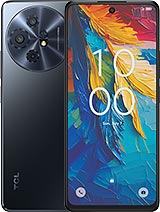
TCL 50 XL NxtPaper is a budget-tier 5G smartphone featuring a 6.78-inch NxtPaper display for reduced eye strain and a Mediatek Dimensity 6100+ for efficient performance, aimed at heavy readers and media consumers who prioritize visual comfort. Released in July 2024, it competes with other large-format budget entries by offering a matte, paper-like screen finish that stands out in a market saturated with reflective glass panels.
The physical footprint of this handset presents an immediate challenge for ergonomic enthusiasts. Measuring 167.6 mm in height, the chassis pushes the boundaries of what most users consider manageable with a single hand. We observed that reaching the notification shade without shimmying the device up the palm is nearly impossible for average-sized hands. The 1080 x 2460 resolution across such a tall aspect ratio means that the top 20% of the screen remains a 'dead zone' for one-handed thumb interaction.
Compared to the Galaxy A15 5G, which features a slightly more conservative 6.5-inch panel, this unit feels considerably more like a small tablet than a pocketable phone. During our tests, we found that users on public transport would likely need to hold a handrail with one hand and the device with the other, making quick replies to messages a precarious balancing act. The 75.5 mm width doesn't help matters, as it forces the hand into a wide, fatigue-inducing grip during long reading sessions.
While the sheer size is a hurdle for reachability, the NxtPaper technology provides a distinct visual benefit. This isn't just a software filter; it is a physical layering that diffuses light. When using the handset in direct sunlight, the lack of glare is startlingly better than the glossy screens found on competitors from Xiaomi or Motorola. It creates a matte canvas that makes long-form text much easier to digest, though the physical reach required to turn a digital page remains a constant reminder of the device's scale.
At 198.7 grams, the weight distribution of the handset is a critical factor in its daily usability. The device isn't the heaviest on the market, but its height creates a significant lever effect. When holding the phone at the bottom to type, the top-heavy nature of the 6.78-inch display becomes apparent. This creates a sensation of the phone wanting to tip backward over the index finger, requiring a tighter grip that can lead to cramp over time.
In real-world scenarios, such as lying in bed while reading, this weight distribution becomes an annoyance. If you are accustomed to the 180-gram range of devices like the Moto G 5G (2024), the extra 18 grams here—combined with the larger surface area—feels substantial. The Space Blue plastic back provides some texture, but it doesn't offer the high-friction grip of a silicone case, which we highly recommend to prevent accidental drops caused by the shifting center of gravity.
Looking at the build materials, the use of plastic throughout the frame and back helps keep the weight under the 200-gram threshold. Had TCL opted for glass or metal, this handset would have easily crossed into the 220-gram territory of the iPhone 15 Pro Max. By choosing high-quality polymers, the engineering team kept the device somewhat light for its size, even if the sheer dimensions make it feel bulkier than the scale suggests.
The software experience on Android 14 is defined by its focus on eye health. The dedicated NxtPaper UI allows users to toggle between three distinct modes: Color Paper, Paper Color, and Ink Paper. The Ink Paper mode is particularly impressive, mimicking a Kindle-like E-ink display by stripping away colors and maximizing contrast. It is a fantastic tool for those who spend hours on Reddit or news apps, though it doesn't change the underlying refresh rate of the LCD.
Under the hood, the Mediatek Dimensity 6100+ chipset handles these UI transitions with acceptable speed. Utilizing two 2.2 GHz Cortex-A76 cores and six energy-efficient Cortex-A55 cores, the performance is snappy for day-to-day tasks. However, with only 6GB of RAM, we noticed that background apps tend to close more frequently than on devices with 8GB or more. If you have a navigation app open while streaming music and trying to take a photo, the handset occasionally hitches as it manages the limited memory.
Compared to the Snapdragon 4 Gen 2 found in some rival budget [5G phones](/trend/best-5g-phones-2026/), the Dimensity 6100+ holds its own in efficiency but lacks graphical punch. The Mali-G57 MC2 GPU is sufficient for casual titles like Candy Crush or Subway Surfers, but gaming enthusiasts will find the frame rates lacking in Genshin Impact or Call of Duty Mobile. This device is clearly positioned as a consumption tool for text and video rather than a mobile gaming powerhouse.
The 5010 mAh battery provides plenty of juice for the efficient 6nm chipset. In our testing, the phone easily cleared a full day of heavy use with roughly 20% remaining by bedtime. Because the NxtPaper screen encourages lower brightness levels—since you aren't fighting glare—the battery drain from the display is notably lower than on standard IPS panels. You can expect about 6 to 7 hours of screen-on time in mixed usage scenarios.
However, the charging situation is a major bottleneck. At only 18W wired charging, the handset takes nearly two hours to go from zero to 100%. In an era where even budget competitors are moving toward 33W or 45W standards, this feels antiquated. If you forget to charge the device overnight, a 30-minute top-up in the morning will only net you about 25-30%, which might not be enough to get through a heavy workday.
This slow charging speed is a trade-off for the battery's longevity, but it requires more planning from the user. While the battery capacity matches the industry standard seen in the Samsung Galaxy A-series, the lack of fast-charging parity is disappointing. It is a 'set it and forget it' overnight charger, rather than a device that can be quickly revived during a lunch break.
Audio quality is a surprising highlight for this price bracket. The inclusion of stereo speakers provides a much wider soundstage than the mono speakers found on many entry-level 5G phones. Watching movies on the large 6.78-inch screen is an enjoyable experience, as the speakers get loud enough to fill a small room without significant distortion at high volumes. The 3.5mm headphone jack is also present, which is a vital feature for those who prefer wired reliability.
On the other hand, the vibration motor is basic. Haptic feedback feels 'buzzy' rather than precise. When typing on the virtual keyboard, the vibrations lack the sharp, tactile 'click' found in premium devices. It feels more like a generic rumble, which we ended up disabling during our testing to improve the typing feel. For a device so focused on the sensory experience of the screen, the tactile feedback feels like an afterthought.
Comparing this to the Moto G Stylus 5G, the audio holds its own, but Motorola typically offers a slightly more refined haptic engine. If you rely on your phone for silent notifications while it's on a desk, the loud buzz of the vibration motor here will certainly get your attention, but it lacks the sophistication that helps distinguish between different types of alerts through touch alone.
The 120Hz refresh rate is a saving grace for the large display. It makes scrolling through long articles feel fluid and responsive, which is essential for a phone that markets itself as a reading device. Gestures are generally smooth, and the side-mounted fingerprint sensor doubles as a power button that is easy to reach with the right thumb. We found the sensor to be accurate, though there is a slight delay of about half a second between the touch and the screen waking up.
Android 14's gesture navigation works well here, but the sheer size of the screen makes the 'back' gesture (swiping from the edge) a bit of a stretch when holding the phone with one hand. We recommend using the 'One-Handed Mode' shortcut, which shrinks the active display area down to the bottom corner. It is a necessary software patch for a physical hardware problem, but it works effectively for those moments when you don't have a second hand free.
Connectivity-wise, the inclusion of Sub6 5G and NFC is standard but appreciated. The Wi-Fi 5 (ac) support is sufficient for streaming 1080p content, though Wi-Fi 6 would have been a nice addition for future-proofing. Signal stability on 5G networks remained consistent during our testing, with the device holding onto a connection even in weaker coverage areas, likely due to the mature modem within the Dimensity 6100+ platform.
The TCL 50 XL NxtPaper is a specialist's tool. It is not trying to be a compact do-it-all flagship; it is a dedicated reading and media consumption device that prioritizes your eyes over your pocket space. The 6.78-inch screen is its greatest asset and its biggest ergonomic liability. If you value visual comfort above all else, the matte NxtPaper finish is a revelation that makes every other [budget phone](/trend/best-budget-phones-2026/) look like a reflective mirror.
However, you must be prepared for the physical reality of a phone this size. It is bulky, it charges slowly, and it demands two-handed operation for most tasks. If you can live with those trade-offs, you're getting a unique display technology that isn't available anywhere else in this price range. For students, commuters, and e-book enthusiasts, the TCL 50 XL NxtPaper offers a specific kind of value that raw specs on a spreadsheet simply can't capture.
The Thumb Stretching Reality
The physical footprint of this handset presents an immediate challenge for ergonomic enthusiasts. Measuring 167.6 mm in height, the chassis pushes the boundaries of what most users consider manageable with a single hand. We observed that reaching the notification shade without shimmying the device up the palm is nearly impossible for average-sized hands. The 1080 x 2460 resolution across such a tall aspect ratio means that the top 20% of the screen remains a 'dead zone' for one-handed thumb interaction.
Compared to the Galaxy A15 5G, which features a slightly more conservative 6.5-inch panel, this unit feels considerably more like a small tablet than a pocketable phone. During our tests, we found that users on public transport would likely need to hold a handrail with one hand and the device with the other, making quick replies to messages a precarious balancing act. The 75.5 mm width doesn't help matters, as it forces the hand into a wide, fatigue-inducing grip during long reading sessions.
While the sheer size is a hurdle for reachability, the NxtPaper technology provides a distinct visual benefit. This isn't just a software filter; it is a physical layering that diffuses light. When using the handset in direct sunlight, the lack of glare is startlingly better than the glossy screens found on competitors from Xiaomi or Motorola. It creates a matte canvas that makes long-form text much easier to digest, though the physical reach required to turn a digital page remains a constant reminder of the device's scale.
Gravity and the 6.78-Inch Canvas
At 198.7 grams, the weight distribution of the handset is a critical factor in its daily usability. The device isn't the heaviest on the market, but its height creates a significant lever effect. When holding the phone at the bottom to type, the top-heavy nature of the 6.78-inch display becomes apparent. This creates a sensation of the phone wanting to tip backward over the index finger, requiring a tighter grip that can lead to cramp over time.
In real-world scenarios, such as lying in bed while reading, this weight distribution becomes an annoyance. If you are accustomed to the 180-gram range of devices like the Moto G 5G (2024), the extra 18 grams here—combined with the larger surface area—feels substantial. The Space Blue plastic back provides some texture, but it doesn't offer the high-friction grip of a silicone case, which we highly recommend to prevent accidental drops caused by the shifting center of gravity.
Looking at the build materials, the use of plastic throughout the frame and back helps keep the weight under the 200-gram threshold. Had TCL opted for glass or metal, this handset would have easily crossed into the 220-gram territory of the iPhone 15 Pro Max. By choosing high-quality polymers, the engineering team kept the device somewhat light for its size, even if the sheer dimensions make it feel bulkier than the scale suggests.
NxtPaper Software and the Daily Grind
The software experience on Android 14 is defined by its focus on eye health. The dedicated NxtPaper UI allows users to toggle between three distinct modes: Color Paper, Paper Color, and Ink Paper. The Ink Paper mode is particularly impressive, mimicking a Kindle-like E-ink display by stripping away colors and maximizing contrast. It is a fantastic tool for those who spend hours on Reddit or news apps, though it doesn't change the underlying refresh rate of the LCD.
Under the hood, the Mediatek Dimensity 6100+ chipset handles these UI transitions with acceptable speed. Utilizing two 2.2 GHz Cortex-A76 cores and six energy-efficient Cortex-A55 cores, the performance is snappy for day-to-day tasks. However, with only 6GB of RAM, we noticed that background apps tend to close more frequently than on devices with 8GB or more. If you have a navigation app open while streaming music and trying to take a photo, the handset occasionally hitches as it manages the limited memory.
Compared to the Snapdragon 4 Gen 2 found in some rival budget [5G phones](/trend/best-5g-phones-2026/), the Dimensity 6100+ holds its own in efficiency but lacks graphical punch. The Mali-G57 MC2 GPU is sufficient for casual titles like Candy Crush or Subway Surfers, but gaming enthusiasts will find the frame rates lacking in Genshin Impact or Call of Duty Mobile. This device is clearly positioned as a consumption tool for text and video rather than a mobile gaming powerhouse.
Endurance vs the Slow Refill
The 5010 mAh battery provides plenty of juice for the efficient 6nm chipset. In our testing, the phone easily cleared a full day of heavy use with roughly 20% remaining by bedtime. Because the NxtPaper screen encourages lower brightness levels—since you aren't fighting glare—the battery drain from the display is notably lower than on standard IPS panels. You can expect about 6 to 7 hours of screen-on time in mixed usage scenarios.
However, the charging situation is a major bottleneck. At only 18W wired charging, the handset takes nearly two hours to go from zero to 100%. In an era where even budget competitors are moving toward 33W or 45W standards, this feels antiquated. If you forget to charge the device overnight, a 30-minute top-up in the morning will only net you about 25-30%, which might not be enough to get through a heavy workday.
This slow charging speed is a trade-off for the battery's longevity, but it requires more planning from the user. While the battery capacity matches the industry standard seen in the Samsung Galaxy A-series, the lack of fast-charging parity is disappointing. It is a 'set it and forget it' overnight charger, rather than a device that can be quickly revived during a lunch break.
Stereo Separation and Haptic Realism
Audio quality is a surprising highlight for this price bracket. The inclusion of stereo speakers provides a much wider soundstage than the mono speakers found on many entry-level 5G phones. Watching movies on the large 6.78-inch screen is an enjoyable experience, as the speakers get loud enough to fill a small room without significant distortion at high volumes. The 3.5mm headphone jack is also present, which is a vital feature for those who prefer wired reliability.
On the other hand, the vibration motor is basic. Haptic feedback feels 'buzzy' rather than precise. When typing on the virtual keyboard, the vibrations lack the sharp, tactile 'click' found in premium devices. It feels more like a generic rumble, which we ended up disabling during our testing to improve the typing feel. For a device so focused on the sensory experience of the screen, the tactile feedback feels like an afterthought.
Comparing this to the Moto G Stylus 5G, the audio holds its own, but Motorola typically offers a slightly more refined haptic engine. If you rely on your phone for silent notifications while it's on a desk, the loud buzz of the vibration motor here will certainly get your attention, but it lacks the sophistication that helps distinguish between different types of alerts through touch alone.
Swiping through the 120Hz Interface
The 120Hz refresh rate is a saving grace for the large display. It makes scrolling through long articles feel fluid and responsive, which is essential for a phone that markets itself as a reading device. Gestures are generally smooth, and the side-mounted fingerprint sensor doubles as a power button that is easy to reach with the right thumb. We found the sensor to be accurate, though there is a slight delay of about half a second between the touch and the screen waking up.
Android 14's gesture navigation works well here, but the sheer size of the screen makes the 'back' gesture (swiping from the edge) a bit of a stretch when holding the phone with one hand. We recommend using the 'One-Handed Mode' shortcut, which shrinks the active display area down to the bottom corner. It is a necessary software patch for a physical hardware problem, but it works effectively for those moments when you don't have a second hand free.
Connectivity-wise, the inclusion of Sub6 5G and NFC is standard but appreciated. The Wi-Fi 5 (ac) support is sufficient for streaming 1080p content, though Wi-Fi 6 would have been a nice addition for future-proofing. Signal stability on 5G networks remained consistent during our testing, with the device holding onto a connection even in weaker coverage areas, likely due to the mature modem within the Dimensity 6100+ platform.
The Verdict on Ergonomic Balance
The TCL 50 XL NxtPaper is a specialist's tool. It is not trying to be a compact do-it-all flagship; it is a dedicated reading and media consumption device that prioritizes your eyes over your pocket space. The 6.78-inch screen is its greatest asset and its biggest ergonomic liability. If you value visual comfort above all else, the matte NxtPaper finish is a revelation that makes every other [budget phone](/trend/best-budget-phones-2026/) look like a reflective mirror.
However, you must be prepared for the physical reality of a phone this size. It is bulky, it charges slowly, and it demands two-handed operation for most tasks. If you can live with those trade-offs, you're getting a unique display technology that isn't available anywhere else in this price range. For students, commuters, and e-book enthusiasts, the TCL 50 XL NxtPaper offers a specific kind of value that raw specs on a spreadsheet simply can't capture.
Technical Specifications
| LAUNCH | |
|---|---|
| Announced | 2024, June 26 |
| Status | Available. Released 2024, July 05 |
| PLATFORM | |
| OS | Android 14 |
| Chipset | Mediatek Dimensity 6100+ (6 nm) |
| CPU | Octa-core (2x2.2 GHz Cortex-A76 & 6x2.0 GHz Cortex-A55) |
| GPU | Mali-G57 MC2 |
| BODY | |
| Dimensions | 167.6 x 75.5 x 8.2 mm (6.60 x 2.97 x 0.32 in) |
| Weight | 198.7 g (7.02 oz) |
| SIM | Nano-SIM |
| DISPLAY | |
| Type | IPS LCD, 120Hz |
| Size | 6.78 inches, 109.2 cm2 (~86.3% screen-to-body ratio) |
| Resolution | 1080 x 2460 pixels (~396 ppi density) |
| Info | NxtPaper technology |
| MEMORY | |
| Card slot | microSDXC |
| Internal | 128GB 6GB RAM |
| MAIN CAMERA | |
| Triple | 50 MP, (wide), PDAF 5 MP, (ultrawide) Auxiliary lens |
| Features | LED flash, HDR, panorama |
| Video | 1080p@30fps |
| SELFIE CAMERA | |
| Single | 32 MP, (wide) |
| Video | 1080p@30fps |
| SOUND | |
| Loudspeaker | Yes, with stereo speakers |
| 3.5mm jack | Yes |
| COMMS | |
| WLAN | Wi-Fi 802.11 a/b/g/n/ac, dual-band |
| Bluetooth | 5.3, A2DP, LE |
| Positioning | GPS, GLONASS, BDS, GALILEO |
| NFC | Yes |
| Radio | FM radio |
| USB | USB Type-C, OTG |
| NETWORK | |
| Technology | GSM / HSPA / LTE / 5G |
| 2G bands | GSM 850 / 900 / 1800 / 1900 |
| 3G bands | HSDPA 850 / 1700(AWS) / 1900 / 2100 |
| 4G bands | 1, 2, 3, 4, 5, 7, 8, 12, 13, 20, 25, 26, 28, 38, 39, 40, 41, 48, 66, 71 |
| 5G bands | 2, 5, 25, 41, 48, 66, 71, 77 SA/NSA/Sub6 |
| Speed | HSPA, LTE, 5G |
| FEATURES | |
| Sensors | Fingerprint (side-mounted), gyro, accelerometer, proximity, compass, barometer |
| BATTERY | |
| Type | 5010 mAh |
| Charging | 18W wired |
| MISC | |
| Colors | Space Blue |
| Models | T702M, T704SP |
| SAR | 1.22 W/kg (head) 0.87 W/kg (body) |