The Financial Logic of Owning the Tecno Spark 40 - A Value Retention King or a Throwaway Handset
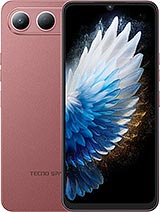
Overview
Tecno Spark 40 is a budget-tier 5G smartphone featuring a 6000 mAh battery for multi-day endurance and a Mediatek Dimensity 6400 chipset for efficient 5G connectivity, aimed at cost-conscious users in emerging markets. Released in August 2025, it competes with entry-level offerings from Redmi and Infinix by prioritizing network longevity over display sharpness. In an era where 4G-only devices are seeing their resale values plummet, this handset positions itself as a strategic purchase for those looking to hedge against network obsolescence.
When we look at the asset value of a mobile device, the display is usually the primary factor in perceived quality. The IPS LCD on this handset presents a complex financial equation. On one hand, the 120Hz refresh rate provides the smooth animations typically reserved for more expensive mid-range units, which helps maintain a "modern" feel during navigation. However, the decision to stick with a 720 x 1600 pixels resolution on a large 6.75-inch canvas is a significant compromise.
At roughly 260 ppi density, the screen lacks the crispness required for high-definition media consumption. Buyers should recognize that by late 2026, 720p panels will likely be viewed as antiquated, potentially accelerating the depreciation of the device on the secondary market. The trade-off, of course, is that a lower resolution puts less strain on the Mali-G57 MC2 GPU, allowing for more consistent frame rates in casual gaming and day-to-day UI interactions. This efficiency is a core part of the value proposition for users who prioritize functional speed over visual fidelity.
Under the hood, the Mediatek Dimensity 6400 chipset is the primary driver of this phone's long-term utility. Built on a 6 nm process, it offers a level of thermal efficiency that ensures the internal hardware doesn't degrade prematurely due to heat. The octa-core configuration, featuring 2x2.5 GHz Cortex-A76 performance cores, provides enough overhead to handle the increasing demands of Android 15 and future iterations of the HIOS 15 skin.
We must view the inclusion of 5G (SA/NSA) as a form of insurance. As carriers continue to sunset older 4G bands to make room for 5G spectrum, 4G-only devices will suffer from poorer signal penetration and slower data speeds. By opting for a 5G-ready chipset in this price bracket, the owner extends the usable life of the handset by several years. Whether you choose the 128GB 4GB RAM or the 256GB 8GB RAM variant, the core processing power remains a solid foundation for a budget investment.
A massive 6000 mAh Li-Po battery is the standout feature for anyone who views their phone as a critical tool rather than a luxury. For a delivery driver or a student commuting long distances, this capacity represents nearly two days of moderate use without needing a wall outlet. This high-capacity cell is also more resilient to the natural degradation cycles of lithium batteries; because it requires fewer charge cycles to get through a week, it will likely retain a higher percentage of its original health after two years of ownership.
However, we cannot ignore the 18W wired charging speed. In 2025, an 18W ceiling on a 6000mAh tank is a significant bottleneck. Imagine a scenario where you arrive home with 5% battery and need to leave again in 30 minutes. A modern mid-range phone with 65W charging would be nearly full; this model would barely reach 20%. This "slow-fill" nature means users must adopt a nocturnal charging habit, as mid-day top-ups are largely ineffective. This is a classic budget trade-off: you get massive volume, but very low flow.
Starting at 7:00 AM, the Tecno Spark 40 serves as the primary hub. With a full charge, the user can ignore the battery icon for the duration of a standard workday. During the morning commute, the 5G connectivity ensures that high-bitrate audio streaming remains uninterrupted even in high-traffic urban areas. The side-mounted fingerprint sensor allows for quick access when pulling the phone from a pocket, though the plastic frame and back suggest a need for a protective case to prevent scuffing that would hurt future resale.
By mid-afternoon, after several hours of email, social media, and navigation, the device typically hovers around 65-70% battery. The IP64 dust and water resistance offers peace of mind during a sudden rain shower, protecting against splashes that might kill non-rated competitors. The infrared port is a surprisingly useful utility for controlling home appliances, adding a layer of convenience often missing in this tier. By 10:00 PM, after evening media consumption, the handset usually rests at 40%, ready to start the next day without an overnight charge if necessary.
No budget phone is without its frustrations. The most glaring issue is the 5 MP selfie camera. In an era of high-definition video calls and social media dominance, a 5MP sensor is a relic. It lacks the dynamic range and sharpness expected in 2025, making it a poor choice for anyone who frequently uses the front-facing camera for anything beyond basic security checks.
Secondly, while the 50 MP main camera is capable of 1440p video recording—a rare find in this segment—the lack of advanced stabilization means handheld footage can be jittery. Users looking for a content creation tool will find the hardware limiting. Finally, the HIOS 15 software experience is feature-rich but can feel cluttered compared to cleaner versions of Android. For a buyer seeking a "set it and forget it" experience, the software learning curve and pre-installed utilities might be a deterrent.
Security is handled reliably by the side-mounted fingerprint scanner. Unlike under-display sensors in this price range, which are often slow and prone to failure, physical capacitive sensors offer a near-instant unlock experience. The inclusion of NFC is another win for the value hunter, enabling contactless payments and transit card integration which are becoming mandatory in modernized cities.
From a connectivity standpoint, the Wi-Fi 802.11 a/b/g/n/ac and Bluetooth 5.4 ensure that the phone pairs efficiently with modern accessories. The 3.5mm jack remains a vital asset for those who refuse to deal with the battery anxiety of wireless earbuds or for users who require high-fidelity wired connections for FM radio or basic audio recording.
As is common in the budget sector, the community debate surrounding the Tecno Spark 40 centers on the longevity of software updates. While it launches with Android 15, the track record for multi-year OS upgrades in this price tier is often inconsistent. However, the Mediatek Dimensity 6400 is a widely used platform, which typically means better community support and security patch availability compared to obscure, unbranded chipsets.
Enthusiasts in forums often argue that for a few dollars more, one could find a device with a 1080p screen. While true, those alternatives often sacrifice the 6000mAh battery or the 5G modem. The consensus among practical buyers is that this handset is a utility-first device. It isn't trying to win beauty contests; it's trying to stay powered on and connected for as long as possible.
Evaluating the Tecno Spark 40 requires a shift in perspective. It is not a premium asset that will hold 70% of its value after a year. Instead, it is a high-utility tool with a low entry cost. The combination of 5G, NFC, and an IP64 rating ensures that it remains functional and relevant in a rapidly changing technological landscape. While the screen resolution and charging speeds are definite drawbacks, they are calculated sacrifices made to bolster the core pillars of connectivity and endurance. For the savvy economist, this is a purchase made for the long haul, designed to be used until the hardware itself reaches the end of its natural life.
The Depreciation Trap: Display and Resolution Realities
When we look at the asset value of a mobile device, the display is usually the primary factor in perceived quality. The IPS LCD on this handset presents a complex financial equation. On one hand, the 120Hz refresh rate provides the smooth animations typically reserved for more expensive mid-range units, which helps maintain a "modern" feel during navigation. However, the decision to stick with a 720 x 1600 pixels resolution on a large 6.75-inch canvas is a significant compromise.
At roughly 260 ppi density, the screen lacks the crispness required for high-definition media consumption. Buyers should recognize that by late 2026, 720p panels will likely be viewed as antiquated, potentially accelerating the depreciation of the device on the secondary market. The trade-off, of course, is that a lower resolution puts less strain on the Mali-G57 MC2 GPU, allowing for more consistent frame rates in casual gaming and day-to-day UI interactions. This efficiency is a core part of the value proposition for users who prioritize functional speed over visual fidelity.
Performance Longevity: The Dimensity 6400 5G Bet
Under the hood, the Mediatek Dimensity 6400 chipset is the primary driver of this phone's long-term utility. Built on a 6 nm process, it offers a level of thermal efficiency that ensures the internal hardware doesn't degrade prematurely due to heat. The octa-core configuration, featuring 2x2.5 GHz Cortex-A76 performance cores, provides enough overhead to handle the increasing demands of Android 15 and future iterations of the HIOS 15 skin.
We must view the inclusion of 5G (SA/NSA) as a form of insurance. As carriers continue to sunset older 4G bands to make room for 5G spectrum, 4G-only devices will suffer from poorer signal penetration and slower data speeds. By opting for a 5G-ready chipset in this price bracket, the owner extends the usable life of the handset by several years. Whether you choose the 128GB 4GB RAM or the 256GB 8GB RAM variant, the core processing power remains a solid foundation for a budget investment.
Endurance vs. Downtime: The 6000mAh Paradox
A massive 6000 mAh Li-Po battery is the standout feature for anyone who views their phone as a critical tool rather than a luxury. For a delivery driver or a student commuting long distances, this capacity represents nearly two days of moderate use without needing a wall outlet. This high-capacity cell is also more resilient to the natural degradation cycles of lithium batteries; because it requires fewer charge cycles to get through a week, it will likely retain a higher percentage of its original health after two years of ownership.
However, we cannot ignore the 18W wired charging speed. In 2025, an 18W ceiling on a 6000mAh tank is a significant bottleneck. Imagine a scenario where you arrive home with 5% battery and need to leave again in 30 minutes. A modern mid-range phone with 65W charging would be nearly full; this model would barely reach 20%. This "slow-fill" nature means users must adopt a nocturnal charging habit, as mid-day top-ups are largely ineffective. This is a classic budget trade-off: you get massive volume, but very low flow.
A Day in the Life: The Utility Test
Starting at 7:00 AM, the Tecno Spark 40 serves as the primary hub. With a full charge, the user can ignore the battery icon for the duration of a standard workday. During the morning commute, the 5G connectivity ensures that high-bitrate audio streaming remains uninterrupted even in high-traffic urban areas. The side-mounted fingerprint sensor allows for quick access when pulling the phone from a pocket, though the plastic frame and back suggest a need for a protective case to prevent scuffing that would hurt future resale.
By mid-afternoon, after several hours of email, social media, and navigation, the device typically hovers around 65-70% battery. The IP64 dust and water resistance offers peace of mind during a sudden rain shower, protecting against splashes that might kill non-rated competitors. The infrared port is a surprisingly useful utility for controlling home appliances, adding a layer of convenience often missing in this tier. By 10:00 PM, after evening media consumption, the handset usually rests at 40%, ready to start the next day without an overnight charge if necessary.
The Deal Breakers: Navigating the Compromises
No budget phone is without its frustrations. The most glaring issue is the 5 MP selfie camera. In an era of high-definition video calls and social media dominance, a 5MP sensor is a relic. It lacks the dynamic range and sharpness expected in 2025, making it a poor choice for anyone who frequently uses the front-facing camera for anything beyond basic security checks.
Secondly, while the 50 MP main camera is capable of 1440p video recording—a rare find in this segment—the lack of advanced stabilization means handheld footage can be jittery. Users looking for a content creation tool will find the hardware limiting. Finally, the HIOS 15 software experience is feature-rich but can feel cluttered compared to cleaner versions of Android. For a buyer seeking a "set it and forget it" experience, the software learning curve and pre-installed utilities might be a deterrent.
Biometrics, Security, and Connectivity
Security is handled reliably by the side-mounted fingerprint scanner. Unlike under-display sensors in this price range, which are often slow and prone to failure, physical capacitive sensors offer a near-instant unlock experience. The inclusion of NFC is another win for the value hunter, enabling contactless payments and transit card integration which are becoming mandatory in modernized cities.
From a connectivity standpoint, the Wi-Fi 802.11 a/b/g/n/ac and Bluetooth 5.4 ensure that the phone pairs efficiently with modern accessories. The 3.5mm jack remains a vital asset for those who refuse to deal with the battery anxiety of wireless earbuds or for users who require high-fidelity wired connections for FM radio or basic audio recording.
Long Term Support and Community Consensus
As is common in the budget sector, the community debate surrounding the Tecno Spark 40 centers on the longevity of software updates. While it launches with Android 15, the track record for multi-year OS upgrades in this price tier is often inconsistent. However, the Mediatek Dimensity 6400 is a widely used platform, which typically means better community support and security patch availability compared to obscure, unbranded chipsets.
Enthusiasts in forums often argue that for a few dollars more, one could find a device with a 1080p screen. While true, those alternatives often sacrifice the 6000mAh battery or the 5G modem. The consensus among practical buyers is that this handset is a utility-first device. It isn't trying to win beauty contests; it's trying to stay powered on and connected for as long as possible.
Investment Summary
Evaluating the Tecno Spark 40 requires a shift in perspective. It is not a premium asset that will hold 70% of its value after a year. Instead, it is a high-utility tool with a low entry cost. The combination of 5G, NFC, and an IP64 rating ensures that it remains functional and relevant in a rapidly changing technological landscape. While the screen resolution and charging speeds are definite drawbacks, they are calculated sacrifices made to bolster the core pillars of connectivity and endurance. For the savvy economist, this is a purchase made for the long haul, designed to be used until the hardware itself reaches the end of its natural life.
Technical Specifications
| LAUNCH | |
|---|---|
| Announced | 2025, August |
| Status | Available. Released 2025, August |
| PLATFORM | |
| OS | Android 15, HIOS 15 |
| Chipset | Mediatek Dimensity 6400 (6 nm) |
| CPU | Octa-core (2x2.5 GHz Cortex-A76 & 6x2.0 GHz Cortex-A55) |
| GPU | Mali-G57 MC2 |
| BODY | |
| Dimensions | 167.7 x 77.9 x 8 mm (6.60 x 3.07 x 0.31 in) |
| Weight | 194 g (6.84 oz) |
| Build | Glass front, plastic back, plastic frame |
| SIM | Nano-SIM + Nano-SIM |
| Info | IP64 dust tight and water resistant (water splashes) |
| DISPLAY | |
| Type | IPS LCD, 120Hz |
| Size | 6.75 inches, 110.0 cm2 (~84.2% screen-to-body ratio) |
| Resolution | 720 x 1600 pixels, 20:9 ratio (~260 ppi density) |
| MEMORY | |
| Card slot | microSDXC (dedicated slot) |
| Internal | 128GB 4GB RAM, 256GB 8GB RAM |
| MAIN CAMERA | |
| Single | 50 MP |
| Features | Dual-LED flash |
| Video | 1440p@30fps, 1080p@30fps |
| SELFIE CAMERA | |
| Single | 5 MP |
| Video | Yes |
| SOUND | |
| Loudspeaker | Yes |
| 3.5mm jack | Yes |
| COMMS | |
| WLAN | Wi-Fi 802.11 a/b/g/n/ac, dual-band |
| Bluetooth | 5.4, A2DP, LE |
| Positioning | GPS |
| NFC | Yes |
| Infrared port | Yes |
| Radio | FM radio |
| USB | USB Type-C, OTG |
| NETWORK | |
| Technology | GSM / HSPA / LTE / 5G |
| 2G bands | GSM 850 / 900 / 1800 / 1900 |
| 3G bands | HSDPA 900 / 2100 |
| 4G bands | LTE |
| 5G bands | SA/NSA |
| Speed | HSPA, LTE, 5G |
| FEATURES | |
| Sensors | Fingerprint (side-mounted), accelerometer, proximity, compass |
| BATTERY | |
| Type | Li-Po 6000 mAh |
| Charging | 18W wired |
| MISC | |
| Display | 6.75-inch IPS LCD, 120Hz, 720 x 1600 pixels |
| Chipset | Mediatek Dimensity 6400 (6 nm) |
| RAM/Storage | Up to 8GB RAM / 256GB Internal |
| Battery | 6000 mAh Li-Po, 18W Wired Charging |
| Main Camera | 50 MP, 1440p@30fps video |
| Selfie Camera | 5 MP |
| OS | Android 15, HIOS 15 |
| Durability | IP64 dust and water resistant |
| Connectivity | 5G, NFC, Infrared Port, Bluetooth 5.4 |
| Colors | Sky Blue, Ink Black, Turquoise Green, Bikaner Red |