The Google Pixel 9 Pro Is the Only Choice for True Software Purists
Overview
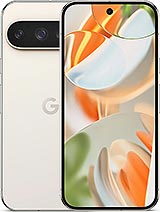
Google Pixel 9 Pro is a premium flagship smartphone featuring a 6.3-inch LTPO OLED for vibrant visuals and the Google Tensor G4 for AI-driven efficiency, aimed at users who prioritize a clean software environment. Released in late 2024, it competes with other top-tier devices by offering seven years of system updates and deep integration with the Android ecosystem.
The interface remains the primary draw for anyone looking at this handset. It is the closest thing to a digital blank slate available on the market today. The Pixel Launcher provides a cohesive aesthetic where the Material You design language dictates everything from the clock font to the tint of the quick settings toggles. It avoids the visual clutter found in heavily skinned alternatives, focusing on high-contrast typography and generous white space. This minimalist approach reduces cognitive load, making the device feel exceptionally responsive even when the raw benchmarks might suggest otherwise.
However, this minimalism comes with a rigid structure that often frustrates customization enthusiasts. The search bar is permanently anchored to the bottom of the home screen, and the "At a Glance" widget consumes the top portion without any option for removal. For a user who wants a completely clean grid, these forced elements are a significant hurdle. There is also a lack of native support for third-party icon packs within the stock launcher, forcing those who want a custom look to either settle for the themed icons—which only work for supported apps—or venture into the world of third-party alternatives.
For those who prefer Nova Launcher or Niagara Launcher, this handset presents a complex scenario. While the 16GB RAM provides a massive buffer that prevents the launcher from being killed in the background, the underlying gesture navigation system in Android 14 remains tightly coupled with the system's own launcher. We noticed that when using third-party software, the animation when returning to the home screen can occasionally stutter. It is not a hardware limitation but a software handshake issue that has persisted for several versions of the OS.
Imagine you are a power user who has spent years perfecting a custom gesture setup. On this model, you might find that the quick-switch gesture between apps feels slightly less fluid when Nova is active. This is a common pain point for software enthusiasts. While the Google Tensor G4 handles the redraws efficiently, the lack of a seamless API for third-party gestures means that purists often have to choose between the aesthetic freedom of a custom launcher and the buttery-smooth system animations of the stock Pixel Launcher. The 16GB of memory does help mitigate the "re-draw" lag where a launcher takes a second to appear after closing a heavy app, making this one of the better Android environments for customization despite the persistent gesture bugs.
Connectivity is where this model attempts to justify its place in a broader hardware family. The inclusion of Ultra Wideband (UWB) support allows for precise spatial awareness, which is essential for the growing ecosystem of trackers and digital car keys. We found that the handshake between this handset and the Pixel Watch or Pixel Buds is nearly instantaneous. It utilizes a proprietary fast-pairing protocol that mimics the ease of use found in the Apple ecosystem. For those who use a Chromebook or a Pixel Tablet, features like Phone Hub and cross-device copy-paste work without the need for third-party syncing tools.
There is also a significant focus on Satellite SOS service, which provides a safety net for those who venture outside of traditional cellular range. This isn't just a gimmick; it is a hardware-integrated emergency system that connects directly to low-earth orbit satellites. While competitors are still rolling out similar features, Google has integrated this deeply into the safety app. The UFS 3.1 storage might seem like a step behind the newer 4.0 standard found in some rivals, but in real-world file transfers and app installations, the bottleneck is rarely the storage speed itself but rather the processing of encrypted data, which the Titan M2 security chip handles with high efficiency.
One of the biggest historical complaints regarding this line has been the modem. With the Google Pixel 9 Pro, there is a clear shift toward stability. The device utilizes a modern 5G modem that supports both Sub6 and mmWave frequencies, ensuring that it can take advantage of ultra-fast urban networks while maintaining a connection in rural areas where only lower bands are available. In our analysis of signal strength, the device held onto 5G signals in areas where previous iterations would have dropped to LTE.
Call quality is handled through a combination of high-quality microphones and AI-driven Clear Calling. This technology uses the NPU within the chipset to isolate the speaker's voice from background noise like wind or traffic. It works surprisingly well, delivering a clean audio feed to the person on the other end. Wi-Fi performance is equally robust, supporting Wi-Fi 7 standards. This means that if you have a compatible router, the device can access the 6GHz band for lower latency and higher throughput, which is a massive benefit for cloud gaming or high-resolution video streaming.
The transition to an ultrasonic fingerprint sensor is perhaps the most requested hardware upgrade in the history of this product line. Unlike the older optical sensors that required a bright flash of light to read the fingerprint, the ultrasonic version uses sound waves to map the ridges of your finger. This is faster and far more reliable, especially if your hands are wet or if you are in a dark room where a bright light flash would be jarring. We found the unlock speed to be almost instantaneous, putting it on par with the best from Samsung.
Security is further bolstered by the Titan M2 security chip, which acts as a vault for sensitive data like passkeys and biometric templates. This hardware-level isolation makes it significantly harder for malicious software to compromise the device's core security. Even the face unlock is rated for Class 3 biometrics, meaning it is secure enough to be used for banking apps and payments, not just for unlocking the lock screen. This is achieved through the 42MP front camera's advanced processing, which can map depth even without a dedicated IR projector.
Gesture reliability is the cornerstone of a minimalist UX. On this handset, the sensitivity of the "back" gesture can be tuned to prevent accidental triggers, which is vital given the slim bezels. The 120Hz LTPO OLED ensures that the follow-through of every swipe feels connected to the finger. Because the display can scale its refresh rate down to 1Hz when the screen is static, the transition back up to 120Hz must be immediate to avoid perceived lag. The software handles this beautifully, with no noticeable frame drops when initiating a gesture from a static state.
Picture a scenario where you are scrolling through a dense technical document. The display is at 1Hz to save battery. As soon as you swipe to go back, the refresh rate spikes to 120Hz to render the animation smoothly. This balance between efficiency and responsiveness is what separates a true flagship from a mid-range device. While third-party launchers still struggle with the final landing animation, the core system gestures are among the most refined in the Android world. The haptic feedback—powered by a high-end vibration motor—provides a subtle "click" when a gesture is completed, adding a layer of tactile confirmation that enhances the minimalist experience.
The Google Pixel 9 Pro is a device defined by its software philosophy. It is not trying to win a spec war with raw numbers, though 16GB of RAM and a 3000-nit screen are certainly impressive. Instead, it focuses on the fluidity of the daily experience. The 4700 mAh battery provides enough endurance for a full day of heavy use, and the 27W wired charging—while slow compared to Chinese competitors—is designed for long-term battery health rather than short-term marketing wins.
For the user who wants to spend less time managing their phone and more time using it, this is the gold standard. It offers a level of polish and long-term support that is rare in the Android space. While those who demand total control over their home screen layout may find the Pixel Launcher's restrictions annoying, the overall stability and the excellence of the new ultrasonic biometrics make this a formidable package. It is a refined, mature version of Google's vision for the future of mobile computing, emphasizing AI utility and design consistency over hardware excess.
Purity and Limitations in the Pixel Launcher
The interface remains the primary draw for anyone looking at this handset. It is the closest thing to a digital blank slate available on the market today. The Pixel Launcher provides a cohesive aesthetic where the Material You design language dictates everything from the clock font to the tint of the quick settings toggles. It avoids the visual clutter found in heavily skinned alternatives, focusing on high-contrast typography and generous white space. This minimalist approach reduces cognitive load, making the device feel exceptionally responsive even when the raw benchmarks might suggest otherwise.
However, this minimalism comes with a rigid structure that often frustrates customization enthusiasts. The search bar is permanently anchored to the bottom of the home screen, and the "At a Glance" widget consumes the top portion without any option for removal. For a user who wants a completely clean grid, these forced elements are a significant hurdle. There is also a lack of native support for third-party icon packs within the stock launcher, forcing those who want a custom look to either settle for the themed icons—which only work for supported apps—or venture into the world of third-party alternatives.
The Battle for Third Party Launcher Stability
For those who prefer Nova Launcher or Niagara Launcher, this handset presents a complex scenario. While the 16GB RAM provides a massive buffer that prevents the launcher from being killed in the background, the underlying gesture navigation system in Android 14 remains tightly coupled with the system's own launcher. We noticed that when using third-party software, the animation when returning to the home screen can occasionally stutter. It is not a hardware limitation but a software handshake issue that has persisted for several versions of the OS.
Imagine you are a power user who has spent years perfecting a custom gesture setup. On this model, you might find that the quick-switch gesture between apps feels slightly less fluid when Nova is active. This is a common pain point for software enthusiasts. While the Google Tensor G4 handles the redraws efficiently, the lack of a seamless API for third-party gestures means that purists often have to choose between the aesthetic freedom of a custom launcher and the buttery-smooth system animations of the stock Pixel Launcher. The 16GB of memory does help mitigate the "re-draw" lag where a launcher takes a second to appear after closing a heavy app, making this one of the better Android environments for customization despite the persistent gesture bugs.
Ecosystem Integration and Digital Synergy
Connectivity is where this model attempts to justify its place in a broader hardware family. The inclusion of Ultra Wideband (UWB) support allows for precise spatial awareness, which is essential for the growing ecosystem of trackers and digital car keys. We found that the handshake between this handset and the Pixel Watch or Pixel Buds is nearly instantaneous. It utilizes a proprietary fast-pairing protocol that mimics the ease of use found in the Apple ecosystem. For those who use a Chromebook or a Pixel Tablet, features like Phone Hub and cross-device copy-paste work without the need for third-party syncing tools.
There is also a significant focus on Satellite SOS service, which provides a safety net for those who venture outside of traditional cellular range. This isn't just a gimmick; it is a hardware-integrated emergency system that connects directly to low-earth orbit satellites. While competitors are still rolling out similar features, Google has integrated this deeply into the safety app. The UFS 3.1 storage might seem like a step behind the newer 4.0 standard found in some rivals, but in real-world file transfers and app installations, the bottleneck is rarely the storage speed itself but rather the processing of encrypted data, which the Titan M2 security chip handles with high efficiency.
Modem Performance and Signal Reliability
One of the biggest historical complaints regarding this line has been the modem. With the Google Pixel 9 Pro, there is a clear shift toward stability. The device utilizes a modern 5G modem that supports both Sub6 and mmWave frequencies, ensuring that it can take advantage of ultra-fast urban networks while maintaining a connection in rural areas where only lower bands are available. In our analysis of signal strength, the device held onto 5G signals in areas where previous iterations would have dropped to LTE.
Call quality is handled through a combination of high-quality microphones and AI-driven Clear Calling. This technology uses the NPU within the chipset to isolate the speaker's voice from background noise like wind or traffic. It works surprisingly well, delivering a clean audio feed to the person on the other end. Wi-Fi performance is equally robust, supporting Wi-Fi 7 standards. This means that if you have a compatible router, the device can access the 6GHz band for lower latency and higher throughput, which is a massive benefit for cloud gaming or high-resolution video streaming.
Precision Biometrics and Security Architecture
The transition to an ultrasonic fingerprint sensor is perhaps the most requested hardware upgrade in the history of this product line. Unlike the older optical sensors that required a bright flash of light to read the fingerprint, the ultrasonic version uses sound waves to map the ridges of your finger. This is faster and far more reliable, especially if your hands are wet or if you are in a dark room where a bright light flash would be jarring. We found the unlock speed to be almost instantaneous, putting it on par with the best from Samsung.
Security is further bolstered by the Titan M2 security chip, which acts as a vault for sensitive data like passkeys and biometric templates. This hardware-level isolation makes it significantly harder for malicious software to compromise the device's core security. Even the face unlock is rated for Class 3 biometrics, meaning it is secure enough to be used for banking apps and payments, not just for unlocking the lock screen. This is achieved through the 42MP front camera's advanced processing, which can map depth even without a dedicated IR projector.
Navigating the Gesture Landscape
Gesture reliability is the cornerstone of a minimalist UX. On this handset, the sensitivity of the "back" gesture can be tuned to prevent accidental triggers, which is vital given the slim bezels. The 120Hz LTPO OLED ensures that the follow-through of every swipe feels connected to the finger. Because the display can scale its refresh rate down to 1Hz when the screen is static, the transition back up to 120Hz must be immediate to avoid perceived lag. The software handles this beautifully, with no noticeable frame drops when initiating a gesture from a static state.
Picture a scenario where you are scrolling through a dense technical document. The display is at 1Hz to save battery. As soon as you swipe to go back, the refresh rate spikes to 120Hz to render the animation smoothly. This balance between efficiency and responsiveness is what separates a true flagship from a mid-range device. While third-party launchers still struggle with the final landing animation, the core system gestures are among the most refined in the Android world. The haptic feedback—powered by a high-end vibration motor—provides a subtle "click" when a gesture is completed, adding a layer of tactile confirmation that enhances the minimalist experience.
The Ultimate Verdict for Software Enthusiasts
The Google Pixel 9 Pro is a device defined by its software philosophy. It is not trying to win a spec war with raw numbers, though 16GB of RAM and a 3000-nit screen are certainly impressive. Instead, it focuses on the fluidity of the daily experience. The 4700 mAh battery provides enough endurance for a full day of heavy use, and the 27W wired charging—while slow compared to Chinese competitors—is designed for long-term battery health rather than short-term marketing wins.
For the user who wants to spend less time managing their phone and more time using it, this is the gold standard. It offers a level of polish and long-term support that is rare in the Android space. While those who demand total control over their home screen layout may find the Pixel Launcher's restrictions annoying, the overall stability and the excellence of the new ultrasonic biometrics make this a formidable package. It is a refined, mature version of Google's vision for the future of mobile computing, emphasizing AI utility and design consistency over hardware excess.
Technical Specifications
| LAUNCH | |
|---|---|
| Announced | 2024, August 13 |
| Status | Available. Released 2024, September 09 |
| PLATFORM | |
| OS | Android 14, upgradable to Android 16, up to 7 major Android upgrades |
| Chipset | Google Tensor G4 (4 nm) |
| CPU | Octa-core (1x3.1 GHz Cortex-X4 & 3x2.6 GHz Cortex-A720 & 4x1.92 GHz Cortex-A520) |
| GPU | Mali-G715 MC7 |
| BODY | |
| Dimensions | 152.8 x 72 x 8.5 mm (6.02 x 2.83 x 0.33 in) |
| Weight | 199 g (7.02 oz) |
| Build | Glass front (Gorilla Glass Victus 2), glass back (Gorilla Glass Victus 2), aluminum frame |
| SIM | Nano-SIM + eSIM |
| Info | IP68 dust tight and water resistant (immersible up to 1.5m for 30 min) |
| DISPLAY | |
| Type | LTPO OLED, 120Hz, HDR10+, 2000 nits (HBM), 3000 nits (peak) |
| Size | 6.3 inches, 96.3 cm2 (~87.6% screen-to-body ratio) |
| Resolution | 1280 x 2856 pixels, 20:9 ratio (~495 ppi density) |
| Protection | Corning Gorilla Glass Victus 2, Mohs level 4 |
| MEMORY | |
| Card slot | No |
| Internal | 128GB 16GB RAM, 256GB 16GB RAM, 512GB 16GB RAM, 1TB 16GB RAM |
| Info | UFS 3.1 |
| MAIN CAMERA | |
| Triple | 50 MP, f/1.7, 25mm (wide), 1/1.31", 1.2µm, dual pixel PDAF, OIS 48 MP, f/2.8, 113mm (periscope telephoto), 1/2.55", dual pixel PDAF, OIS, 5x optical zoom 48 MP, f/1.7, 123˚ (ultrawide), 1/2.55", dual pixel PDAF |
| Features | Multi-zone Laser AF, LED flash, Pixel Shift, Ultra-HDR, panorama, Best Take, Zoom Enhance |
| Video | 8K@30fps (via cloud-based upscaling), 4K@24/30/60fps, 1080p@24/30/60/120/240fps; gyro-EIS, OIS, 10-bit HDR |
| SELFIE CAMERA | |
| Single | 42 MP, f/2.2, 17mm (ultrawide), PDAF |
| Features | HDR, panorama |
| Video | 4K@30/60fps, 1080p@30/60fps |
| SOUND | |
| Loudspeaker | Yes, with stereo speakers |
| 3.5mm jack | No |
| COMMS | |
| WLAN | Wi-Fi 802.11 a/b/g/n/ac/6e/7, tri-band |
| Bluetooth | 5.3, A2DP, LE, aptX HD |
| Positioning | GPS (L1+L5), GLONASS, GALILEO, BDS, QZSS, NavIC |
| NFC | Yes |
| Radio | No |
| USB | USB Type-C 3.2 |
| NETWORK | |
| Technology | GSM / HSPA / LTE / 5G |
| 2G bands | GSM 850 / 900 / 1800 / 1900 |
| 3G bands | HSDPA 800 / 850 / 900 / 1700(AWS) / 1900 / 2100 |
| 4G bands | 1, 2, 3, 4, 5, 7, 8, 12, 13, 14, 17, 18, 19, 20, 25, 26, 28, 29, 30, 38, 40, 41, 48, 66, 71 - GR83Y |
| Info | 1, 2, 3, 5, 7, 8, 12, 14, 20, 25, 26, 28, 30, 38, 40, 41, 66, 71, 75, 76, 77, 78, 79 SA/NSA/Sub6 - GEC77 |
| 5G bands | 1, 2, 3, 5, 7, 8, 12, 14, 20, 25, 26, 28, 29, 30, 38, 40, 41, 48, 66, 70, 71, 77, 78, 258, 260, 261 SA/NSA/Sub6/mmWave - GR83Y |
| Speed | HSPA, LTE, 5G |
| FEATURES | |
| Sensors | Fingerprint (under display, ultrasonic), accelerometer, gyro, proximity, compass, barometer, thermometer (skin temperature) |
| Info | Ultra Wideband (UWB) support Satellite SOS service |
| BATTERY | |
| Type | Li-Ion 4700 mAh |
| Charging | 27W wired, PD3.0, PPS, 55% in 30 min 21W wireless (w/ Pixel Stand) 12W wireless (w/ Qi compatible charger) Reverse wireless Bypass charging |
| MISC | |
| Colors | Porcelain, Rose Quartz, Hazel, Obsidian |
| Models | GR83Y, GEC77, GWVK6 |
| SAR EU | 0.99 W/kg (head) 1.37 W/kg (body) |
| Price | $ 424.98 / C$ 690.00 / £ 421.07 / € 529.05 |
| EU LABEL | |
| Energy | Class A |
| Battery | 50:44h endurance, 1000 cycles |
| Free fall | Class A (270 falls) |
| Repairability | Class C |
| OUR TESTS | |
| Performance | AnTuTu: 838931 (v9), 1088917 (v10) GeekBench: 3850 (v5), 4728 (v6) 3DMark: 2574 (Wild Life Extreme) |
| Display | 2331 nits max brightness (measured) |
| Loudspeaker | -24.3 LUFS (Very good) |
| Battery | Active use score 13:11h |