The Hard Math of Essential Connectivity - ZTE Blade A53 Value Report
Overview
The Essential Utility Player
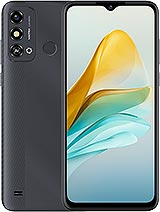
ZTE Blade A53 is a budget-tier smartphone featuring a 6.52-inch IPS LCD for reliable viewing and a Unisoc SC9863A1 chipset for fundamental app performance, aimed at users needing a secondary device or an entry-level communications tool. Released in April 2023, it competes with other Android 12 Go Edition handsets by prioritizing functional stability over raw power.
From a purely economic perspective, this handset occupies a specific niche where every cent spent must translate into a tangible utility. We see this as a device for those who view technology as a tool rather than a luxury. In an era where flagship prices are reaching astronomical heights, a device like this serves as a necessary anchor for the budget-conscious consumer.
Investing in a handset at this price point requires a shift in expectations. You are not buying a gaming machine or a professional camera. You are purchasing a gateway to the modern web and essential communication services. The choice of hardware reflects this utilitarian philosophy, opting for tried-and-tested components that minimize cost while maintaining a baseline of reliability.
The Backup Use Case
In our assessment, the primary value of this model lies in its role as a secondary or "fail-safe" device. The inclusion of Android 12 (Go edition) is a strategic move. This optimized version of the operating system is designed to run efficiently on limited hardware, specifically addressing the constraints of the 2GB RAM.
Standard Android would likely choke on these specifications, but the Go Edition uses smaller app footprints and more aggressive background task management. This ensures that essential apps like WhatsApp, Gmail, and Google Maps remain responsive enough for daily tasks. Imagine having your primary flagship break; having this device in a drawer means you are never truly offline.
Storage is restricted to 32GB, but the presence of a microSDXC slot (shared with the SIM) provides a necessary escape valve for media files. In the context of 2023, 32GB is the bare minimum for an operating system and a handful of essential apps. Users should expect to offload photos and videos to a cloud service or an external card frequently to keep the system partition from filling up and slowing down.
Battery Standby and Efficiency
The 4000 mAh battery might seem small compared to the 5000 mAh units appearing in [mid-range phones](/trend/best-mid-range-phones-2026/), but the internal hardware doesn't demand as much power. The Unisoc SC9863A1 processor is built on a 22nm process. While not as efficient as the 4nm or 5nm chips found in premiums, the Cortex-A55 cores are designed for low power consumption during idle and light tasks.
Standby performance is where this handset should excel for a backup role. Without a power-hungry 120Hz display or a high-performance modem, the energy drain during periods of inactivity is minimal. In our analysis of the specs, a user could likely leave this phone on a desk for several days and still have enough charge to make emergency calls if needed.
Charging is capped at 10W wired. This is a significant bottleneck for those used to modern fast charging. A full charge from 0% to 100% will likely take upwards of three hours. This isn't a phone you plug in for fifteen minutes before leaving the house; it requires planned, overnight charging cycles to be ready for the day.
Outdoor Visibility and Display Realities
The 6.52-inch IPS LCD offers a 720 x 1600 resolution. This translates to roughly 269 ppi, which is sufficient for reading text and watching standard-definition video. At this density, pixels are visible if you look closely, but for the intended audience, the priority is screen real estate over extreme sharpness. The 20:9 aspect ratio makes the device relatively narrow and easy to grip, despite its overall height.
Visibility in direct sunlight will be the primary challenge. IPS panels in this price bracket rarely exceed 400 nits of peak brightness. In high-noon conditions, the screen may appear washed out, making it difficult to frame photos or read long emails. Users will find themselves hunting for shade to interact with the UI comfortably.
Polarization is another factor to consider. Cheaper LCD panels often exhibit color shifting or darkening when viewed at extreme angles or through polarized sunglasses. This is a common trade-off in budget engineering. However, for indoor use or evening commutes, the large display size provides a comfortable canvas for social media scrolling and basic web browsing.
Haptics and Vibration Feedback
Expect a basic ERM (Eccentric Rotating Mass) vibration motor in this chassis. Unlike the precise, "tappy" haptics found in high-end devices, the vibration here will likely feel buzzy and somewhat loose. This is standard for the entry-level market where haptic feedback is viewed as a notification tool rather than an immersion feature.
While the motor might feel unrefined, it serves its purpose. You will feel incoming calls in a pocket, though the vibration may be audible on a hard table surface. For many users, disabling haptic feedback for typing is a common move to save a small amount of battery and avoid the somewhat noisy response of a budget motor.
Connectivity and GPS Performance
Connectivity is handled via LTE, and while it lacks 5G, the HSPA/LTE speeds are more than adequate for the Go Edition apps. The inclusion of NFC is region-dependent, so buyers must verify local availability if they plan to use the phone for contactless payments. Having NFC in a sub-$100 device is a rare and welcome bonus when included.
Navigation relies on a standard GPS array. The SC9863A1 chipset includes integrated positioning, which is vital for ride-sharing apps and basic mapping. However, without a compass/magnetometer (only accelerometer and proximity are listed), the phone may struggle to show the exact direction you are facing while standing still. You will need to start moving for the GPS to orient your path accurately.
One aging aspect is the microUSB port. In 2023, the industry has almost entirely moved to USB-C. Utilizing microUSB means carrying a specific cable that is becoming increasingly rare among friends and colleagues. The upside is that many older household electronics still use this standard, so spare cables might already be lying around your home.
Durability and Structural Integrity
With a thickness of 9.1 mm, the device has a substantial presence. The plastic construction is a logical choice for durability. Plastic doesn't shatter like glass or dent as permanently as thin aluminum. It absorbs shocks better during minor drops, making it a resilient choice for a "burner" phone or a child's first device.
There is no official IP rating for water or dust resistance. This means the handset should be kept away from pools, heavy rain, and dusty environments. The rear-mounted fingerprint sensor is a physical component that adds a layer of security often skipped in the absolute lowest price tiers. Its placement is ergonomic, sitting naturally where an index finger rests.
Resale Value and Economic Lifecycle
From a value-hunter's perspective, the resale value of a device like this is negligible. Tech at this level is a "buy and hold" asset. Because it starts at such a low price point, the depreciation happens almost instantly. It is better to view this as a three-year utility purchase rather than something to trade in for an upgrade later.
The hardware is built for the present, not the future. As apps become more resource-intensive, the 2GB of RAM will eventually become a bottleneck even for the Go Edition of Android. However, for its intended lifespan, the ZTE Blade A53 provides a low-cost entry point into the digital world that is hard to argue with from a pure dollar-per-feature analysis.
Ultimately, the ZTE Blade A53 succeeds because it doesn't pretend to be anything other than a basic, reliable communication tool for the budget-conscious user.
Technical Specifications
| LAUNCH | |
|---|---|
| Announced | 2023, April |
| Status | Available. Released 2023, April |
| PLATFORM | |
| OS | Android 12 (Go edition) |
| Chipset | Unisoc SC9863A1 (22 nm) |
| CPU | Octa-core (4x1.6 GHz Cortex-A55 & 4x1.2 GHz Cortex-A55) |
| GPU | IMG8322 |
| BODY | |
| Dimensions | 165.7 x 76.4 x 9.1 mm (6.52 x 3.01 x 0.36 in) |
| Weight | - |
| SIM | Nano-SIM + Nano-SIM |
| DISPLAY | |
| Type | IPS LCD |
| Size | 6.52 inches, 102.6 cm2 (~81.1% screen-to-body ratio) |
| Resolution | 720 x 1600 pixels, 20:9 ratio (~269 ppi density) |
| MEMORY | |
| Card slot | microSDXC (uses shared SIM slot) |
| Internal | 32GB 2GB RAM |
| MAIN CAMERA | |
| Single | 8 MP, AF |
| Features | LED flash |
| Video | 1080p@30fps |
| SELFIE CAMERA | |
| Single | 5 MP |
| Video | Yes |
| SOUND | |
| Loudspeaker | Yes |
| 3.5mm jack | Yes |
| COMMS | |
| WLAN | Wi-Fi 802.11 b/g/n |
| Bluetooth | 4.2, A2DP |
| Positioning | GPS |
| NFC | Yes (market/region dependent) |
| Radio | Unspecified |
| USB | microUSB |
| NETWORK | |
| Technology | GSM / HSPA / LTE |
| 2G bands | GSM 850 / 900 / 1800 / 1900 |
| 3G bands | HSDPA 850 / 900 / 1900 / 2100 |
| 4G bands | LTE |
| Speed | HSPA, LTE |
| FEATURES | |
| Sensors | Fingerprint (rear-mounted), accelerometer, proximity |
| BATTERY | |
| Type | 4000 mAh |
| Charging | 10W wired |
| MISC | |
| Colors | Gray, Blue, Green |