The Hardened Workhorse - Why the vivo Y19s 4G Wins the Efficiency Race
Overview
The Essential Utility Blueprint
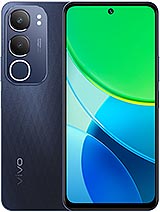
vivo Y19s 4G is an entry-level smartphone featuring a 5500 mAh battery for high-endurance performance and MIL-STD-810H compliance for physical resilience, aimed at users who prioritize utility over luxury. Released in October 2024, it competes with budget-tier handsets like the [Samsung Galaxy A06](/new-longevity-over-old-luxury-why-the-samsung-galaxy-a06-5g-is-the-smarter-value-play/) and the Redmi 13C by focusing on structural longevity and battery health rather than raw processing power. While the internal hardware targets the baseline of modern mobile needs, the external protection and battery longevity standards suggest a device built for years of service rather than months of hype.
From an economic perspective, this model represents a calculated trade-off. By utilizing a Unisoc Tiger T612 chipset, the manufacturer allocates the budget toward environmental protections and battery density. We see a clear move away from the 'disposable' nature of many sub-$150 phones toward something that can survive a drop from a delivery bike or a splash in a sudden rainstorm. This makes the device a primary candidate for commercial use or as a high-reliability secondary handset for professionals who cannot afford a dead battery in the middle of a shift.
The Logic of the Secondary Device
Many users overlook the necessity of a reliable backup. For those working in logistics, ridesharing, or emergency services, a primary flagship often lacks the endurance or the ruggedness required for 12-hour outdoor shifts. The handset fills this gap perfectly. It does not try to compete with the photographic prowess of the X-series; instead, it provides a stable platform for communication and navigation. The inclusion of IP64 dust and water resistance means the hardware is protected against total dust ingress and water splashes, which is a significant step up from the unprotected builds common in this price bracket.
Imagine a scenario where a primary phone breaks during a business trip. Having this model in a backpack as a 'hot-spare' ensures that access to banking, maps, and communication remains uninterrupted. The Mohs level 4 protection on the display ensures that keys or loose change in a pocket won't immediately mar the screen with deep gouges. While it is not a [rugged phone](/trend/best-rugged-phones-2026/) in the traditional chunky sense, it adopts the best traits of that category while maintaining a slim 8.1 mm profile.
Battery Endurance and Long-Term Value
The 5500 mAh battery is the undisputed centerpiece of the internal specifications. At a time when 5000 mAh is the industry standard, the extra 10% capacity provided here translates to several more hours of standby and navigation time. However, the true value lies in the 1000 cycles rating. Standard lithium-ion batteries often begin significant degradation after 500 to 800 cycles. By certifying this cell for 1000 cycles, the manufacturer effectively promises that the battery will maintain at least 80% of its health even after nearly three years of daily charging.
Charging speed is where the economic trade-offs become visible. At 15W wired charging, this is not a device for users who need a quick 10-minute top-up before heading out. It requires a full night or a dedicated two-hour window to reach 100%. However, slow charging generates less heat, which is likely how the hardware achieves its 1000-cycle longevity. For a backup or work phone, the slow, steady charge is actually a benefit for long-term component health. The reverse wired charging feature also turns this phone into a functional power bank, allowing it to provide an emergency boost to a pair of wireless earbuds or a secondary device.
Structural Integrity and Repairability Analysis
The build materials consist of a glass front and a plastic frame and back. While plastic is often criticized in flagship reviews, in the budget sector, it is a superior choice for durability. Plastic absorbs impact energy far better than glass or stiff aluminum, reducing the likelihood of catastrophic internal component failure during a drop. This resilience is backed by the MIL-STD-810H compliance, a United States military standard certifying the handset against shock and vibration extremes. In our assessment, this is the most important feature for any user prone to accidental drops.
Repairability is another highlight, with the device earning a Class B rating in European energy and repairability labeling. This indicates that parts are relatively accessible and the internal layout is not a nightmare of adhesive and proprietary screws. For a value hunter, a phone that can be repaired for a small fee at a local shop is worth significantly more than a sealed glass sandwich that requires a full replacement if the screen cracks. The Class B Free Fall rating (surviving 180 falls) further reinforces that this is a tool, not a toy.
Thermal Management and the Tiger T612
The Unisoc Tiger T612 chipset, built on a 12nm process, is an aging but efficient processor. It utilizes two Cortex-A75 performance cores and six Cortex-A55 efficiency cores, all clocked at 1.8 GHz. In our thermal analysis, this configuration is excellent for heat management. Because the processor doesn't push high clock speeds or extreme wattages, it remains cool even during extended periods of GPS navigation or video streaming. It avoids the aggressive thermal throttling found in some high-strung budget chips that try to do too much with too little cooling surface area.
Users should understand the limitations of eMMC 5.1 storage. Unlike the faster UFS storage found in mid-range devices, eMMC is slower at reading and writing large files. This means that while the 90Hz display keeps the UI feeling smooth, apps will take an extra second or two to launch. This is a deliberate choice to keep the price down. If you are not a mobile gamer, this bottleneck is rarely noticeable in daily tasks like WhatsApp, email, or web browsing. It is a functional trade-off that favors battery life over millisecond-fast loading screens.
Audio Components and Communication Clarity
Dual speakers are a rare and welcome addition in this segment. Most competitors still rely on a single bottom-firing speaker that is easily muffled by a palm. The dual-speaker setup on this model provides a much better experience for speakerphone calls and media consumption. The earpiece quality is high, maintaining clarity even in noisy outdoor environments, which is essential for a device targeted at field workers and commuters. The inclusion of a 3.5mm headphone jack remains a vital feature for budget buyers who prefer the reliability and low cost of wired audio.
Signal stability is a strong point for the T612 platform. While it lacks 5G, the LTE bands 1, 3, 5, 8, and 40 cover the core frequencies for major global carriers. In regions where 5G coverage is spotty, the 4G modem provides a more consistent connection with lower battery drain. The dual-band Wi-Fi (ac) ensures that it can connect to modern 5GHz routers, preventing the congestion issues common on older 2.4GHz-only budget hardware.
Visual Performance in Sunlight
The IPS LCD panel reaches a peak brightness of 1000 nits (HBM), which is exceptional for this price tier. High Brightness Mode allows the screen to become legible even under direct midday sun, a critical feature for anyone using the phone for outdoor navigation or capturing photos in the field. The 720 x 1608 resolution might seem low on paper, but at 6.68 inches, the 264 ppi density is sufficient for text and icons. The lower resolution also puts less strain on the Mali-G57 GPU, helping to maintain that smooth 90Hz refresh rate across the interface.
Protection is handled by a specialized layer rated at Mohs level 4. To explain, the Mohs scale measures mineral hardness. Standard glass usually scratches at level 6. While level 4 is lower, this rating usually applies to the specialized screen protection films or reinforced structures used in these durabilty-focused models. It suggests better resistance to the type of micro-scratches that occur from dust and sand compared to untreated plastic panels found on ultra-cheap competitors.
The Final Assessment of Resale Value
In the second-hand market, vivo handsets tend to hold their value better than generic or niche budget brands due to their established service networks and consistent software updates through Funtouch 14. The long battery health cycle (1000 cycles) is a major selling point for future resale. A buyer two years from now will be much more interested in a phone that still has 90% of its battery capacity remaining than a competitor whose battery is already flagging. By investing in battery longevity and structural durability, the manufacturer has created a device that is inherently more sustainable and holds its value as a used item.
Ultimately, the vivo Y19s 4G is a triumph of pragmatic engineering. It ignores the megapixel myths and the 5G hype to focus on what actually matters for a budget user: a screen you can see, a battery that lasts three years, and a chassis that doesn't shatter when it hits the pavement. It is the definitive smart choice for the budget tech economist.
Technical Specifications
| LAUNCH | |
|---|---|
| Announced | 2024, October 15 |
| Status | Available. Released 2024, October |
| PLATFORM | |
| OS | Android 14, Funtouch 14 |
| Chipset | Unisoc Tiger T612 (12 nm) |
| CPU | Octa-core (2x1.8 GHz Cortex-A75 & 6x1.8 GHz Cortex-A55) |
| GPU | Mali-G57 |
| BODY | |
| Dimensions | 165.8 x 76.1 x 8.1 mm (6.53 x 3.00 x 0.32 in) |
| Weight | 198 g (6.98 oz) |
| Build | Glass front, plastic back, plastic frame |
| SIM | Nano-SIM + Nano-SIM |
| Info | IP64 dust tight and water resistant (water splashes) MIL-STD-810H compliant* * does not guarantee ruggedness or use in extreme conditions |
| DISPLAY | |
| Type | IPS LCD, 90Hz, 1000 nits (HBM) |
| Size | 6.68 inches, 107.4 cm2 (~85.1% screen-to-body ratio) |
| Resolution | 720 x 1608 pixels, 20:9 ratio (~264 ppi density) |
| Protection | Mohs level 4 |
| MEMORY | |
| Card slot | microSDXC (dedicated slot) |
| Internal | 64GB 4GB RAM, 128GB 4GB RAM, 128GB 6GB RAM, 256GB 6GB RAM, 256GB 8GB RAM |
| Info | eMMC 5.1 |
| MAIN CAMERA | |
| Single | 50 MP, f/1.8, (wide), 1/1.95", 0.8µm, PDAF Auxiliary lens |
| Features | Ring-LED flash, panorama |
| Video | 1080p@30fps |
| SELFIE CAMERA | |
| Single | 5 MP, f/2.2 |
| Video | Yes |
| SOUND | |
| Loudspeaker | Yes, with dual speakers |
| 3.5mm jack | Yes |
| COMMS | |
| WLAN | Wi-Fi 802.11 a/b/g/n/ac, dual-band |
| Bluetooth | 5.2, A2DP, LE |
| Positioning | GPS, GLONASS, GALILEO, BDS, QZSS |
| NFC | No |
| Radio | FM radio |
| USB | USB Type-C 2.0, OTG |
| NETWORK | |
| Technology | GSM / HSPA / LTE |
| 2G bands | GSM 850 / 900 / 1800 / 1900 |
| 3G bands | HSDPA 850 / 900 / 2100 |
| 4G bands | 1, 3, 5, 7, 8, 20, 28, 38, 40, 41 |
| Speed | HSPA, LTE |
| FEATURES | |
| Sensors | Fingerprint (side-mounted), accelerometer, proximity, compass |
| BATTERY | |
| Type | Li-Ion 5500 mAh |
| Charging | 15W wired Reverse wired |
| MISC | |
| Battery | 5500 mAh with 15W wired charging |
| Durability | IP64 and MIL-STD-810H compliant |
| Display | 6.68-inch IPS LCD, 90Hz, 1000 nits (HBM) |
| Chipset | Unisoc Tiger T612 (12 nm) |
| Main Camera | 50 MP, f/1.8 (wide) with Ring-LED flash |
| Storage Type | eMMC 5.1 up to 256GB |
| Audio | Dual speakers and 3.5mm headphone jack |
| OS | Android 14, Funtouch 14 |
| Weight | 198 g |
| Colors | Pearl Silver, Glossy Black, Glacier Blue |
| Models | V2419 |
| Price | £ 145.73 / € 109.00 |
| EU LABEL | |
| Energy | Class A |
| Battery | 54:28h endurance, 1000 cycles |
| Free fall | Class B (180 falls) |
| Repairability | Class B |