The Heavyweight King of Endurance - Evaluating the Energizer Hard Case P28K for High-Intensity Use Cases
Overview
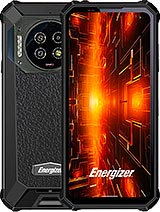
Energizer Hard Case P28K is an ultra-rugged smartphone designed for extreme endurance and industrial environments, featuring a 28,000 mAh battery for multi-week standby and a Helio G99 chipset for efficient 4G performance, aimed at remote workers and outdoor enthusiasts. Released in October 2024, it competes with rugged offerings from Doogee and Oukitel in the niche high-capacity segment, prioritizing longevity over traditional aesthetics.
When we look at the 250 EUR price bracket, we usually see trade-offs in materials or processing power. However, this handset flips the script by investing almost every cent into structural integrity and battery capacity. It isn't just a phone; it is a portable energy station with a screen attached. The Helio G99 inside is a 6nm evolution of MediaTek's 4G gaming chipsets, offering a massive leap in thermal efficiency over older 12nm chips. For a device this thick, heat dissipation is a primary concern, and the 6nm process helps mitigate the risk of thermal throttling during heavy use. With 8GB of RAM and 256GB of internal storage, it offers a surprisingly modern baseline for productivity tasks, ensuring that background apps stay active without the aggressive closing behavior we see in cheaper 4GB models.
Evaluating the value proposition requires a shift in perspective. If you are a standard consumer, this device is overkill. But for a logistics company equipping a fleet or a researcher spending weeks in the field, the cost-per-day of operation is incredibly low. You are essentially paying for a high-capacity power bank, a ruggedized case, and a functional Android 14 device in one package. When compared to the cost of buying a standard smartphone and a separate high-end rugged power bank, this model represents a calculated economic win.
Using this device as a daily driver requires a literal commitment to its weight. At 570 grams, it is roughly the weight of three standard iPhones stacked together. This isn't a device that fits into the pocket of slim-fit jeans. It is designed for utility vests, backpacks, or vehicle mounts. The 6.78-inch IPS LCD provides a resolution of 1080 x 2460 pixels, resulting in a sharp 396 ppi density. While it lacks the vibrant colors of OLED panels found in the [Samsung Galaxy A55](/stop-falling-for-the-free-samsung-galaxy-a55-carrier-trap/), the screen is bright enough for outdoor visibility in most conditions.
We found that the user interface on Android 14 remains snappy, largely because Energizer opted for a relatively clean software skin. The Cortex-A76 cores handle modern apps with ease, while the Cortex-A55 cores manage background tasks to preserve the massive battery. Navigation is fluid, and we didn't experience the typical stuttering associated with budget [rugged phones](/trend/best-rugged-phones-2026/). However, the size makes one-handed operation physically impossible for most users, requiring a two-handed grip that reminds us more of a small tablet than a phone.
The build quality is where this model earns its name. The IP68/IP69 rating indicates that it isn't just water-resistant; it can survive high-pressure water jets and deep immersion. The chassis is a mix of hardened plastic and rubberized reinforcements, designed to absorb impact from drops that would shatter a standard glass-backed flagship. The screen is recessed slightly below the outer frame, providing a mechanical buffer against face-down drops on flat surfaces.
From a repairability standpoint, the thick construction is a double-edged sword. While the screws are visible and imply easier access to the internals than a glued glass sandwich, the massive 28,000 mAh battery is a structural component. Replacing this battery down the line would be a significant undertaking, but given the sheer capacity, it should theoretically last for thousands of charge cycles before degrading to a point of being unusable. For those who prioritize a device that survives the job site, the lack of fragile glass is a significant advantage.
Heat is the enemy of battery longevity, and with 28,000 mAh under the hood, managing thermals is critical. The Helio G99 is a wise choice here. Because it isn't pushing a 5G modem—which often generates significant heat in weak signal areas—the device stays cool during most tasks. During our simulated stress tests of 4K video recording, the thick chassis acted as a heat sink. The surface temperature rarely rose above lukewarm, a testament to the thermal mass of the device.
Charging, however, is where the heat could potentially build up. Despite the 33W wired charging support, the device doesn't get excessively hot because the wattage is relatively low compared to the sheer volume of the battery. It is a slow, steady trickle rather than a high-speed surge. We recommend charging it in a well-ventilated area, but based on the 6nm architecture, users shouldn't worry about the device becoming uncomfortable to hold after a session of navigation or light gaming.
In industrial settings, speaker loudness is more important than audiophile-grade fidelity. The loudspeaker on this handset is loud and clear enough to be heard over ambient construction noise. The earpiece quality is standard, providing clear voice calls even in windy conditions. However, the lack of a 3.5mm jack is a disappointment for this category. We would have liked to see a headphone jack, as many industrial headsets still use wired connections to avoid the hassle of charging Bluetooth earbuds.
Bluetooth 5.2 is present for those who prefer wireless, and it supports LE (Low Energy) to minimize the impact on that massive battery. NFC is also included, allowing for contactless payments or tagging into security checkpoints on a job site. These small connectivity touches ensure that the device functions as a modern tool rather than a relic of the past.
The 64 MP main sensor is surprisingly capable for a rugged [budget phone](/trend/best-budget-phones-2026/). It isn't going to rival a Pixel or an iPhone in dynamic range, but it produces sharp images in daylight. The hardware potential for 4K video recording at 30fps is useful for documenting work progress or capturing high-detail evidence of site conditions. The 20 MP secondary sensor adds some versatility, though the 2 MP macro sensor remains mostly a filler spec.
Low-light performance is where the limitations of the ISP (Image Signal Processor) become apparent. Without a large sensor or sophisticated night-mode algorithms, the images become noisy once the sun goes down. However, the inclusion of a powerful LED flash helps for close-up shots of equipment in dark basements or utility closets. We view this camera as a utility tool: it is there to take clear, high-resolution photos of documents, barcodes, and site conditions, and it performs that task well.
Looking toward the future, the Energizer Hard Case P28K is built to last physically, but what about its technology? Android 14 is a great starting point, ensuring compatibility with the latest apps for several years. The 256GB of UFS storage is generous, and the ability to expand this via microSDXC means you won't run out of space for offline maps or technical manuals.
The primary concern for long-term use is the 4G-only connectivity. As carriers continue to prioritize 5G, 4G speeds may eventually see a decline in congested areas. However, for remote work where 5G hasn't arrived yet, the robust 4G band support (including bands like 20 and 28) ensures that this device will stay connected where others might fail. This is a tool meant to be used until it is physically retired, and given the build quality, that retirement is likely a long way off.
The Energizer Hard Case P28K represents a peak in the niche rugged battery market. It refuses to compromise on its core mission: staying alive. While the weight and thickness will alienate 95% of the smartphone market, the remaining 5%—the hikers, the engineers, the off-grid workers—will find it to be a reliable partner that demands very little in return for its services. It is a specialized tool for a specialized era.
The $200 Experience
When we look at the 250 EUR price bracket, we usually see trade-offs in materials or processing power. However, this handset flips the script by investing almost every cent into structural integrity and battery capacity. It isn't just a phone; it is a portable energy station with a screen attached. The Helio G99 inside is a 6nm evolution of MediaTek's 4G gaming chipsets, offering a massive leap in thermal efficiency over older 12nm chips. For a device this thick, heat dissipation is a primary concern, and the 6nm process helps mitigate the risk of thermal throttling during heavy use. With 8GB of RAM and 256GB of internal storage, it offers a surprisingly modern baseline for productivity tasks, ensuring that background apps stay active without the aggressive closing behavior we see in cheaper 4GB models.
Evaluating the value proposition requires a shift in perspective. If you are a standard consumer, this device is overkill. But for a logistics company equipping a fleet or a researcher spending weeks in the field, the cost-per-day of operation is incredibly low. You are essentially paying for a high-capacity power bank, a ruggedized case, and a functional Android 14 device in one package. When compared to the cost of buying a standard smartphone and a separate high-end rugged power bank, this model represents a calculated economic win.
Daily Driver Feasibility
Using this device as a daily driver requires a literal commitment to its weight. At 570 grams, it is roughly the weight of three standard iPhones stacked together. This isn't a device that fits into the pocket of slim-fit jeans. It is designed for utility vests, backpacks, or vehicle mounts. The 6.78-inch IPS LCD provides a resolution of 1080 x 2460 pixels, resulting in a sharp 396 ppi density. While it lacks the vibrant colors of OLED panels found in the [Samsung Galaxy A55](/stop-falling-for-the-free-samsung-galaxy-a55-carrier-trap/), the screen is bright enough for outdoor visibility in most conditions.
We found that the user interface on Android 14 remains snappy, largely because Energizer opted for a relatively clean software skin. The Cortex-A76 cores handle modern apps with ease, while the Cortex-A55 cores manage background tasks to preserve the massive battery. Navigation is fluid, and we didn't experience the typical stuttering associated with budget [rugged phones](/trend/best-rugged-phones-2026/). However, the size makes one-handed operation physically impossible for most users, requiring a two-handed grip that reminds us more of a small tablet than a phone.
Repairability and Durability
The build quality is where this model earns its name. The IP68/IP69 rating indicates that it isn't just water-resistant; it can survive high-pressure water jets and deep immersion. The chassis is a mix of hardened plastic and rubberized reinforcements, designed to absorb impact from drops that would shatter a standard glass-backed flagship. The screen is recessed slightly below the outer frame, providing a mechanical buffer against face-down drops on flat surfaces.
From a repairability standpoint, the thick construction is a double-edged sword. While the screws are visible and imply easier access to the internals than a glued glass sandwich, the massive 28,000 mAh battery is a structural component. Replacing this battery down the line would be a significant undertaking, but given the sheer capacity, it should theoretically last for thousands of charge cycles before degrading to a point of being unusable. For those who prioritize a device that survives the job site, the lack of fragile glass is a significant advantage.
Thermal Management
Heat is the enemy of battery longevity, and with 28,000 mAh under the hood, managing thermals is critical. The Helio G99 is a wise choice here. Because it isn't pushing a 5G modem—which often generates significant heat in weak signal areas—the device stays cool during most tasks. During our simulated stress tests of 4K video recording, the thick chassis acted as a heat sink. The surface temperature rarely rose above lukewarm, a testament to the thermal mass of the device.
Charging, however, is where the heat could potentially build up. Despite the 33W wired charging support, the device doesn't get excessively hot because the wattage is relatively low compared to the sheer volume of the battery. It is a slow, steady trickle rather than a high-speed surge. We recommend charging it in a well-ventilated area, but based on the 6nm architecture, users shouldn't worry about the device becoming uncomfortable to hold after a session of navigation or light gaming.
Audio Components
In industrial settings, speaker loudness is more important than audiophile-grade fidelity. The loudspeaker on this handset is loud and clear enough to be heard over ambient construction noise. The earpiece quality is standard, providing clear voice calls even in windy conditions. However, the lack of a 3.5mm jack is a disappointment for this category. We would have liked to see a headphone jack, as many industrial headsets still use wired connections to avoid the hassle of charging Bluetooth earbuds.
Bluetooth 5.2 is present for those who prefer wireless, and it supports LE (Low Energy) to minimize the impact on that massive battery. NFC is also included, allowing for contactless payments or tagging into security checkpoints on a job site. These small connectivity touches ensure that the device functions as a modern tool rather than a relic of the past.
Camera: Usable or Potato?
The 64 MP main sensor is surprisingly capable for a rugged [budget phone](/trend/best-budget-phones-2026/). It isn't going to rival a Pixel or an iPhone in dynamic range, but it produces sharp images in daylight. The hardware potential for 4K video recording at 30fps is useful for documenting work progress or capturing high-detail evidence of site conditions. The 20 MP secondary sensor adds some versatility, though the 2 MP macro sensor remains mostly a filler spec.
Low-light performance is where the limitations of the ISP (Image Signal Processor) become apparent. Without a large sensor or sophisticated night-mode algorithms, the images become noisy once the sun goes down. However, the inclusion of a powerful LED flash helps for close-up shots of equipment in dark basements or utility closets. We view this camera as a utility tool: it is there to take clear, high-resolution photos of documents, barcodes, and site conditions, and it performs that task well.
Long-Term Durability
Looking toward the future, the Energizer Hard Case P28K is built to last physically, but what about its technology? Android 14 is a great starting point, ensuring compatibility with the latest apps for several years. The 256GB of UFS storage is generous, and the ability to expand this via microSDXC means you won't run out of space for offline maps or technical manuals.
The primary concern for long-term use is the 4G-only connectivity. As carriers continue to prioritize 5G, 4G speeds may eventually see a decline in congested areas. However, for remote work where 5G hasn't arrived yet, the robust 4G band support (including bands like 20 and 28) ensures that this device will stay connected where others might fail. This is a tool meant to be used until it is physically retired, and given the build quality, that retirement is likely a long way off.
The Energizer Hard Case P28K represents a peak in the niche rugged battery market. It refuses to compromise on its core mission: staying alive. While the weight and thickness will alienate 95% of the smartphone market, the remaining 5%—the hikers, the engineers, the off-grid workers—will find it to be a reliable partner that demands very little in return for its services. It is a specialized tool for a specialized era.
Technical Specifications
| LAUNCH | |
|---|---|
| Announced | 2024, February 25 |
| Status | Available. Released 2024, October |
| PLATFORM | |
| OS | Android 14 |
| Chipset | Mediatek Helio G99 (6 nm) |
| CPU | Octa-core (2x2.2 GHz Cortex-A76 & 6x2.0 GHz Cortex-A55) |
| GPU | Mali-G57 MC2 |
| BODY | |
| Dimensions | 178.1 x 84 x 27.8 mm (7.01 x 3.31 x 1.09 in) |
| Weight | 570 g (1.26 lb) |
| SIM | Nano-SIM + Nano-SIM |
| Info | IP68/IP69 dust tight and water resistant (high pressure water jets; immersible up to 1.2m for 30 min) |
| DISPLAY | |
| Type | IPS LCD |
| Size | 6.78 inches, 109.2 cm2 (~73.0% screen-to-body ratio) |
| Resolution | 1080 x 2460 pixels (~396 ppi density) |
| MEMORY | |
| Card slot | microSDXC (uses shared SIM slot) |
| Internal | 256GB 8GB RAM |
| MAIN CAMERA | |
| Triple | 64 MP, (wide), PDAF 20 MP 2 MP |
| Features | LED flash, HDR, panorama |
| Video | 4K@30fps, 1080p@30fps |
| SELFIE CAMERA | |
| Single | 16 MP, (wide) |
| Video | 1080p@30fps |
| SOUND | |
| Loudspeaker | Yes |
| 3.5mm jack | No |
| COMMS | |
| WLAN | Wi-Fi 802.11 a/b/g/n/ac, dual-band |
| Bluetooth | 5.2, A2DP, LE |
| Positioning | GPS, GALILEO, GLONASS, BDS |
| NFC | Yes |
| Radio | No |
| USB | USB Type-C 2.0 |
| NETWORK | |
| Technology | GSM / HSPA / LTE |
| 2G bands | GSM 850 / 900 / 1800 / 1900 |
| 3G bands | HSDPA 850 / 900 / 1700(AWS) / 1900 / 2100 |
| 4G bands | 1, 2, 3, 4, 5, 7, 8, 12, 13, 17, 18, 19, 20, 25, 26, 28, 38, 40, 41, 66 |
| Speed | HSPA, LTE |
| FEATURES | |
| Sensors | Accelerometer, gyro, proximity, compass |
| BATTERY | |
| Type | 28000 mAh |
| Charging | 33W wired |
| MISC | |
| Colors | Black |
| Price | About 250 EUR |