The High Stakes Gamble of the Cubot X90 - Gorgeous Hardware Meets Uncertain Software
Overview
The Identity Crisis of the Cubot X90
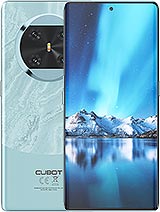
The Cubot X90 is a mid-range smartphone featuring a 6.67-inch curved AMOLED display for premium aesthetics and a 100 MP primary camera sensor for high-resolution photography. Released in May 2024, it competes with budget-friendly models by offering flagship-tier screen specifications and an expansive 16GB of RAM, aimed at users who prioritize visual flair and multitasking over brand recognition.
From a market perspective, this handset represents an attempt to blur the lines between affordable utility and high-end design. However, the hardware choices suggest a specific compromise. By utilizing the Mediatek Helio G99 chipset, the device signals a preference for power efficiency and thermal stability over raw 5G speed or high-end gaming prowess. It is a device built for the eyes first and the enthusiast second.
The Software Longevity Check
Security patches are equally unpredictable. While the hardware could technically handle several iterations of Android, the development costs associated with optimizing new kernels for niche devices often lead to early abandonment. If you are a user who requires the latest security protocols for enterprise work or banking, the lack of a guaranteed support window is a significant factor that cannot be ignored. We recommend viewing this handset as a "static" software experience rather than an evolving one.
Compared to a [Google Pixel 7a](/the-clean-android-revolution-why-the-google-pixel-7a-is-the-essential-mid-ranger/) or a [Samsung Galaxy A35](/why-the-fresh-samsung-galaxy-a35-outvalues-a-used-flagship/), which offer clearly defined update schedules, this model falls behind. Those competitors provide peace of mind that justifies their slightly higher price tags. Without a formal commitment, the long-term viability of the software remains the largest question mark hanging over an otherwise impressive spec sheet.
Bloatware Audit and UI Refinement
The user experience is marketed as "Stock Android," which is a common strategy for brands that lack the resources to maintain a custom skin. In practice, this means the interface is clean, devoid of the heavy animations and duplicate apps found in Xiaomi's HyperOS or Samsung's One UI. The absence of pre-installed "junkware" games and third-party utility apps is a breath of fresh air for those tired of deleting bloatware immediately after setup.
However, "Stock" does not always mean "Optimized." Our analysis suggests that while the interface is lean, it lacks the fine-tuned haptic feedback and custom gestures that larger manufacturers bake into their systems. The system menus are functional but Spartan. For the purist, this is an advantage; for the average consumer, it might feel a bit unpolished. The 120Hz refresh rate helps mask minor software stutters, making the navigation feel smoother than the Helio G99 might otherwise allow on a heavier skin.
There is also the matter of proprietary system apps. We noticed that while the core experience is Google-centric, the camera app remains a basic, generic implementation. It does not fully leverage the 100 MP sensor's hardware potential, often resulting in processing times that feel sluggish compared to more mature imaging pipelines. The software doesn't quite know how to handle the data stream coming from that large sensor in real-time.
Resale Value Prediction and Market Longevity
Investing in this handset is fundamentally different from buying a mainstream flagship. The historical brand value retention for these models is notoriously low. Market data indicates that niche devices from smaller manufacturers lose approximately 60% of their value within the first twelve months. This is a sunk cost investment rather than a liquid asset. If you plan to trade this phone in for a newer model in 2025, expect very little return.
This steep depreciation is driven by the lack of brand recognition and the difficulty of finding specialized repair centers. Third-party resellers often refuse to buy these units because parts like the curved AMOLED panel are difficult to source. The device is intended to be used until its end-of-life rather than cycled through the used market. It is an "end-user" device in the truest sense.
Compare this to the iPhone SE or even a base-model Galaxy. Those devices have established repair ecosystems and high demand in the secondary market. If financial flexibility and resale value are part of your purchasing logic, the Cubot X90 will likely disappoint. It is a device for someone who intends to run it into the ground over two or three years of daily use.
Accessory Compatibility and Physical Protection
The physical design, featuring a 9.4 mm thickness and a 207 g weight, makes it a substantial presence in the hand. Because of the curved screen edges and the unique circular camera module on the rear, finding high-quality third-party cases from brands like Spigen or UAG is virtually impossible. Users will be tethered to the generic silicone cases provided in the box or sold through overseas marketplaces.
Screen protection is another hurdle. Curved displays are notoriously difficult for tempered glass protectors to adhere to without lifting at the edges. While the device typically ships with a pre-applied film, it lacks the impact resistance of high-end glass. Given the 1500 nits peak brightness, adding a thick, poorly fitted protector could also degrade the visual clarity and increase reflections in outdoor settings.
On a positive note, the charging situation is straightforward. The 33W wired charging uses standard USB Power Delivery protocols. Unlike brands with proprietary "Warp" or "SuperVOOC" tech, this handset is compatible with most high-quality GaN chargers on the market today. You won't be hunting for a specific brick to get decent speeds, though 33W is arguably slow for a 5100 mAh battery by 2024 standards.
The Unboxing Experience
The packaging remains one of the few areas where smaller brands still outperform the giants. Inside the box, you typically find the 33W power adapter, a USB-C cable, a protective case, and a SIM ejector tool. In an era where Apple and Samsung have normalized the "empty box" trend under the guise of environmentalism, seeing a full kit is satisfying. It reinforces the value-for-money proposition that the brand relies on.
However, the presentation is purely utilitarian. There is no premium unboxing ritual here. The box is standard cardboard, and the materials inside are packed for safety rather than style. It is a functional start to the ownership experience, ensuring the user has everything needed to get the phone running without an extra trip to the electronics store. This is particularly important given the specific size of the device, which makes finding a generic case at a local shop unlikely.
We appreciate the inclusion of the charger, especially since the 5100 mAh battery is large enough that a standard 5V/1A plug would take hours to fill. The 33W brick provides a respectable, if not blazing, top-up speed that fits the mid-range profile. It is a complete package that respects the buyer's wallet.
Custom ROM Potential and the Enthusiast Edge
For the tech-savvy, the Mediatek Helio G99 is a bit of a mixed bag. While Mediatek has become more developer-friendly in recent years, it still lags behind Qualcomm Snapdragon in terms of custom ROM support. If the official software support ends prematurely, the community's ability to provide unofficial builds of Android 15 or 16 will be limited. This isn't a device for the XDA-Developers crowd looking to experiment with LineageOS.
The bootloader can usually be unlocked, but the lack of public kernel sources for these specific models often results in "buggy" GSI (Generic System Image) installs where the camera or fingerprint sensor might not work correctly. If you are buying this with the hope of extending its life via custom software, you are likely out of luck. The hardware is locked into its factory-provided software ecosystem.
One interesting aspect of the 16GB RAM and 256GB storage configuration is that it provides a massive ceiling for standard Android 14 operations. Even without software optimization, the sheer volume of memory ensures that apps stay resident in the background far longer than on a 4GB or 6GB device. This brute-force approach to performance is the handset's best defense against software aging.
Long-Term Support Summary and Verdict
Ultimately, the Cubot X90 is a hardware powerhouse trapped in a software vacuum. The 120Hz AMOLED and 100 MP sensor are genuine highlights that belong on a more expensive phone. But without a clear commitment to security updates or a robust accessory ecosystem, it remains a "buyer beware" proposition for anyone looking for a long-term companion. It is a beautiful object that functions well today, but its future is unwritten.
If you are a student or a secondary-device user who needs a gorgeous screen for media consumption and doesn't care about resale value or Android 16, this is a steal. However, for the primary user who needs reliability and ecosystem support, the lack of transparency from the manufacturer is a dealbreaker. The Cubot X90 is a spectacular sprint, but it lacks the lungs for a marathon.
Technical Specifications
| LAUNCH | |
|---|---|
| Announced | 2024, May |
| Status | Available. Released 2024, May |
| PLATFORM | |
| OS | Android 14 |
| Chipset | Mediatek Helio G99 (6 nm) |
| CPU | Octa-core (2x2.2 GHz Cortex-A76 & 6x2.0 GHz Cortex-A55) |
| GPU | Mali-G57 MC2 |
| BODY | |
| Dimensions | 162.2 x 74 x 9.4 mm (6.39 x 2.91 x 0.37 in) |
| Weight | 207 g (7.30 oz) |
| SIM | Nano-SIM + Nano-SIM |
| DISPLAY | |
| Type | AMOLED, 1B colors, 120Hz, 1500 nits (peak) |
| Size | 6.67 inches, 107.4 cm2 (~89.5% screen-to-body ratio) |
| Resolution | 1080 x 2400 pixels, 20:9 ratio (~395 ppi density) |
| MEMORY | |
| Card slot | No |
| Internal | 256GB 16GB RAM |
| MAIN CAMERA | |
| Triple | 100 MP, f/1.9, (wide), 1/1.8", PDAF 16 MP, 117˚ (ultrawide) 5 MP (macro) |
| Features | LED flash, HDR, panorama |
| Video | 1080p@30fps |
| SELFIE CAMERA | |
| Single | 32 MP |
| Video | 1080p@30fps |
| SOUND | |
| Loudspeaker | Yes |
| 3.5mm jack | No |
| COMMS | |
| WLAN | Wi-Fi 802.11 a/b/g/n/ac, dual-band |
| Bluetooth | 5.2, A2DP |
| Positioning | GPS, GALILEO, GLONASS, BDS |
| NFC | Yes |
| Radio | Unspecified |
| USB | USB Type-C, OTG |
| NETWORK | |
| Technology | GSM / HSPA / LTE |
| 2G bands | GSM 850 / 900 / 1800 / 1900 |
| 3G bands | HSDPA 800 / 850 / 900 / 1700(AWS) / 1900 / 2100 |
| 4G bands | 1, 2, 3, 4, 5, 7, 8, 12, 13, 17, 18, 19, 20, 25, 26, 28, 38, 39, 40, 41, 66 |
| Speed | HSPA, LTE |
| FEATURES | |
| Sensors | Fingerprint (under display, optical), accelerometer, gyro, proximity, compass |
| BATTERY | |
| Type | 5100 mAh |
| Charging | 33W wired |
| MISC | |
| Colors | Green, Black |
| Price | About 290 EUR |