The High Stakes Waiting Game - Why the Huawei Enjoy 80 Demands a Price Cut
Overview
The Pricing Paradox of Entry-Level Tech
Huawei Enjoy 80 is a rugged entry-tier smartphone designed for extreme endurance and physical durability, featuring a 6620 mAh Si/C Li-Ion battery and an IP64-rated chassis to serve users in demanding environments. Released in April 2025, it enters a crowded budget market where display resolution often clashes with battery innovation, forcing consumers to choose between visual clarity and multi-day longevity.
At a launch price of approximately 140 EUR, the device occupies a precarious position in the market. While the internal technology represents a significant leap forward in battery chemistry, the external hardware feels like a relic from 2022. We must analyze whether the revolutionary silicon-carbon anode justifies the compromises made in screen resolution and connectivity. In the current economic climate of 2025, every Euro spent on a smartphone must yield tangible benefits in daily usability.
Resilience Beyond the Spec Sheet
Building a phone that survives a 1.8-meter drop without a bulky rugged case is no small feat for a device that weighs only 203 grams. Huawei Enjoy 80 utilizes Aluminosilicate glass and a reinforced internal frame to achieve this rating. This level of durability typically remains reserved for specialized industrial handsets or premium flagships with heavy-duty cases. The inclusion of IP64 protection ensures that water splashes and dust ingress do not compromise the internal circuitry.
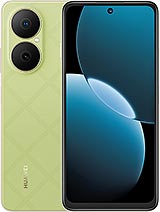
Users working in construction, outdoor logistics, or those who are simply prone to accidental drops will find this resilience invaluable. Unlike the glass-sandwich designs of the Samsung Galaxy A-series that often shatter on first impact with concrete, the Huawei Enjoy 80 implies a certain level of confidence during rough handling. However, the use of plastic for the back panel—available in Black, White, Blue, and Green—serves as a reminder of its budget origins despite the structural rigidity.
The Compromise of 720p in a High-Definition World
The 6.67-inch IPS LCD panel presents the most significant hurdle for potential buyers. With a resolution of 720 x 1604 pixels, the pixel density sits at a meager 264 ppi. In an era where 1080p has become the baseline for even the cheapest Redmi and Realme competitors, this choice is difficult to defend from a journalistic perspective. Text appears slightly soft, and high-resolution video content loses the sharpness that modern mobile users expect.
Outdoor visibility remains a bright spot, literally. The screen hits a 1000 nits peak brightness, which is impressive for an LCD. This allows the display to stay legible even under the harsh April sun. However, the inherent limitations of IPS technology mean that blacks are never truly black, and the contrast ratio cannot compete with the OLED panels found in the slightly more expensive Huawei Nova series. The 90Hz refresh rate provides some smoothness to the HarmonyOS 4.0 animations, but it cannot mask the lack of detail.
Energy Density: The Silicon-Carbon Advantage
The real star of the Huawei Enjoy 80 is the Si/C Li-Ion 6620 mAh battery. For the uninitiated, Silicon-Carbon technology allows manufacturers to pack more energy into a smaller footprint than traditional graphite anodes. This is why the device remains under 8.5mm in thickness despite having a battery capacity that would usually result in a brick-like form factor. This isn't just a marginal improvement; it is a fundamental shift in how [budget phones](/trend/best-budget-phones-2026/) handle power.
In practical terms, this battery should easily provide three days of moderate use. Imagine a weekend camping trip where you never once look for a power outlet. The 40W wired charging is a necessary inclusion to fill such a massive cell, though it still takes over an hour to reach 100%. The 5W reverse wired charging is a thoughtful addition, essentially turning the phone into a small power bank for accessories like wireless earbuds or a secondary device in an emergency.
Software Efficiency: HarmonyOS 4.0 as the Stabilizer
Running HarmonyOS 4.0, the Huawei Enjoy 80 benefits from an operating system that has been meticulously optimized for Huawei's specific hardware stack. The lack of Google Mobile Services remains a factor for Western markets, but for those within the Huawei ecosystem, the inter-device connectivity is seamless. Features like the Super Device controller allow users to drag and drop files between their phone and a Huawei MateBook or tablet with zero friction.
Efficiency is the primary goal here. The OS manages background processes aggressively to ensure that the 8GB of RAM is never fully saturated by rogue apps. Even with multiple tabs open in the browser and several social media feeds active, the system maintains a consistent frame rate. However, the lack of 5G connectivity is a glaring omission for a device released in 2025. Relying on LTE in a world that has largely transitioned to 5G infrastructure limits the device's future-proofing.
Connectivity Bottlenecks in the Mid-Decade
Aside from the lack of 5G, the Huawei Enjoy 80 makes several other odd connectivity choices. The inclusion of an Infrared port is a nostalgic and practical touch, allowing the phone to act as a universal remote for air conditioners and TVs. Yet, the absence of NFC is a dealbreaker for users who have grown accustomed to contactless payments. In 2025, mobile wallets are the standard, and being forced back to physical cards or QR codes feels like a regression.
Bluetooth 5.1 is also a step behind the Bluetooth 5.3 or 5.4 standards we see in rivals like the Xiaomi Poco series. While it handles audio streaming perfectly fine, it lacks the improved energy efficiency and range of the newer versions. The GPS performance remains solid, supporting multiple satellite constellations including GLONASS and GALILEO, ensuring that navigation is accurate even in dense urban environments where signals can bounce off skyscrapers.
Imaging Limits and Sensor Realities
The camera system on the Huawei Enjoy 80 is utilitarian. The 50 MP f/1.8 main sensor handles daylight photography with respectable competence. The PDAF (Phase Detection Auto Focus) is quick enough to capture stationary subjects, and the HDR processing helps balance bright skies against darker foregrounds. However, do not expect flagship-level dynamic range or low-light performance. Without OIS (Optical Image Stabilization), night shots will require a very steady hand to avoid blur.
Video recording is capped at 1080p@30fps, which is standard for this price bracket but disappointing for anyone looking to create high-quality social media content. The 8 MP selfie camera is similarly basic, providing enough detail for video calls but lacking the wide-angle capabilities found on more expensive models. This is a camera meant for documentation—scanning documents, snapping a quick photo of a grocery list, or capturing a memory in good lighting—rather than artistic photography.
The Depreciation Curve: Timing the Acquisition
The most important factor in the Huawei Enjoy 80 story is the price trajectory. Huawei devices in the Enjoy line typically see a 20-25% price correction within the first three to four months of release. At 140 EUR, you are paying a premium for being an early adopter of the Si/C battery tech. By July or August 2025, this device will likely sit closer to the 110 EUR mark, making the 720p screen much easier to swallow.
When compared to the 2025 iteration of the [Samsung Galaxy A16](/the-six-year-longevity-monster-why-samsung-galaxy-a16-reinvents-the-value-equation/), which offers a 1080p OLED screen but a smaller 5000mAh battery, the Huawei Enjoy 80 is clearly the choice for the endurance-focused user. However, if you do not strictly need the 1.8m drop resistance or the massive battery, there are better-balanced devices currently on the market. The savvy move is to wait for the first round of seasonal discounts before pulling the trigger.
Conclusion: Wait or Buy?
The Huawei Enjoy 80 is a specialist masquerading as a generalist. It excels in durability and battery life—two areas that genuinely matter to a specific segment of the workforce. However, for the average consumer, the low-resolution screen and lack of NFC are significant trade-offs at the current launch price. If your daily life involves harsh environments and long stretches away from a charger, it is a solid tool. For everyone else, the advice is to wait for the inevitable price drop that will bring its cost in line with its display quality.
Technical Specifications
| LAUNCH | |
|---|---|
| Announced | 2025, April 22 |
| Status | Available. Released 2025, April 26 |
| PLATFORM | |
| OS | HarmonyOS 4.0 |
| BODY | |
| Dimensions | 166 x 76.6 x 8.3 mm (6.54 x 3.02 x 0.33 in) |
| Weight | 203 g or 206 g (7.16 oz) |
| SIM | Nano-SIM + Nano-SIM |
| Info | IP64 dust tight and water resistant (water splashes) Drop resistant up to 1.8m |
| DISPLAY | |
| Type | IPS LCD, 90Hz, 1000 nits (peak) |
| Size | 6.67 inches, 107.2 cm2 (~84.3% screen-to-body ratio) |
| Resolution | 720 x 1604 pixels, 20:9 ratio (~264 ppi density) |
| Protection | Aluminosilicate glass |
| MEMORY | |
| Card slot | No |
| Internal | 128GB 8GB RAM, 256GB 8GB RAM, 512GB 8GB RAM |
| MAIN CAMERA | |
| Single | 50 MP, f/1.8, (wide), PDAF |
| Features | LED flash, HDR, panorama |
| Video | 1080p@30fps |
| SELFIE CAMERA | |
| Single | 8 MP, f/2.0, (wide) |
| Video | 1080p@30fps |
| SOUND | |
| Loudspeaker | Yes |
| 3.5mm jack | No |
| COMMS | |
| WLAN | Wi-Fi 802.11 a/b/g/n/ac, dual-band |
| Bluetooth | 5.1, A2DP, LE |
| Positioning | GPS, GLONASS, GALILEO, BDS, QZSS |
| NFC | No |
| Infrared port | Yes |
| Radio | No |
| USB | USB Type-C 2.0, OTG |
| NETWORK | |
| Technology | GSM / HSPA / LTE |
| 2G bands | GSM 850 / 900 / 1800 / 1900 |
| 3G bands | HSDPA 850 / 900 / 2100 |
| 4G bands | LTE |
| Speed | HSPA, LTE |
| FEATURES | |
| Sensors | Fingerprint (side-mounted), accelerometer, proximity, compass |
| BATTERY | |
| Type | Si/C Li-Ion 6620 mAh |
| Charging | 40W wired 5W reverse wired |
| MISC | |
| Colors | Black, White, Blue, Green |
| Models | JUY-AL00 |
| Price | About 140 EUR |