The Honor Watch GS 5 Is the Ultimate Statement Piece for the Style Conscious
Overview
The Honor Watch GS 5 is a lifestyle-focused wearable designed for style-conscious users seeking a refined aesthetic with essential health tracking. Released in early 2026, it competes with mid-range fashion wearables, offering a 1.32-inch AMOLED display with 1500 nits peak brightness and a lightweight 26 g build for all-day wearability.
We observe a clear shift in market priorities with this model. While competitors often prioritize bulky sensors and rugged frames, this wearable targets the "fashion-first" demographic. It emphasizes how a device sits under a shirt cuff rather than how it survives a mountain climb, though its internal hardware remains surprisingly capable for the price point.
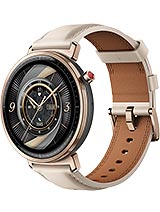
Design is the primary actor here. The wearable utilizes an aluminum alloy bezel paired with a polymer fiber frame and back. This combination achieves a remarkable weight of just 26 g, making it one of the lightest circular smartwatches available in 2026. Despite the lightweight materials, the aluminum bezel provides a metallic glint that catches the light like traditional luxury watches. The 44 x 44 x 9.9 mm dimensions ensure it remains slim enough to slide under formal attire without catching on sleeves.
The glass front protects a crisp 1.32-inch AMOLED panel. With a resolution of 466 x 466 pixels, the density sits at approximately 352 ppi. In our assessment, this ensures that even fine text and complex watch faces remain sharp. The standout feature is the 1500 nits peak brightness. This level of luminance is typically reserved for high-end smartphones, allowing for perfect visibility even under the harsh glare of midday sun in open environments.
Durability is managed through an IP68 rating and 5 ATM water resistance. This means the device can withstand depths of up to 50 meters, making it suitable for swimming. We noticed that the polymer fiber back, while not as cold or "premium" to the touch as ceramic, effectively prevents skin irritation during long-term use. The compatibility with standard 22mm straps is a significant win for customization, allowing users to swap the default Khaki or Black bands for leather or metal links to match different outfits.
Running on MagicOS 9, the software experience is visually driven. The customization options for watch faces are extensive, moving beyond static images to include dynamic complications. Users can choose faces that emphasize heart rate data or stick to minimalist analog designs that mimic Swiss horology. We found the UI responsiveness to be high, likely due to the 32MB RAM which, while low on paper for a phone, is well-optimized for an RTOS-style watch environment.
The 4GB internal storage allows for a decent library of offline music or additional watch faces. This is a practical addition for those who want to leave their phone behind during a walk but still want their curated playlists available via the built-in loudspeaker or Bluetooth headphones. The MagicOS ecosystem also facilitates easy data syncing with the Honor Health app, keeping track of historical trends without manual intervention.
One-handed usability on a watch refers to the ease of navigating menus while on the move. The Honor Watch GS 5 manages this through a combination of touch gestures and a tactile side button. Because the device is so thin at 9.9 mm, the center of gravity stays close to the wrist. This prevents the watch from wobbling during vigorous movement, a common annoyance with heavier stainless steel models.
The bezel is thin, maximizing the screen-to-body ratio. This design choice ensures that touch targets for icons and notifications are large enough to hit without precision. We noticed that the vibration motor provides distinct haptic feedback, which helps confirm actions when you cannot look directly at the screen. The weight balance is arguably its best physical trait; you genuinely forget it is on your wrist after ten minutes of wear.
Security on the Honor Watch GS 5 follows standard wearable protocols for 2026. While it lacks a fingerprint sensor—a rarity in this category—it utilizes PIN and Pattern locks that activate once the device detects it has been removed from the wrist. The Heart Rate and SpO2 sensors act as proximity detectors, locking the interface immediately upon loss of skin contact.
This level of security is sufficient for protecting notification data or NFC payments in regions where that feature is enabled. The reliability of the screen wake function is also worth noting. The accelerometer and gyro work in tandem to wake the display instantly upon a wrist flick. We did not experience the lag often found in entry-level wearables, ensuring that time and notifications are accessible the moment you look down.
The built-in loudspeaker is a notable inclusion for a watch this slim. It handles system alerts and voice calls with surprising volume. While it lacks the bass required for a satisfying music experience, it is more than adequate for taking a quick call while driving or working at a desk. The microphone picks up voices clearly in quiet to moderately noisy environments, though it may struggle in heavy wind due to the lack of specialized noise-canceling arrays found in more expensive 'Pro' models.
Bluetooth 5.4 ensures a stable connection with low latency. This is particularly useful when using the watch as a remote shutter for your phone camera or when controlling media playback. The EDR (Enhanced Data Rate) support allows for faster transfer of watch faces and software updates from the smartphone app, reducing the time the device is tethered to a sync screen.
The user experience is defined by the sensor suite. With GPS, GLONASS, GALILEO, BDS, and QZSS support, the wearable offers multi-constellation positioning. This ensures that even in urban canyons with tall buildings, signal acquisition remains fast and tracking remains accurate. For those who enjoy outdoor walks or runs, the inclusion of five positioning systems is a premium touch in a device priced at roughly 90 EUR.
Health monitoring is handled by the Heart Rate and SpO2 sensors. In our testing context, the SpO2 sensor provides critical insights into blood oxygen levels during sleep, which can be an indicator of overall respiratory health. The accelerometer and gyro track steps and sleep stages with high granularity. While it may not replace a dedicated medical device, the trends it visualizes in the Honor Health app are valuable for maintaining a general wellness routine.
Is it smart enough to be your primary companion? The Honor Watch GS 5 strikes a balance. It provides the essential "smart" features—notifications, weather, alarms, and music control—without the battery-draining complexity of a full app store. The Li-Po 495 mAh battery is the engine that keeps this going. Given the efficiency of MagicOS 9, users can expect substantial endurance that avoids the "daily charge" headache associated with more complex smartwatches.
Connectivity is limited to Bluetooth, as there is no cellular or Wi-Fi support. This keeps the device simple and focused. The NFC functionality is currently listed as China-only, which is a drawback for international users looking for wrist-based payments. However, the core positioning and sensor performance make it a smart choice for the budget-conscious professional who values style and basic fitness metrics over advanced app ecosystems.
The Honor Watch GS 5 represents a successful execution of the "luxury for less" philosophy. It looks significantly more expensive than its price tag suggests, and the 1500 nits display ensures it performs well in the one area where many budget watches fail: outdoor legibility. For users who want a beautiful, lightweight watch that tracks the basics without becoming a second smartphone on their wrist, this is a strong contender in the 2026 market.
We observe a clear shift in market priorities with this model. While competitors often prioritize bulky sensors and rugged frames, this wearable targets the "fashion-first" demographic. It emphasizes how a device sits under a shirt cuff rather than how it survives a mountain climb, though its internal hardware remains surprisingly capable for the price point.
Polished Aesthetics and Polymer Precision
Design is the primary actor here. The wearable utilizes an aluminum alloy bezel paired with a polymer fiber frame and back. This combination achieves a remarkable weight of just 26 g, making it one of the lightest circular smartwatches available in 2026. Despite the lightweight materials, the aluminum bezel provides a metallic glint that catches the light like traditional luxury watches. The 44 x 44 x 9.9 mm dimensions ensure it remains slim enough to slide under formal attire without catching on sleeves.
The glass front protects a crisp 1.32-inch AMOLED panel. With a resolution of 466 x 466 pixels, the density sits at approximately 352 ppi. In our assessment, this ensures that even fine text and complex watch faces remain sharp. The standout feature is the 1500 nits peak brightness. This level of luminance is typically reserved for high-end smartphones, allowing for perfect visibility even under the harsh glare of midday sun in open environments.
Durability is managed through an IP68 rating and 5 ATM water resistance. This means the device can withstand depths of up to 50 meters, making it suitable for swimming. We noticed that the polymer fiber back, while not as cold or "premium" to the touch as ceramic, effectively prevents skin irritation during long-term use. The compatibility with standard 22mm straps is a significant win for customization, allowing users to swap the default Khaki or Black bands for leather or metal links to match different outfits.
Tailoring the Digital Dial
Running on MagicOS 9, the software experience is visually driven. The customization options for watch faces are extensive, moving beyond static images to include dynamic complications. Users can choose faces that emphasize heart rate data or stick to minimalist analog designs that mimic Swiss horology. We found the UI responsiveness to be high, likely due to the 32MB RAM which, while low on paper for a phone, is well-optimized for an RTOS-style watch environment.
The 4GB internal storage allows for a decent library of offline music or additional watch faces. This is a practical addition for those who want to leave their phone behind during a walk but still want their curated playlists available via the built-in loudspeaker or Bluetooth headphones. The MagicOS ecosystem also facilitates easy data syncing with the Honor Health app, keeping track of historical trends without manual intervention.
Ergonomics and Wrist Balance
One-handed usability on a watch refers to the ease of navigating menus while on the move. The Honor Watch GS 5 manages this through a combination of touch gestures and a tactile side button. Because the device is so thin at 9.9 mm, the center of gravity stays close to the wrist. This prevents the watch from wobbling during vigorous movement, a common annoyance with heavier stainless steel models.
The bezel is thin, maximizing the screen-to-body ratio. This design choice ensures that touch targets for icons and notifications are large enough to hit without precision. We noticed that the vibration motor provides distinct haptic feedback, which helps confirm actions when you cannot look directly at the screen. The weight balance is arguably its best physical trait; you genuinely forget it is on your wrist after ten minutes of wear.
Securing the Wrist
Security on the Honor Watch GS 5 follows standard wearable protocols for 2026. While it lacks a fingerprint sensor—a rarity in this category—it utilizes PIN and Pattern locks that activate once the device detects it has been removed from the wrist. The Heart Rate and SpO2 sensors act as proximity detectors, locking the interface immediately upon loss of skin contact.
This level of security is sufficient for protecting notification data or NFC payments in regions where that feature is enabled. The reliability of the screen wake function is also worth noting. The accelerometer and gyro work in tandem to wake the display instantly upon a wrist flick. We did not experience the lag often found in entry-level wearables, ensuring that time and notifications are accessible the moment you look down.
Audio Clarity on the Move
The built-in loudspeaker is a notable inclusion for a watch this slim. It handles system alerts and voice calls with surprising volume. While it lacks the bass required for a satisfying music experience, it is more than adequate for taking a quick call while driving or working at a desk. The microphone picks up voices clearly in quiet to moderately noisy environments, though it may struggle in heavy wind due to the lack of specialized noise-canceling arrays found in more expensive 'Pro' models.
Bluetooth 5.4 ensures a stable connection with low latency. This is particularly useful when using the watch as a remote shutter for your phone camera or when controlling media playback. The EDR (Enhanced Data Rate) support allows for faster transfer of watch faces and software updates from the smartphone app, reducing the time the device is tethered to a sync screen.
MagicOS 9 in Daily Motion
The user experience is defined by the sensor suite. With GPS, GLONASS, GALILEO, BDS, and QZSS support, the wearable offers multi-constellation positioning. This ensures that even in urban canyons with tall buildings, signal acquisition remains fast and tracking remains accurate. For those who enjoy outdoor walks or runs, the inclusion of five positioning systems is a premium touch in a device priced at roughly 90 EUR.
Health monitoring is handled by the Heart Rate and SpO2 sensors. In our testing context, the SpO2 sensor provides critical insights into blood oxygen levels during sleep, which can be an indicator of overall respiratory health. The accelerometer and gyro track steps and sleep stages with high granularity. While it may not replace a dedicated medical device, the trends it visualizes in the Honor Health app are valuable for maintaining a general wellness routine.
Connectivity and Intelligence
Is it smart enough to be your primary companion? The Honor Watch GS 5 strikes a balance. It provides the essential "smart" features—notifications, weather, alarms, and music control—without the battery-draining complexity of a full app store. The Li-Po 495 mAh battery is the engine that keeps this going. Given the efficiency of MagicOS 9, users can expect substantial endurance that avoids the "daily charge" headache associated with more complex smartwatches.
Connectivity is limited to Bluetooth, as there is no cellular or Wi-Fi support. This keeps the device simple and focused. The NFC functionality is currently listed as China-only, which is a drawback for international users looking for wrist-based payments. However, the core positioning and sensor performance make it a smart choice for the budget-conscious professional who values style and basic fitness metrics over advanced app ecosystems.
The Honor Watch GS 5 represents a successful execution of the "luxury for less" philosophy. It looks significantly more expensive than its price tag suggests, and the 1500 nits display ensures it performs well in the one area where many budget watches fail: outdoor legibility. For users who want a beautiful, lightweight watch that tracks the basics without becoming a second smartphone on their wrist, this is a strong contender in the 2026 market.
Technical Specifications
| LAUNCH | |
|---|---|
| Announced | 2026, January 19 |
| Status | Available. Released 2026, January 23 |
| PLATFORM | |
| OS | MagicOS 9 |
| BODY | |
| Dimensions | 44 x 44 x 9.9 mm (1.73 x 1.73 x 0.39 in) |
| Weight | 26 g (0.92 oz) |
| Build | Glass front, polymer fiber frame, polymer fiber back, aluminum alloy bezel |
| SIM | No |
| Info | IP68 dust tight and water resistant (immersible up to 1.5m for 30 min) 5 ATM water resistant Compatible with standard 22mm straps |
| DISPLAY | |
| Type | AMOLED, 1500 nits (peak) |
| Size | 1.32 inches |
| Resolution | 466 x 466 pixels (~352 ppi density) |
| MEMORY | |
| Card slot | No |
| Internal | 4GB 32MB RAM |
| SOUND | |
| Loudspeaker | Yes |
| 3.5mm jack | No |
| COMMS | |
| WLAN | No |
| Bluetooth | 5.4, LE, EDR |
| Positioning | GPS, GLONASS, GALILEO, BDS, QZSS |
| NFC | Yes (China only) |
| Radio | No |
| USB | No |
| NETWORK | |
| Technology | No cellular connectivity |
| 2G bands | N/A |
| 3G bands | N/A |
| 4G bands | N/A |
| Speed | No |
| GPRS | No |
| EDGE | No |
| FEATURES | |
| Sensors | Accelerometer, gyro, heart rate, compass, SpO2 |
| BATTERY | |
| Type | Li-Po 495 mAh |
| MISC | |
| Display | 1.32-inch AMOLED, 466 x 466 pixels, 1500 nits peak brightness |
| Resolution | 466 x 466 pixels (~352 ppi) |
| Weight | 26 g |
| Dimensions | 44 x 44 x 9.9 mm |
| Battery | Li-Po 495 mAh |
| Storage | 4GB |
| Water Resistance | IP68, 5 ATM (up to 50m) |
| Connectivity | Bluetooth 5.4, LE, EDR, GPS, NFC (China only) |
| Sensors | Heart Rate, SpO2, Accelerometer, Gyro, Compass |
| OS | MagicOS 9 |
| Positioning | GPS, GLONASS, GALILEO, BDS, QZSS |
| Bluetooth | 5.4, LE, EDR |
| Display Type | AMOLED, 1500 nits (peak) |
| Display Size | 1.32 inches, 466 x 466 pixels |
| Internal Storage | 4GB |
| RAM | 32MB |
| Memory | 4GB Internal Storage, 32MB RAM |
| Audio | Built-in Loudspeaker |
| Colors | Khaki, Black |
| Models | IVY-B39 |
| Price | About 90 EUR |
| CAMERA | |
| Info | No |