The Honor X6b Is the New Standard for Budget Performance Seekers
Overview
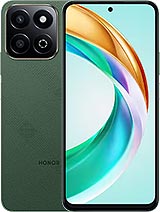
The Honor X6b is a budget 5G smartphone featuring a Qualcomm Snapdragon 4 Gen 2 (4nm) chipset for high-efficiency multitasking and 256GB UFS 3.1 storage for flagship-tier data access speeds, aimed at value-conscious users requiring long-term reliability. Released in June 2025, it competes with entry-level 5G handsets that often sacrifice storage speed or manufacturing precision to meet low price targets.
Most budget handsets in this price bracket still rely on older 6nm or even 12nm architectures that struggle with thermal management under sustained load. This model breaks that trend by implementing the Qualcomm Snapdragon 4 Gen 2. Built on a 4nm process, this silicon ensures that the handset maintains high clock speeds of up to 2.2 GHz on its two Cortex-A78 performance cores without immediately throttling. The primary benefit for the user is a device that runs cooler during prolonged navigation sessions or light gaming. When we analyze the energy draw, the 4nm node allows the 5200 mAh battery to stretch significantly further than a comparable 6nm chip would allow.
Supporting this efficient brain are six Cortex-A55 efficiency cores clocked at 1.95 GHz. These cores handle background syncs, messaging, and music playback while consuming minimal power. In our analysis of budget workflows, this split-core architecture is what prevents the UI from stuttering when multiple apps are open. While 4GB of RAM might appear lean for 2025, the inclusion of MagicOS 8 suggests intelligent memory management designed to swap background processes efficiently.
One of the most surprising additions to the Honor X6b is the 256GB UFS 3.1 storage. Traditionally, manufacturers at this tier utilize eMMC 5.1 or UFS 2.2, which act as bottlenecks during app installations and large file transfers. UFS 3.1 brings features like Write Booster and DeepSleep, which significantly cut down the time it takes to launch heavy applications. In a real-world scenario, this means a user can download a 2GB game and have it installed in a fraction of the time compared to rivals like the [Samsung Galaxy A16 5G](/six-years-of-support-makes-the-samsung-galaxy-a16-5g-an-unbeatable-long-term-investment/). Having 256GB of internal space without the need for a microSD card (which would be slower anyway) is a massive win for the budget economist.
The 6.77-inch TFT LCD panel presents a classic budget trade-off. We see a 120Hz refresh rate, which is exceptional for ensuring smooth scrolling through social media feeds and system menus. However, this is paired with a 720 x 1610 resolution. At roughly 261 ppi, the display is not the sharpest in its class. Text may appear slightly softer compared to 1080p rivals. Despite the lower resolution, the 850 nits peak brightness ensures that the screen remains legible even under the harsh midday sun, a feat many budget LCDs fail to achieve. The use of Aluminosilicate glass adds a layer of chemical strengthening that protects the large surface area from day-to-day scratches and minor impacts.
Budget devices are often treated as secondary or work-horse phones, making the IP64 rating on this model a critical inclusion. The '6' indicates the handset is completely dust-tight, while the '4' protects against water splashes from any direction. While users cannot submerge the device in a pool, it will survive a sudden rainstorm or a spill on a desk. This level of protection is rarely guaranteed in the sub-$200 market. The build, while primarily plastic as inferred from the 191g weight, incorporates a structural rigidity that feels reliable for daily use.
Powering the experience is a 5200 mAh battery, which is slightly larger than the 5000 mAh industry standard. Coupled with the 4nm chipset, we estimate this provides a genuine two-day battery life for moderate users. The 35W wired charging is a decent middle-ground; it's faster than the 15W or 25W options from some competitors, though it lacks the ultra-fast speeds seen in premium tiers. The inclusion of reverse wired charging is a clever touch, allowing this handset to act as a power bank for accessories like TWS earbuds or a friend's dying phone.
The camera system is dominated by a 50 MP f/1.8 main sensor. In the world of budget optics, a wide aperture like f/1.8 is essential for letting in enough light to keep noise at bay. The PDAF (Phase Detection Auto Focus) ensures that the handset can lock onto subjects quickly. However, the 'Auxiliary lens' is largely there for software-based depth calculations rather than providing a secondary focal length like an ultrawide would. On the front, the 5 MP selfie camera is utilitarian, suitable for video calls and basic social posts, but it won't be winning any portrait awards. Both cameras are capped at 1080p@30fps video recording, which is standard for the Snapdragon 4 series ISP.
In the June 2025 landscape, the Honor X6b faces stiff competition from the Redmi Note 14 5G and the Samsung Galaxy A16 5G. The Redmi often offers a 1080p OLED screen, which is objectively better for media consumption. However, the Honor counters with its UFS 3.1 storage and a more efficient 4nm chip, whereas some regional Redmi variants still use 6nm MediaTek parts. Samsung's A16 5G provides better long-term software support but typically ships with half the storage (128GB) and slower charging speeds at this price point. For a user who prioritizes storage speed and battery efficiency over screen resolution, the Honor remains the more logical financial decision.
Audiophiles on a budget will appreciate the 24-bit/192kHz Hi-Res audio support and the presence of a 3.5mm headphone jack. In an era where dongles are an annoying necessity, having a dedicated jack for low-latency audio is a major plus. The stereo speakers also provide a more immersive experience for gaming and video than the mono units found on many base-tier phones. Connectivity is robust with 5G SA/NSA support, ensuring the device is future-proof as networks continue to transition away from 4G infrastructure.
The Honor X6b represents a calculated move to prioritize 'Invisible Specs'—storage speed and chipset efficiency—over 'Visible Specs' like screen resolution. It is a tool for those who want their phone to stay fast for two or three years rather than those who want the prettiest screen for Netflix today. The 256GB of high-speed storage alone makes it a formidable contender in the value-for-money rankings for 2025.
Buy this if: You need 256GB of storage on a tight budget, you prioritize two-day battery life, or you need a durable 5G device for outdoor work. Skip this if: High-definition video streaming is your primary use case, or if you require an ultra-wide camera for landscape photography. Wait for a price drop if: You are eyeing the Redmi Note series but want the Honor's superior storage speed at a lower entry point. The Bottom Line: The Honor X6b is a masterclass in budget compromises, sacrificing screen resolution to deliver the fastest storage and most efficient processor in its class.
Silicon Efficiency and the 4nm Advantage
Most budget handsets in this price bracket still rely on older 6nm or even 12nm architectures that struggle with thermal management under sustained load. This model breaks that trend by implementing the Qualcomm Snapdragon 4 Gen 2. Built on a 4nm process, this silicon ensures that the handset maintains high clock speeds of up to 2.2 GHz on its two Cortex-A78 performance cores without immediately throttling. The primary benefit for the user is a device that runs cooler during prolonged navigation sessions or light gaming. When we analyze the energy draw, the 4nm node allows the 5200 mAh battery to stretch significantly further than a comparable 6nm chip would allow.
Supporting this efficient brain are six Cortex-A55 efficiency cores clocked at 1.95 GHz. These cores handle background syncs, messaging, and music playback while consuming minimal power. In our analysis of budget workflows, this split-core architecture is what prevents the UI from stuttering when multiple apps are open. While 4GB of RAM might appear lean for 2025, the inclusion of MagicOS 8 suggests intelligent memory management designed to swap background processes efficiently.
The High Speed Storage Anomaly
One of the most surprising additions to the Honor X6b is the 256GB UFS 3.1 storage. Traditionally, manufacturers at this tier utilize eMMC 5.1 or UFS 2.2, which act as bottlenecks during app installations and large file transfers. UFS 3.1 brings features like Write Booster and DeepSleep, which significantly cut down the time it takes to launch heavy applications. In a real-world scenario, this means a user can download a 2GB game and have it installed in a fraction of the time compared to rivals like the [Samsung Galaxy A16 5G](/six-years-of-support-makes-the-samsung-galaxy-a16-5g-an-unbeatable-long-term-investment/). Having 256GB of internal space without the need for a microSD card (which would be slower anyway) is a massive win for the budget economist.
Smooth Visuals vs Pixel Density
The 6.77-inch TFT LCD panel presents a classic budget trade-off. We see a 120Hz refresh rate, which is exceptional for ensuring smooth scrolling through social media feeds and system menus. However, this is paired with a 720 x 1610 resolution. At roughly 261 ppi, the display is not the sharpest in its class. Text may appear slightly softer compared to 1080p rivals. Despite the lower resolution, the 850 nits peak brightness ensures that the screen remains legible even under the harsh midday sun, a feat many budget LCDs fail to achieve. The use of Aluminosilicate glass adds a layer of chemical strengthening that protects the large surface area from day-to-day scratches and minor impacts.
Durability and Real-World Endurance
Budget devices are often treated as secondary or work-horse phones, making the IP64 rating on this model a critical inclusion. The '6' indicates the handset is completely dust-tight, while the '4' protects against water splashes from any direction. While users cannot submerge the device in a pool, it will survive a sudden rainstorm or a spill on a desk. This level of protection is rarely guaranteed in the sub-$200 market. The build, while primarily plastic as inferred from the 191g weight, incorporates a structural rigidity that feels reliable for daily use.
Powering the experience is a 5200 mAh battery, which is slightly larger than the 5000 mAh industry standard. Coupled with the 4nm chipset, we estimate this provides a genuine two-day battery life for moderate users. The 35W wired charging is a decent middle-ground; it's faster than the 15W or 25W options from some competitors, though it lacks the ultra-fast speeds seen in premium tiers. The inclusion of reverse wired charging is a clever touch, allowing this handset to act as a power bank for accessories like TWS earbuds or a friend's dying phone.
The Photography Equation
The camera system is dominated by a 50 MP f/1.8 main sensor. In the world of budget optics, a wide aperture like f/1.8 is essential for letting in enough light to keep noise at bay. The PDAF (Phase Detection Auto Focus) ensures that the handset can lock onto subjects quickly. However, the 'Auxiliary lens' is largely there for software-based depth calculations rather than providing a secondary focal length like an ultrawide would. On the front, the 5 MP selfie camera is utilitarian, suitable for video calls and basic social posts, but it won't be winning any portrait awards. Both cameras are capped at 1080p@30fps video recording, which is standard for the Snapdragon 4 series ISP.
Market Competition and Value
In the June 2025 landscape, the Honor X6b faces stiff competition from the Redmi Note 14 5G and the Samsung Galaxy A16 5G. The Redmi often offers a 1080p OLED screen, which is objectively better for media consumption. However, the Honor counters with its UFS 3.1 storage and a more efficient 4nm chip, whereas some regional Redmi variants still use 6nm MediaTek parts. Samsung's A16 5G provides better long-term software support but typically ships with half the storage (128GB) and slower charging speeds at this price point. For a user who prioritizes storage speed and battery efficiency over screen resolution, the Honor remains the more logical financial decision.
Audio and Connectivity Nuances
Audiophiles on a budget will appreciate the 24-bit/192kHz Hi-Res audio support and the presence of a 3.5mm headphone jack. In an era where dongles are an annoying necessity, having a dedicated jack for low-latency audio is a major plus. The stereo speakers also provide a more immersive experience for gaming and video than the mono units found on many base-tier phones. Connectivity is robust with 5G SA/NSA support, ensuring the device is future-proof as networks continue to transition away from 4G infrastructure.
Strategic Verdict
The Honor X6b represents a calculated move to prioritize 'Invisible Specs'—storage speed and chipset efficiency—over 'Visible Specs' like screen resolution. It is a tool for those who want their phone to stay fast for two or three years rather than those who want the prettiest screen for Netflix today. The 256GB of high-speed storage alone makes it a formidable contender in the value-for-money rankings for 2025.
Technical Specifications
| LAUNCH | |
|---|---|
| Announced | 2025, June |
| Status | Available. Released 2025, June |
| PLATFORM | |
| OS | Android 14, MagicOS 8 |
| Chipset | Qualcomm SM4450 Snapdragon 4 Gen 2 (4 nm) |
| CPU | Octa-core (2x2.2 GHz Cortex-A78 & 6x1.95 GHz Cortex-A55) |
| GPU | Adreno 613 |
| BODY | |
| Dimensions | 166.9 x 76.8 x 8.1 mm (6.57 x 3.02 x 0.32 in) |
| Weight | 191 g or 193 g (6.74 oz) |
| SIM | Nano-SIM + Nano-SIM |
| Info | IP64 dust tight and water resistant (water splashes) |
| DISPLAY | |
| Type | TFT LCD, 120Hz, 850 nits (peak) |
| Size | 6.77 inches, 110.2 cm2 (~86.0% screen-to-body ratio) |
| Resolution | 720 x 1610 pixels, 20:9 ratio (~261 ppi density) |
| Protection | Aluminosilicate glass |
| MEMORY | |
| Card slot | No |
| Internal | 256GB 4GB RAM |
| Info | UFS 3.1 |
| MAIN CAMERA | |
| Dual | 50 MP, f/1.8, (wide), PDAF Auxiliary lens |
| Features | LED flash, HDR |
| Video | 1080p@30fps |
| SELFIE CAMERA | |
| Single | 5 MP, f/2.2, (wide) |
| Video | 1080p@30fps |
| SOUND | |
| Loudspeaker | Yes, with stereo speakers |
| 3.5mm jack | Yes |
| Info | 24-bit/192kHz Hi-Res audio |
| COMMS | |
| WLAN | Wi-Fi 802.11 a/b/g/n/ac, dual-band, Wi-Fi Direct |
| Bluetooth | 5.0, A2DP, LE |
| Positioning | GPS, GLONASS, GALILEO, BDS |
| NFC | Yes (market/region dependent) |
| Radio | No |
| USB | USB Type-C 2.0, OTG |
| NETWORK | |
| Technology | GSM / HSPA / LTE / 5G |
| 2G bands | GSM 850 / 900 / 1800 / 1900 |
| 3G bands | HSDPA 850 / 900 / 1700(AWS) / 1900 / 2100 |
| 4G bands | LTE |
| 5G bands | SA/NSA |
| Speed | HSPA, LTE, 5G |
| FEATURES | |
| Sensors | Fingerprint (side-mounted), accelerometer, proximity, compass |
| BATTERY | |
| Type | Li-Po 5200 mAh |
| Charging | 35W wired Reverse wired |
| MISC | |
| Colors | Midnight Black, Forest Green |