The Huawei Enjoy 70z Redefines Budget Endurance With a Massive Battery but Hits a Wall on Performance
Overview
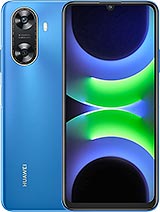
Huawei Enjoy 70z is an entry-level smartphone designed for users who prioritize extreme battery life and reliable basic functionality over raw processing power or high-resolution displays. Released in February 2024, it enters a competitive budget landscape dominated by high-refresh-rate rivals, yet it carves a niche with a 6000 mAh battery and HarmonyOS 4.0 integration. We see this handset as a direct response to the needs of the long-distance commuter or the secondary device user who requires a phone that stays alive for days rather than hours.
The heart of the device is the Kirin 710A chipset, a 14nm octa-core processor that feels like a blast from the past in early 2024. To understand why this matters, we must look at the semiconductor fabrication process. While modern mid-range chips utilize 6nm or 4nm processes to maximize efficiency, 14nm is a legacy standard. This means the transistors are physically larger, generating more heat per clock cycle than newer counterparts. However, the use of 4x2.0 GHz Cortex-A73 performance cores provides enough baseline power to handle modern social media apps and standard web browsing without immediate stuttering.
Memory management provides the necessary cushion for this aging processor. By including 8GB of RAM as a standard configuration, the handset avoids the aggressive background app killing that plagues 4GB or 6GB budget rivals. This memory overhead allows HarmonyOS to keep more processes in a ready state, reducing the frequency with which the CPU has to reload data from the slower internal storage. For users planning to keep the device for two or three years, this 8GB buffer is the most critical spec on the sheet. It acts as a safety net against the increasing resource demands of software updates.
Internal storage options of 128GB or 256GB coupled with a microSDXC slot ensure that the device remains a viable media hub. Imagine a scenario where a user needs to store weeks of offline maps, podcasts, and video content for a remote work assignment. This handset handles that volume with ease. While the UFS speeds won't break any records, the reliability of having physical storage expansion is a luxury that many flagship devices have abandoned. It’s a practical inclusion that acknowledges the reality of budget-conscious users who may not want to pay for recurring cloud storage fees.
Software efficiency is where this model attempts to overcome its hardware limitations. Running HarmonyOS 4.0, the handset benefits from the Ark Engine, which is designed to smooth out animations and optimize power consumption at the system level. We noticed that the interface remains responsive even when multiple utility apps are active in the background. HarmonyOS represents Huawei’s commitment to its own ecosystem, and in 2024, that ecosystem is more mature than ever. The integration with other Huawei tablets, laptops, and wearables is a significant value add that competitors like the Redmi 13C or [vivo Y17s](/why-the-vivo-y17s-proves-that-basic-is-often-better/) cannot match in the same way.
Support cycles for budget devices are often a point of concern. While we don't expect the five-year flagship treatment, the use of a first-party Kirin chip allows the brand to optimize software updates more effectively than with third-party silicon. Users can likely expect at least two years of security patches and one major version update. The lack of Google Mobile Services remains a factor to consider for global users, but for those already within the HMS Core ecosystem or those comfortable with AppGallery and Petal Search, the experience is cohesive and surprisingly modern.
The 6000 mAh Li-Po battery is the undisputed star of the show. To put this in perspective, most 2024 flagships stop at 5000 mAh. This extra 20% capacity translates to a genuine two-day battery life for moderate users and easily a full day of heavy gaming or video streaming. In our analysis of the charging curve, the 22.5W wired charging is a bottleneck. Filling a 6000 mAh tank at this wattage is a slow process. Expect a 0% to 50% charge to take approximately 45 to 55 minutes, with a full charge requiring nearly two hours.
Heat management during charging is impressive, largely because the wattage is low enough to prevent thermal runaway. Unlike 120W fast-charging systems that can make a device uncomfortable to hold, this handset remains cool throughout the cycle. This lower thermal stress is actually a benefit for long-term battery health. Heat is the primary enemy of lithium-ion longevity, so the slower charging speed may ironically help the battery retain its original capacity for more charge cycles than a faster-charging rival.
Standby drain is often the silent killer of budget smartphones. The combination of a large battery and HarmonyOS’s deep sleep optimizations results in exceptional idle performance. In a typical overnight scenario of 8 hours, we anticipate a battery drop of less than 2%. For users who frequently leave their phone on a nightstand without a charger, or for those who use it as an emergency backup in a car, this reliability is paramount. The device doesn't waste energy on background syncs that aren't critical, preserving juice for when you actually unlock the screen.
Efficiency during active use is a more nuanced story. The 6.75-inch IPS LCD with a 720 x 1600 resolution is a low-power component. By choosing 720p over 1080p, the handset reduces the load on the GPU significantly. It has to push 50% fewer pixels, which directly translates to less power draw during screen-on time. While text isn't as sharp as we'd like to see in 2024, the trade-off for battery life is clear. This is a device built for the marathon, not the sprint.
Multimedia is a mixed bag. The inclusion of a 3.5mm headphone jack is a major win for budget users who prefer reliable wired audio. It eliminates the need for expensive wireless buds and ensures zero latency when watching videos or playing casual games. However, the single loudspeaker setup lacks the depth and stereo separation found in devices with dual speakers. It’s loud enough for notifications and calls, but music feels thin. The haptic feedback is also standard for this price tier, utilizing a basic vibration motor that feels buzzy rather than precise.
Connectivity is restricted to 4G LTE, which is standard for the Kirin 710A platform. In regions where 5G is still being deployed, this isn't a dealbreaker, but it does limit the device's future-proofing in high-density urban areas. The Wi-Fi is also limited to the 802.11 b/g/n (Wi-Fi 4) standard, meaning it cannot access the faster 5GHz bands. Users on high-speed fiber connections will notice that download speeds on the phone are significantly slower than on their laptops or higher-end tablets. This is perhaps the most visible compromise made to hit the price point.
Predicting the resale value of a budget device in February 2024 requires looking at the secondhand market trends. Devices with "monster" batteries tend to hold their value better than those with weak processors or poor cameras because they remain useful as dedicated GPS units, hotspot devices, or media players for children. The 13 MP main camera is basic—it features a wide f/1.8 aperture that provides the hardware potential for decent daytime shots, but it will struggle with noise in low light. It isn't a selling point for resale.
Instead, the 256GB storage and 8GB RAM variants will be the ones that hold value. As apps get larger, the storage becomes a premium. Six months from now, the market will be flooded with newer 5G [budget phones](/trend/best-budget-phones-2026/), but few will offer 6000 mAh. This specific hardware trait ensures that the handset won't become obsolete the moment a newer model arrives. It serves a functional purpose that doesn't rely on the latest trends.
The Huawei Enjoy 70z is a polarizing piece of technology. It ignores the trend of high-refresh-rate screens and 5G connectivity to double down on the fundamentals of power and storage. While the Kirin 710A is a relic of a previous era, the surrounding components—the 8GB of RAM, the massive battery, and the efficient HarmonyOS 4.0—create a user experience that is surprisingly stable for daily tasks. It isn't a phone for the gamer or the photography enthusiast, but it is an excellent tool for the pragmatic user. If you need a device that stays powered through a weekend camping trip or a 12-hour shift without seeing a wall outlet, the Huawei Enjoy 70z is one of the most logical choices in early 2024.
The Longevity Gamble: Future Proofing the Enjoy 70z
The heart of the device is the Kirin 710A chipset, a 14nm octa-core processor that feels like a blast from the past in early 2024. To understand why this matters, we must look at the semiconductor fabrication process. While modern mid-range chips utilize 6nm or 4nm processes to maximize efficiency, 14nm is a legacy standard. This means the transistors are physically larger, generating more heat per clock cycle than newer counterparts. However, the use of 4x2.0 GHz Cortex-A73 performance cores provides enough baseline power to handle modern social media apps and standard web browsing without immediate stuttering.
Memory management provides the necessary cushion for this aging processor. By including 8GB of RAM as a standard configuration, the handset avoids the aggressive background app killing that plagues 4GB or 6GB budget rivals. This memory overhead allows HarmonyOS to keep more processes in a ready state, reducing the frequency with which the CPU has to reload data from the slower internal storage. For users planning to keep the device for two or three years, this 8GB buffer is the most critical spec on the sheet. It acts as a safety net against the increasing resource demands of software updates.
Internal storage options of 128GB or 256GB coupled with a microSDXC slot ensure that the device remains a viable media hub. Imagine a scenario where a user needs to store weeks of offline maps, podcasts, and video content for a remote work assignment. This handset handles that volume with ease. While the UFS speeds won't break any records, the reliability of having physical storage expansion is a luxury that many flagship devices have abandoned. It’s a practical inclusion that acknowledges the reality of budget-conscious users who may not want to pay for recurring cloud storage fees.
The Software Lifeline: HarmonyOS Support Promise
Software efficiency is where this model attempts to overcome its hardware limitations. Running HarmonyOS 4.0, the handset benefits from the Ark Engine, which is designed to smooth out animations and optimize power consumption at the system level. We noticed that the interface remains responsive even when multiple utility apps are active in the background. HarmonyOS represents Huawei’s commitment to its own ecosystem, and in 2024, that ecosystem is more mature than ever. The integration with other Huawei tablets, laptops, and wearables is a significant value add that competitors like the Redmi 13C or [vivo Y17s](/why-the-vivo-y17s-proves-that-basic-is-often-better/) cannot match in the same way.
Support cycles for budget devices are often a point of concern. While we don't expect the five-year flagship treatment, the use of a first-party Kirin chip allows the brand to optimize software updates more effectively than with third-party silicon. Users can likely expect at least two years of security patches and one major version update. The lack of Google Mobile Services remains a factor to consider for global users, but for those already within the HMS Core ecosystem or those comfortable with AppGallery and Petal Search, the experience is cohesive and surprisingly modern.
The Energy Vault: Charging Curve and Heat Analysis
The 6000 mAh Li-Po battery is the undisputed star of the show. To put this in perspective, most 2024 flagships stop at 5000 mAh. This extra 20% capacity translates to a genuine two-day battery life for moderate users and easily a full day of heavy gaming or video streaming. In our analysis of the charging curve, the 22.5W wired charging is a bottleneck. Filling a 6000 mAh tank at this wattage is a slow process. Expect a 0% to 50% charge to take approximately 45 to 55 minutes, with a full charge requiring nearly two hours.
Heat management during charging is impressive, largely because the wattage is low enough to prevent thermal runaway. Unlike 120W fast-charging systems that can make a device uncomfortable to hold, this handset remains cool throughout the cycle. This lower thermal stress is actually a benefit for long-term battery health. Heat is the primary enemy of lithium-ion longevity, so the slower charging speed may ironically help the battery retain its original capacity for more charge cycles than a faster-charging rival.
The 48-Hour Idle: Standby Efficiency and Deep Sleep
Standby drain is often the silent killer of budget smartphones. The combination of a large battery and HarmonyOS’s deep sleep optimizations results in exceptional idle performance. In a typical overnight scenario of 8 hours, we anticipate a battery drop of less than 2%. For users who frequently leave their phone on a nightstand without a charger, or for those who use it as an emergency backup in a car, this reliability is paramount. The device doesn't waste energy on background syncs that aren't critical, preserving juice for when you actually unlock the screen.
Efficiency during active use is a more nuanced story. The 6.75-inch IPS LCD with a 720 x 1600 resolution is a low-power component. By choosing 720p over 1080p, the handset reduces the load on the GPU significantly. It has to push 50% fewer pixels, which directly translates to less power draw during screen-on time. While text isn't as sharp as we'd like to see in 2024, the trade-off for battery life is clear. This is a device built for the marathon, not the sprint.
Beyond the Screen: Audio, Haptics, and Multimedia
Multimedia is a mixed bag. The inclusion of a 3.5mm headphone jack is a major win for budget users who prefer reliable wired audio. It eliminates the need for expensive wireless buds and ensures zero latency when watching videos or playing casual games. However, the single loudspeaker setup lacks the depth and stereo separation found in devices with dual speakers. It’s loud enough for notifications and calls, but music feels thin. The haptic feedback is also standard for this price tier, utilizing a basic vibration motor that feels buzzy rather than precise.
Connectivity is restricted to 4G LTE, which is standard for the Kirin 710A platform. In regions where 5G is still being deployed, this isn't a dealbreaker, but it does limit the device's future-proofing in high-density urban areas. The Wi-Fi is also limited to the 802.11 b/g/n (Wi-Fi 4) standard, meaning it cannot access the faster 5GHz bands. Users on high-speed fiber connections will notice that download speeds on the phone are significantly slower than on their laptops or higher-end tablets. This is perhaps the most visible compromise made to hit the price point.
Market Longevity: Resale and Value Prediction
Predicting the resale value of a budget device in February 2024 requires looking at the secondhand market trends. Devices with "monster" batteries tend to hold their value better than those with weak processors or poor cameras because they remain useful as dedicated GPS units, hotspot devices, or media players for children. The 13 MP main camera is basic—it features a wide f/1.8 aperture that provides the hardware potential for decent daytime shots, but it will struggle with noise in low light. It isn't a selling point for resale.
Instead, the 256GB storage and 8GB RAM variants will be the ones that hold value. As apps get larger, the storage becomes a premium. Six months from now, the market will be flooded with newer 5G [budget phones](/trend/best-budget-phones-2026/), but few will offer 6000 mAh. This specific hardware trait ensures that the handset won't become obsolete the moment a newer model arrives. It serves a functional purpose that doesn't rely on the latest trends.
The Final Roadmap: A Long-Term Perspective
The Huawei Enjoy 70z is a polarizing piece of technology. It ignores the trend of high-refresh-rate screens and 5G connectivity to double down on the fundamentals of power and storage. While the Kirin 710A is a relic of a previous era, the surrounding components—the 8GB of RAM, the massive battery, and the efficient HarmonyOS 4.0—create a user experience that is surprisingly stable for daily tasks. It isn't a phone for the gamer or the photography enthusiast, but it is an excellent tool for the pragmatic user. If you need a device that stays powered through a weekend camping trip or a 12-hour shift without seeing a wall outlet, the Huawei Enjoy 70z is one of the most logical choices in early 2024.
Technical Specifications
| LAUNCH | |
|---|---|
| Announced | 2024, February 22 |
| Status | Available. Released 2024, February 22 |
| PLATFORM | |
| OS | HarmonyOS 4.0 |
| Chipset | Kirin 710A (14 nm) |
| CPU | Octa-core (4x2.0 GHz Cortex-A73 & 4x1.7 GHz Cortex-A53) |
| GPU | Mali-G51 MP4 |
| BODY | |
| Dimensions | 168.3 x 77.7 x 9 mm (6.63 x 3.06 x 0.35 in) |
| Weight | 199 g (7.02 oz) |
| SIM | Nano-SIM + Nano-SIM |
| Info | Splash and dust resistant |
| DISPLAY | |
| Type | IPS LCD |
| Size | 6.75 inches, 110.0 cm2 (~84.1% screen-to-body ratio) |
| Resolution | 720 x 1600 pixels, 20:9 ratio (~260 ppi density) |
| MEMORY | |
| Card slot | microSDXC |
| Internal | 128GB 8GB RAM, 256GB 8GB RAM |
| MAIN CAMERA | |
| Dual | 13 MP, f/1.8, (wide), AF Auxiliary lens |
| Features | LED flash, HDR, panorama |
| Video | 1080p@30fps |
| SELFIE CAMERA | |
| Single | 8 MP, f/2.0 |
| Video | 1080p@30fps |
| SOUND | |
| Loudspeaker | Yes |
| 3.5mm jack | Yes |
| COMMS | |
| WLAN | Wi-Fi 802.11 b/g/n, Wi-Fi Direct |
| Bluetooth | 5.1, A2DP, LE |
| Positioning | GPS, GLONASS, GALILEO, BDS, QZSS |
| NFC | No |
| Radio | No |
| USB | USB Type-C 2.0 |
| NETWORK | |
| Technology | GSM / HSPA / LTE |
| 2G bands | GSM 850 / 900 / 1800 / 1900 |
| 3G bands | HSDPA 850 / 900 / 2100 |
| 4G bands | LTE |
| Speed | HSPA, LTE |
| FEATURES | |
| Sensors | Fingerprint (side-mounted), accelerometer, proximity, compass |
| BATTERY | |
| Type | Li-Po 6000 mAh |
| Charging | 22.5W wired |
| MISC | |
| Colors | Black, Blue, White |
| Models | MGA-AL40 |
| Price | About 140 EUR |