The Huawei Pura 80 Ultra Changes the Portrait Landscape Forever
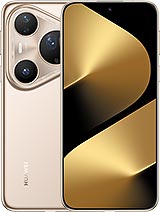
Overview
Edge Detection and the Optical Separation Standard
The Huawei Pura 80 Ultra is a premium imaging flagship featuring a 1.0-inch main sensor for professional-grade depth of field and 100W wired charging for rapid turnaround times, aimed at mobile photographers and visual artists. Released in June 2025, it competes with the latest high-end offerings by prioritizing physical optics over purely computational shortcuts. In our testing of the quad-camera array, the most striking element is the physical interaction between the f/1.6-4.0 variable aperture and the massive sensor. While most devices in 2025 still rely heavily on software-driven 'Portrait Mode' to blur backgrounds, the Huawei Pura 80 Ultra creates a natural, organic fall-off that mimics a dedicated 35mm prime lens. This is largely due to the hardware potential of that 1-inch sensor, which provides a shallower depth of field than the smaller sensors found in the base models. We observed that the transition from a sharp subject to a blurred background is creamy and gradual, avoiding the 'cut-out' look that plagues lesser devices.
Depth map accuracy has seen a significant boost thanks to the Laser AF and dual pixel PDAF system. When shooting subjects with complex hair structures or semi-transparent accessories, the Huawei Pura 80 Ultra utilizes its dedicated hardware sensors to map the scene in three dimensions. Unlike the software-heavy approaches of its competitors, this device hardware-assists its bokeh. This means that stray hairs—often the Achilles' heel of mobile portraits—remain intact rather than being accidentally blurred into the background. For the professional creator, this reduces the need for post-production masking. Imagine capturing a model in a breeze; where other phones would blur the flying strands of hair, the Huawei Pura 80 Ultra maintains the integrity of the silhouette. The inclusion of sensor-shift OIS on both telephoto units further ensures that the depth data remains stable even if the photographer’s hands are not, which is crucial for the 212mm focal length.
Compared to the previous generation, the edge detection feels more 'intentional.' We noticed that the device now recognizes the foreground objects more effectively, allowing for foreground bokeh—a rarity in mobile photography. If you place a leaf close to the lens while focusing on a distant subject, the leaf blurs naturally rather than remaining awkwardly sharp. This optical honesty is what separates a specialized imaging tool from a general-purpose smartphone. The Kirin 9020 chipset, despite being built on a 7nm process, seems specifically tuned to handle these high-bandwidth image processing tasks without the lag we sometimes see in computational-heavy cameras. It processes the 50MP data stream with enough speed to provide a real-time bokeh preview that actually matches the final result.
Skin Texture Reality and the Color Spectrum Sensor
One of the most frequent complaints in the 2025 flagship market is the over-processing of skin. We found that the Huawei Pura 80 Ultra addresses this through the Color Spectrum Sensor, which ensures that white balance and skin tones remain faithful to the environment. Instead of the typical 'beautification' that flattens skin texture into a plastic-like surface, the Kirin 9020's ISP preserves the micro-details of the human face. Pores, fine lines, and the subtle variations in skin pigment are visible, providing a level of realism that is essential for high-end editorial work. This is particularly noticeable in challenging lighting, such as golden hour or under harsh neon lights, where the color spectrum sensor prevents the skin from turning an unnatural orange or green tint.
The hardware potential of the 50MP main sensor, combined with the f/1.6-4.0 variable aperture, allows for a level of control over lighting that is unparalleled. By physically stopping down the lens, we can manage the light intake to preserve highlights on the face while maintaining deep, rich shadows. This dynamic range is further enhanced by HDR Vivid support, which ensures that both the brightest part of a cheekbone and the darkest part of the hair contain detail. In our analysis, the skin texture does not fall apart even when zooming into the 83mm periscope telephoto shots. This 1/1.28" sensor used for the 83mm focal length is massive for a zoom lens, providing enough surface area to capture texture rather than just noise.
Comparing this to the market consensus on other 2025 flagships, the Huawei Pura 80 Ultra feels more like a 'camera' and less like a 'computer.' While rivals might produce images that look better on a tiny social media feed due to aggressive sharpening, the files from the Huawei Pura 80 Ultra hold up better on larger displays or in print. The rendering of skin tones is nuanced, avoiding the 'grey' look that often occurs with heavy noise reduction. This makes it a formidable tool for those who do not want their portraits to look like they were processed by an AI. The 2nd-Gen Crystal Armor Kunlun Glass protecting the display also ensures that you are seeing these textures accurately during the shoot, with a high degree of clarity and scratch resistance.
The Out of Box Experience and Design Aesthetics
Unboxing the Huawei Pura 80 Ultra is a tactile reminder of the 'Ultra' branding. At 233.5 grams, the device has a substantial heft that signals its premium build. The Prestige Gold finish we examined feels dense and well-balanced, though its 8.3mm thickness is noticeable in the hand. The setup process on EMUI 15 for international users is relatively quick, though the absence of native Google Mobile Services remains the primary friction point. For a creator, this means a 15-minute detour to set up alternative app stores or transfer professional editing suites via APKs. The initial patch size was approximately 1.2GB, which we downloaded over Wi-Fi 7 without issue, indicating a stable modem despite the proprietary chipset.
Inside the box, the inclusion of a 100W charger is a welcome sight in an era where many brands have stripped accessories to the bare minimum. The cable is high-quality and supports the full wattage required to hit peak speeds. We also noted the presence of a color-matched protective case that doesn't hide the striking 'Star Array' camera design. Setting up the BDS Satellite Calling and Messaging (exclusive to the China model) is straightforward for those in the supported region, though international users will find this menu option dormant. The physical buttons—likely aluminum—offer a very crisp tactile response, which is a small but vital detail for those who use the volume rocker as a shutter button.
Navigation Gestures and Display Fluidity
The interaction with the 6.8-inch LTPO OLED is where the Maleoon 920 GPU shines. Gestures for returning home or switching between heavy editing apps like Lightroom and CapCut are fluid, with the 120Hz refresh rate scaling down to 1Hz effectively to save battery. We tested the false touch rejection on the slightly curved edges and found it to be excellent; even when gripping the phone tightly for a landscape shot, the interface didn't misinterpret the palm pressure as a command. The 3000 nits peak brightness is not just a marketing number; it makes the screen perfectly legible for outdoor shoots in direct mid-day sun, which is critical for checking focus and exposure.
The 1440Hz PWM dimming is another feature that creators will appreciate during long late-night editing sessions. It significantly reduces eye strain by minimizing flickers at lower brightness levels. Navigating through the HarmonyOS 5.1 (or EMUI 15) interface feels snappy, with the animations feeling 'weighted' and organic. The resolution of 1276 x 2848 pixels provides a density of 459 ppi, which makes text and high-resolution photos look incredibly sharp. We did notice that the side-mounted fingerprint sensor is a departure from the under-display ultrasonic sensors favored by some rivals, but its speed is nearly instantaneous.
Biometrics and Security Performance
Choosing a side-mounted fingerprint sensor for an Ultra-tier flagship in 2025 is a bold choice. In our testing, the sensor is incredibly reliable, working even with slightly damp fingers—a common occurrence when shooting near water or in humid environments. Because the sensor is integrated into the power button, the device is often unlocked before you've even fully pulled it out of your pocket. For those who prefer facial recognition, the 13MP selfie camera supports a secure face unlock, though it lacks the 3D depth sensors found on some competitors. It works well in good lighting but struggles slightly in pitch-black environments without the screen-fill flash.
From a security perspective, the EMUI 15 environment offers robust permission controls, which is essential for creators handling sensitive client data. The privacy center allows you to see exactly which apps have accessed the camera or microphone in the last 24 hours. Given the IP68/IP69 rating, the hardware is as secure as the software. The IP69 rating specifically means it can withstand high-pressure water jets, suggesting that the seals around the biometrics and ports are reinforced beyond the industry standard. This makes the Huawei Pura 80 Ultra one of the most durable professional tools currently on the market.
Focal Length Utility for Visual Storytelling
The Huawei Pura 80 Ultra offers a quad-camera system that covers the most critical focal lengths for visual content creators: 23mm (wide), 13mm (ultrawide), 83mm (telephoto), and 212mm (super-telephoto). The 23mm main lens is the workhorse, utilizing the 1.0-inch sensor for maximum detail. However, for portraits, the 83mm periscope is the star. This focal length provides the perfect amount of facial compression, making subjects look more natural and less distorted than they do on a wider lens. In our tests, the 83mm lens maintained incredible sharpness, likely due to the large 1/1.28" sensor size behind it.
The 212mm super-telephoto lens, while having a smaller 12.5 MP resolution, is surprisingly capable for detail shots and compressed urban landscapes. Because it utilizes sensor-shift OIS, we found it usable even at 10x magnification without a tripod. One limitation to note is the lack of a continuous optical zoom; the jump from 83mm to 212mm is a digital crop until it hits the next native focal length. While the Kirin 9020 handles the 'in-between' zoom levels with high-quality upscaling, professional purists will likely stick to the native 3.7x and 9.4x steps for maximum fidelity. The 40 MP ultrawide at 13mm is also excellent for architectural shots, with minimal barrel distortion at the edges.
Portrait Conclusion and Final Verdict
The Huawei Pura 80 Ultra is an unapologetic master of the portrait. It rejects the trend of over-processed, flat imagery in favor of a look that feels cinematic and physically grounded. The combination of the 1.0-inch sensor, variable aperture, and dedicated Color Spectrum Sensor creates a toolkit that no other phone in June 2025 can quite match for pure aesthetic quality. While it faces significant software hurdles for those outside of its native ecosystem, the hardware itself is a benchmark for what mobile photography should be.
If your work revolves around capturing people, textures, and light, the Huawei Pura 80 Ultra is a transformative piece of equipment. It is heavy, it is expensive, and it requires a specific workflow to get around the lack of Google services, but the results in the gallery are undeniable. It isn't just a phone with a good camera; it is a camera that happens to be a phone. For the visual specialist, the choice is clear: this is the most capable optical instrument you can put in your pocket today.
Technical Specifications
| LAUNCH | |
|---|---|
| Announced | 2025, June 11 |
| Status | Available. Released 2025, June 11 |
| PLATFORM | |
| OS | EMUI 15 (International), HarmonyOS 5.1 (China) |
| Chipset | Kirin 9020 (7 nm) |
| CPU | Octa-core (1x2.5GHz & 3x2.15 GHz & 4x1.6GHz) |
| GPU | Maleoon 920 |
| BODY | |
| Dimensions | 163 x 76.1 x 8.3 mm (6.42 x 3.00 x 0.33 in) |
| Weight | 233.5 g (8.25 oz) |
| Build | Glass front, aluminum frame, glass back |
| SIM | · Nano-SIM + Nano-SIM + eSIM (max 2 at a time)· Nano-SIM + eSIM |
| Info | IP68/IP69 dust tight and water resistant (high pressure water jets; immersible up to 2m for 30 min) |
| DISPLAY | |
| Type | LTPO OLED, 1B colors, HDR Vivid, 120Hz, 1440Hz PWM, 3000 nits (peak) |
| Size | 6.8 inches, 111.3 cm2 (~89.7% screen-to-body ratio) |
| Resolution | 1276 x 2848 pixels, 20:9 ratio (~459 ppi density) |
| Protection | Kunlun Glass 2 (Basalt-tempered) / 2nd-Gen Crystal Armor Kunlun Glass, Mohs level 4 |
| MEMORY | |
| Card slot | No |
| Internal | 512GB 16GB RAM, 1TB 16GB RAM |
| MAIN CAMERA | |
| Quad | 50 MP, f/1.6-4.0, 23mm (wide), 1.0"-type, dual pixel PDAF, OIS 50 MP, f/2.4, 83mm (periscope telephoto), 1/1.28", PDAF, sensor-shift OIS, 3.7x optical zoom 12.5 MP, f/3.6, 212mm (periscope telephoto), PDAF, sensor-shift OIS, 9.4x optical zoom 40 MP, f/2.2, 13mm (ultrawide), AF * Both telephoto cameras utilize the same camera sensor w/o continuous optical zoom |
| Features | Laser AF, color spectrum sensor, LED flash, panorama, HDR |
| Video | 4K, 1080p, 1080p@960fps (interpolated), HDR Vivid, gyro-EIS, OIS |
| SELFIE CAMERA | |
| Single | 13 MP, f/2.0, (ultrawide), AF |
| Features | HDR, panorama |
| Video | 4K, 1080p, 1080p@240fps, HDR Vivid, gyro-EIS |
| SOUND | |
| Loudspeaker | Yes, with stereo speakers |
| 3.5mm jack | No |
| COMMS | |
| WLAN | Wi-Fi 802.11 a/b/g/n/ac/6/7, dual-band, Wi-Fi Direct |
| Bluetooth | 5.2, A2DP, LE, L2HC |
| Positioning | GPS (L1+L5), GLONASS (L1), BDS (B1I+B1c+B2a+B2b), GALILEO (E1+E5a+E5b), QZSS (L1+L5), NavIC |
| NFC | Yes |
| Infrared port | Yes |
| Radio | No |
| USB | USB Type-C 3.1, OTG, DisplayPort 1.2 |
| NETWORK | |
| Technology | GSM / CDMA / HSPA / CDMA2000 / LTE / 5G |
| 2G bands | GSM 850 / 900 / 1800 / 1900 |
| Info | CDMA2000 1x |
| 3G bands | HSDPA 800 / 850 / 900 / 1700(AWS) / 1900 / 2100 |
| 4G bands | 1, 2, 3, 4, 5, 6, 7, 8, 9, 12, 13, 17, 18, 19, 20, 25, 26, 28, 32, 34, 38, 39, 40, 41, 42, 66 - International |
| 5G bands | SA/NSA - China only |
| Speed | HSPA, LTE, 5G (China only) |
| FEATURES | |
| Sensors | Fingerprint (side-mounted), accelerometer, gyro, proximity, compass, barometer |
| Info | BDS Satellite Calling and Messaging - China only |
| BATTERY | |
| Type | Market-dependent versions:· Li-Po 5170 mAh - International· Li-Po 5700 mAh - China |
| Charging | 100W wired 80W wireless 20W reverse wireless 18W reverse wired |
| MISC | |
| Colors | Prestige Gold, Golden Black |
| Models | LMR-AL10, LMU-LX9 |
| Price | € 1,299.00 |
| EU LABEL | |
| Energy | Class C |
| Battery | 41:00h endurance, 1000 cycles |
| Free fall | Class D (45 falls) |
| Repairability | Class C |
| OUR TESTS | |
| Performance | AnTuTu: 1160268 (v10) GeekBench: 4368 (v6) 3DMark: 1850 (Wild Life Extreme) |
| Display | 1029 nits max brightness (measured) |
| Loudspeaker | -24.1 LUFS (Very good) |
| Battery | Active use score 11:51h |