The Industrial Strength Longevity of the Samsung Galaxy XCover7 Pro
Overview
The Armor-Clad Future of Processing
The Samsung Galaxy XCover7 Pro is a rugged enterprise smartphone featuring a Snapdragon 7s Gen 3 for sustained processing and a user-removable 4350 mAh battery for continuous operation, aimed at field engineers and logistics professionals. Released in mid-2025, it competes with specialized industrial hardware while maintaining the high-tier software support typical of the Galaxy ecosystem. We find that the choice of the 4nm Snapdragon 7s Gen 3 chipset represents a strategic shift toward energy efficiency over raw peak performance. In the demanding environment of 2025, where generative AI tasks and real-time data processing are standard in field work, this processor maintains a stable thermal profile even during prolonged use. The Adreno 810 GPU provides enough graphical power to handle industrial AR overlays without the aggressive throttling seen in older rugged handsets. This stability suggests the hardware will remain relevant well into 2027 for its intended business applications.
Durability standards have evolved by 2025, and this handset meets them through a Class A free-fall rating, certifying survival after 270 falls. The inclusion of MIL-STD-810H compliance isn't just a marketing label; it indicates a chassis designed to flex rather than crack under environmental stress. The 6.6-inch PLS LCD features a 120Hz refresh rate, providing smooth navigation for complex technical manuals or blueprints. While an OLED would offer deeper blacks, the PLS LCD technology is more practical here, as it generally allows for easier operation with gloves and remains more readable under the harsh flicker of industrial lighting. The Corning Gorilla Glass Victus+ layer, rated at Mohs level 5, provides the hardware potential to resist scratches from grit and sand that would decimate a standard consumer glass.
A Legacy of Sustained Support
Software longevity remains a primary concern for fleet managers, and the support path from Android 15 to Android 16 ensures a minimum of two years of OS relevance. We expect security patches to extend far beyond the OS upgrades, likely reaching into 2029 or 2030, given Samsung's enterprise track record. The integration of One UI 8 brings a level of software polish that most rugged competitors simply cannot match. It offers a standardized interface that simplifies training for large workforces. Our analysis suggests that the inclusion of Samsung DeX is the most significant productivity multiplier here. Being able to plug this handset into a monitor and use a desktop-like interface in a field office or vehicle makes it more than a phone; it becomes a mobile workstation. This versatility extends the usable life of the device as it replaces the need for separate tablets or laptops in many field scenarios.
Connectivity options for 2025 are robust, with 5G Standalone (SA) and Wi-Fi 6e support. These protocols ensure that the device won't face network bottlenecks as infrastructure upgrades continue over the next three years. The tri-band Wi-Fi capability is particularly useful in congested environments like warehouses or manufacturing plants where 2.4GHz and 5GHz bands are often saturated. With Bluetooth 5.4, the handset maintains stable connections with industrial peripherals like barcode scanners and thermal sensors. We also note the presence of Pogo pins, which are essential for high-volume enterprise environments where USB-C ports would eventually wear out from constant plugging and unplugging in charging docks.
The Rare Commodity of Retained Value
In an era where most smartphones are sealed glass sandwiches, the user-removable battery in this model is a significant driver of long-term value. Traditional smartphones lose significant resale value once their internal battery health drops below 80%. This model bypasses that issue entirely. A secondary buyer in 2026 or 2027 can simply purchase a fresh Li-Po 4350 mAh cell and restore the device to day-one endurance. This modularity makes it an attractive investment for companies looking to minimize total cost of ownership over a four-year cycle. We predict that this specific feature will keep the resale price higher than standard [mid-range phones](/trend/best-mid-range-phones-2026/) that require expensive professional service to replace an aged battery.
Historical data for the XCover series indicates a slower depreciation curve compared to the mass-market Galaxy A-series. The specialized nature of the build means there is always a demand in the secondary market for reliable, tough hardware. The device's Energy Class B rating and 2000-cycle battery longevity further solidify its status as a sustainable investment. Even after two years of heavy daily use, the battery should retain a higher percentage of its original capacity compared to standard cells that typically target 800 or 1000 cycles. This industrial-grade chemistry is a subtle but vital upgrade for 2025.
The Enterprise Ecosystem Interface
Accessory compatibility is often the hidden cost of mobile deployments. Because the XCover7 Pro utilizes Pogo pins, it fits into a mature ecosystem of charging cradles and vehicle mounts that often carry over from previous generations. The physical dimensions and side-mounted fingerprint sensor are positioned to work within ruggedized cases, though the phone is sufficiently durable to be used without one in most scenarios. The dedicated microSDXC slot allows for up to 2TB of offline storage, which is critical for professionals working in remote areas without reliable cloud access. This physical storage expansion is a feature increasingly missing from the 2025 flagship landscape, making this model a niche but necessary alternative.
The 50 MP wide camera and 8 MP ultrawide sensor provide the hardware potential for high-quality site documentation. While it lacks the telephoto zoom of a premium flagship, the f/1.8 aperture on the main sensor captures sufficient light for indoor industrial inspections. The ability to record 4K video at 30fps means technical issues can be captured in enough detail for remote troubleshooting. We find the Dual-LED flash to be more effective than a single LED for lighting up dark corners of machinery or structural voids during inspections. It is a functional camera system designed for utility rather than artistic expression.
Stripping Away the Fluff
The unboxing experience is predictably minimalist, reflecting the 2025 industry standard for sustainability. Inside the box, users will find the handset and the battery, which is often shipped separately for safety and to emphasize the removable nature of the component. A USB-C to USB-C cable is included, but the 15W wall adapter is missing, requiring either a legacy charger or a new purchase. For enterprise fleets, this is rarely an issue as they typically utilize multi-bay Pogo pin chargers. However, for an individual buyer, the 15W charging speed is noticeably slow in a market where 45W to 65W is common. The trade-off is battery longevity; slower charging generates less heat, which contributes to the 2000-cycle lifespan.
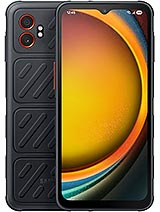
We observe that the 240g weight gives the handset a substantial, dense presence that requires a firm grip. The textured plastic back isn't trying to imitate leather or glass; it is designed for friction and impact absorption. This utilitarian approach to design means the phone won't show the micro-scratches that plague polished devices. The absence of a 3.5mm jack is standard by 2025, though the stereo speakers with Dolby Atmos support provide clear audio for video calls in moderately noisy environments. For those in high-noise areas, the Bluetooth 5.4 LE support ensures low-latency audio through headsets.
Market Longevity Estimates
Looking ahead to late 2025 and 2026, the XCover7 Pro will likely remain the gold standard for mid-range rugged devices. Its competition often comes from smaller brands that lack the software security infrastructure of Samsung's Knox platform. This security layer is what makes the device a viable investment for government or healthcare sectors where data integrity is paramount. While newer chips will eventually emerge, the Snapdragon 7s Gen 3 is built on a 4nm process that should remain efficient enough to run future versions of enterprise software without significant lag. The 8GB of RAM in the 256GB model provides a comfortable ceiling for multitasking between specialized field apps and communication tools.
We anticipate that the resale market will value this device specifically for its IP68 rating and removable power source. In 2027, a well-maintained unit should still fetch approximately 40% of its original value, which is excellent for a non-flagship device. Most standard mid-range phones drop below 20% in that same timeframe. The Class B energy label also makes it compliant with tightening corporate ESG (Environmental, Social, and Governance) requirements, which is a growing factor in procurement decisions as we move through the middle of this decade.
The Sustained Utility Summary
The Samsung Galaxy XCover7 Pro is a calculated exercise in pragmatism. It ignores the trend of curved displays and ultra-thin bodies in favor of a device that can survive a literal fall from a scaffolding. Every design choice, from the Pogo pins to the user-removable battery, is geared toward reducing downtime in a professional setting. While the 15W charging and LCD screen might seem like regressions compared to consumer-focused handsets, they are deliberate choices intended to prioritize longevity and usability in the field. This is not a phone for everyone, but for those whose work takes them away from an office desk, it is a formidable and long-lasting tool.
Technical Specifications
| LAUNCH | |
|---|---|
| Announced | 2025, April 14 |
| Status | Available. Released 2025, May 07 |
| PLATFORM | |
| OS | Android 15, upgradable to Android 16, One UI 8 |
| Chipset | Qualcomm SM7635 Snapdragon 7s Gen 3 (4 nm) |
| CPU | Octa-core (1x2.5 GHz Cortex-A720 & 3x2.4 GHz Cortex-A720 & 4x1.8 GHz Cortex-A520) |
| GPU | Adreno 810 |
| BODY | |
| Dimensions | 168.6 x 79.9 x 10.2 mm (6.64 x 3.15 x 0.40 in) |
| Weight | 240 g (8.47 oz) |
| SIM | · Nano-SIM + eSIM· Nano-SIM + Nano-SIM |
| Info | IP68 dust tight and water resistant (immersible up to 1.5m for 30 min) Drop resistant up to 1.5m MIL-STD-810H compliant |
| DISPLAY | |
| Type | PLS LCD, 120Hz |
| Size | 6.6 inches, 104.9 cm2 (~77.9% screen-to-body ratio) |
| Resolution | 1080 x 2408 pixels, 20:9 ratio (~400 ppi density) |
| Protection | Corning Gorilla Glass Victus+, Mohs level 5 |
| MEMORY | |
| Card slot | microSDXC (dedicated slot) |
| Internal | 128GB 6GB RAM, 256GB 8GB RAM |
| MAIN CAMERA | |
| Dual | 50 MP, f/1.8, (wide), 1/2.76", 0.64µm, PDAF 8 MP, f/2.2, (ultrawide) |
| Features | Dual-LED flash, HDR, panorama |
| Video | 4K@30fps, 1080p@30fps |
| SELFIE CAMERA | |
| Single | 13 MP, f/2.2, (wide) |
| Video | 1080p@30fps |
| SOUND | |
| Loudspeaker | Yes, with stereo speakers (with Dolby Atmos) |
| 3.5mm jack | No |
| COMMS | |
| WLAN | Wi-Fi 802.11 a/b/g/n/ac/6e, tri-band, Wi-Fi Direct |
| Bluetooth | 5.4, A2DP, LE |
| Positioning | GPS, GLONASS, BDS, GALILEO, QZSS |
| NFC | Yes |
| Radio | No |
| USB | USB Type-C 3.2, charging connector pins |
| NETWORK | |
| Technology | GSM / HSPA / LTE / 5G |
| 2G bands | GSM 850 / 900 / 1800 / 1900 |
| 3G bands | HSDPA 850 / 900 / 1700(AWS) / 1900 / 2100 |
| 4G bands | 1, 2, 3, 4, 5, 7, 8, 12, 13, 17, 20, 25, 26, 28, 32, 38, 40, 41, 66, 68 |
| 5G bands | 1, 3, 5, 7, 8, 20, 28, 38, 40, 41, 66, 77, 78 SA/NSA |
| Speed | HSPA, LTE, 5G |
| FEATURES | |
| Sensors | Fingerprint (side-mounted), accelerometer, gyro, proximity, compass |
| Info | Samsung DeX (desktop experience support) |
| BATTERY | |
| Type | Li-Po 4350 mAh, removable |
| Charging | 15W wired |
| MISC | |
| Processor | Qualcomm Snapdragon 7s Gen 3 (4 nm) |
| Memory | Up to 256GB Storage, 8GB RAM |
| Display | 6.6-inch PLS LCD, 120Hz, 1080 x 2408 pixels |
| Durability | IP68, MIL-STD-810H, 270 Falls (Class A) |
| Battery | 4350 mAh, User-Removable |
| Main Camera | 50 MP (Wide) + 8 MP (Ultrawide), 4K Video |
| Charging | 15W Wired, Pogo Pin support |
| OS | Android 15, upgradable to Android 16 |
| Camera | 50 MP Wide + 8 MP Ultrawide, 4K Video |
| Connectivity | 5G, Wi-Fi 6e, NFC, Pogo Pins |
| Chipset | Qualcomm Snapdragon 7s Gen 3 (4 nm) |
| Weight | 240 g (8.47 oz) |
| Colors | Black |
| Models | SM-G766B, SM-G766BU1, SM-G766B/DS |
| SAR EU | 0.81 W/kg (head) 1.03 W/kg (body) |
| Price | $ 394.99 / € 412.90 |
| EU LABEL | |
| Energy | Class B |
| Battery | 38:15h endurance, 2000 cycles |
| Free fall | Class A (270 falls) |
| Repairability | Class B |