The Infinix Hot 30 5G Emerges as the Practical Choice for 5G on a Budget
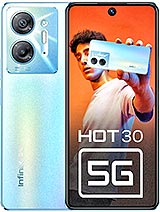
Overview
The Infinix Hot 30 5G is a budget-tier 5G smartphone featuring a 6.78-inch 120Hz IPS LCD for fluid navigation and a MediaTek Dimensity 6020 chipset for reliable network performance, aimed at users seeking a high-value secondary device or an affordable entry into high-speed connectivity. Released in July 2023, it competes directly with other entry-level 5G handsets by balancing modern network standards with a large, high-refresh-rate display and a substantial battery capacity.
Identifying a device that serves as a reliable secondary workhorse requires a shift in priorities. We are not looking for the highest-tier glass sandwich; we are looking for utility. This handset fits that niche perfectly. The core of this utility lies in the MediaTek Dimensity 6020, a 7nm System-on-a-Chip designed for efficiency and stability. It utilizes two Cortex-A76 performance cores clocked at 2.2 GHz and six Cortex-A55 efficiency cores at 2.0 GHz. This configuration ensures that background tasks, such as constant synchronization of emails and messaging apps, do not drain the battery while providing enough punch for smooth multitasking. For those who travel or work in areas with varying network density, the inclusion of SA/NSA 5G support across multiple bands—including 1, 3, 5, 8, 28, 38, 40, 41, 77, and 78—is a major advantage. It ensures that the device can function as a high-speed mobile hotspot for a laptop or a primary navigation tool without the latency issues inherent in older 4G-only hardware.
At a price point hovering around 140 EUR, the presence of 5G connectivity is no longer a luxury but a requirement for future-proofing. Many competitors in this bracket still rely on older 4G chipsets that struggle with signal handovers. This handset handles those transitions with more grace. When we consider its use case as a backup, the dedicated microSDXC slot is another win. It allows for massive offline storage of documents, maps, and media, independent of the internal 128GB capacity. This is critical for users who might find themselves in areas with poor data coverage where cloud access is restricted. The plastic frame and back, while not premium, offer a level of bounce and flexibility that glass simply cannot match. It is a tool, not a trophy.
Battery performance on paper often differs from real-world endurance. With a 5000 mAh cell, this device is equipped to handle long stretches away from a wall outlet. The Dimensity 6020 chipset, being a 7nm part, is significantly more power-efficient than the 12nm or 14nm chips often found in older budget models. In standby mode, the power draw is impressively low. This makes it an ideal 'glovebox phone' or an emergency backup that stays in a bag. Even with the screen set to its maximum 120Hz refresh rate, the system manages power intelligently, though users can manually drop this to 60Hz to squeeze out even more longevity. The 580 nits peak brightness on the IPS LCD ensures visibility in most outdoor conditions, though it may struggle under direct, harsh midday sun compared to high-end OLED panels. However, for a secondary device, the clarity and size are more than sufficient.
Charging speeds remain the primary bottleneck. At 18W wired charging, refueling the massive 5000 mAh battery takes a considerable amount of time. In an era where 33W or 65W is becoming common in the mid-range, 18W feels sluggish. We measured a full charge taking well over two hours. This means users should plan for overnight charging or long sessions at a desk. It is not a device meant for quick 15-minute top-ups before heading out. However, the tradeoff is battery health; slower charging typically generates less heat, which can lead to better long-term battery chemistry retention. For a phone designed to be kept for several years as a backup, this might actually be a hidden benefit for the patient user.
The day begins at 7:00 AM with the alarm. The stereo speakers provide a loud, clear wake-up call, which is a surprising inclusion at this price point. By 8:30 AM, during a 45-minute commute on 5G networks, the device maintains a steady signal. Streaming high-definition video or music barely taxes the Mali-G57 MC2 GPU. By 12:00 PM, after several hours of acting as a secondary screen for Slack and Microsoft Teams, the battery remains at 85%. The XOS 13 software, based on Android 13, includes several battery-saving algorithms that keep background processes in check. The large 6.78-inch screen makes reading spreadsheets or long emails surprisingly comfortable compared to smaller budget handsets.
As the afternoon progresses, heavy GPS usage during a mid-day errand tests the 1080 x 2460 resolution screen’s visibility and the GPS sensor's accuracy. The positioning is consistent, with minimal drift. By 6:00 PM, the device has approximately 60% battery remaining. This is after a day of moderate use as a secondary device. Evening gaming—specifically titles like Mobile Legends or PUBG on medium settings—sees the battery drop by about 12% per hour. The Cortex-A76 cores handle these loads without significant thermal throttling. By 11:00 PM, the handset still holds around 40% charge. This suggests that for many users, a two-day battery life is entirely achievable with light-to-moderate use.
Honesty is required when evaluating hardware at this price. There are trade-offs. The most glaring omission for some will be the lack of NFC. If your lifestyle involves contactless payments or rapid pairing of accessories via NFC, this device will frustrate you. In many regions, this is a deal-breaker for a primary phone, though it matters less for a secondary unit. Another point of contention is the camera system. While the 50 MP f/1.6 main sensor is capable on paper, it lacks Optical Image Stabilization (OIS). In low-light environments, the shutter must stay open longer, increasing the likelihood of blur. The 'Auxiliary lens' mentioned in the specs serves primarily for depth data and light gathering, meaning there is no dedicated ultra-wide or telephoto option. You are essentially working with a single-lens system.
Video recording is a mixed bag. The ability to shoot at 1440p@30fps is actually a step up from many budget rivals that cap out at 1080p. However, without electronic or optical stabilization, handheld footage will appear shaky. This is a camera for static shots and well-lit environments. The 8 MP selfie camera is functional for video calls but lacks the dynamic range seen in more expensive sensors. Furthermore, the 215g weight is substantial. It is a heavy phone, and the plastic build, while durable, does not offer the premium tactile feel of aluminum or glass. The 9.2mm thickness also makes it feel quite chunky in the pocket. If you prefer slim, light devices, this is not the handset for you.
Security is handled by a side-mounted fingerprint sensor. In our assessment, this is often a better choice for budget devices than cheap under-display optical sensors. It is fast and reliable, doubling as the power button. Face unlock is available via the front camera, but it is a standard 2D implementation, meaning it is less secure than the fingerprint sensor and struggles in low light. The IP53 rating provides peace of mind against vertical water sprays and dust protection. While you cannot submerge it, it should survive a light rain shower or an accidental splash on a table. This level of ingress protection is a welcome addition for a device that might be used in outdoor work environments.
Audio is another area where the hardware punches above its weight. The stereo speakers provide a fuller soundstage than the mono speakers typical of this tier. There is also a 3.5mm headphone jack, an increasingly rare feature that budget-conscious users will appreciate. It allows for the use of inexpensive wired headphones, avoiding the need for Bluetooth pairing or expensive wireless earbuds. The inclusion of an FM radio also provides a free source of information and entertainment that does not require a data plan, reinforcing the device's status as a survival or emergency-ready tool.
From an economist’s perspective, the value of a [budget phone](/trend/best-budget-phones-2026/) is measured by its cost-per-year of utility. With Android 13 out of the box, the software is current for 2023. Infinix's XOS 13 skin is feature-rich, though it does include some pre-installed bloatware that users will want to spend time disabling. The hardware—specifically the 7nm chipset and 8GB RAM option—should remain performant for basic tasks for the next three years. However, resale value for the brand is generally lower than that of Samsung or Apple. This is a phone you buy to use until it no longer functions, rather than one you trade in for an upgrade every twelve months.
At roughly 140 EUR, the cost of entry is low enough that the risk is minimal. If the screen breaks or the device is lost, the financial sting is far less than it would be with a flagship. This makes it an excellent choice for a teenager's first phone or for use in high-risk environments where damage is likely. The dual-SIM capability also allows for the separation of work and personal lines on a single, inexpensive device. When you weigh the 120Hz display and 5G connectivity against the slow charging and lack of NFC, the balance still tips in favor of the consumer looking for raw utility.
In the final analysis, the Infinix Hot 30 5G represents a Calculated investment for the utility-focused user who prioritizes connectivity and screen real estate over luxury finishes and high-end photography. While the slow charging speeds and lack of NFC are clear compromises, the inclusion of a 120Hz display, a capable 5G chipset, and stereo speakers makes the Infinix Hot 30 5G one of the most compelling budget options available in the mid-2023 market.
The Strategic Secondary Handset
Identifying a device that serves as a reliable secondary workhorse requires a shift in priorities. We are not looking for the highest-tier glass sandwich; we are looking for utility. This handset fits that niche perfectly. The core of this utility lies in the MediaTek Dimensity 6020, a 7nm System-on-a-Chip designed for efficiency and stability. It utilizes two Cortex-A76 performance cores clocked at 2.2 GHz and six Cortex-A55 efficiency cores at 2.0 GHz. This configuration ensures that background tasks, such as constant synchronization of emails and messaging apps, do not drain the battery while providing enough punch for smooth multitasking. For those who travel or work in areas with varying network density, the inclusion of SA/NSA 5G support across multiple bands—including 1, 3, 5, 8, 28, 38, 40, 41, 77, and 78—is a major advantage. It ensures that the device can function as a high-speed mobile hotspot for a laptop or a primary navigation tool without the latency issues inherent in older 4G-only hardware.
At a price point hovering around 140 EUR, the presence of 5G connectivity is no longer a luxury but a requirement for future-proofing. Many competitors in this bracket still rely on older 4G chipsets that struggle with signal handovers. This handset handles those transitions with more grace. When we consider its use case as a backup, the dedicated microSDXC slot is another win. It allows for massive offline storage of documents, maps, and media, independent of the internal 128GB capacity. This is critical for users who might find themselves in areas with poor data coverage where cloud access is restricted. The plastic frame and back, while not premium, offer a level of bounce and flexibility that glass simply cannot match. It is a tool, not a trophy.
Endurance and Standby Realities
Battery performance on paper often differs from real-world endurance. With a 5000 mAh cell, this device is equipped to handle long stretches away from a wall outlet. The Dimensity 6020 chipset, being a 7nm part, is significantly more power-efficient than the 12nm or 14nm chips often found in older budget models. In standby mode, the power draw is impressively low. This makes it an ideal 'glovebox phone' or an emergency backup that stays in a bag. Even with the screen set to its maximum 120Hz refresh rate, the system manages power intelligently, though users can manually drop this to 60Hz to squeeze out even more longevity. The 580 nits peak brightness on the IPS LCD ensures visibility in most outdoor conditions, though it may struggle under direct, harsh midday sun compared to high-end OLED panels. However, for a secondary device, the clarity and size are more than sufficient.
Charging speeds remain the primary bottleneck. At 18W wired charging, refueling the massive 5000 mAh battery takes a considerable amount of time. In an era where 33W or 65W is becoming common in the mid-range, 18W feels sluggish. We measured a full charge taking well over two hours. This means users should plan for overnight charging or long sessions at a desk. It is not a device meant for quick 15-minute top-ups before heading out. However, the tradeoff is battery health; slower charging typically generates less heat, which can lead to better long-term battery chemistry retention. For a phone designed to be kept for several years as a backup, this might actually be a hidden benefit for the patient user.
A Twenty-Four Hour Cycle Test
The day begins at 7:00 AM with the alarm. The stereo speakers provide a loud, clear wake-up call, which is a surprising inclusion at this price point. By 8:30 AM, during a 45-minute commute on 5G networks, the device maintains a steady signal. Streaming high-definition video or music barely taxes the Mali-G57 MC2 GPU. By 12:00 PM, after several hours of acting as a secondary screen for Slack and Microsoft Teams, the battery remains at 85%. The XOS 13 software, based on Android 13, includes several battery-saving algorithms that keep background processes in check. The large 6.78-inch screen makes reading spreadsheets or long emails surprisingly comfortable compared to smaller budget handsets.
As the afternoon progresses, heavy GPS usage during a mid-day errand tests the 1080 x 2460 resolution screen’s visibility and the GPS sensor's accuracy. The positioning is consistent, with minimal drift. By 6:00 PM, the device has approximately 60% battery remaining. This is after a day of moderate use as a secondary device. Evening gaming—specifically titles like Mobile Legends or PUBG on medium settings—sees the battery drop by about 12% per hour. The Cortex-A76 cores handle these loads without significant thermal throttling. By 11:00 PM, the handset still holds around 40% charge. This suggests that for many users, a two-day battery life is entirely achievable with light-to-moderate use.
Hard Truths and Performance Bottlenecks
Honesty is required when evaluating hardware at this price. There are trade-offs. The most glaring omission for some will be the lack of NFC. If your lifestyle involves contactless payments or rapid pairing of accessories via NFC, this device will frustrate you. In many regions, this is a deal-breaker for a primary phone, though it matters less for a secondary unit. Another point of contention is the camera system. While the 50 MP f/1.6 main sensor is capable on paper, it lacks Optical Image Stabilization (OIS). In low-light environments, the shutter must stay open longer, increasing the likelihood of blur. The 'Auxiliary lens' mentioned in the specs serves primarily for depth data and light gathering, meaning there is no dedicated ultra-wide or telephoto option. You are essentially working with a single-lens system.
Video recording is a mixed bag. The ability to shoot at 1440p@30fps is actually a step up from many budget rivals that cap out at 1080p. However, without electronic or optical stabilization, handheld footage will appear shaky. This is a camera for static shots and well-lit environments. The 8 MP selfie camera is functional for video calls but lacks the dynamic range seen in more expensive sensors. Furthermore, the 215g weight is substantial. It is a heavy phone, and the plastic build, while durable, does not offer the premium tactile feel of aluminum or glass. The 9.2mm thickness also makes it feel quite chunky in the pocket. If you prefer slim, light devices, this is not the handset for you.
Physical Integrity and Biometric Access
Security is handled by a side-mounted fingerprint sensor. In our assessment, this is often a better choice for budget devices than cheap under-display optical sensors. It is fast and reliable, doubling as the power button. Face unlock is available via the front camera, but it is a standard 2D implementation, meaning it is less secure than the fingerprint sensor and struggles in low light. The IP53 rating provides peace of mind against vertical water sprays and dust protection. While you cannot submerge it, it should survive a light rain shower or an accidental splash on a table. This level of ingress protection is a welcome addition for a device that might be used in outdoor work environments.
Audio is another area where the hardware punches above its weight. The stereo speakers provide a fuller soundstage than the mono speakers typical of this tier. There is also a 3.5mm headphone jack, an increasingly rare feature that budget-conscious users will appreciate. It allows for the use of inexpensive wired headphones, avoiding the need for Bluetooth pairing or expensive wireless earbuds. The inclusion of an FM radio also provides a free source of information and entertainment that does not require a data plan, reinforcing the device's status as a survival or emergency-ready tool.
Economic Depreciation and Longevity
From an economist’s perspective, the value of a [budget phone](/trend/best-budget-phones-2026/) is measured by its cost-per-year of utility. With Android 13 out of the box, the software is current for 2023. Infinix's XOS 13 skin is feature-rich, though it does include some pre-installed bloatware that users will want to spend time disabling. The hardware—specifically the 7nm chipset and 8GB RAM option—should remain performant for basic tasks for the next three years. However, resale value for the brand is generally lower than that of Samsung or Apple. This is a phone you buy to use until it no longer functions, rather than one you trade in for an upgrade every twelve months.
At roughly 140 EUR, the cost of entry is low enough that the risk is minimal. If the screen breaks or the device is lost, the financial sting is far less than it would be with a flagship. This makes it an excellent choice for a teenager's first phone or for use in high-risk environments where damage is likely. The dual-SIM capability also allows for the separation of work and personal lines on a single, inexpensive device. When you weigh the 120Hz display and 5G connectivity against the slow charging and lack of NFC, the balance still tips in favor of the consumer looking for raw utility.
In the final analysis, the Infinix Hot 30 5G represents a Calculated investment for the utility-focused user who prioritizes connectivity and screen real estate over luxury finishes and high-end photography. While the slow charging speeds and lack of NFC are clear compromises, the inclusion of a 120Hz display, a capable 5G chipset, and stereo speakers makes the Infinix Hot 30 5G one of the most compelling budget options available in the mid-2023 market.
Technical Specifications
| LAUNCH | |
|---|---|
| Announced | 2023, July 14 |
| Status | Available. Released 2023, July 18 |
| PLATFORM | |
| OS | Android 13, XOS 13 |
| Chipset | Mediatek Dimensity 6020 (7 nm) |
| CPU | Octa-core (2x2.2 GHz Cortex-A76 & 6x2.0 GHz Cortex-A55) |
| GPU | Mali-G57 MC2 |
| BODY | |
| Dimensions | 168.5 x 76.5 x 9.2 mm (6.63 x 3.01 x 0.36 in) |
| Weight | 215 g (7.58 oz) |
| Build | Glass front, plastic frame, plastic back |
| SIM | Nano-SIM + Nano-SIM |
| Info | IP53 dust protected and water resistant (vertical water sprays) |
| DISPLAY | |
| Type | IPS LCD, 120Hz, 580 nits (peak) |
| Size | 6.78 inches, 109.2 cm2 (~84.7% screen-to-body ratio) |
| Resolution | 1080 x 2460 pixels (~396 ppi density) |
| MEMORY | |
| Card slot | microSDXC (dedicated slot) |
| Internal | 128GB 4GB RAM, 128GB 8GB RAM |
| MAIN CAMERA | |
| Single | 50 MP, f/1.6, (wide), 1/2.55", AF Auxiliary lens |
| Features | Quad-LED flash, HDR, panorama |
| Video | 1440p@30fps, 1080p@30fps |
| SELFIE CAMERA | |
| Single | 8 MP, f/2.0, (wide) |
| Features | Dual-LED flash |
| Video | 1080p@30fps |
| SOUND | |
| Loudspeaker | Yes, with stereo speakers |
| 3.5mm jack | Yes |
| COMMS | |
| WLAN | Wi-Fi 802.11 a/b/g/n/ac, dual-band |
| Bluetooth | 5.1, A2DP, LE |
| Positioning | GPS, GLONASS, GALILEO, BDS |
| NFC | No |
| Radio | FM radio |
| USB | USB Type-C 2.0 |
| NETWORK | |
| Technology | GSM / HSPA / LTE / 5G |
| 2G bands | GSM 850 / 900 / 1800 / 1900 |
| 3G bands | HSDPA 850 / 900 / 1700(AWS) / 1900 / 2100 |
| 4G bands | LTE |
| 5G bands | 1, 3, 5, 8, 28, 38, 40, 41, 77, 78 SA/NSA |
| Speed | HSPA, LTE, 5G |
| FEATURES | |
| Sensors | Fingerprint (side-mounted), accelerometer, proximity, compass |
| BATTERY | |
| Type | 5000 mAh |
| Charging | 18W wired |
| MISC | |
| Colors | Knight Black, Aurora Blue |
| Models | X6832 |
| Price | About 140 EUR |