The Infinix Note 40 Pro 4G Redefines Mid-Range Charging Utility - But Can It Outlast the 5G Wave?
Overview
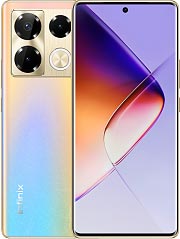
The Infinix Note 40 Pro 4G is a mid-range smartphone featuring a 6.78-inch 120Hz AMOLED for immersive visuals and 70W wired plus 20W wireless MagCharge for versatile power management, aimed at style-conscious users and heavy media consumers who prioritize charging convenience over 5G speeds. Released in March 2024, this device positions itself as a luxury-lite contender in a market increasingly dominated by high-speed connectivity, choosing instead to focus on the tangible daily benefits of battery tech and display ergonomics.
Under the hood, the handset relies on the Mediatek Helio G99 Ultimate chipset. This is a performance-tuned variant of the 6nm G99, utilizing an octa-core configuration with two Cortex-A76 cores clocked at 2.2 GHz and six power-efficient Cortex-A55 cores. While this silicon provides enough muscle for a fluid 120Hz UI and popular social media applications, it lacks an integrated 5G modem. In 2024, as carriers expand their sub-6GHz networks, this creates a potential shelf-life issue for users who keep their phones for more than two years. However, for those in regions where 5G remains a premium or inconsistent service, the trade-off results in better thermal stability and battery endurance.
During a standard afternoon of heavy multitasking—jumping between high-bitrate video streaming, navigating with GPS, and editing short-form video—the Helio G99 Ultimate maintains a consistent temperature. It doesn't exhibit the aggressive thermal throttling often seen in budget-tier 5G chips that sacrifice efficiency for speed. This model proves that for the average user, optimized 4G silicon often feels more stable in day-to-day interactions than a compromised, entry-level 5G alternative.
Compared to the previous Note 30 Pro, the internal architecture here feels refined rather than revolutionary. The transition to UFS 2.2 storage ensures that app installation and file transfers remain snappy, though it still falls behind the UFS 3.1 speeds found in slightly more expensive competitors. The decision to stick with the G99 series highlights a focus on reliability over raw benchmark scores, a move that will resonate with users who prioritize a lag-free interface over the ability to play competitive shooters at maximum settings.
Power management is where the device truly shines, utilizing a 5000 mAh cell paired with 70W wired charging. This setup claims a 50% charge in just 20 minutes, a figure that shifts the way users interact with their devices. Instead of overnight charging, which can degrade battery health over time, a quick morning top-up while getting ready is entirely feasible. This model also introduces MagCharge, a magnetic wireless charging system that uses internal magnets to align the device with induction coils. It's a rare inclusion at this price point, offering a level of convenience usually reserved for high-end flagships.
Imagine a desk setup where the phone snaps into place on a magnetic stand, charging at 20W without the need to fumble with cables. For office workers or students, this adds a layer of utility that is hard to give up once experienced. The inclusion of Bypass Charging is another critical feature for longevity; it allows the phone to power the motherboard directly during gaming or navigation without going through the battery, significantly reducing heat and preventing battery wear during intense usage sessions.
When we look at the competition, specifically the [Samsung Galaxy A25](/why-the-samsung-galaxy-a25-crushes-the-used-flagship-market/) or the Redmi Note 13, the charging suite provided by the Infinix Note 40 Pro 4G is objectively superior. While Samsung still languishes with 25W wired speeds and no wireless option in this tier, this handset offers a versatile ecosystem of charging possibilities. This isn't just about speed; it's about the flexibility of reverse wired and reverse wireless charging, allowing the device to act as a power bank for earbuds or a friend's struggling phone.
The visual experience centers on a 6.78-inch curved AMOLED panel with a 120Hz refresh rate and a peak brightness of 1300 nits. This brightness level ensures that the screen remains legible even under direct midday sun, a common failing of cheaper LCD or low-quality OLED panels. The use of a curved display gives the handset a much more expensive feel, effectively mimicking the aesthetic of a $800 flagship. However, the curve also introduces a higher risk of accidental touches and makes finding a glass screen protector more difficult, even with the included Corning Gorilla Glass protection.
Users watching high-fidelity content will appreciate the 24-bit/192kHz Hi-Res audio tuned by JBL. The stereo speakers provide a wider soundstage than expected, making it a strong choice for those who consume media without headphones. The lack of a 3.5mm jack is a departure from the traditional budget philosophy, but it reflects the industry's shift toward wireless audio. The inclusion of an IP54 rating offers protection against dust and splashes, providing peace of mind during a light rain shower, though it certainly won't survive a submersion in a pool.
In our assessment, the display quality punches well above its weight class. The 1080 x 2436 resolution results in approximately 393 ppi, providing crisp text and vibrant colors. While it doesn't offer the LTPO technology found in ultra-premium devices to scale refresh rates down to 1Hz, the software does a decent job of switching between 60Hz and 120Hz to preserve power when high motion isn't required.
The primary camera features a 108 MP sensor with an f/1.8 aperture and Optical Image Stabilization (OIS). This is a significant hardware inclusion for a 4G device, as OIS is the most effective tool for preventing blurry photos in low light or shaky video footage. The sensor utilizes pixel binning to produce 12MP images with improved light intake, though users can shoot at the full 108MP resolution if they require maximum detail for large prints. The secondary 2 MP macro and depth sensors are essentially fillers, adding little practical value to the photography suite.
When shooting video, the handset caps at 1440p@30fps or 1080p@60fps. The absence of 4K recording is a limitation of the Helio G99 ISP rather than the sensor itself. For content creators on TikTok or Instagram, the 32 MP selfie camera with a Dual-LED flash is a standout feature. It allows for clear video calls and selfies in poorly lit environments like cafes or evening events, a scenario where most mid-range front cameras fall apart.
Compared to the [Xiaomi Redmi Note 13 4G](/tactile-luxury-on-a-budget-the-xiaomi-redmi-note-13-4g-shakes-the-entry-tier/), which also features a 108MP sensor, the addition of OIS here gives the Infinix Note 40 Pro 4G a clear edge in reliability. It ensures that the hardware potential isn't wasted by a shaky hand, though the image processing software still tends toward aggressive saturation and sharpening that may not appeal to purists.
Running Android 14 with XOS 14, the software experience is a bit of a mixed bag. Infinix has made strides in cleaning up its UI, but bloatware remains a persistent issue. There are numerous pre-installed apps that the average user will never open. However, XOS 14 offers deep customization options and useful tools like the 'Magic Ring' for notifications, which utilizes the area around the punch-hole camera for quick status updates.
In terms of updates, the brand has historically been less predictable than Samsung or Google. While they have promised improvements to their support cycle, users should realistically expect at least one major Android upgrade and two years of security patches. This is a critical factor for the 'Future Proofing' analysis; if you require a device that will receive Android 17 or 18, this might not be the right choice. Samsung’s Galaxy A series remains the king of longevity in this price bracket with its 4-year OS update promise.
Price vs. Performance, the device is aggressively positioned at roughly 240 EUR. At this price, you are paying for the premium design, the exceptional charging tech, and the OIS-equipped camera. If you are a performance enthusiast, you might find more value in a 5G-enabled Poco device, but you would likely sacrifice the wireless charging and the superior build quality offered here.
The resale value of this model is likely to drop faster than its 5G counterparts. As 5G becomes the baseline standard for even entry-level devices in the coming years, 4G-only handsets will become harder to sell on the secondary market. However, for the primary user, the value is extracted during the period of ownership through the convenience of the charging ecosystem. The included MagCharge accessories in the box add immediate tangible value that competitors charge extra for.
In conclusion, the Infinix Note 40 Pro 4G is a specialized tool. It doesn't try to be everything to everyone. It ignores the 5G hype to focus on the things people actually feel every day: the speed of their charger, the brightness of their screen, and the stability of their handheld photos. If you live in an area where 4G is still king and you want a phone that looks and feels twice its price, this is a compelling package that challenges the established leaders in the mid-range segment.
The Longevity Gamble: 4G Hardware in a 5G World
Under the hood, the handset relies on the Mediatek Helio G99 Ultimate chipset. This is a performance-tuned variant of the 6nm G99, utilizing an octa-core configuration with two Cortex-A76 cores clocked at 2.2 GHz and six power-efficient Cortex-A55 cores. While this silicon provides enough muscle for a fluid 120Hz UI and popular social media applications, it lacks an integrated 5G modem. In 2024, as carriers expand their sub-6GHz networks, this creates a potential shelf-life issue for users who keep their phones for more than two years. However, for those in regions where 5G remains a premium or inconsistent service, the trade-off results in better thermal stability and battery endurance.
During a standard afternoon of heavy multitasking—jumping between high-bitrate video streaming, navigating with GPS, and editing short-form video—the Helio G99 Ultimate maintains a consistent temperature. It doesn't exhibit the aggressive thermal throttling often seen in budget-tier 5G chips that sacrifice efficiency for speed. This model proves that for the average user, optimized 4G silicon often feels more stable in day-to-day interactions than a compromised, entry-level 5G alternative.
Compared to the previous Note 30 Pro, the internal architecture here feels refined rather than revolutionary. The transition to UFS 2.2 storage ensures that app installation and file transfers remain snappy, though it still falls behind the UFS 3.1 speeds found in slightly more expensive competitors. The decision to stick with the G99 series highlights a focus on reliability over raw benchmark scores, a move that will resonate with users who prioritize a lag-free interface over the ability to play competitive shooters at maximum settings.
Charging Innovation: All-Round FastCharge 2.0 and MagCharge
Power management is where the device truly shines, utilizing a 5000 mAh cell paired with 70W wired charging. This setup claims a 50% charge in just 20 minutes, a figure that shifts the way users interact with their devices. Instead of overnight charging, which can degrade battery health over time, a quick morning top-up while getting ready is entirely feasible. This model also introduces MagCharge, a magnetic wireless charging system that uses internal magnets to align the device with induction coils. It's a rare inclusion at this price point, offering a level of convenience usually reserved for high-end flagships.
Imagine a desk setup where the phone snaps into place on a magnetic stand, charging at 20W without the need to fumble with cables. For office workers or students, this adds a layer of utility that is hard to give up once experienced. The inclusion of Bypass Charging is another critical feature for longevity; it allows the phone to power the motherboard directly during gaming or navigation without going through the battery, significantly reducing heat and preventing battery wear during intense usage sessions.
When we look at the competition, specifically the [Samsung Galaxy A25](/why-the-samsung-galaxy-a25-crushes-the-used-flagship-market/) or the Redmi Note 13, the charging suite provided by the Infinix Note 40 Pro 4G is objectively superior. While Samsung still languishes with 25W wired speeds and no wireless option in this tier, this handset offers a versatile ecosystem of charging possibilities. This isn't just about speed; it's about the flexibility of reverse wired and reverse wireless charging, allowing the device to act as a power bank for earbuds or a friend's struggling phone.
Display Excellence and Structural Integrity
The visual experience centers on a 6.78-inch curved AMOLED panel with a 120Hz refresh rate and a peak brightness of 1300 nits. This brightness level ensures that the screen remains legible even under direct midday sun, a common failing of cheaper LCD or low-quality OLED panels. The use of a curved display gives the handset a much more expensive feel, effectively mimicking the aesthetic of a $800 flagship. However, the curve also introduces a higher risk of accidental touches and makes finding a glass screen protector more difficult, even with the included Corning Gorilla Glass protection.
Users watching high-fidelity content will appreciate the 24-bit/192kHz Hi-Res audio tuned by JBL. The stereo speakers provide a wider soundstage than expected, making it a strong choice for those who consume media without headphones. The lack of a 3.5mm jack is a departure from the traditional budget philosophy, but it reflects the industry's shift toward wireless audio. The inclusion of an IP54 rating offers protection against dust and splashes, providing peace of mind during a light rain shower, though it certainly won't survive a submersion in a pool.
In our assessment, the display quality punches well above its weight class. The 1080 x 2436 resolution results in approximately 393 ppi, providing crisp text and vibrant colors. While it doesn't offer the LTPO technology found in ultra-premium devices to scale refresh rates down to 1Hz, the software does a decent job of switching between 60Hz and 120Hz to preserve power when high motion isn't required.
Photography Potential: 108MP with OIS
The primary camera features a 108 MP sensor with an f/1.8 aperture and Optical Image Stabilization (OIS). This is a significant hardware inclusion for a 4G device, as OIS is the most effective tool for preventing blurry photos in low light or shaky video footage. The sensor utilizes pixel binning to produce 12MP images with improved light intake, though users can shoot at the full 108MP resolution if they require maximum detail for large prints. The secondary 2 MP macro and depth sensors are essentially fillers, adding little practical value to the photography suite.
When shooting video, the handset caps at 1440p@30fps or 1080p@60fps. The absence of 4K recording is a limitation of the Helio G99 ISP rather than the sensor itself. For content creators on TikTok or Instagram, the 32 MP selfie camera with a Dual-LED flash is a standout feature. It allows for clear video calls and selfies in poorly lit environments like cafes or evening events, a scenario where most mid-range front cameras fall apart.
Compared to the [Xiaomi Redmi Note 13 4G](/tactile-luxury-on-a-budget-the-xiaomi-redmi-note-13-4g-shakes-the-entry-tier/), which also features a 108MP sensor, the addition of OIS here gives the Infinix Note 40 Pro 4G a clear edge in reliability. It ensures that the hardware potential isn't wasted by a shaky hand, though the image processing software still tends toward aggressive saturation and sharpening that may not appeal to purists.
Software Support and Market Positioning
Running Android 14 with XOS 14, the software experience is a bit of a mixed bag. Infinix has made strides in cleaning up its UI, but bloatware remains a persistent issue. There are numerous pre-installed apps that the average user will never open. However, XOS 14 offers deep customization options and useful tools like the 'Magic Ring' for notifications, which utilizes the area around the punch-hole camera for quick status updates.
In terms of updates, the brand has historically been less predictable than Samsung or Google. While they have promised improvements to their support cycle, users should realistically expect at least one major Android upgrade and two years of security patches. This is a critical factor for the 'Future Proofing' analysis; if you require a device that will receive Android 17 or 18, this might not be the right choice. Samsung’s Galaxy A series remains the king of longevity in this price bracket with its 4-year OS update promise.
Price vs. Performance, the device is aggressively positioned at roughly 240 EUR. At this price, you are paying for the premium design, the exceptional charging tech, and the OIS-equipped camera. If you are a performance enthusiast, you might find more value in a 5G-enabled Poco device, but you would likely sacrifice the wireless charging and the superior build quality offered here.
Resale Prediction and Final Value
The resale value of this model is likely to drop faster than its 5G counterparts. As 5G becomes the baseline standard for even entry-level devices in the coming years, 4G-only handsets will become harder to sell on the secondary market. However, for the primary user, the value is extracted during the period of ownership through the convenience of the charging ecosystem. The included MagCharge accessories in the box add immediate tangible value that competitors charge extra for.
In conclusion, the Infinix Note 40 Pro 4G is a specialized tool. It doesn't try to be everything to everyone. It ignores the 5G hype to focus on the things people actually feel every day: the speed of their charger, the brightness of their screen, and the stability of their handheld photos. If you live in an area where 4G is still king and you want a phone that looks and feels twice its price, this is a compelling package that challenges the established leaders in the mid-range segment.
Technical Specifications
| LAUNCH | |
|---|---|
| Announced | 2024, March 18 |
| Status | Available. Released 2024, March 19 |
| PLATFORM | |
| OS | Android 14, XOS 14 |
| Chipset | Mediatek Helio G99 Ultimate |
| CPU | Octa-core (2x2.2 GHz Cortex-A76 & 6x2.0 GHz Cortex-A55) |
| GPU | Mali-G57 MC2 |
| BODY | |
| Dimensions | 164.4 x 74.6 x 7.8 mm (6.47 x 2.94 x 0.31 in) |
| Weight | 190 g (6.70 oz) |
| SIM | Nano-SIM + Nano-SIM |
| Info | IP54 dust protected and water resistant (water splashes) |
| DISPLAY | |
| Type | AMOLED, 120Hz, 1300 nits (peak) |
| Size | 6.78 inches, 109.9 cm2 (~89.6% screen-to-body ratio) |
| Resolution | 1080 x 2436 pixels (~393 ppi density) |
| Protection | Corning Gorilla Glass |
| MEMORY | |
| Card slot | Unspecified |
| Internal | 256GB 8GB RAM, 256GB 12GB RAM |
| Info | UFS 2.2 |
| MAIN CAMERA | |
| Triple | 108 MP, f/1.8, (wide), 1/1.67", PDAF, OIS 2 MP, f/2.4 2 MP, f/2.4 |
| Features | Quad-LED flash, HDR, panorama |
| Video | 1440p@30fps, 1080p@30/60fps |
| SELFIE CAMERA | |
| Single | 32 MP, f/2.2, (wide), 1/3.1" |
| Features | Dual-LED flash |
| Video | 1080p@30fps |
| SOUND | |
| Loudspeaker | Yes, with stereo speakers |
| 3.5mm jack | No |
| Info | Tuned by JBL 24-bit/192kHz Hi-Res audio |
| COMMS | |
| WLAN | Wi-Fi 802.11 a/b/g/n/ac, dual-band |
| Bluetooth | Yes |
| Positioning | GPS |
| NFC | Yes (market/region dependent) |
| Infrared port | Yes |
| Radio | FM radio |
| USB | USB Type-C 2.0, OTG |
| NETWORK | |
| Technology | GSM / HSPA / LTE |
| 2G bands | GSM 850 / 900 / 1800 / 1900 |
| 3G bands | HSDPA 850 / 900 / 1700(AWS) / 1900 / 2100 |
| Info | 1, 3, 5, 8, 38, 40, 41 |
| 4G bands | 1, 2, 3, 4, 5, 7, 8, 12, 17, 13, 26, 28, 38, 40, 41, 66 |
| Speed | HSPA, LTE |
| FEATURES | |
| Sensors | Fingerprint (under display, optical), accelerometer, gyro, proximity, compass |
| BATTERY | |
| Type | 5000 mAh |
| Charging | 70W wired, 50% in 20 min 20W wireless MagCharge Reverse wired Reverse wireless |
| MISC | |
| Colors | Vintage Green, Titan Gold, Racing Edition |
| Models | X6850 |
| Price | About 240 EUR |