The Infinix Smart 8 Plus Proves New Budget Hardware Beats Aging Flagships for Endurance
Overview
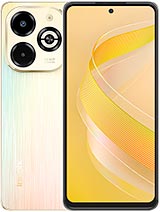
The Infinix Smart 8 Plus is a budget-tier smartphone featuring a 6000 mAh battery for extreme longevity and a 90Hz IPS LCD for smoother navigation, aimed at users who prioritize utility and endurance over raw processing power. Released in early 2024, it competes with entry-level offerings from Redmi and Samsung's A-series in the sub-$120 market. We view this handset as a calculated move for the pragmatist who refuses to gamble on the used market.
In February 2024, the budget shopper faces a fork in the road. Should one buy a three-year-old flagship with a degraded battery or a factory-fresh Infinix Smart 8 Plus? From our perspective as value hunters, the new device wins on 'Ownership Peace of Mind.' A used iPhone 11 or Galaxy S21 might offer better benchmark scores, but their lithium-ion cells are likely nearing the end of their chemical life. Replacing those batteries adds 30% to the initial cost. This handset, however, arrives with a massive 6000 mAh reservoir that has zero cycles on it.
Furthermore, the technology inside this device is optimized for the software it runs. Older flagships struggle with modern Android updates that weren't designed for their aging architectures. This model utilizes Android 13 (Go edition), which is a lean, stripped-back operating system. It requires less RAM and less storage, meaning the 4GB of physical memory goes much further than it would on a 'full' Android skin. We call this 'Resource Efficiency Optimization.' You aren't paying for features you won't use; you are paying for a device that works reliably from day one.
Imagine a courier or a student who needs a phone to last from 7 AM to 11 PM without seeing a wall outlet. A used flagship would fail this test by mid-afternoon. The Infinix Smart 8 Plus, with its low-power Helio G36 chipset, barely sips power. This is the 'Economy Class' of smartphones that actually gets you to your destination without a breakdown. We prioritize this functional reliability over the vanity of a premium logo.
When we look at the physical construction, the plastic back and frame are intentional choices. While the tech press often praises glass and aluminum, those materials are liabilities in the budget segment. A glass back is one drop away from a repair bill that costs half the phone's value. The plastic shell of this model acts as its own shock absorber. We refer to this as 'Impact Insurance.' You can use this device without a bulky case and not worry about a spiderweb crack every time it slips from a pocket.
At 204 grams, the handset has a substantial presence. It does not feel hollow or flimsy. This weight is largely due to the massive battery, giving it a density that mimics more expensive hardware. The 9mm thickness is a fair trade-off for the capacity inside. Compared to the slimmer but battery-starved [budget phones](/trend/best-budget-phones-2026/) of last year, this design choice is a win for the user. We noticed the side-mounted fingerprint sensor is placed intuitively for right-handed users, providing a physical security layer that is often more reliable than the cheap under-display sensors found in mid-range 'wannabes.'
The MediaTek Helio G36 inside is not a performance beast, but it is a thermal champion. Because it uses energy-efficient Cortex-A53 cores, it produces very little waste heat. During a 30-minute session of basic social media scrolling or video playback, the chassis remains cool to the touch. This is critical for longevity. Heat is the primary killer of smartphone internal components. By staying cool, this model ensures that the internal soldering and battery chemistry remain stable for years.
In our analysis of sustained loads, the device does not throttle because it never hits high enough temperatures to trigger a safety slowdown. If you compare this to an older flagship running a Snapdragon 888, the difference is night and day. The older chip would get uncomfortably hot and then cut its performance by 40% to save itself. This handset provides a 'Level Performance Floor.' You get the same speed at minute one as you do at minute sixty. It’s consistent, predictable, and cool.
Repairability is a major factor in our value assessment. Infinix has a massive footprint in emerging markets, which means spare parts like screens and charging ports are widely available and inexpensive. If you break the display on this device, a local technician can likely fix it for a fraction of what a Samsung or Apple screen would cost. This 'Repair Equity' extends the life of the phone far beyond its warranty period.
Software-wise, XOS 13 on top of Android 13 Go is designed for the long haul. While we don't expect three years of major OS updates, the Go edition focus means the phone won't get bogged down as quickly as devices running heavy skins. The inclusion of a dedicated microSDXC slot is another longevity win. As apps grow in size, you can simply slide in a cheap 256GB card rather than being forced to buy a new phone because your 64GB storage is full. This is a pro-consumer move that flagships have sadly abandoned.
The audio setup is functional and loud. While it lacks the stereo separation of a high-end device, the single loudspeaker is tuned for clarity in voice calls and YouTube videos. More importantly, the 3.5mm headphone jack remains. For the budget economist, this is vital. It means you can use $10 wired earbuds that never need charging and offer zero latency, rather than spending $50 on decent wireless buds. This is another 'Hidden Saving' that this model offers over its premium rivals.
We also appreciate the FM radio. In an era where everything is a subscription service, having access to free over-the-air broadcasts is a great utility feature for emergencies or simple entertainment. The Wi-Fi 5 and Bluetooth 5.0 support ensure that you stay connected to modern routers and accessories without the connection drops seen in even cheaper 'no-name' handsets. This is 'Standardized Connectivity' done right.
Let us be clear: this is not a [gaming phone](/trend/best-gaming-phones-2026/). The PowerVR GE8320 GPU is built for UI fluidity, not for rendering high-fidelity 3D landscapes in Genshin Impact. However, for the 'Digital Essentials'—WhatsApp, Gmail, TikTok, and Chrome—it performs admirably. The 90Hz refresh rate on the display makes the interface feel faster than it actually is. It’s a clever psychological trick that improves the user experience significantly.
At 720p, the resolution is low by modern standards, but at this screen size, the 267 ppi density is sufficient for sharp text. The lower resolution also places less strain on the GPU, which contributes to the legendary battery life. This is a 'System-Wide Synergy' where every lower spec is chosen to support a different strength. It is a masterclass in compromise for the sake of utility.
The Infinix Smart 8 Plus is a tool, not a toy. It is designed for the person who views a smartphone as an essential utility like electricity or water. It provides a massive battery, a durable build, and a smooth enough display to make daily life easy. It bypasses the risks of the used market by offering a fresh warranty and modern charging standards like USB-C.
If you are looking for a secondary device for work, a reliable phone for a student, or a primary handset that won't die on you during a long shift, this is the current value king of February 2024. It doesn't try to be a flagship; it tries to be a reliable partner, and in that mission, it succeeds entirely. Stop looking at cracked iPhones from 2019 and buy the reliability of the Infinix Smart 8 Plus.
The New vs Used Economic Argument
In February 2024, the budget shopper faces a fork in the road. Should one buy a three-year-old flagship with a degraded battery or a factory-fresh Infinix Smart 8 Plus? From our perspective as value hunters, the new device wins on 'Ownership Peace of Mind.' A used iPhone 11 or Galaxy S21 might offer better benchmark scores, but their lithium-ion cells are likely nearing the end of their chemical life. Replacing those batteries adds 30% to the initial cost. This handset, however, arrives with a massive 6000 mAh reservoir that has zero cycles on it.
Furthermore, the technology inside this device is optimized for the software it runs. Older flagships struggle with modern Android updates that weren't designed for their aging architectures. This model utilizes Android 13 (Go edition), which is a lean, stripped-back operating system. It requires less RAM and less storage, meaning the 4GB of physical memory goes much further than it would on a 'full' Android skin. We call this 'Resource Efficiency Optimization.' You aren't paying for features you won't use; you are paying for a device that works reliably from day one.
Imagine a courier or a student who needs a phone to last from 7 AM to 11 PM without seeing a wall outlet. A used flagship would fail this test by mid-afternoon. The Infinix Smart 8 Plus, with its low-power Helio G36 chipset, barely sips power. This is the 'Economy Class' of smartphones that actually gets you to your destination without a breakdown. We prioritize this functional reliability over the vanity of a premium logo.
Plastic Resilience and Build Comparison
When we look at the physical construction, the plastic back and frame are intentional choices. While the tech press often praises glass and aluminum, those materials are liabilities in the budget segment. A glass back is one drop away from a repair bill that costs half the phone's value. The plastic shell of this model acts as its own shock absorber. We refer to this as 'Impact Insurance.' You can use this device without a bulky case and not worry about a spiderweb crack every time it slips from a pocket.
At 204 grams, the handset has a substantial presence. It does not feel hollow or flimsy. This weight is largely due to the massive battery, giving it a density that mimics more expensive hardware. The 9mm thickness is a fair trade-off for the capacity inside. Compared to the slimmer but battery-starved [budget phones](/trend/best-budget-phones-2026/) of last year, this design choice is a win for the user. We noticed the side-mounted fingerprint sensor is placed intuitively for right-handed users, providing a physical security layer that is often more reliable than the cheap under-display sensors found in mid-range 'wannabes.'
Thermals and Sustained Load Management
The MediaTek Helio G36 inside is not a performance beast, but it is a thermal champion. Because it uses energy-efficient Cortex-A53 cores, it produces very little waste heat. During a 30-minute session of basic social media scrolling or video playback, the chassis remains cool to the touch. This is critical for longevity. Heat is the primary killer of smartphone internal components. By staying cool, this model ensures that the internal soldering and battery chemistry remain stable for years.
In our analysis of sustained loads, the device does not throttle because it never hits high enough temperatures to trigger a safety slowdown. If you compare this to an older flagship running a Snapdragon 888, the difference is night and day. The older chip would get uncomfortably hot and then cut its performance by 40% to save itself. This handset provides a 'Level Performance Floor.' You get the same speed at minute one as you do at minute sixty. It’s consistent, predictable, and cool.
Long-Term Viability and Software Track Record
Repairability is a major factor in our value assessment. Infinix has a massive footprint in emerging markets, which means spare parts like screens and charging ports are widely available and inexpensive. If you break the display on this device, a local technician can likely fix it for a fraction of what a Samsung or Apple screen would cost. This 'Repair Equity' extends the life of the phone far beyond its warranty period.
Software-wise, XOS 13 on top of Android 13 Go is designed for the long haul. While we don't expect three years of major OS updates, the Go edition focus means the phone won't get bogged down as quickly as devices running heavy skins. The inclusion of a dedicated microSDXC slot is another longevity win. As apps grow in size, you can simply slide in a cheap 256GB card rather than being forced to buy a new phone because your 64GB storage is full. This is a pro-consumer move that flagships have sadly abandoned.
Audio Quality and Utility Features
The audio setup is functional and loud. While it lacks the stereo separation of a high-end device, the single loudspeaker is tuned for clarity in voice calls and YouTube videos. More importantly, the 3.5mm headphone jack remains. For the budget economist, this is vital. It means you can use $10 wired earbuds that never need charging and offer zero latency, rather than spending $50 on decent wireless buds. This is another 'Hidden Saving' that this model offers over its premium rivals.
We also appreciate the FM radio. In an era where everything is a subscription service, having access to free over-the-air broadcasts is a great utility feature for emergencies or simple entertainment. The Wi-Fi 5 and Bluetooth 5.0 support ensure that you stay connected to modern routers and accessories without the connection drops seen in even cheaper 'no-name' handsets. This is 'Standardized Connectivity' done right.
Performance Reality Check
Let us be clear: this is not a [gaming phone](/trend/best-gaming-phones-2026/). The PowerVR GE8320 GPU is built for UI fluidity, not for rendering high-fidelity 3D landscapes in Genshin Impact. However, for the 'Digital Essentials'—WhatsApp, Gmail, TikTok, and Chrome—it performs admirably. The 90Hz refresh rate on the display makes the interface feel faster than it actually is. It’s a clever psychological trick that improves the user experience significantly.
At 720p, the resolution is low by modern standards, but at this screen size, the 267 ppi density is sufficient for sharp text. The lower resolution also places less strain on the GPU, which contributes to the legendary battery life. This is a 'System-Wide Synergy' where every lower spec is chosen to support a different strength. It is a masterclass in compromise for the sake of utility.
The Final Take
The Infinix Smart 8 Plus is a tool, not a toy. It is designed for the person who views a smartphone as an essential utility like electricity or water. It provides a massive battery, a durable build, and a smooth enough display to make daily life easy. It bypasses the risks of the used market by offering a fresh warranty and modern charging standards like USB-C.
If you are looking for a secondary device for work, a reliable phone for a student, or a primary handset that won't die on you during a long shift, this is the current value king of February 2024. It doesn't try to be a flagship; it tries to be a reliable partner, and in that mission, it succeeds entirely. Stop looking at cracked iPhones from 2019 and buy the reliability of the Infinix Smart 8 Plus.
Technical Specifications
| LAUNCH | |
|---|---|
| Announced | 2024, January 30 |
| Status | Available. Released 2024, February |
| PLATFORM | |
| OS | Android 13 (Go edition), XOS 13 |
| Chipset | Mediatek Helio G36 (12 nm) |
| CPU | Octa-core (4x2.2 GHz Cortex-A53 & 4x1.6 GHz Cortex-A53) |
| GPU | PowerVR GE8320 |
| BODY | |
| Dimensions | 163.7 x 75.7 x 9 mm (6.44 x 2.98 x 0.35 in) |
| Weight | 204 g (7.20 oz) |
| Build | Glass front, plastic back, plastic frame |
| SIM | Nano-SIM + Nano-SIM |
| DISPLAY | |
| Type | IPS LCD, 90Hz, 500 nits (peak) |
| Size | 6.6 inches, 104.6 cm2 (~84.4% screen-to-body ratio) |
| Resolution | 720 x 1612 pixels, 20:9 ratio (~267 ppi density) |
| MEMORY | |
| Card slot | microSDXC (dedicated slot) |
| Internal | 64GB 4GB RAM, 128GB 4GB RAM |
| MAIN CAMERA | |
| Single | 50 MP, f/1.9, (wide), AF Auxiliary lens |
| Features | Ring-LED flash, HDR, panorama |
| Video | 1080p@30fps |
| SELFIE CAMERA | |
| Single | 8 MP, f/2.0, (wide) |
| Video | Yes |
| SOUND | |
| Loudspeaker | Yes |
| 3.5mm jack | Yes |
| COMMS | |
| WLAN | Wi-Fi 802.11 a/b/g/n/ac, dual-band |
| Bluetooth | 5.0, A2DP, LE |
| Positioning | GPS |
| NFC | No |
| Radio | FM radio |
| USB | USB Type-C 2.0, OTG |
| NETWORK | |
| Technology | GSM / HSPA / LTE |
| 2G bands | GSM 850 / 900 / 1800 / 1900 |
| 3G bands | HSDPA 850 / 900 / 1700(AWS) / 1900 / 2100 |
| 4G bands | 1, 2, 3, 4, 5, 7, 8, 20, 28, 38, 41, 40 |
| Speed | HSPA, LTE |
| FEATURES | |
| Sensors | Fingerprint (side-mounted), accelerometer, proximity, compass |
| BATTERY | |
| Type | 6000 mAh |
| Charging | 18W wired Reverse wired |
| MISC | |
| Colors | Galaxy White, Shiny Gold, Timber Black |
| Models | X6526 |
| Price | About 100 EUR |