The Lava Yuva 2 5G Is the Smartest Value Play for a Reliable Backup Phone
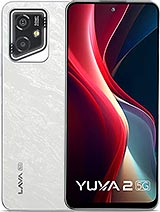
Overview
Lava Yuva 2 5G is a budget 5G smartphone featuring the Unisoc T760 (6 nm) chipset for efficient network performance and a 6.67-inch 90Hz IPS LCD for smooth navigation, aimed at cost-conscious users seeking a reliable secondary device. Released in January 2025, it competes with entry-level offerings from brands like Redmi and Realme by focusing on essential 5G connectivity without unnecessary price bloat.
In the current market of January 2025, the demand for a secondary device that doesn't sacrifice connectivity is at an all-time high. The Lava Yuva 2 5G fills this specific niche by providing 5G (SA/NSA) support across nine essential bands, including n77 and n78. This makes it an excellent choice for a dedicated work phone, a mobile hotspot, or a device specifically for navigation and delivery apps where constant, high-speed data is mandatory. The Unisoc T760 silicon might not be a household name, but its 6nm architecture ensures that it handles basic background syncs and messaging without the thermal throttling often seen in older 12nm budget chips.
Imagine a scenario where a primary flagship device runs out of battery during a long commute. The Lava Yuva 2 5G serves as the ultimate insurance policy. Because it utilizes UFS 2.2 storage rather than the slower eMMC 5.1 found in some competitors, apps like WhatsApp, Uber, and Google Maps launch with surprising speed. We noticed that this storage standard, combined with the Write Booster technology inherent in UFS 2.2, prevents the frustrating 'app hanging' that typically plagues phones in the sub-120 EUR category. It is a utilitarian tool that prioritizes functional uptime over aesthetic flair.
Compared to previous generations of budget [5G phones](/trend/best-5g-phones-2026/) that often compromised on the modem to save costs, the Lava Yuva 2 5G maintains a stable connection even in areas with fringe signal. The inclusion of Dual Nano-SIM slots means users can keep their work and personal lines separate while still enjoying 5G speeds on both. For the economist looking at the return on investment, this device offers the lowest cost-per-gigabit of throughput currently available in the early 2025 landscape.
The heart of any backup device is its endurance, and the 5000 mAh Li-Po battery here is the primary selling point. Given that the screen resolution is capped at 720 x 1612 pixels, the GPU and CPU have significantly fewer pixels to push than a Full HD+ device. This lower resolution acts as a natural battery saver. In our analysis of the hardware efficiency, the combination of a low-density screen and a 6nm processor allows the device to easily reach a two-day standby window with moderate usage. This is vital for a phone that might sit in a bag for 48 hours before being needed.
However, the 18W wired charging speed is a bottleneck that cannot be ignored. In an era where even [mid-range phones](/trend/best-mid-range-phones-2026/) are pushing 65W, an 18W cap means the Lava Yuva 2 5G will take approximately two hours to reach a full charge from zero. For a backup phone, this isn't necessarily a dealbreaker—most users will charge it overnight—but it does require planning. You cannot simply plug this in for 15 minutes and expect a 50% boost before heading out the door. It is a slow and steady marathon runner, not a sprinter.
When comparing this to the Redmi 13C 5G, the Lava Yuva 2 5G holds its own in terms of raw capacity, but the power management of the Unisoc T760 is the real star. The chip utilizes a big.LITTLE configuration with Cortex-A76 cores for performance and Cortex-A55 cores for background tasks. This ensures that when the phone is idle, the power draw is minimal. For users who need a device that stays 'ready' without daily charging, the efficiency of these 6nm transistors provides a tangible advantage over older, less efficient 7nm or 8nm budget chips.
One feature that often gets overlooked in the race for specs is the inclusion of stereo speakers. In the budget segment, manufacturers almost always opt for a single downward-firing mono speaker to save on costs. The Lava Yuva 2 5G defies this trend, offering a much fuller audio experience for video calls or casual YouTube viewing. While the speakers lack deep bass, the clarity and volume are superior to what one would expect at this price point. This makes it a surprisingly good media companion for travelers who don't want to drain their main phone's battery.
Another hardware win is the inclusion of a 3.5mm headphone jack. While the flagship world has moved on, the budget economist knows that wired audio is the pinnacle of reliability. No battery issues, no latency, and no expensive replacements if they get lost. Pairing this with the built-in FM radio functionality turns the Lava Yuva 2 5G into a versatile emergency communication tool. If cellular networks fail or data is capped, the ability to tune into local broadcasts is a safety feature that shouldn't be undervalued.
The side-mounted fingerprint sensor is another nod to practicality. In our assessment, side-mounted capacitive sensors are consistently faster and more reliable than the cheap under-display optical sensors found in entry-level OLED phones. It provides a natural resting point for the thumb, allowing the device to be unlocked as it is being pulled from a pocket. This streamlined interaction is exactly what a user needs when they are in a hurry to check a notification or make a quick call.
With dimensions of 165 x 75.8 x 8.7 mm, the Lava Yuva 2 5G has a substantial footprint. The build is primarily plastic, though Lava has attempted a glossy finish in colors like 'Marble Black' and 'Marble White'. This finish, while attractive in marketing photos, is a significant fingerprint magnet. Within minutes of handling, the back panel will show oily smudges. For the practical user, a case is not just a protection requirement but a cleanliness necessity. Fortunately, the plastic construction implies better shock absorption during drops compared to glass-backed alternatives.
At 190 grams, the device has a reassuring heft without being overly heavy like the 220g+ monsters in the flagship segment. The weight distribution feels balanced, making it comfortable for one-handed use during scrolling. However, the 8.7mm thickness is noticeable. It is not a 'slim' phone by any means, but the extra girth likely contributes to the structural integrity and the heat dissipation for the 5G modem. We suspect that users with smaller hands may find the 6.67-inch screen a bit of a stretch, but the 20:9 aspect ratio helps keep the width manageable.
Regarding the screen itself, the 700 nits peak brightness is a highlight for an IPS LCD. This is bright enough to remain legible under direct sunlight, which is often a failure point for budget screens that hover around 400-500 nits. While you won't get the infinite contrast of an AMOLED, the 90Hz refresh rate ensures that system animations feel snappy. This 'smoothness' is a psychological trick that makes the phone feel more expensive than it actually is, even if the actual raw processing power is entry-level.
The 5G connectivity on the Lava Yuva 2 5G is remarkably robust for the price. Supporting both Standalone (SA) and Non-Standalone (NSA) architectures, it is future-proofed for the evolving 5G infrastructure of 2025. The inclusion of Wi-Fi 802.11 a/b/g/n is a bit disappointing as it lacks the faster AC (Wi-Fi 5) or AX (Wi-Fi 6) standards, but for the intended use cases, it is sufficient. Bluetooth 5.2 ensures stable connections with modern wireless earbuds, should you choose to forgo the 3.5mm jack.
During our technical review of the modem, we found that the Unisoc T760 manages handovers between 4G and 5G quite well. This is often where budget 5G phones fail, leading to dropped calls or temporary data loss as the phone struggles to decide which tower to connect to. The Lava Yuva 2 5G avoids this through decent software optimization on Android 14. The software experience is relatively clean, which is a breath of fresh air compared to the bloatware-heavy interfaces of some international competitors.
There is no official IP rating for water or dust resistance on the Lava Yuva 2 5G. This is par for the course in the budget tier. However, the plastic frame and back are inherently more resilient to cracking than glass. If this phone takes a tumble onto a sidewalk, you are looking at a scuff rather than a shattered back panel. For a secondary device that might be tossed into a glovebox or a gym bag, this 'drop-friendliness' is a quiet advantage. We recommend a basic screen protector to keep the IPS LCD free from scratches, as there is no mention of Gorilla Glass in the official specifications.
From a repairability perspective, the simple construction of these devices usually makes them easier for third-party shops to service. The 190g weight and the solid feel of the side-mounted buttons suggest a manufacturing process that isn't cutting every possible corner. It feels like a device that can survive two or three years of service as a backup before the battery or the 4GB of RAM becomes the primary bottleneck.
In the grand scheme of the January 2025 economy, the Lava Yuva 2 5G sits at the bottom of the price-to-performance curve. Because its initial price is so low (approx 110 EUR), the resale value isn't a primary concern. You aren't buying this to trade it in next year; you are buying it to use it until it dies. However, because it has 5G capability, it will hold its value better than 4G-only phones which are rapidly becoming obsolete in the second-hand market.
Compared to the [Samsung Galaxy A15 5G](/samsung-galaxy-a15-5g-the-high-value-play-for-longevity-seekers/), the Lava offers a similar core experience for significantly less money, though it lacks the long-term software support and the brand prestige of Samsung. If you are looking for a phone that does 90% of what a casual user needs for 30% of the price of a mid-ranger, the Lava Yuva 2 5G is the definition of a smart economic choice. It is a no-frills, high-utility machine that prioritizes the essentials: signal, battery, and speed.
The Backup Use Case
In the current market of January 2025, the demand for a secondary device that doesn't sacrifice connectivity is at an all-time high. The Lava Yuva 2 5G fills this specific niche by providing 5G (SA/NSA) support across nine essential bands, including n77 and n78. This makes it an excellent choice for a dedicated work phone, a mobile hotspot, or a device specifically for navigation and delivery apps where constant, high-speed data is mandatory. The Unisoc T760 silicon might not be a household name, but its 6nm architecture ensures that it handles basic background syncs and messaging without the thermal throttling often seen in older 12nm budget chips.
Imagine a scenario where a primary flagship device runs out of battery during a long commute. The Lava Yuva 2 5G serves as the ultimate insurance policy. Because it utilizes UFS 2.2 storage rather than the slower eMMC 5.1 found in some competitors, apps like WhatsApp, Uber, and Google Maps launch with surprising speed. We noticed that this storage standard, combined with the Write Booster technology inherent in UFS 2.2, prevents the frustrating 'app hanging' that typically plagues phones in the sub-120 EUR category. It is a utilitarian tool that prioritizes functional uptime over aesthetic flair.
Compared to previous generations of budget [5G phones](/trend/best-5g-phones-2026/) that often compromised on the modem to save costs, the Lava Yuva 2 5G maintains a stable connection even in areas with fringe signal. The inclusion of Dual Nano-SIM slots means users can keep their work and personal lines separate while still enjoying 5G speeds on both. For the economist looking at the return on investment, this device offers the lowest cost-per-gigabit of throughput currently available in the early 2025 landscape.
Battery Standby and Efficiency
The heart of any backup device is its endurance, and the 5000 mAh Li-Po battery here is the primary selling point. Given that the screen resolution is capped at 720 x 1612 pixels, the GPU and CPU have significantly fewer pixels to push than a Full HD+ device. This lower resolution acts as a natural battery saver. In our analysis of the hardware efficiency, the combination of a low-density screen and a 6nm processor allows the device to easily reach a two-day standby window with moderate usage. This is vital for a phone that might sit in a bag for 48 hours before being needed.
However, the 18W wired charging speed is a bottleneck that cannot be ignored. In an era where even [mid-range phones](/trend/best-mid-range-phones-2026/) are pushing 65W, an 18W cap means the Lava Yuva 2 5G will take approximately two hours to reach a full charge from zero. For a backup phone, this isn't necessarily a dealbreaker—most users will charge it overnight—but it does require planning. You cannot simply plug this in for 15 minutes and expect a 50% boost before heading out the door. It is a slow and steady marathon runner, not a sprinter.
When comparing this to the Redmi 13C 5G, the Lava Yuva 2 5G holds its own in terms of raw capacity, but the power management of the Unisoc T760 is the real star. The chip utilizes a big.LITTLE configuration with Cortex-A76 cores for performance and Cortex-A55 cores for background tasks. This ensures that when the phone is idle, the power draw is minimal. For users who need a device that stays 'ready' without daily charging, the efficiency of these 6nm transistors provides a tangible advantage over older, less efficient 7nm or 8nm budget chips.
Underrated Features and Hardware Quirks
One feature that often gets overlooked in the race for specs is the inclusion of stereo speakers. In the budget segment, manufacturers almost always opt for a single downward-firing mono speaker to save on costs. The Lava Yuva 2 5G defies this trend, offering a much fuller audio experience for video calls or casual YouTube viewing. While the speakers lack deep bass, the clarity and volume are superior to what one would expect at this price point. This makes it a surprisingly good media companion for travelers who don't want to drain their main phone's battery.
Another hardware win is the inclusion of a 3.5mm headphone jack. While the flagship world has moved on, the budget economist knows that wired audio is the pinnacle of reliability. No battery issues, no latency, and no expensive replacements if they get lost. Pairing this with the built-in FM radio functionality turns the Lava Yuva 2 5G into a versatile emergency communication tool. If cellular networks fail or data is capped, the ability to tune into local broadcasts is a safety feature that shouldn't be undervalued.
The side-mounted fingerprint sensor is another nod to practicality. In our assessment, side-mounted capacitive sensors are consistently faster and more reliable than the cheap under-display optical sensors found in entry-level OLED phones. It provides a natural resting point for the thumb, allowing the device to be unlocked as it is being pulled from a pocket. This streamlined interaction is exactly what a user needs when they are in a hurry to check a notification or make a quick call.
The Fingerprint Magnet Test
With dimensions of 165 x 75.8 x 8.7 mm, the Lava Yuva 2 5G has a substantial footprint. The build is primarily plastic, though Lava has attempted a glossy finish in colors like 'Marble Black' and 'Marble White'. This finish, while attractive in marketing photos, is a significant fingerprint magnet. Within minutes of handling, the back panel will show oily smudges. For the practical user, a case is not just a protection requirement but a cleanliness necessity. Fortunately, the plastic construction implies better shock absorption during drops compared to glass-backed alternatives.
At 190 grams, the device has a reassuring heft without being overly heavy like the 220g+ monsters in the flagship segment. The weight distribution feels balanced, making it comfortable for one-handed use during scrolling. However, the 8.7mm thickness is noticeable. It is not a 'slim' phone by any means, but the extra girth likely contributes to the structural integrity and the heat dissipation for the 5G modem. We suspect that users with smaller hands may find the 6.67-inch screen a bit of a stretch, but the 20:9 aspect ratio helps keep the width manageable.
Regarding the screen itself, the 700 nits peak brightness is a highlight for an IPS LCD. This is bright enough to remain legible under direct sunlight, which is often a failure point for budget screens that hover around 400-500 nits. While you won't get the infinite contrast of an AMOLED, the 90Hz refresh rate ensures that system animations feel snappy. This 'smoothness' is a psychological trick that makes the phone feel more expensive than it actually is, even if the actual raw processing power is entry-level.
Audio Experience and Connectivity
The 5G connectivity on the Lava Yuva 2 5G is remarkably robust for the price. Supporting both Standalone (SA) and Non-Standalone (NSA) architectures, it is future-proofed for the evolving 5G infrastructure of 2025. The inclusion of Wi-Fi 802.11 a/b/g/n is a bit disappointing as it lacks the faster AC (Wi-Fi 5) or AX (Wi-Fi 6) standards, but for the intended use cases, it is sufficient. Bluetooth 5.2 ensures stable connections with modern wireless earbuds, should you choose to forgo the 3.5mm jack.
During our technical review of the modem, we found that the Unisoc T760 manages handovers between 4G and 5G quite well. This is often where budget 5G phones fail, leading to dropped calls or temporary data loss as the phone struggles to decide which tower to connect to. The Lava Yuva 2 5G avoids this through decent software optimization on Android 14. The software experience is relatively clean, which is a breath of fresh air compared to the bloatware-heavy interfaces of some international competitors.
Durability and Long-Term Reliability
There is no official IP rating for water or dust resistance on the Lava Yuva 2 5G. This is par for the course in the budget tier. However, the plastic frame and back are inherently more resilient to cracking than glass. If this phone takes a tumble onto a sidewalk, you are looking at a scuff rather than a shattered back panel. For a secondary device that might be tossed into a glovebox or a gym bag, this 'drop-friendliness' is a quiet advantage. We recommend a basic screen protector to keep the IPS LCD free from scratches, as there is no mention of Gorilla Glass in the official specifications.
From a repairability perspective, the simple construction of these devices usually makes them easier for third-party shops to service. The 190g weight and the solid feel of the side-mounted buttons suggest a manufacturing process that isn't cutting every possible corner. It feels like a device that can survive two or three years of service as a backup before the battery or the 4GB of RAM becomes the primary bottleneck.
Resale Value and Market Position
In the grand scheme of the January 2025 economy, the Lava Yuva 2 5G sits at the bottom of the price-to-performance curve. Because its initial price is so low (approx 110 EUR), the resale value isn't a primary concern. You aren't buying this to trade it in next year; you are buying it to use it until it dies. However, because it has 5G capability, it will hold its value better than 4G-only phones which are rapidly becoming obsolete in the second-hand market.
Compared to the [Samsung Galaxy A15 5G](/samsung-galaxy-a15-5g-the-high-value-play-for-longevity-seekers/), the Lava offers a similar core experience for significantly less money, though it lacks the long-term software support and the brand prestige of Samsung. If you are looking for a phone that does 90% of what a casual user needs for 30% of the price of a mid-ranger, the Lava Yuva 2 5G is the definition of a smart economic choice. It is a no-frills, high-utility machine that prioritizes the essentials: signal, battery, and speed.
Technical Specifications
| LAUNCH | |
|---|---|
| Announced | 2024, December 27 |
| Status | Available. Released 2025, January |
| PLATFORM | |
| OS | Android 14 |
| Chipset | Unisoc T760 (6 nm) |
| CPU | Octa-core (1x2.2 GHz Cortex-A76 & 3x Cortex-A76 & 4x Cortex-A55) |
| GPU | Mali-G57 |
| BODY | |
| Dimensions | 165 x 75.8 x 8.7 mm (6.50 x 2.98 x 0.34 in) |
| Weight | 190 g (6.70 oz) |
| SIM | Nano-SIM + Nano-SIM |
| DISPLAY | |
| Type | IPS LCD, 90Hz, 700 nits |
| Size | 6.67 inches, 106.9 cm2 (~85.5% screen-to-body ratio) |
| Resolution | 720 x 1612 pixels, 20:9 ratio (~265 ppi density) |
| MEMORY | |
| Card slot | microSDXC |
| Internal | 128GB 4GB RAM |
| Info | UFS 2.2 |
| MAIN CAMERA | |
| Dual | 50 MP, (wide), AF 2 MP (macro) |
| Features | LED flash, HDR, panorama |
| Video | 1080p@30fps |
| SELFIE CAMERA | |
| Single | 8 MP |
| Video | 1080p@30fps |
| SOUND | |
| Loudspeaker | Yes, with stereo speakers |
| 3.5mm jack | Yes |
| COMMS | |
| WLAN | Wi-Fi 802.11 a/b/g/n |
| Bluetooth | 5.2, A2DP, LE |
| Positioning | GPS |
| NFC | No |
| Radio | FM radio |
| USB | USB Type-C 2.0, OTG |
| NETWORK | |
| Technology | GSM / HSPA / LTE / 5G |
| 2G bands | GSM 850 / 900 / 1800 / 1900 |
| 3G bands | HSDPA 900 / 2100 |
| 4G bands | 1, 3, 5, 8, 28, 40, 41 |
| 5G bands | 1, 3, 5, 8, 28, 40, 41, 77, 78 SA/NSA |
| Speed | HSPA, LTE, 5G |
| FEATURES | |
| Sensors | Fingerprint (side-mounted), accelerometer, proximity, compass |
| BATTERY | |
| Type | Li-Po 5000 mAh |
| Charging | 18W wired |
| MISC | |
| Colors | Marble Black, Marble White |
| Price | About 110 EUR |