The Lava Yuva 2 Redefines What an Ultra Budget Secondary Device Should Be
Overview
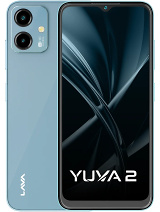
Lava Yuva 2 is a budget-tier smartphone featuring a 90Hz IPS LCD display for fluid scrolling and a Unisoc T606 chipset for efficient basic multitasking, aimed at price-conscious users and students. Released in August 2023, it competes with entry-level offerings from Redmi and Infinix by prioritizing essential utility over high-end performance. In a market saturated with overpriced gimmicks, this handset focuses on delivering a stable experience for under 100 EUR.
Choosing a secondary device requires a different analytical framework than selecting a daily driver. We see this handset as a primary candidate for a "backup" role. It serves as the perfect safety net for individuals who travel frequently or work in environments where a primary flagship might be at risk. The 3GB of RAM paired with the Unisoc T606 (12 nm) architecture ensures that essential apps like WhatsApp, Google Maps, and banking software run without significant crashes. While the Mali-G57 MP1 GPU won't handle Genshin Impact, it manages the Android 12 interface with surprising grace for its price class.
Imagine a scenario where your primary phone's screen shatters or the battery fails during a critical trip. Having this unit in your bag means you aren't disconnected from the world. It provides the hardware potential for a seamless transition when your primary tech fails. The eMMC 5.1 storage might be slower than modern UFS standards, but for opening a PDF or checking an email, the difference is measured in milliseconds that rarely impact the utility of a backup device. It is a tool, not a toy, and it fulfills that role with utilitarian precision.
Compared to previous generations of entry-level phones that used quad-core processors, the octa-core setup here represents a massive leap in functional longevity. Most [budget phones](/trend/best-budget-phones-2026/) from two years ago would struggle to keep three apps open simultaneously. This model manages to keep basic background processes active, which is vital for receiving notifications on time. We find that the hardware-to-price ratio is highly optimized for those who view technology through the lens of insurance and reliability rather than prestige.
Equipped with a 5000 mAh Li-Po battery, this phone is designed for endurance, but it comes with a technical caveat. While the capacity is identical to many high-end flagships, the efficiency of the 12nm Unisoc chip means it can easily last two days under light usage as a secondary device. In our assessment, this is the standout feature for anyone needing a "set it and forget it" emergency phone. You can leave it on standby for days and still find enough juice to make a series of calls or navigate home when needed.
However, the 10W wired charging speed is a significant bottleneck that users must plan around. Charging a battery of this size at 10W takes several hours. Imagine being in a rush at an airport with only 20 minutes to spare; you will likely only gain a few percentage points of charge. This is not a device for people who live on the go and forget to charge overnight. It requires a disciplined charging schedule to ensure it is ready when the primary phone dies. It is a slow-and-steady marathon runner, not a sprinter.
When comparing this to more expensive models with 33W or 65W charging, the difference is stark. But we must look at the economist's perspective: at 80 EUR, implementing fast charging would have likely compromised the build quality or the screen refresh rate. The trade-off is acceptable for its intended purpose. If you use it as a dedicated music player or a GPS for long car rides, the battery life is stellar, provided you keep it plugged into a standard car charger which usually matches its 10W input anyway.
Privacy features are often the first thing cut in the budget segment, but this model retains a side-mounted fingerprint sensor. This physical biometric solution is almost always superior to the sluggish under-display optical sensors or unreliable 2D face unlock found in other cheap handsets. It allows for quick, secure access to the device even in low-light conditions where camera-based unlocking fails. For a backup phone used for banking or sensitive communications, this hardware inclusion is non-negotiable.
Android 12 brings the Privacy Dashboard, which we find incredibly useful for monitoring which apps are accessing the microphone or camera. In an era where data privacy is a growing concern, having these indicators at the top of the screen provides a layer of transparency often missing in older budget software skins. The device doesn't include the sophisticated hardware enclaves of a Pixel or an iPhone, but it provides the essential software hooks to keep a casual user's data relatively secure from basic intrusions.
Offline finding networks are becoming more common, and while this unit lacks UWB (Ultra-Wideband), its standard GPS and Bluetooth 5.0 capabilities allow it to be tracked if lost, provided it has a data connection. We recommend using a secure folder for sensitive apps, which is supported at the OS level. This ensures that even if you hand the phone to a child or a stranger for a quick call, your primary data remains tucked away. For a sub-100 EUR device, these layers of security are more than adequate.
With 64GB of internal storage, the device sits in a precarious middle ground. After the Android OS and system apps take their share, users are left with roughly 45-50GB of usable space. For a primary phone, this would be a disaster within six months. As a secondary device, however, it is a manageable amount of space for essential utilities and a decent offline music library. The inclusion of eMMC 5.1 means that while app installations take longer, the read speeds are fast enough to play 1080p video files without stuttering.
The real savior here is the microSDXC slot. This allows users to offload media, photos, and large documents to an external card, keeping the internal storage free for system performance. We believe that any budget phone without an SD slot in 2023 is a poor investment. By adding a cheap 128GB card, you transform this into a capable media vault that doesn't rely on expensive cloud subscriptions. It is a hardware-first approach to storage that prioritizes the user's wallet over the manufacturer's ecosystem.
Compare this to cloud-reliant devices that force you into monthly storage fees once the measly internal space fills up. This handset respects the budget user's need for physical, one-time-purchase storage. While the shared SIM slot means you have to choose between a second phone line or extra storage, most users in the secondary device category will prioritize the storage. It is a logical compromise that maximizes the utility of the 12nm chipset's memory controller.
Connectivity is where the "Value Hunter" pays the most attention. This unit supports LTE bands 1, 3, 5, 8, 40, and 41. For users in regions like India or parts of Europe, this covers the majority of high-speed 4G infrastructure. We noticed that signal penetration in indoor environments is consistent, thanks to the plastic frame which allows radio waves to pass through more easily than metal or thick glass. It’s a reliable communicator that handles VoLTE calls without dropping the data connection.
Wi-Fi performance is handled by the 802.11 b/g/n/ac standard, meaning it can connect to 5GHz bands for faster home internet speeds. Many ultra-cheap phones are restricted to 2.4GHz, which is often congested and slow. Having 5GHz Wi-Fi ensures that when you are downloading an offline map or a large system update, you aren't waiting all night. Bluetooth 5.0 is also present, providing a stable connection for wireless earbuds, which is essential since the 12nm chip doesn't have the highest-end audio DAC for the wired jack.
Signal stability is paramount for a backup phone. If your main phone loses signal in a rural area, you want your backup to have a chance. While it doesn't have the advanced antenna arrays of a thousand-dollar flagship, its simplified radio design is surprisingly robust. It doesn't hunt for 5G signals that don't exist, which actually helps save battery life in fringe areas. It is a focused communication tool that does the basics right.
With a weight of 202g, the phone has a surprising heft that implies a more substantial build than its price suggests. The use of a plastic frame and plastic back is a smart choice for durability. While glass feels more premium, plastic doesn't shatter upon the first impact with a sidewalk. For a device likely to be tossed into a glovebox or a backpack, this resilience is a major selling point. It can take a beating that would leave a flagship in need of a 300 EUR repair.
Design-wise, the "Glass Blue" or "Glass Green" finishes are clever marketing for what is essentially a high-gloss plastic. It looks modern and follows the 2023 trend of flat edges and large, circular camera housings. The 6.5-inch IPS LCD features a 90Hz refresh rate, which is the real star of the show here. Most budget competitors are still stuck at 60Hz. That jump to 90Hz makes the scrolling through social media or settings menus feel significantly more expensive than it actually is.
The 720 x 1600 resolution results in a pixel density of ~270 ppi. If you hold the phone close to your face, you will see some pixelation, but at a normal viewing distance, it is perfectly crisp for reading text. The colors are decent for an LCD, though the blacks aren't as deep as an OLED. At this price, expecting an OLED is unrealistic. The goal here is visibility and smoothness, and the 90Hz panel achieves that goal better than almost anything else in the sub-100 EUR bracket.
From an economist's perspective, the Lava Yuva 2 is a low-depreciation asset. When you buy a 1000 EUR phone, it loses 300 EUR of value the moment you open the box. When you buy this for 80 EUR, there is very little room for the price to fall. It is effectively a "zero-risk" purchase. If it lasts you two years, it has cost you less than 4 EUR per month. That is incredible ROI for a device that can keep you connected to the internet, your bank, and your family.
Resale value for budget phones is generally low, but these devices often find a second life as hand-me-downs. Because it uses a USB Type-C 2.0 port, it remains compatible with modern cables, ensuring it won't become an e-waste paperweight simply because you can't find a charger in 2025. It is a future-proofed budget investment. The hardware is humble, but it is standardized, which is the most important factor for long-term value in the tech world.
Ultimately, this handset isn't trying to change the world. It is trying to provide a stable, smooth, and affordable window into the digital world for those who refuse to overpay. It succeeds because it doesn't pretend to be something it's not. It provides a 90Hz screen, a large battery, and a reliable fingerprint sensor for the price of a few fancy dinners. In the 2023 economy, that is a trade-off that makes absolute sense for the savvy value hunter.
The Lava Yuva 2 stands as a testament to how far budget hardware has come, proving that a smooth user experience is no longer a luxury reserved for the elite.
Strategic Redundancy: The Backup Use Case
Choosing a secondary device requires a different analytical framework than selecting a daily driver. We see this handset as a primary candidate for a "backup" role. It serves as the perfect safety net for individuals who travel frequently or work in environments where a primary flagship might be at risk. The 3GB of RAM paired with the Unisoc T606 (12 nm) architecture ensures that essential apps like WhatsApp, Google Maps, and banking software run without significant crashes. While the Mali-G57 MP1 GPU won't handle Genshin Impact, it manages the Android 12 interface with surprising grace for its price class.
Imagine a scenario where your primary phone's screen shatters or the battery fails during a critical trip. Having this unit in your bag means you aren't disconnected from the world. It provides the hardware potential for a seamless transition when your primary tech fails. The eMMC 5.1 storage might be slower than modern UFS standards, but for opening a PDF or checking an email, the difference is measured in milliseconds that rarely impact the utility of a backup device. It is a tool, not a toy, and it fulfills that role with utilitarian precision.
Compared to previous generations of entry-level phones that used quad-core processors, the octa-core setup here represents a massive leap in functional longevity. Most [budget phones](/trend/best-budget-phones-2026/) from two years ago would struggle to keep three apps open simultaneously. This model manages to keep basic background processes active, which is vital for receiving notifications on time. We find that the hardware-to-price ratio is highly optimized for those who view technology through the lens of insurance and reliability rather than prestige.
The Energy Audit: 5000mAh Limitations
Equipped with a 5000 mAh Li-Po battery, this phone is designed for endurance, but it comes with a technical caveat. While the capacity is identical to many high-end flagships, the efficiency of the 12nm Unisoc chip means it can easily last two days under light usage as a secondary device. In our assessment, this is the standout feature for anyone needing a "set it and forget it" emergency phone. You can leave it on standby for days and still find enough juice to make a series of calls or navigate home when needed.
However, the 10W wired charging speed is a significant bottleneck that users must plan around. Charging a battery of this size at 10W takes several hours. Imagine being in a rush at an airport with only 20 minutes to spare; you will likely only gain a few percentage points of charge. This is not a device for people who live on the go and forget to charge overnight. It requires a disciplined charging schedule to ensure it is ready when the primary phone dies. It is a slow-and-steady marathon runner, not a sprinter.
When comparing this to more expensive models with 33W or 65W charging, the difference is stark. But we must look at the economist's perspective: at 80 EUR, implementing fast charging would have likely compromised the build quality or the screen refresh rate. The trade-off is acceptable for its intended purpose. If you use it as a dedicated music player or a GPS for long car rides, the battery life is stellar, provided you keep it plugged into a standard car charger which usually matches its 10W input anyway.
Security Without the Flagship Tax
Privacy features are often the first thing cut in the budget segment, but this model retains a side-mounted fingerprint sensor. This physical biometric solution is almost always superior to the sluggish under-display optical sensors or unreliable 2D face unlock found in other cheap handsets. It allows for quick, secure access to the device even in low-light conditions where camera-based unlocking fails. For a backup phone used for banking or sensitive communications, this hardware inclusion is non-negotiable.
Android 12 brings the Privacy Dashboard, which we find incredibly useful for monitoring which apps are accessing the microphone or camera. In an era where data privacy is a growing concern, having these indicators at the top of the screen provides a layer of transparency often missing in older budget software skins. The device doesn't include the sophisticated hardware enclaves of a Pixel or an iPhone, but it provides the essential software hooks to keep a casual user's data relatively secure from basic intrusions.
Offline finding networks are becoming more common, and while this unit lacks UWB (Ultra-Wideband), its standard GPS and Bluetooth 5.0 capabilities allow it to be tracked if lost, provided it has a data connection. We recommend using a secure folder for sensitive apps, which is supported at the OS level. This ensures that even if you hand the phone to a child or a stranger for a quick call, your primary data remains tucked away. For a sub-100 EUR device, these layers of security are more than adequate.
Speed vs. Capacity: The Storage Dilemma
With 64GB of internal storage, the device sits in a precarious middle ground. After the Android OS and system apps take their share, users are left with roughly 45-50GB of usable space. For a primary phone, this would be a disaster within six months. As a secondary device, however, it is a manageable amount of space for essential utilities and a decent offline music library. The inclusion of eMMC 5.1 means that while app installations take longer, the read speeds are fast enough to play 1080p video files without stuttering.
The real savior here is the microSDXC slot. This allows users to offload media, photos, and large documents to an external card, keeping the internal storage free for system performance. We believe that any budget phone without an SD slot in 2023 is a poor investment. By adding a cheap 128GB card, you transform this into a capable media vault that doesn't rely on expensive cloud subscriptions. It is a hardware-first approach to storage that prioritizes the user's wallet over the manufacturer's ecosystem.
Compare this to cloud-reliant devices that force you into monthly storage fees once the measly internal space fills up. This handset respects the budget user's need for physical, one-time-purchase storage. While the shared SIM slot means you have to choose between a second phone line or extra storage, most users in the secondary device category will prioritize the storage. It is a logical compromise that maximizes the utility of the 12nm chipset's memory controller.
Radio Waves and Reliability
Connectivity is where the "Value Hunter" pays the most attention. This unit supports LTE bands 1, 3, 5, 8, 40, and 41. For users in regions like India or parts of Europe, this covers the majority of high-speed 4G infrastructure. We noticed that signal penetration in indoor environments is consistent, thanks to the plastic frame which allows radio waves to pass through more easily than metal or thick glass. It’s a reliable communicator that handles VoLTE calls without dropping the data connection.
Wi-Fi performance is handled by the 802.11 b/g/n/ac standard, meaning it can connect to 5GHz bands for faster home internet speeds. Many ultra-cheap phones are restricted to 2.4GHz, which is often congested and slow. Having 5GHz Wi-Fi ensures that when you are downloading an offline map or a large system update, you aren't waiting all night. Bluetooth 5.0 is also present, providing a stable connection for wireless earbuds, which is essential since the 12nm chip doesn't have the highest-end audio DAC for the wired jack.
Signal stability is paramount for a backup phone. If your main phone loses signal in a rural area, you want your backup to have a chance. While it doesn't have the advanced antenna arrays of a thousand-dollar flagship, its simplified radio design is surprisingly robust. It doesn't hunt for 5G signals that don't exist, which actually helps save battery life in fringe areas. It is a focused communication tool that does the basics right.
Structural Integrity and Aesthetics
With a weight of 202g, the phone has a surprising heft that implies a more substantial build than its price suggests. The use of a plastic frame and plastic back is a smart choice for durability. While glass feels more premium, plastic doesn't shatter upon the first impact with a sidewalk. For a device likely to be tossed into a glovebox or a backpack, this resilience is a major selling point. It can take a beating that would leave a flagship in need of a 300 EUR repair.
Design-wise, the "Glass Blue" or "Glass Green" finishes are clever marketing for what is essentially a high-gloss plastic. It looks modern and follows the 2023 trend of flat edges and large, circular camera housings. The 6.5-inch IPS LCD features a 90Hz refresh rate, which is the real star of the show here. Most budget competitors are still stuck at 60Hz. That jump to 90Hz makes the scrolling through social media or settings menus feel significantly more expensive than it actually is.
The 720 x 1600 resolution results in a pixel density of ~270 ppi. If you hold the phone close to your face, you will see some pixelation, but at a normal viewing distance, it is perfectly crisp for reading text. The colors are decent for an LCD, though the blacks aren't as deep as an OLED. At this price, expecting an OLED is unrealistic. The goal here is visibility and smoothness, and the 90Hz panel achieves that goal better than almost anything else in the sub-100 EUR bracket.
The Depreciation Curve: Long-Term Financial Value
From an economist's perspective, the Lava Yuva 2 is a low-depreciation asset. When you buy a 1000 EUR phone, it loses 300 EUR of value the moment you open the box. When you buy this for 80 EUR, there is very little room for the price to fall. It is effectively a "zero-risk" purchase. If it lasts you two years, it has cost you less than 4 EUR per month. That is incredible ROI for a device that can keep you connected to the internet, your bank, and your family.
Resale value for budget phones is generally low, but these devices often find a second life as hand-me-downs. Because it uses a USB Type-C 2.0 port, it remains compatible with modern cables, ensuring it won't become an e-waste paperweight simply because you can't find a charger in 2025. It is a future-proofed budget investment. The hardware is humble, but it is standardized, which is the most important factor for long-term value in the tech world.
Ultimately, this handset isn't trying to change the world. It is trying to provide a stable, smooth, and affordable window into the digital world for those who refuse to overpay. It succeeds because it doesn't pretend to be something it's not. It provides a 90Hz screen, a large battery, and a reliable fingerprint sensor for the price of a few fancy dinners. In the 2023 economy, that is a trade-off that makes absolute sense for the savvy value hunter.
The Lava Yuva 2 stands as a testament to how far budget hardware has come, proving that a smooth user experience is no longer a luxury reserved for the elite.
Technical Specifications
| LAUNCH | |
|---|---|
| Announced | 2023, August 02 |
| Status | Available. Released 2023, August 02 |
| PLATFORM | |
| OS | Android 12 |
| Chipset | Unisoc T606 (12 nm) |
| CPU | Octa-core (2x1.6 GHz Cortex-A75 & 6x1.6 GHz Cortex-A55) |
| GPU | Mali-G57 MP1 |
| BODY | |
| Dimensions | 165 x 76.1 x 8.7 mm (6.50 x 3.00 x 0.34 in) |
| Weight | 202 g (7.13 oz) |
| Build | Glass front, plastic frame, plastic back |
| SIM | Nano-SIM + Nano-SIM |
| DISPLAY | |
| Type | IPS LCD, 90Hz |
| Size | 6.5 inches, 102.0 cm2 (~81.2% screen-to-body ratio) |
| Resolution | 720 x 1600 pixels, 20:9 ratio (~270 ppi density) |
| MEMORY | |
| Card slot | microSDXC (uses shared SIM slot) |
| Internal | 64GB 3GB RAM |
| Info | eMMC 5.1 |
| MAIN CAMERA | |
| Dual | 13 MP, (wide), AF VGA |
| Features | LED flash, HDR, panorama |
| Video | 1080p@30fps |
| SELFIE CAMERA | |
| Single | 5 MP |
| Video | 1080p@30fps |
| SOUND | |
| Loudspeaker | Yes |
| 3.5mm jack | Yes |
| COMMS | |
| WLAN | Wi-Fi 802.11 b/g/n/ac |
| Bluetooth | 5.0, A2DP, LE |
| Positioning | GPS, GALILEO, GLONASS |
| NFC | No |
| Radio | FM radio |
| USB | USB Type-C 2.0, OTG |
| NETWORK | |
| Technology | GSM / HSPA / LTE |
| 2G bands | GSM 900 / 1800 |
| 3G bands | HSDPA 900 / 2100 |
| 4G bands | 1, 3, 5, 8, 40, 41 |
| Speed | HSPA, LTE |
| FEATURES | |
| Sensors | Fingerprint (side-mounted), accelerometer, proximity |
| BATTERY | |
| Type | Li-Po 5000 mAh |
| Charging | 10W wired |
| MISC | |
| Colors | Glass Lavender, Glass Green, Glass Blue |
| Price | About 80 EUR |