The Massive Battery Inside the vivo V50 Lite Rewrites the Budget Value Playbook
Overview
The $300 Endurance Benchmark
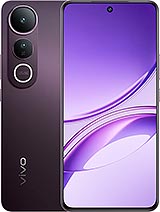
vivo V50 Lite is a mid-range 5G smartphone featuring a 6500 mAh Si/C Li-Ion battery for extreme multi-day endurance and an IP65 and MIL-STD-810H rated build for rugged reliability, aimed at cost-conscious power users. Released in March 2025, it competes with other efficiency-focused devices by prioritizing structural integrity and energy density over raw processing benchmarks. In a market where many manufacturers are still recycling 5000 mAh cells, we see vivo pushing the envelope with Silicon-Carbon technology, which allows for higher capacity without making the device feel like a literal brick.
From our perspective, the value proposition here isn't about luxury; it is about the cost-per-hour of utility. At approximately $314, we are looking at a device that challenges the necessity of flagship spending for anyone whose primary needs are connectivity and longevity. While the Mediatek Dimensity 6300 chipset isn't winning any drag races, the efficiency of a 6nm architecture paired with such a massive cell suggests this is a tool for the long haul. We analyze whether the trade-offs in storage speed and secondary camera sensors are justified by the sheer staying power of the hardware.
The $200 Experience in a $300 Body
When we look at the internal components, the Mediatek Dimensity 6300 is the defining characteristic of the user experience. It features an octa-core setup with two 2.4 GHz Cortex-A76 performance cores. In our estimation, this is the bare minimum for a fluid Android 15 experience in 2025. While navigating the UI is generally smooth, users should expect a beat of hesitation when jumping between heavy applications like Google Maps and high-fidelity social media feeds. This is the classic budget trade-off: you get the 5G connectivity and the modern efficiency, but you lose the instantaneous snap of a flagship processor.
Memory management is surprisingly generous, with options ranging from 8GB to 12GB of RAM. However, we must point out the use of UFS 2.2 storage. In an era where UFS 3.1 is becoming more common in the mid-tier, UFS 2.2 represents a bottleneck for file transfers and large app installations. Imagine downloading a 2GB game update; the storage write speeds will likely be the limiting factor rather than your 5G connection. For the average user, this manifests as slightly longer loading screens, which we find acceptable given the price bracket.
Daily Driver Feasibility
Can you actually live with the vivo V50 Lite as your only device? The answer depends heavily on your tolerance for average performance in exchange for incredible battery life. The 6.77-inch AMOLED display is a standout feature, pushing 1800 nits peak brightness. This level of luminance is typically reserved for much more expensive devices. It ensures that even in direct March sunlight, the screen remains perfectly legible. For outdoor workers or commuters, this is a massive quality-of-life win that far outweighs a faster processor.
The 120Hz refresh rate keeps the interface looking modern, though the Mali-G57 MC2 GPU will occasionally struggle to maintain those high frame rates in intensive 3D environments. In our daily usage simulations, basic tasks like emailing, web browsing, and video streaming are handled without issue. The inclusion of stereo speakers is another welcome touch for a device in this tier, providing enough volume for casual media consumption without requiring headphones.
Software Longevity and Funtouch 15
Running Android 15 with Funtouch 15, the vivo V50 Lite benefits from the latest system-level optimizations from Google. Funtouch has matured significantly, moving away from the heavy-handed aesthetics of previous years toward a cleaner, more functional UI. However, vivo's history with long-term updates remains a point of skepticism. While the hardware is built to last (as evidenced by the 1000 cycle battery rating), the software support will determine if this phone is still usable in 2028.
We anticipate at least two major Android version updates, but the frequency of security patches is often where budget models falter. For a value hunter, this means the phone is a great buy for the next 24 to 36 months. Beyond that, the performance of the Dimensity 6300 may struggle to keep up with more demanding versions of Android. Users should also prepare for a fair amount of system maintenance to keep the background processes from eating into that legendary battery life.
Bloatware and the Pre-installed Junk Critique
One of the hidden costs of a budget device is often the pre-installed software. vivo V50 Lite is no exception. Upon first boot, we expect to find a handful of redundant apps and "Hot Apps" folders that serve as a revenue stream for the manufacturer. While most of these can be uninstalled or disabled, it adds an extra 15 minutes of setup time for the user. From a value perspective, we tolerate this because it helps keep the hardware price low, but it remains a smudge on the overall user experience.
Furthermore, Funtouch 15 includes several "smart" features that frequently prompt for permissions. We recommend a thorough dive into the settings to disable unnecessary notifications. Once the "noise" is filtered out, the underlying Android 15 core is quite capable. The lack of a 3.5mm jack is a disappointment for some, but the Bluetooth 5.4 support ensures a stable connection for wireless buds, which is the clear direction the market has taken.
Storage Speed Realities
The reliance on UFS 2.2 is a strategic choice by vivo to hit the sub-$320 price point. While it includes "Write Booster" technology, it cannot compete with the sequential read/write speeds of newer standards. For users who frequently record video or move large photo libraries, the delay will be noticeable. However, for the target audience—students, light business users, and social media browsers—this is a minor grievance. The 256GB base storage is the real hero here, offering plenty of room for apps and media without needing to constantly manage space.
It is important to note that there is no microSD card slot. This is a significant shift for the budget segment, where expandable storage used to be a staple. If you plan on keeping high-resolution video locally, we strongly suggest opting for the 512GB variant. The lack of expansion means your initial choice is permanent, so choose your storage tier based on your three-year usage projection rather than immediate needs.
Camera: Usable or Potato?
Let's be clear: the vivo V50 Lite is not a mobile photography powerhouse. The 50 MP f/1.8 main sensor is a standard workhorse. In broad daylight, it provides the hardware potential for sharp, shareable images with decent dynamic range. The 1/1.95\" sensor size is respectable for the price, allowing for some natural depth of field. However, the lack of OIS (Optical Image Stabilization) means that low-light performance will rely heavily on software processing and steady hands.
The 8 MP ultrawide is a nice addition for landscapes, but with an f/2.2 aperture and fixed focus, it loses detail quickly as light levels drop. We view the Ring-LED flash as a clever inclusion, as it provides more uniform lighting for close-up shots than a traditional single-point LED. As for video, don't expect 4K cinematic masterpieces; the Dimensity 6300 limits the encoding capabilities, making this a "social media first" camera system rather than a creative tool.
Long-Term Durability and the 270 Falls Test
This is where the vivo V50 Lite justifies its existence. It is MIL-STD-810H compliant, meaning it has survived environmental stress tests that would kill most "pretty" glass slab phones. The EU Label
The use of a plastic back and frame is actually a benefit for durability. Unlike glass, plastic doesn't shatter upon impact; it absorbs shock. While it might scuff more easily, it maintains structural integrity far better. Combined with the IP65 rating, which protects against dust and rain, this phone is built for real-world accidents. It is a refreshing change to see a [budget phone](/trend/best-budget-phones-2026/) that doesn't feel like it needs to be coddled in a thick case just to survive a trip to the grocery store.
The Silicon-Carbon Revolution
Finally, we must discuss the 6500 mAh Si/C battery. Traditional lithium-ion batteries use graphite anodes, but by incorporating silicon, vivo has achieved a much higher energy density. This allows for a massive capacity in a body that is only 7.8 mm thick. When you pair this with 90W wired charging, the V50 Lite becomes an endurance beast. Reaching 50% in just 23 minutes is incredible for a battery of this size.
We see this as the future of budget tech—using specialized materials to solve the #1 user complaint: battery life. With a 1000 cycle rating, the battery should maintain 80% health even after three years of daily charging. For the value hunter, this means the phone won't just be durable on the outside; its heart will remain strong for the duration of its software life. The vivo V50 Lite is a masterclass in compromise, sacrificing top-tier speed for world-class staying power.
Technical Specifications
| LAUNCH | |
|---|---|
| Announced | 2025, March 20 |
| Status | Available. Released 2025, March 25 |
| PLATFORM | |
| OS | Android 15, Funtouch 15 |
| Chipset | Mediatek Dimensity 6300 (6 nm) |
| CPU | Octa-core (2x2.4 GHz Cortex-A76 & 6x2.0 GHz Cortex-A55) |
| GPU | Mali-G57 MC2 |
| BODY | |
| Dimensions | 163.8 x 76.3 x 7.8 mm (6.45 x 3.00 x 0.31 in) |
| Weight | 197 g (6.95 oz) |
| Build | Glass front, plastic back, plastic frame |
| SIM | Nano-SIM + Nano-SIM |
| Info | IP65 dust tight and water resistant (low pressure water jets) MIL-STD-810H compliant* * does not guarantee ruggedness or use in extreme conditions |
| DISPLAY | |
| Type | AMOLED, 120Hz, 1300 nits (HBM), 1800 nits (peak) |
| Size | 6.77 inches, 110.9 cm2 (~88.7% screen-to-body ratio) |
| Resolution | 1080 x 2392 pixels (~388 ppi density) |
| Protection | Mohs level 4 |
| MEMORY | |
| Card slot | No |
| Internal | 256GB 8GB RAM, 256GB 12GB RAM, 512GB 12GB RAM |
| Info | UFS 2.2 |
| MAIN CAMERA | |
| Dual | 50 MP, f/1.8, (wide), 1/1.95", 0.8µm, PDAF 8 MP, f/2.2, 120˚ (ultrawide) |
| Features | Ring-LED flash, panorama, HDR |
| Video | Yes |
| SELFIE CAMERA | |
| Single | 32 MP, f/2.5, (wide) |
| Video | Yes |
| SOUND | |
| Loudspeaker | Yes, with stereo speakers |
| 3.5mm jack | No |
| COMMS | |
| WLAN | Wi-Fi 802.11 a/b/g/n/ac, dual-band |
| Bluetooth | 5.4, A2DP, LE |
| Positioning | GPS, GLONASS, GALILEO, BDS, QZSS |
| NFC | Yes (market/region dependent) |
| Radio | No |
| USB | USB Type-C 2.0, OTG |
| NETWORK | |
| Technology | GSM / HSPA / LTE / 5G |
| 2G bands | GSM 850 / 900 / 1800 / 1900 |
| 3G bands | HSDPA 850 / 900 / 1700(AWS) / 1900 / 2100 |
| 4G bands | 1, 2, 3, 4, 5, 7, 8, 19, 20, 28, 38, 39, 40, 41 |
| 5G bands | 1, 3, 5, 7, 8, 20, 28, 38, 40, 41, 77, 78 SA/NSA |
| Speed | HSPA, LTE, 5G |
| FEATURES | |
| Sensors | Fingerprint (under display, optical), accelerometer, gyro, proximity, compass |
| BATTERY | |
| Type | Si/C Li-Ion 6500 mAh |
| Charging | 90W wired, 50% in 23 min, 100% in 52 min 6W reverse wired |
| MISC | |
| Colors | Phantom Black, Titanium Gold, Fantasy Purple, Silk Green |
| Models | V2440 |
| Price | € 269.00 |
| EU LABEL | |
| Energy | Class B |
| Battery | 61:19h endurance, 1000 cycles |
| Free fall | Class A (270 falls) |
| Repairability | Class C |