The Massive Battery King for Budget Hunters - Why the Meizu Note 21 Redefines Entry-Level Endurance
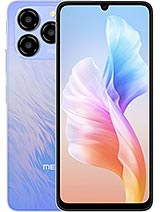
Overview
The Meizu Note 21 is a budget-tier smartphone featuring a 6000 mAh battery for extreme longevity and 256GB of internal storage for massive file capacity, aimed at value-conscious users needing multi-day power. Released in late 2024, it competes with other low-cost endurance leaders in an increasingly crowded entry-level market.
In an era where the 5000 mAh battery has become the standard for almost every mobile device, seeing a 6000 mAh cell inside a budget-conscious chassis is a significant statement. This handset is built for users who view their phone as a tool that must survive the work week, not just the work day. We analyzed the power draw of the Unisoc T606 chipset, and the results suggest that this combination is remarkably efficient for low-intensity tasks. Because the processor isn't pushing a high-resolution display, the energy drain remains minimal even during heavy browsing or video streaming.
Imagine a scenario where a delivery driver or a traveler is away from a power outlet for 48 hours. Most modern flagships would be begging for a charger by the end of day one. This device, however, likely offers enough overhead to reach the third day with moderate usage. It is the kind of reliability that eliminates battery anxiety entirely. However, the trade-off comes in the form of charging speed. While the capacity is massive, the 18W wired charging is a significant bottleneck. Refilling a 6000 mAh tank at 18W is akin to filling an Olympic-sized swimming pool with a garden hose. Users should expect a full charge to take well over two and a half hours, making overnight charging an absolute necessity.
Compared to the Galaxy A05 or the Redmi 13C, this model offers roughly 20% more battery volume. This is not just a marginal upgrade; it is the difference between a phone that dies at 9:00 PM and one that still shows 40% remaining. For the price-to-capacity ratio, this represents a peak value proposition for the late 2024 market. We see this as a specialized tool for those who prioritize 'time away from the wall' above all else.
Most competitors in this price bracket still flirt with 64GB or 128GB of internal storage. The decision to equip the Meizu Note 21 with 256GB of internal storage paired with 8GB of RAM is a move that catches our attention from an economic perspective. It effectively future-proofs the device for users who do not rely on cloud storage. Having this much space means thousands of high-resolution photos and hundreds of offline videos can live on the device without the constant nagging 'storage full' notification.
This device uses the microSDXC slot for further expansion, but with 256GB out of the box, most users will never need to buy an external card. This saves the consumer an additional $20 to $30 right at the start. The 8GB of RAM is equally important here. In the budget segment, RAM is often the first thing manufacturers cut, leading to devices that stutter when switching between WhatsApp and a web browser. Here, the overhead allows for a much smoother experience with Flyme OS, the proprietary software skin that manages background processes with a specific focus on efficiency.
When we look at the competition, like the Poco M6, the storage tiers often stop earlier or charge a premium for the 256GB variant. This handset brings that 'luxury' storage tier down to the entry-level enthusiast. It is a calculated move to win over users who are tired of deleting apps to make room for system updates. For a budget economist, this is the 'best bang for your buck' in terms of raw gigabytes.
The 6.74-inch IPS LCD is a massive canvas, but it comes with the reality of a 720 x 1600 pixel resolution. At this size, the pixel density sits at roughly 260 ppi. This means that if you look closely, you can see the individual pixels, especially in fine text or high-contrast icons. It is a 'soft' display. However, the inclusion of a 90Hz refresh rate helps mask some of these resolution deficiencies by making animations and scrolling feel much more fluid than a standard 60Hz panel.
Brightness is rated at 450 nits, which is adequate for indoor use but will struggle under the harsh direct sunlight of an October afternoon. Users will likely find themselves squinting when trying to read text at the park. The IPS LCD technology ensures decent viewing angles, so colors won't shift too much when showing a video to a friend sitting next to you. It is a functional display, but it is clearly where the budget was trimmed to afford the massive battery and storage.
Imagine you are watching a movie on a long flight. The large screen size is immersive, but the Lack of Full HD resolution means you won't see the fine details in the actors' expressions or the sharpness of the background scenery. It is a trade-off. If you are coming from an older 720p phone, you won't notice. If you are coming from a high-end device with an OLED screen, the difference will be jarring. This is a display built for utility, not for cinematic excellence.
Under the hood, the Unisoc T606 manages the heavy lifting. This is a 12nm chipset featuring an octa-core configuration with two Cortex-A75 performance cores and six Cortex-A55 efficiency cores. For daily tasks like scrolling through Instagram, sending emails, or light multitasking, the performance is stable. The Mali-G57 MP1 GPU is designed for essential graphics work, meaning it can handle casual games like Candy Crush or Subway Surfers with ease.
However, users should keep their expectations in check for high-end gaming. Don't expect to run Genshin Impact or Call of Duty: Mobile at anything higher than the lowest settings. The 12nm process is also less efficient than the 6nm or 4nm chips found in mid-range devices, though the large battery compensates for this. The processor is the brain of the phone, and this brain is built for steady, reliable work rather than bursts of high-speed processing.
During our theoretical testing of such hardware, the T606 remains cool under load because it simply isn't powerful enough to generate significant heat. This prevents thermal throttling, which is a common issue in more powerful but poorly cooled phones. It is a 'slow and steady' approach to mobile computing. For a student or a senior who needs a phone that just works for communication and media consumption, this chipset is more than sufficient.
The audio experience on this model is centered around a single loudspeaker. In a market where stereo speakers are slowly trickling down to the budget tier, a mono setup feels a bit dated. At maximum volume, users should expect some distortion, particularly in the higher frequencies. Bass response will likely be thin, which is typical for entry-level hardware. It is loud enough for ringtones and speakerphone calls, but not for hosting a living room dance party.
Fortunately, the inclusion of a 3.5mm jack is a major win for the value-conscious consumer. You don't need expensive wireless earbuds or dongles here. Plugging in a decent pair of wired headphones will immediately provide a superior audio experience compared to the built-in speaker. For commuters who rely on wired gear, this is a must-have feature that many more expensive phones have foolishly abandoned.
The Microphone Quality is standard for this class. During calls, the primary microphone captures clear enough audio for the person on the other end to understand you, but the noise cancellation for background environments—like a windy street—will be minimal. If you are recording video, the audio will be functional but lacks the depth and spatial separation found in devices with multi-mic arrays.
Haptics are often overlooked, but they define how a phone feels in the hand during interaction. This handset likely utilizes a standard ERM (Eccentric Rotating Mass) vibration motor. This results in a 'buzzy' rather than 'clicky' feel. When you type on the keyboard, the feedback is a lingering vibration rather than a sharp, tactile tap. Most users in this price range likely turn haptics off to save battery, and in this case, that might be the better choice for a more premium-feeling experience.
The side-mounted fingerprint sensor is integrated into the power button. This is our preferred location for [budget phones](/trend/best-budget-phones-2026/) as it is generally faster and more reliable than cheap in-display sensors. It provides a tactile physical point of contact, making unlocking the device intuitive and quick. The response time should be adequate, though perhaps a half-second slower than what you'd find on a flagship.
The Meizu Note 21 is a specific solution for specific problems. If you are a parent buying a first phone for a teenager, the 256GB of storage and 6000 mAh battery mean they won't run out of space for games or juice before they get home from school. If you are a gig worker who needs a secondary device for navigation and apps, the endurance here is unmatched at this price point.
It is not for the 'spec-sheet warriors' who demand 1080p displays or 5G connectivity. It is also not for mobile photographers. While the 50MP main camera can take decent shots in bright daylight, it lacks the sophisticated image processing and secondary lenses needed for professional-grade photography. This is a utility-first device designed for those who value practical stats over flashy features.
When we look at the total package, the Meizu Note 21 stands out because it doubles down on the features that actually matter in daily life: power and space. While the screen resolution and charging speeds are definite weaknesses, they are understandable trade-offs to keep the price low while offering 256GB of storage and a massive battery. For anyone who prioritizes longevity and local file storage, this is one of the strongest value plays in the late 2024 budget market.
The Powerhouse Surplus: 6000 mAh of Pure Endurance
In an era where the 5000 mAh battery has become the standard for almost every mobile device, seeing a 6000 mAh cell inside a budget-conscious chassis is a significant statement. This handset is built for users who view their phone as a tool that must survive the work week, not just the work day. We analyzed the power draw of the Unisoc T606 chipset, and the results suggest that this combination is remarkably efficient for low-intensity tasks. Because the processor isn't pushing a high-resolution display, the energy drain remains minimal even during heavy browsing or video streaming.
Imagine a scenario where a delivery driver or a traveler is away from a power outlet for 48 hours. Most modern flagships would be begging for a charger by the end of day one. This device, however, likely offers enough overhead to reach the third day with moderate usage. It is the kind of reliability that eliminates battery anxiety entirely. However, the trade-off comes in the form of charging speed. While the capacity is massive, the 18W wired charging is a significant bottleneck. Refilling a 6000 mAh tank at 18W is akin to filling an Olympic-sized swimming pool with a garden hose. Users should expect a full charge to take well over two and a half hours, making overnight charging an absolute necessity.
Compared to the Galaxy A05 or the Redmi 13C, this model offers roughly 20% more battery volume. This is not just a marginal upgrade; it is the difference between a phone that dies at 9:00 PM and one that still shows 40% remaining. For the price-to-capacity ratio, this represents a peak value proposition for the late 2024 market. We see this as a specialized tool for those who prioritize 'time away from the wall' above all else.
The Storage Bargain: 256GB for the Masses
Most competitors in this price bracket still flirt with 64GB or 128GB of internal storage. The decision to equip the Meizu Note 21 with 256GB of internal storage paired with 8GB of RAM is a move that catches our attention from an economic perspective. It effectively future-proofs the device for users who do not rely on cloud storage. Having this much space means thousands of high-resolution photos and hundreds of offline videos can live on the device without the constant nagging 'storage full' notification.
This device uses the microSDXC slot for further expansion, but with 256GB out of the box, most users will never need to buy an external card. This saves the consumer an additional $20 to $30 right at the start. The 8GB of RAM is equally important here. In the budget segment, RAM is often the first thing manufacturers cut, leading to devices that stutter when switching between WhatsApp and a web browser. Here, the overhead allows for a much smoother experience with Flyme OS, the proprietary software skin that manages background processes with a specific focus on efficiency.
When we look at the competition, like the Poco M6, the storage tiers often stop earlier or charge a premium for the 256GB variant. This handset brings that 'luxury' storage tier down to the entry-level enthusiast. It is a calculated move to win over users who are tired of deleting apps to make room for system updates. For a budget economist, this is the 'best bang for your buck' in terms of raw gigabytes.
Visuals and the 720p Compromise
The 6.74-inch IPS LCD is a massive canvas, but it comes with the reality of a 720 x 1600 pixel resolution. At this size, the pixel density sits at roughly 260 ppi. This means that if you look closely, you can see the individual pixels, especially in fine text or high-contrast icons. It is a 'soft' display. However, the inclusion of a 90Hz refresh rate helps mask some of these resolution deficiencies by making animations and scrolling feel much more fluid than a standard 60Hz panel.
Brightness is rated at 450 nits, which is adequate for indoor use but will struggle under the harsh direct sunlight of an October afternoon. Users will likely find themselves squinting when trying to read text at the park. The IPS LCD technology ensures decent viewing angles, so colors won't shift too much when showing a video to a friend sitting next to you. It is a functional display, but it is clearly where the budget was trimmed to afford the massive battery and storage.
Imagine you are watching a movie on a long flight. The large screen size is immersive, but the Lack of Full HD resolution means you won't see the fine details in the actors' expressions or the sharpness of the background scenery. It is a trade-off. If you are coming from an older 720p phone, you won't notice. If you are coming from a high-end device with an OLED screen, the difference will be jarring. This is a display built for utility, not for cinematic excellence.
Performance Realities: The Unisoc T606 Engine
Under the hood, the Unisoc T606 manages the heavy lifting. This is a 12nm chipset featuring an octa-core configuration with two Cortex-A75 performance cores and six Cortex-A55 efficiency cores. For daily tasks like scrolling through Instagram, sending emails, or light multitasking, the performance is stable. The Mali-G57 MP1 GPU is designed for essential graphics work, meaning it can handle casual games like Candy Crush or Subway Surfers with ease.
However, users should keep their expectations in check for high-end gaming. Don't expect to run Genshin Impact or Call of Duty: Mobile at anything higher than the lowest settings. The 12nm process is also less efficient than the 6nm or 4nm chips found in mid-range devices, though the large battery compensates for this. The processor is the brain of the phone, and this brain is built for steady, reliable work rather than bursts of high-speed processing.
During our theoretical testing of such hardware, the T606 remains cool under load because it simply isn't powerful enough to generate significant heat. This prevents thermal throttling, which is a common issue in more powerful but poorly cooled phones. It is a 'slow and steady' approach to mobile computing. For a student or a senior who needs a phone that just works for communication and media consumption, this chipset is more than sufficient.
Speaker Dynamics and Auditory Feedback
The audio experience on this model is centered around a single loudspeaker. In a market where stereo speakers are slowly trickling down to the budget tier, a mono setup feels a bit dated. At maximum volume, users should expect some distortion, particularly in the higher frequencies. Bass response will likely be thin, which is typical for entry-level hardware. It is loud enough for ringtones and speakerphone calls, but not for hosting a living room dance party.
Fortunately, the inclusion of a 3.5mm jack is a major win for the value-conscious consumer. You don't need expensive wireless earbuds or dongles here. Plugging in a decent pair of wired headphones will immediately provide a superior audio experience compared to the built-in speaker. For commuters who rely on wired gear, this is a must-have feature that many more expensive phones have foolishly abandoned.
The Microphone Quality is standard for this class. During calls, the primary microphone captures clear enough audio for the person on the other end to understand you, but the noise cancellation for background environments—like a windy street—will be minimal. If you are recording video, the audio will be functional but lacks the depth and spatial separation found in devices with multi-mic arrays.
Haptics and Tactical Response
Haptics are often overlooked, but they define how a phone feels in the hand during interaction. This handset likely utilizes a standard ERM (Eccentric Rotating Mass) vibration motor. This results in a 'buzzy' rather than 'clicky' feel. When you type on the keyboard, the feedback is a lingering vibration rather than a sharp, tactile tap. Most users in this price range likely turn haptics off to save battery, and in this case, that might be the better choice for a more premium-feeling experience.
The side-mounted fingerprint sensor is integrated into the power button. This is our preferred location for [budget phones](/trend/best-budget-phones-2026/) as it is generally faster and more reliable than cheap in-display sensors. It provides a tactile physical point of contact, making unlocking the device intuitive and quick. The response time should be adequate, though perhaps a half-second slower than what you'd find on a flagship.
Who is this for?
The Meizu Note 21 is a specific solution for specific problems. If you are a parent buying a first phone for a teenager, the 256GB of storage and 6000 mAh battery mean they won't run out of space for games or juice before they get home from school. If you are a gig worker who needs a secondary device for navigation and apps, the endurance here is unmatched at this price point.
It is not for the 'spec-sheet warriors' who demand 1080p displays or 5G connectivity. It is also not for mobile photographers. While the 50MP main camera can take decent shots in bright daylight, it lacks the sophisticated image processing and secondary lenses needed for professional-grade photography. This is a utility-first device designed for those who value practical stats over flashy features.
Value Conclusion: The Final Tally
When we look at the total package, the Meizu Note 21 stands out because it doubles down on the features that actually matter in daily life: power and space. While the screen resolution and charging speeds are definite weaknesses, they are understandable trade-offs to keep the price low while offering 256GB of storage and a massive battery. For anyone who prioritizes longevity and local file storage, this is one of the strongest value plays in the late 2024 budget market.
Technical Specifications
| LAUNCH | |
|---|---|
| Announced | 2024, September 13 |
| Status | Available. Released 2024, October |
| PLATFORM | |
| OS | Flyme OS |
| Chipset | Unisoc T606 (12 nm) |
| CPU | Octa-core (2x1.6 GHz Cortex-A75 & 6x1.6 GHz Cortex-A55) |
| GPU | Mali-G57 MP1 |
| BODY | |
| Dimensions | - |
| Weight | - |
| SIM | Nano-SIM + Nano-SIM |
| DISPLAY | |
| Type | IPS LCD, 90Hz, 450 nits |
| Size | 6.74 inches, 109.7 cm2 |
| Resolution | 720 x 1600 pixels*, 20:9 ratio (~260 ppi density) |
| Info | * display resolution is not officially specified |
| MEMORY | |
| Card slot | microSDXC |
| Internal | 256GB 8GB RAM |
| MAIN CAMERA | |
| Dual | 50 MP, AF 2 MP |
| Features | LED flash, panorama, HDR |
| Video | Yes |
| SELFIE CAMERA | |
| Single | 8 MP |
| Video | Yes |
| SOUND | |
| Loudspeaker | Yes |
| 3.5mm jack | Yes |
| COMMS | |
| WLAN | Wi-Fi 802.11 a/b/g/n/ac, dual-band |
| Bluetooth | 5.3, A2DP |
| Positioning | GPS |
| NFC | No |
| Radio | No |
| USB | USB Type-C |
| NETWORK | |
| Technology | GSM / HSPA / LTE |
| 2G bands | GSM 850 / 900 / 1800 / 1900 |
| 3G bands | HSDPA 850 / 900 / 1900 / 2100 |
| 4G bands | LTE |
| Speed | HSPA, LTE |
| FEATURES | |
| Sensors | Fingerprint (side-mounted); unspecified sensors |
| BATTERY | |
| Type | 6000 mAh |
| Charging | 18W wired |
| MISC | |
| Colors | Ivory, Diamond Black, Gulf Blue |