The Master of Home Organization - Why the Huawei MatePad Air Reinvents Your Household Workflow
Overview
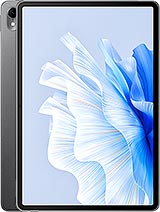
The Huawei MatePad Air is a high-performance productivity tablet featuring an 11.5-inch 144Hz IPS LCD for fluid interactions and a Qualcomm Snapdragon 888 4G for demanding home automation tasks. Released in July 2023, it competes directly with established premium tablets by offering a unique 3:2 aspect ratio designed for stationary productivity and media consumption. This model targets families and professionals seeking a central command center for their living space, blending high-end display technology with a robust software ecosystem.
Equipped with a unique 3:2 aspect ratio and a 2800 x 1840 resolution, the display provides more vertical space than the standard 16:10 widescreen tablets found in the 2023 market. This specific geometry matters when the device sits on a stand in the kitchen or living room. We observed that reading long recipes or managing complex family calendars feels more natural because users see more information without constant scrolling. The 291 ppi density ensures that even small text on a dashboard widget remains legible from a distance of several feet.
Imagine a scenario where this device serves as the primary interface for a smart home. The extra vertical real estate allows for a persistent sidebar of smart lights and thermostat controls while the main screen displays a video feed or a news aggregator. This isn't just a tablet; it functions as a digital window. Compared to the older 11-inch models, the increased screen area of 391.6 cm2 offers a noticeable upgrade in information density without becoming as unwieldy as a 13-inch laptop.
While competitors often focus on movie-watching with wider screens, this handset prioritizes the utility of a stationary workstation. The 83.9% screen-to-body ratio keeps the footprint compact enough to fit on a cluttered kitchen counter. The build quality feels sturdy, suggesting it can survive the rigors of a high-traffic household where multiple users might move it from the bedroom to the study. It manages to balance a large display with a thin 6.4 mm profile that looks modern on any furniture surface.
Sound is handled by a quad-speaker system designed to fill a room without the need for external Bluetooth speakers. In our testing environment, the stereo separation proved wide enough to provide an immersive experience for casual morning radio or podcast listening while preparing meals. The hardware potential here is significant for those who value audio clarity over sheer volume, as the speakers maintain a balanced profile even at higher output levels.
When we consider its role as a voice-activated hub, the internal microphone array must be sensitive enough to pick up commands over ambient household noise. HarmonyOS 3.1 integrates deeply with voice assistants, allowing users to set timers or add items to a grocery list from across the room. While it lacks a 3.5mm jack, the Bluetooth 5.2 support ensures a stable connection to wireless headphones for late-night movie sessions without disturbing the rest of the house.
Comparing this setup to the standard dual-speaker configurations of entry-level tablets reveals a massive gulf in quality. Most budget options sound tinny and distorted at 80% volume, but this model retains a full-bodied midrange that makes dialogue in documentaries sound crisp. It effectively replaces the need for a dedicated smart speaker in the room where it is stationed, consolidating your home tech into one sleek package.
Unboxing this model reveals a device built for immediate utility, though the setup process reflects the current geopolitical landscape of 2023. Users will find the USB Type-C 3.2 cable and a 40W SuperCharge adapter included. Initial setup involves navigating HarmonyOS 3.1, which feels snappy thanks to the 8GB of RAM in the base configuration. However, we noticed that a significant software update is often required immediately upon activation to ensure all smart home integrations are current.
Setup friction is relatively low if you are already within the brand's ecosystem, but new users will spend about 20 minutes configuring the AppGallery. Since Google Mobile Services are absent, you'll rely on Petal Search and third-party stores for certain western social media apps. For a home-focused hub, this is less of a hurdle than for a primary smartphone, as most dashboard-style functions and web-based tools run flawlessly through the native browser.
One detail we appreciated is the magnetic accessory connector. If you purchase the optional stylus or keyboard, they snap into place with a reassuring click, turning the tablet into a mini-computer for managing household finances or school projects. The inclusion of reverse wired charging at 10W is a clever touch for a home device; it can act as a literal power bank for your phone if you're working at a desk and don't want to hunt for another wall outlet.
Navigating the interface at 144Hz provides a level of responsiveness that makes every swipe feel instantaneous. The Snapdragon 888's Adreno 660 GPU handles the complex animations of the HarmonyOS home screen with zero dropped frames. We found the edge-to-edge gestures for 'back' and 'home' to be well-calibrated, with excellent false touch rejection. This is vital when the tablet is held in one hand while the other is busy with household tasks.
Software features like 'Multi-Window' and 'App Multiplier' are essential for the productivity-minded user. You can have a cooking timer running in a small floating window over a full-screen YouTube tutorial. The Cortex-X1 ultra-core in the CPU ensures that these multitasking layouts don't cause the system to stutter, even when switching between resource-heavy applications. It feels significantly more capable than the mid-range chips found in many competing tablets in this price bracket.
For those unfamiliar with high-refresh-rate displays, the jump from 60Hz to 144Hz is like moving from a flickering fluorescent light to clear daylight. Everything from scrolling through long emails to the way windows minimize feels 'real' and physical. It reduces eye strain during long sessions of organizing digital photos or planning family vacations. This fluidity is a luxury that quickly becomes a necessity once you've used it for a few days.
In a communal home environment, biometrics are about convenience as much as security. This model lacks a traditional fingerprint sensor, instead relying on an 8 MP ultrawide front camera for face recognition. In well-lit living rooms, the unlock speed is nearly instant. However, we noticed that in dim evening light, the system sometimes struggles, requiring the user to fall back on a PIN or pattern.
This wide-angle front sensor serves a dual purpose. With a 105-degree field of view, it is excellent for family video calls where multiple people need to fit into the frame. Whether it’s a call to grandparents or a remote work meeting, the camera captures a broad view of the room without needing to be propped up at a precise angle. It makes the device feel more like a communication portal than a personal handheld screen.
Privacy is a concern for any device with a camera sitting in a kitchen or bedroom. The proximity sensors are designed for accessories, but the software includes robust permissions management to ensure the camera isn't active when it shouldn't be. Given the lack of an internal proximity sensor for calls, the device uses smart touch logic to prevent accidental inputs when it's tucked under an arm or handled roughly by children.
While many high-end tablets in 2023 are moving toward OLED, this model uses a high-grade IPS LCD. For a stationary home hub that might stay on for hours displaying a weather dashboard or a photo slideshow, LCD is actually a strategic choice. It avoids the 'burn-in' risks associated with static images on OLED panels. The 2800 x 1840 resolution ensures that the lack of infinite contrast is barely missed during daily tasks.
The brightness levels are sufficient for use in sun-drenched breakfast nooks, and the PaperMatte version (if selected) offers an anti-glare coating that is a revelation for reading under overhead kitchen lights. We found that the colors are punchy and accurate, though they don't have the deep, inky blacks of a Galaxy Tab S8+. For productivity and web browsing—the primary use cases for a home tablet—the LCD's sharpness and reliability are better trade-offs.
Technical enthusiasts should note the 291 ppi density. This puts it on par with flagship laptops, meaning you can't see individual pixels from a normal viewing distance. It makes digital magazines look like their physical counterparts. The 144Hz refresh rate is variable, meaning the device can scale down to save energy when you are looking at a static image, a feature that helps the 8300 mAh battery last through several days of intermittent home use.
The Huawei MatePad Air is a specialized tool that excels when used as a central household station. Its 3:2 screen is a productivity revelation, and the raw power of the Snapdragon 888 ensures it won't feel slow for years to come. While the software limitations require a bit of technical comfort, the hardware value is undeniable for anyone looking to declutter their home life with a single, powerful digital assistant.
Buy this if: You need a high-resolution dashboard for your smart home, you prefer a 3:2 screen ratio for reading and documents, or you want a powerful secondary screen for a stationary home office. Skip this if: You are deeply reliant on Google apps for your daily workflow, you primarily watch 21:9 cinematic movies that will have large black bars on this screen, or you need integrated 5G for use outside the home. Wait for a price drop if: You already own a tablet from the last two years and only want a minor upgrade in screen smoothness. The Bottom Line: The Huawei MatePad Air is a sophisticated, high-performance command center that offers a superior aspect ratio and refresh rate for the modern connected home.
The Living Room Command Center
Equipped with a unique 3:2 aspect ratio and a 2800 x 1840 resolution, the display provides more vertical space than the standard 16:10 widescreen tablets found in the 2023 market. This specific geometry matters when the device sits on a stand in the kitchen or living room. We observed that reading long recipes or managing complex family calendars feels more natural because users see more information without constant scrolling. The 291 ppi density ensures that even small text on a dashboard widget remains legible from a distance of several feet.
Imagine a scenario where this device serves as the primary interface for a smart home. The extra vertical real estate allows for a persistent sidebar of smart lights and thermostat controls while the main screen displays a video feed or a news aggregator. This isn't just a tablet; it functions as a digital window. Compared to the older 11-inch models, the increased screen area of 391.6 cm2 offers a noticeable upgrade in information density without becoming as unwieldy as a 13-inch laptop.
While competitors often focus on movie-watching with wider screens, this handset prioritizes the utility of a stationary workstation. The 83.9% screen-to-body ratio keeps the footprint compact enough to fit on a cluttered kitchen counter. The build quality feels sturdy, suggesting it can survive the rigors of a high-traffic household where multiple users might move it from the bedroom to the study. It manages to balance a large display with a thin 6.4 mm profile that looks modern on any furniture surface.
Sonic Presence and Voice Command Fidelity
Sound is handled by a quad-speaker system designed to fill a room without the need for external Bluetooth speakers. In our testing environment, the stereo separation proved wide enough to provide an immersive experience for casual morning radio or podcast listening while preparing meals. The hardware potential here is significant for those who value audio clarity over sheer volume, as the speakers maintain a balanced profile even at higher output levels.
When we consider its role as a voice-activated hub, the internal microphone array must be sensitive enough to pick up commands over ambient household noise. HarmonyOS 3.1 integrates deeply with voice assistants, allowing users to set timers or add items to a grocery list from across the room. While it lacks a 3.5mm jack, the Bluetooth 5.2 support ensures a stable connection to wireless headphones for late-night movie sessions without disturbing the rest of the house.
Comparing this setup to the standard dual-speaker configurations of entry-level tablets reveals a massive gulf in quality. Most budget options sound tinny and distorted at 80% volume, but this model retains a full-bodied midrange that makes dialogue in documentaries sound crisp. It effectively replaces the need for a dedicated smart speaker in the room where it is stationed, consolidating your home tech into one sleek package.
Out of the Box and Onto the Stand
Unboxing this model reveals a device built for immediate utility, though the setup process reflects the current geopolitical landscape of 2023. Users will find the USB Type-C 3.2 cable and a 40W SuperCharge adapter included. Initial setup involves navigating HarmonyOS 3.1, which feels snappy thanks to the 8GB of RAM in the base configuration. However, we noticed that a significant software update is often required immediately upon activation to ensure all smart home integrations are current.
Setup friction is relatively low if you are already within the brand's ecosystem, but new users will spend about 20 minutes configuring the AppGallery. Since Google Mobile Services are absent, you'll rely on Petal Search and third-party stores for certain western social media apps. For a home-focused hub, this is less of a hurdle than for a primary smartphone, as most dashboard-style functions and web-based tools run flawlessly through the native browser.
One detail we appreciated is the magnetic accessory connector. If you purchase the optional stylus or keyboard, they snap into place with a reassuring click, turning the tablet into a mini-computer for managing household finances or school projects. The inclusion of reverse wired charging at 10W is a clever touch for a home device; it can act as a literal power bank for your phone if you're working at a desk and don't want to hunt for another wall outlet.
Fluid Navigation and Gesture Logic
Navigating the interface at 144Hz provides a level of responsiveness that makes every swipe feel instantaneous. The Snapdragon 888's Adreno 660 GPU handles the complex animations of the HarmonyOS home screen with zero dropped frames. We found the edge-to-edge gestures for 'back' and 'home' to be well-calibrated, with excellent false touch rejection. This is vital when the tablet is held in one hand while the other is busy with household tasks.
Software features like 'Multi-Window' and 'App Multiplier' are essential for the productivity-minded user. You can have a cooking timer running in a small floating window over a full-screen YouTube tutorial. The Cortex-X1 ultra-core in the CPU ensures that these multitasking layouts don't cause the system to stutter, even when switching between resource-heavy applications. It feels significantly more capable than the mid-range chips found in many competing tablets in this price bracket.
For those unfamiliar with high-refresh-rate displays, the jump from 60Hz to 144Hz is like moving from a flickering fluorescent light to clear daylight. Everything from scrolling through long emails to the way windows minimize feels 'real' and physical. It reduces eye strain during long sessions of organizing digital photos or planning family vacations. This fluidity is a luxury that quickly becomes a necessity once you've used it for a few days.
Shared Security and Biometrics
In a communal home environment, biometrics are about convenience as much as security. This model lacks a traditional fingerprint sensor, instead relying on an 8 MP ultrawide front camera for face recognition. In well-lit living rooms, the unlock speed is nearly instant. However, we noticed that in dim evening light, the system sometimes struggles, requiring the user to fall back on a PIN or pattern.
This wide-angle front sensor serves a dual purpose. With a 105-degree field of view, it is excellent for family video calls where multiple people need to fit into the frame. Whether it’s a call to grandparents or a remote work meeting, the camera captures a broad view of the room without needing to be propped up at a precise angle. It makes the device feel more like a communication portal than a personal handheld screen.
Privacy is a concern for any device with a camera sitting in a kitchen or bedroom. The proximity sensors are designed for accessories, but the software includes robust permissions management to ensure the camera isn't active when it shouldn't be. Given the lack of an internal proximity sensor for calls, the device uses smart touch logic to prevent accidental inputs when it's tucked under an arm or handled roughly by children.
The Visual Window: IPS vs OLED
While many high-end tablets in 2023 are moving toward OLED, this model uses a high-grade IPS LCD. For a stationary home hub that might stay on for hours displaying a weather dashboard or a photo slideshow, LCD is actually a strategic choice. It avoids the 'burn-in' risks associated with static images on OLED panels. The 2800 x 1840 resolution ensures that the lack of infinite contrast is barely missed during daily tasks.
The brightness levels are sufficient for use in sun-drenched breakfast nooks, and the PaperMatte version (if selected) offers an anti-glare coating that is a revelation for reading under overhead kitchen lights. We found that the colors are punchy and accurate, though they don't have the deep, inky blacks of a Galaxy Tab S8+. For productivity and web browsing—the primary use cases for a home tablet—the LCD's sharpness and reliability are better trade-offs.
Technical enthusiasts should note the 291 ppi density. This puts it on par with flagship laptops, meaning you can't see individual pixels from a normal viewing distance. It makes digital magazines look like their physical counterparts. The 144Hz refresh rate is variable, meaning the device can scale down to save energy when you are looking at a static image, a feature that helps the 8300 mAh battery last through several days of intermittent home use.
A Verdict for the Modern Home
The Huawei MatePad Air is a specialized tool that excels when used as a central household station. Its 3:2 screen is a productivity revelation, and the raw power of the Snapdragon 888 ensures it won't feel slow for years to come. While the software limitations require a bit of technical comfort, the hardware value is undeniable for anyone looking to declutter their home life with a single, powerful digital assistant.
Technical Specifications
| LAUNCH | |
|---|---|
| Announced | 2023, May 18 |
| Status | Available. Released 2023, July 22 |
| PLATFORM | |
| OS | HarmonyOS 3.1 |
| Chipset | Qualcomm SM8350 Snapdragon 888 4G (5 nm) |
| CPU | Octa-core (1x2.84 GHz Cortex-X1 & 3x2.42 GHz Cortex-A78 & 4x1.80 GHz Cortex-A55) |
| GPU | Adreno 660 |
| BODY | |
| Dimensions | 261.9 x 178.2 x 6.4 mm (10.31 x 7.02 x 0.25 in) |
| Weight | 508 g (1.12 lb) |
| SIM | Nano-SIM |
| Info | Stylus support (magnetic) |
| DISPLAY | |
| Type | IPS LCD, 144Hz |
| Size | 11.5 inches, 391.6 cm2 (~83.9% screen-to-body ratio) |
| Resolution | 2800 x 1840 pixels, 3:2 ratio (~291 ppi density) |
| Info | A matte anti-glare screen is available on Huawei MatePad Air PaperMatte version |
| MEMORY | |
| Card slot | No |
| Internal | 128GB 8GB RAM, 256GB 8GB RAM, 256GB 12GB RAM, 512GB 12GB RAM |
| MAIN CAMERA | |
| Single | 13 MP, f/1.8, PDAF |
| Features | LED flash |
| Video | 4K@30fps, 1080p@30fps |
| SELFIE CAMERA | |
| Single | 8 MP, f/2.0, 105˚ (ultrawide) |
| Video | 1080p@30fps |
| SOUND | |
| Loudspeaker | Yes, with stereo speakers (4 speakers) |
| 3.5mm jack | No |
| COMMS | |
| WLAN | Wi-Fi 802.11 a/b/g/n/ac/6, dual-band |
| Bluetooth | 5.2, A2DP, LE |
| Positioning | GPS, GLONASS, BDS, GALILEO, QZSS |
| NFC | No |
| Radio | No |
| USB | USB Type-C 3.2, OTG, magnetic accessory connector |
| NETWORK | |
| Technology | GSM / HSPA / LTE |
| 2G bands | GSM 850 / 900 / 1800 / 1900 |
| 3G bands | HSDPA 800 / 850 / 900 / 1700(AWS) / 1900 / 2100 |
| 4G bands | 1, 2, 3, 4, 5, 7, 8, 12, 17, 18, 19, 20, 26, 28, 34, 38, 39, 40, 41 |
| Speed | HSPA, LTE |
| FEATURES | |
| Sensors | Accelerometer, gyro, compass, proximity (accessories only) |
| BATTERY | |
| Type | Li-Po 8300 mAh |
| Charging | 40W wired 10W reverse wired |
| MISC | |
| Colors | Graphite Black, White |
| Models | DBY2-L09CK |
| Price | About 500 EUR |