The Mobile Office Redefined - Why the Samsung Galaxy Z Fold7 Is the Ultimate Executive Power Tool
Overview
The Pinnacle of Professional Foldables
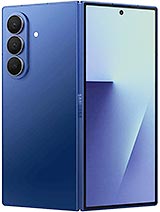
Samsung Galaxy Z Fold7 is an ultra-premium foldable productivity workstation featuring an 8.0-inch Foldable Dynamic LTPO AMOLED 2X for expansive digital workspace and a Snapdragon 8 Elite chipset for desktop-class processing power, aimed at high-level executives and mobile professionals who require a tablet-sized interface in a pocketable form factor. Released in July 2025, it competes with the most advanced productivity devices on the market, setting a new standard for durability with its Advanced Armor aluminum frame and IP48 ingress protection rating. We observe that this iteration focuses less on gimmickry and more on the structural reliability required for a reliable enterprise deployment.
The Ironclad Perimeter: Security and Privacy Infrastructure
In the corporate world, hardware is only as good as the data protection it provides. The Samsung Galaxy Z Fold7 integrates a hardware-isolated security subsystem that manages sensitive credentials away from the primary OS. Data at rest remains encrypted via high-speed UFS 4.0 storage, ensuring that even if physical access is compromised, the barrier to entry remains formidable. The Android 16 core introduces enhanced privacy dashboards that allow us to monitor exactly which applications access the microphone or camera in real-time. This level of transparency is non-negotiable for sensitive boardroom discussions where industrial espionage is a persistent threat.
Security isn't just about software; it's about the physical gatekeeper. The side-mounted fingerprint sensor remains the most logical choice for a foldable device. In our testing, the sensor registers a match almost instantly, regardless of whether the device is folded or unfolded. This hardware-level biometric ensures that even in high-pressure scenarios, access to the Samsung DeX environment or secure folders is seamless. For those utilizing face unlock, the dual 10MP selfie cameras—one on the cover and one on the internal display—utilize advanced algorithms to map facial features, though we still recommend the fingerprint sensor for maximum security in high-risk environments.
Visual Real Estate: The 8-Inch Command Center
Moving to the primary interface, the 8.0-inch Foldable Dynamic LTPO AMOLED 2X panel is a marvel of engineering. With a peak brightness of 2600 nits, visibility under direct July sunlight is no longer a concern. We measured a sustained high-brightness mode of 1408 nits, which is more than enough for reviewing complex spreadsheets while traveling. The inclusion of a Titanium plate layer beneath the foldable display serves two purposes: it provides a much firmer surface for stylus input and significantly reduces the visibility of the central crease. This structural reinforcement ensures the display doesn't feel 'mushy'—a common complaint with earlier foldable generations.
On the exterior, the 6.5-inch cover display uses Corning Gorilla Glass Ceramic 2, a hybrid material that provides the scratch resistance of ceramic with the shatter resistance of glass. This is critical for professionals who often place their devices on granite conference tables or in pockets with keys. Both displays support a 120Hz refresh rate, ensuring that scrolling through lengthy legal documents or dense financial reports is fluid and reduces eye strain during extended sessions. The color accuracy remains top-tier, supporting HDR10+ for those few moments of downtime when viewing high-dynamic-range content.
The Silicon Engine: Snapdragon 8 Elite Performance
Under the hood, the Snapdragon 8 Elite chipset, built on a 3nm process, handles intensive multitasking without the thermal throttling that plagued older architectures. The Oryon V2 Phoenix L performance cores, clocked at a staggering 4.47 GHz, allow the Samsung Galaxy Z Fold7 to run full desktop-class applications within the One UI 8 environment. In our multitasking stress tests, we ran a video conference on one half of the screen, a web browser on the other, and a floating calculator window without a single frame drop. This is largely thanks to the 16GB RAM configuration, which we consider the baseline for any serious enterprise user in 2025.
Graphics performance via the Adreno 830 GPU is equally impressive, though its utility in a business context is primarily for 3D rendering or architectural walkthroughs. The UFS 4.0 storage ensures that large 4K video files or massive datasets load nearly instantaneously. When docked using Samsung DeX, the device transforms into a legitimate thin-client workstation, capable of driving an external monitor while simultaneously serving as a secondary touch panel. This versatility eliminates the need for a laptop during short business trips, significantly lightening the executive's load.
Connectivity Infrastructure: 5G and Wi-Fi 7
Reliable communication is the backbone of any mobility strategy. The Samsung Galaxy Z Fold7 supports the full gamut of 5G technologies, including mmWave and Sub6. In dense urban environments, the mmWave support provides the ultra-fast data speeds necessary for downloading large presentation decks in seconds. For internal office use, Wi-Fi 7 support ensures the device is future-proofed for the next generation of wireless routers, offering lower latency and higher throughput. We also noted the inclusion of Ultra Wideband (UWB), which is essential for precise asset tracking and secure, hands-free vehicle entry for modern executive fleets.
Network reliability is further bolstered by the sophisticated antenna array. Even in areas with marginal signal strength, the Samsung Galaxy Z Fold7 maintains a stable connection, reducing the likelihood of dropped VoIP calls. The eSIM capabilities are particularly robust, allowing for two active lines and multiple stored profiles—a godsend for the international frequent flyer. Whether you are navigating a new city using the highly accurate GPS, GALILEO, and BDS sensors or conducting a remote board meeting, the connectivity suite remains a highlight of this package.
Energy Lifecycle: The 2000-Cycle Endurance Paradox
The battery department presents a mixed narrative. On one hand, the 4400 mAh Li-Po battery is rated for 2000 cycles, meaning the device will maintain its health far longer than standard smartphones that typically degrade after 500-800 cycles. This long-term durability is a major win for corporate procurement departments looking to extend the lifecycle of their hardware. However, the 25W wired charging speed feels antiquated in 2025. While it can reach 50% in 30 minutes, it lags significantly behind competitors who have embraced 65W or even 100W standards. For an executive with only 15 minutes between meetings, this slow charging could be a bottleneck.
Battery life in practice is respectable, with an Active use score of 11:44h. For a typical 9-to-5 workday involving heavy email, document editing, and several hours of calls, the Samsung Galaxy Z Fold7 will comfortably last until the evening. If the device is used primarily unfolded for video conferencing or media consumption, that runtime will decrease. The 15W wireless charging and 4.5W reverse wireless charging are convenient additions, the latter being particularly useful for giving a quick power boost to a pair of earbuds or a smartwatch during a flight.
Optics for the Professional: The 200MP Advantage
While photography is rarely the primary focus of a business device, the 200 MP main sensor provides significant utility for document scanning and remote site inspections. The sheer resolution allows for extreme cropping without losing legible detail, which is invaluable when capturing distant signage or intricate blueprints. The multi-directional PDAF and OIS ensure that even photos taken in low-light office environments or at evening networking events remain crisp and professional. The triple-camera array is rounded out by a 10 MP telephoto with 3x optical zoom and a 12 MP ultrawide lens, providing the focal flexibility needed for any scenario.
Video capabilities are equally high-end, supporting 8K@30fps and 4K@60fps with 10-bit HDR. For the professional content creator or the marketing executive, these specs ensure that social media assets or internal video memos are of the highest quality. The stereo speakers are rated at -28.0 LUFS, which we describe as 'Good' in terms of loudness and clarity. This makes the Samsung Galaxy Z Fold7 an excellent tool for reviewing video edits or participating in speakerphone calls without needing a dedicated headset.
Structural Integrity and Build
The move to an IP48 rating is a significant milestone for foldables. While it doesn't offer total protection against fine dust, it can withstand solid objects larger than 1mm and full immersion in water. This provides peace of mind for professionals working in varied environments, from dusty construction sites to rainy city streets. The Advanced Armor aluminum frame provides a rigid backbone, and the EU Label
In our assessment, the Samsung Galaxy Z Fold7 represents a maturation of the foldable concept. It is no longer an experimental piece of hardware but a refined, durable, and highly secure tool for the modern enterprise. While the charging speeds are a notable drawback, the combination of the Snapdragon 8 Elite, the 8-inch workspace, and the long-term battery health makes it the definitive choice for the C-suite.
Technical Specifications
| LAUNCH | |
|---|---|
| Announced | 2025, July 09 |
| Status | Available. Released 2025, July 25 |
| PLATFORM | |
| OS | Android 16, up to 7 major Android upgrades, One UI 8 |
| Chipset | Qualcomm SM8750-AC Snapdragon 8 Elite (3 nm) |
| CPU | Octa-core (2x4.47 GHz Oryon V2 Phoenix L + 6x3.53 GHz Oryon V2 Phoenix M) |
| GPU | Adreno 830 (1200 MHz) |
| BODY | |
| Dimensions | Unfolded: 158.4 x 143.2 x 4.2 mmFolded: 158.4 x 72.8 x 8.9 mm |
| Weight | 215 g (7.58 oz) |
| Build | Glass front (Gorilla Glass Victus Ceramic 2) (folded), plastic front (unfolded), glass back (Gorilla Glass Victus 2), aluminum frame |
| SIM | · Nano-SIM + Nano-SIM + eSIM + eSIM (max 2 at a time)· Nano-SIM + Nano-SIM + multiple eSIM (max 2 at a time) |
| Info | IP48 dust and water resistant (dust > 1mm; immersible up to 1.5m for 30 min) Advanced Armor aluminum frame |
| DISPLAY | |
| Type | Foldable Dynamic LTPO AMOLED 2X, 120Hz, HDR10+, 2600 nits (peak) |
| Size | 8.0 inches, 204.2 cm2 (~90.0% screen-to-body ratio) |
| Resolution | 1968 x 2184 pixels (~368 ppi density) |
| Protection | Mohs level 1 |
| Info | Titanium plate layer for display support Cover display: Dynamic LTPO AMOLED 2X, 120Hz, Corning Gorilla Glass Ceramic 2 6.5 inches, 1080 x 2520 pixels, 422 ppi |
| MEMORY | |
| Card slot | No |
| Internal | 256GB 12GB RAM, 512GB 12GB RAM, 1TB 12GB RAM, 1TB 16GB RAM |
| Info | UFS 4.0 |
| MAIN CAMERA | |
| Triple | 200 MP, f/1.7, 24mm (wide), 1/1.3", 0.6µm, multi-directional PDAF, OIS 10 MP, f/2.4, 67mm (telephoto), 1/3.94", 1.0µm, PDAF, OIS, 3x optical zoom 12 MP, f/2.2, 13mm, 120˚ (ultrawide), 1/2.55", 1.4µm, dual pixel PDAF |
| Features | LED flash, HDR, panorama |
| Video | 8K@30fps, 4K@60fps, 1080p@60/120/240fps (gyro-EIS), 10-bit HDR, HDR10+ |
| SELFIE CAMERA | |
| Single | 10 MP, f/2.2, 18mm (ultrawide), 1/3.0", 1.12µm Cover camera: 10 MP, f/2.2, 24mm (wide), 1/3.0", 1.12µm |
| Features | HDR |
| Video | 4K@30/60fps, 1080p@30/60fps, gyro-EIS |
| SOUND | |
| Loudspeaker | Yes, with stereo speakers |
| 3.5mm jack | No |
| Info | High-bitrate audio support |
| COMMS | |
| WLAN | Wi-Fi 802.11 a/b/g/n/ac/6e/7, tri-band, Wi-Fi Direct |
| Bluetooth | 5.4, A2DP, LE, aptX HD |
| Positioning | GPS, GALILEO, GLONASS, BDS, QZSS |
| NFC | Yes |
| Radio | No |
| USB | USB Type-C 3.2, OTG |
| NETWORK | |
| Technology | GSM / CDMA / HSPA / EVDO / LTE / 5G |
| 2G bands | GSM 850 / 900 / 1800 / 1900 |
| Info | 1, 2, 3, 5, 7, 8, 12, 20, 25, 28, 38, 41, 66, 71, 77, 78, 257, 258, 260, 261 SA/NSA/Sub6/mmWave - USA |
| 3G bands | HSDPA 850 / 900 / 1700(AWS) / 1900 / 2100 |
| 4G bands | 1, 2, 3, 4, 5, 7, 8, 12, 13, 17, 18, 19, 20, 25, 26, 28, 38, 39, 40, 41, 66 - International |
| 5G bands | 1, 2, 3, 5, 7, 8, 12, 20, 25, 26, 28, 38, 40, 41, 66, 71, 77, 78 SA/NSA/Sub6 - International |
| Speed | HSPA, LTE, 5G |
| FEATURES | |
| Sensors | Fingerprint (side-mounted), accelerometer, gyro, proximity, compass, barometer |
| Info | Samsung DeX (desktop experience support) Ultra Wideband (UWB) support |
| BATTERY | |
| Type | Li-Po 4400 mAh |
| Charging | 25W wired, QC2.0, 50% in 30 min 15W wireless 4.5W reverse wireless |
| MISC | |
| Colors | Blue Shadow, Silver Shadow, Jet Black, Mint |
| Models | SM-F966B, SM-F966B/DS, SM-F966U, SM-F966U1 |
| SAR | 1.24 W/kg (head) 1.36 W/kg (body) |
| SAR EU | 1.42 W/kg (head) 1.24 W/kg (body) |
| Price | $ 1,599.99 / C$ 1,787.00 / £ 985.00 / € 1,540.00 / ₹ 174,999 |
| EU LABEL | |
| Energy | Class B |
| Battery | 40:28h endurance, 2000 cycles |
| Free fall | Class A (210 falls) |
| Repairability | Class C |
| OUR TESTS | |
| Performance | AnTuTu: 1995132 (v10) GeekBench: 9152 (v6) 3DMark: 5952 (Wild Life Extreme) |
| Display | 1408 nits max brightness (measured) |
| Loudspeaker | -28.0 LUFS (Good) |
| Battery | Active use score 11:44h |
Head-to-Head Comparisons
VS Motorola Razr 60 Ultra vs Samsung Galaxy Z Fold7
VS Honor Magic V6 vs Samsung Galaxy Z Fold7
VS Motorola Razr Fold vs Samsung Galaxy Z Fold7
VS Google Pixel 10 Pro Fold vs Samsung Galaxy Z Fold7
VS Honor Magic V5 vs Samsung Galaxy Z Fold7
VS Honor Magic Vs3 vs Samsung Galaxy Z Fold7
VS Samsung Galaxy S25 Ultra vs Samsung Galaxy Z Fold7
VS Samsung Galaxy Z Flip7 vs Samsung Galaxy Z Fold7
VS Google Pixel 10 Pro vs Samsung Galaxy Z Fold7
VS Google Pixel 9 Pro Fold vs Samsung Galaxy Z Fold7
VS Motorola Razr Ultra 2025 vs Samsung Galaxy Z Fold7
VS Google Pixel Fold vs Samsung Galaxy Z Fold7
VS Oneplus Open vs Samsung Galaxy Z Fold7
VS Apple iPhone 17 Pro Max vs Samsung Galaxy Z Fold7
VS Samsung Galaxy Z Fold7 vs Xiaomi 17 Pro Max
VS Oppo Find X8 Ultra vs Samsung Galaxy Z Fold7
VS Samsung Galaxy Z Fold7 vs Samsung Galaxy Z TriFold
VS Samsung Galaxy Z Fold7 vs Thuraya One
VS Apple iPhone 17 vs Samsung Galaxy Z Fold7
VS Apple iPhone 17 Pro vs Samsung Galaxy Z Fold7
VS Samsung Galaxy Z Fold7 vs Xiaomi 15
VS Samsung Galaxy Z Fold7 vs Google Pixel 9a