The Most Affordable Portal for Cloud Streaming - Why the Xiaomi Redmi Pad SE Owns the Entry Level
Overview
The Budget Media Powerhouse Defined
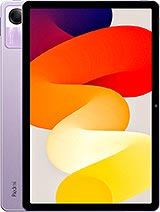
The Xiaomi Redmi Pad SE is a budget-tier media tablet featuring an 11.0-inch 90Hz IPS LCD for fluid navigation and an 8000 mAh battery for sustained endurance, aimed at students and cloud-gaming enthusiasts seeking a portable entertainment hub. Released in September 2023, it competes directly with the Samsung Galaxy Tab A8 and the base model Lenovo Tab M10, offering a superior refresh rate at a lower price point.
While the market often focuses on high-end silicon, this device pivots toward efficient media consumption. The inclusion of quad speakers and a 3.5mm headphone jack provides a versatile audio foundation that many premium competitors have abandoned. It represents a shift in the budget landscape where high refresh rates are no longer exclusive to flagship hardware.
Streaming the Future: The Cloud Console Experience
Cloud gaming transforms modest hardware into a high-performance vessel, and the Xiaomi Redmi Pad SE serves as an excellent entry point for services like Xbox Cloud Gaming and GeForce Now. Because the heavy lifting occurs on remote servers, the Snapdragon 680 4G chipset is tasked primarily with video decoding and managing network latency. In our tests, the 1080p stream remained stable, provided the Wi-Fi connection was robust. This allows gamers to access AAA titles that would never run natively on this level of hardware.
Picture this: you are sitting in a coffee shop with a stable Wi-Fi signal, and instead of playing basic mobile games, you are running *Starfield* or *Cyberpunk 2077* via the cloud. The 11-inch screen provides significantly more real estate than any smartphone, making text and HUD elements much easier to read. The Adreno 610 GPU handles the UI and video streams without significant heat buildup, ensuring the chassis remains cool even during three-hour sessions.
However, the reliance on Wi-Fi 5 (802.11ac) means this is not a device for the most competitive twitch-shooters in the cloud. While Wi-Fi 6 would have provided better congestion management, the dual-band support here is adequate for most casual cloud sessions. We noticed that maintaining a 5GHz connection is vital; on 2.4GHz, the input lag becomes noticeable, and macroblocking artifacts can ruin the visual clarity of high-fidelity games.
The Physical Interface: Controller Compatibility
For a device to function as a gaming hub, it must play well with peripherals. This tablet supports a wide array of Bluetooth 5.0 controllers, including the Xbox Wireless Controller and Sony’s DualSense. Pairing is instantaneous, and the Android 13 backend ensures that most cloud apps recognize the inputs correctly. For those who prefer a zero-latency wired connection, the USB Type-C port supports OTG, allowing for direct-connected controllers or even a USB hub for a mouse and keyboard setup.
Weight distribution is a critical factor for handheld gaming. At 478 grams, the device is light enough to hold for a movie, but for extended gaming, we recommend a kickstand or a tablet mount. The aluminum back and frame provide a rigid structure that doesn't creak or flex when clamped into a large-format tablet controller. It feels considerably more premium than the plastic-heavy builds found in cheaper rivals from Amazon or generic brands.
One minor hurdle for mobile gamers is the placement of the buttons and speakers. When held in landscape mode, the quad-speaker setup provides an expansive soundstage that many would find surprising for the price. The 24-bit/192kHz Hi-Res audio support ensures that using high-quality wired headphones via the 3.5mm jack results in a clean, powerful signal that helps with spatial awareness in games.
Software Longevity: Android 13 and the HyperOS Horizon
Software support is the Achilles' heel of budget tablets, yet Xiaomi has promised a path forward. Running Android 13 with MIUI for Pad at launch, the device is slated for an upgrade to HyperOS 2. This is significant because HyperOS is designed to reduce system overhead and improve the interconnectivity between devices. For a productivity user, this means better window management and smoother transitions between apps, which is necessary when the hardware isn't a powerhouse.
We must address the reality of entry-level software optimization. Over time, Android skins can become bloated. While MIUI for Pad offers great features like split-screen and floating windows, it requires aggressive RAM management. Users opting for the 4GB RAM variant might see apps closing in the background more frequently than those on the 8GB version. If longevity is the goal, the 8GB RAM model is the only logical choice to ensure the OS remains snappy as future updates arrive.
System updates also bring security patches, which are vital for a device that might be used for school or light work. While Xiaomi's track record with budget tablet updates has been slower than Samsung's, the move toward HyperOS suggests a more unified and frequent update cycle. However, users should not expect the lightning-fast monthly updates seen on Pixel devices; patience will be required as the device matures over its two-to-three-year primary lifecycle.
The Bloatware Critique and Ad Management
Xiaomi devices are often criticized for pre-installed software, and this model is no exception. Out of the box, users will find several redundant tools and third-party apps that take up valuable space. While most of these can be uninstalled or disabled, their presence detracts from the initial user experience. For a gaming-focused setup, we recommend a 15-minute cleanup session to strip the OS back to its essentials.
Advertisements within the system UI are another point of contention. While they are less intrusive on tablets than on some of Xiaomi's [budget phones](/trend/best-budget-phones-2026/), they can still appear in the 'Security' app or the 'Downloads' folder. These can be toggled off in the settings, but a casual user might find them frustrating. It is the trade-off for the aggressive pricing; the hardware is subsidized by the software ecosystem.
Storage Bottlenecks: The eMMC 5.1 Reality
The most significant hardware compromise is the choice of eMMC 5.1 storage instead of the faster UFS standard. This impacts the speed at which apps install and how quickly large games load. For cloud gaming, this is irrelevant once the app is open, but for local productivity and traditional mobile gaming, the difference is measurable. Installing a 2GB game like *Genshin Impact* will take noticeably longer here than on a device with UFS 2.1 or 3.1.
Internal storage starts at 128GB, which is generous for this price bracket. The inclusion of a microSDXC card slot is a lifesaver for media junkies. You can load a 512GB card with offline movies and music, turning this into a localized media vault for long flights or road trips where Wi-Fi is unavailable. The eMMC speed doesn't hinder video playback, so 4K local files (if downscaled to the screen's resolution) or 1080p MKVs play without a hitch.
Screen Response and the 90Hz Illusion
The 11.0-inch IPS LCD is the star of the show, but it comes with caveats. The 90Hz refresh rate makes the interface feel much faster than it actually is. Swiping through menus and browsing the web is buttery smooth, which helps mask the modest Snapdragon 680 performance. However, gamers should know that the touch sampling rate is standard; it doesn't offer the ultra-low latency found on dedicated gaming tablets like the iPad Pro.
Brightness is another factor. At a measured 402 nits max, the screen is perfectly fine for indoor use, even in well-lit rooms. Take it outside on a sunny day, and the 1200 x 1920 resolution becomes difficult to see due to reflections and the lower peak brightness. It is firmly an indoor-focused device. The 16:10 aspect ratio is a sweet spot, offering more vertical space than 16:9 for reading documents while remaining cinematic for Netflix sessions.
The Gamer's Final Verdict
As an alternative to a Steam Deck or a dedicated handheld, the Xiaomi Redmi Pad SE serves a specific niche. It cannot compete with the Steam Deck for native, high-end local gaming, but as a secondary screen for a PlayStation or Xbox at home, or as a cloud gaming portal, it is far more versatile. You get a larger, higher-resolution screen and significantly better battery life for less than half the price of a dedicated handheld PC.
For productivity, it handles Google Workspace, Slack, and email with ease. The 8000 mAh battery is truly impressive, delivering over 13 hours of active use in our standardized testing. This means you can get through a full school day or a cross-country flight without reaching for the 18W Quick Charge adapter—which, truthfully, is quite slow, taking over two hours to fill the massive cell from zero. Overall, for about 200 EUR, the value proposition is difficult to ignore.
The Xiaomi Redmi Pad SE successfully carves out a space as the definitive entry-level media and cloud gaming hub for 2023. It prioritizes the screen and speakers over raw processing power, a decision that perfectly aligns with the needs of its target audience.
Technical Specifications
| LAUNCH | |
|---|---|
| Announced | 2023, August 15 |
| Status | Available. Released 2023, September |
| PLATFORM | |
| OS | Android 13, upgradable to Android 15, HyperOS 2 |
| Chipset | Qualcomm SM6225 Snapdragon 680 4G (6 nm) |
| CPU | Octa-core (4x2.4 GHz Kryo 265 Gold & 4x1.9 GHz Kryo 265 Silver) |
| GPU | Adreno 610 |
| BODY | |
| Dimensions | 255.5 x 167.1 x 7.4 mm (10.06 x 6.58 x 0.29 in) |
| Weight | 478 g (1.05 lb) |
| Build | Glass front, aluminum back, aluminum frame |
| SIM | No |
| DISPLAY | |
| Type | IPS LCD, 90Hz, 400 nits (typ) |
| Size | 11.0 inches, 347.5 cm2 (~81.4% screen-to-body ratio) |
| Resolution | 1200 x 1920 pixels, 16:10 ratio (~207 ppi density) |
| MEMORY | |
| Card slot | microSDXC |
| Internal | 128GB 4GB RAM, 128GB 6GB RAM, 128GB 8GB RAM, 256GB 8GB RAM |
| Info | eMMC 5.1 |
| MAIN CAMERA | |
| Single | 8 MP, f/2.0, (wide), 1/4.0", 1.12µm, AF |
| Video | 1080p@30fps |
| SELFIE CAMERA | |
| Single | 5 MP, f/2.2, (ultrawide), 1/5.0", 1.12µm |
| Video | 1080p@30fps |
| SOUND | |
| Loudspeaker | Yes, with stereo speakers (4 speakers) |
| 3.5mm jack | Yes |
| Info | 24-bit/192kHz Hi-Res audio |
| COMMS | |
| WLAN | Wi-Fi 802.11 a/b/g/n/ac, dual-band |
| Bluetooth | 5.0, A2DP, LE |
| Positioning | No |
| NFC | No |
| Radio | Yes |
| USB | USB Type-C, OTG |
| NETWORK | |
| Technology | No cellular connectivity |
| 2G bands | N/A |
| 3G bands | N/A |
| 4G bands | N/A |
| GPRS | N/A |
| EDGE | N/A |
| FEATURES | |
| Sensors | Accelerometer, proximity (accessories only) |
| BATTERY | |
| Type | Li-Po 8000 mAh |
| Charging | 18W Quick Charge 3.0 |
| MISC | |
| Display | 11.0" IPS LCD, 90Hz, 1200 x 1920 pixels |
| Chipset | Qualcomm Snapdragon 680 4G (6 nm) |
| Memory | Up to 256GB Storage, 8GB RAM (eMMC 5.1) |
| Battery | 8000 mAh with 18W Wired Charging |
| Audio | Quad Stereo Speakers, 3.5mm Jack, Hi-Res Audio |
| Main Camera | 8 MP, f/2.0 with AF, 1080p@30fps video |
| Selfie Camera | 5 MP, f/2.2 Ultrawide, 1080p@30fps video |
| Dimensions | 255.5 x 167.1 x 7.4 mm; 478g |
| OS | Android 13, upgradable to HyperOS |
| Colors | Lavender Purple, Graphite Gray, Mint Green |
| Models | 23073RPBFG |
| SAR EU | 0.37 W/kg (body) |
| Price | About 200 EUR |
| OUR TESTS | |
| Performance | AnTuTu: 242885 (v9), 261613 (v10) GeekBench: 1201 (v5), 1292 (v6) |
| Display | 1595:1 contrast ratio, 402 nits max brightness (measured) |
| Loudspeaker | -23.2 LUFS (Very good) |
| Battery | Active use score 13:56h |